

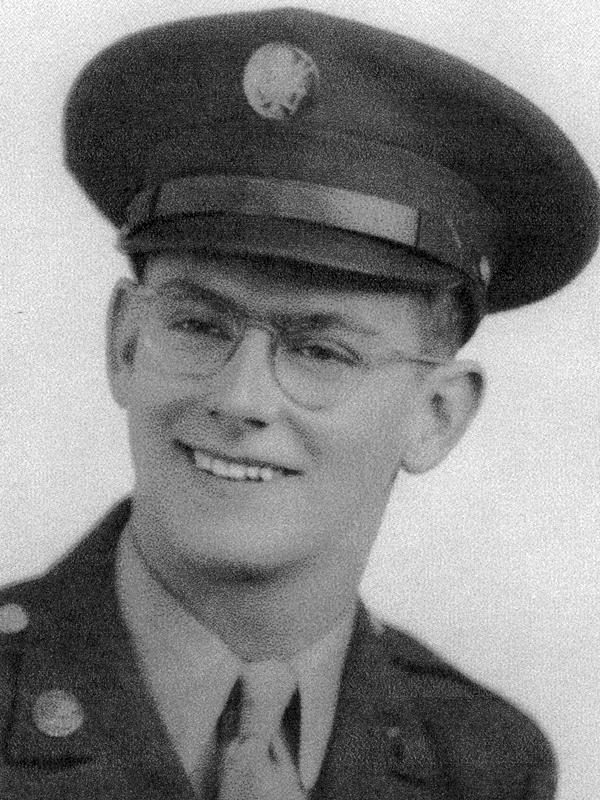
While attending my senior year at Olney High School in Philadelphia in 1943 I turned eighteen and was required to register for the draft. A notice came down that anyone who wanted could be tested for ASTP, Army Specialized Training Program. I took the test and passed making me eligible for the program. On June 22, 1943 I was ordered to go to the Philadelphia Armory to be inducted into the army, that night was my graduation exercises from high school. I was given two weeks to get my affairs in order and then report to New Cumberland Army Depot as a new recruit. After a few days and many shots I found myself on a train heading south. We arrived at Fort McClellan, Alabama for thirteen weeks of basic training. The hot southern weather only added to the rigors of training.
Finally basic training was complete and we were given a short furlough and orders to report to CCNY, City College of New York. I thought I had it made in the Army going to college for a couple of years and come out as an officer and gentlemen. Much to my dismay the program was canceled and I was once again on a train heading south. This time we arrived at Camp Me Cain, Mississippi, where the entire 87th Infantry Division had moved from their barracks into the field now living in pup tents. Imagine the cultural shock of moving from college life to the fields of Mississippi.
The reason for the move was to go on Maneuvers in Tennessee for ten weeks during the winter of 1943-44 living in the fields of Tennessee practicing “War Games”. The weather was awful, rain, sleet and snow prepared us for what we would experience later in the Battle of the Bulge.
After maneuvers we convoyed by truck to Fort Jackson, South Carolina for further training and bringing our Division to full strength. At this time we received many new recruits from ASTP and the Air Force. We continued our training until September 1944 when we shipped overseas to England on HMS Queen Elizabeth, the largest ship afloat at the time. Our entire Division, fifteen thousand men were on the ship. The ship was so fast, we traveled unescorted, randomly changing course to prevent the enemy submarines from waiting to torpedo us. The German submarines sank many of our ships in these waters, so it was a real concern for us to be traveling the seas.
Our company was fortunate enough to be assigned watch on the guns, which meant four hours on and eight hours off. To be near the guns we were berthed in the Cinema on the Promenade deck. This was much better then being below deck. Bunks were stacked eight to ten high as the ceiling was high. After a few days our ship arrived in Glenock, Scottland where we disembarked and by train went to a small town in central England. The town was Congelton, Cheshire County, near Manchester. We were billeted in an old factory building. The food was all dehydrated, getting the cooks prepared for what they would be serving when we got into combat. One of my best memories of England was Fish and Chips. With their paper shortage, newspapers were formed into cones and the Chips (French fries) were put into the cone.
One family was nice to me and invited me to their home. They gave me a boiled egg, which was a real sacrifice for them as they were rationed. They had a son stationed in India and said they hoped someone would look after him as they did me. Each week the ” Honey Dipper” would come by with their horse drawn cart to dip the “Honey” from every ones out house. We were given passes to near by Manchester several times. Passage was by train from Congelton. On one occasion there was an air raid alert and we had to join the civilians in their air raid shelter.
When we were given our Thanksgiving dinner one week early we knew something was up. Sure enough we shipped out before Thanksgiving. Crossing the English Channel to La Harve, France was uneventful. Because of the war damage to the harbor we had to anchor in deep water. Small boats (LCI) Landing Craft Infantry pulled up along side our ship and we had to climb over the rail and down the side of the ship on cargo nets, to get into the boats, carrying all of our equipment, packs and rifles. When we reached shore the bow doors opened and we went ashore getting our feet wet in the process.
After leaving the LSI we were marched up a hill to an apple orchard where we set up our pup tents, in the rain. It just rained and rained and the fields got deeper and deeper in mud. Someone found some hay bales and we spread the hay inside our pup tents to stay out of the mud and help keep our sleeping bags dry. Each squad had a gasoline fueled cook stove and since we were in an apple orchard most squads made fresh cooked apples.
The next day out transportation arrived, a French train with steam locomotive and small wooden box cars called “Forty and Eight” a term carried over from WWI the cars held forty men or eight horses. A little straw on the floor was the only convenience we had. No seats, windows or heat. When the train would stop everyone would get out taking care of their personal needs. If we were near a town or village someone would run to see if there was a bakery and return with loaves of fresh hard French bread.
Several days later, on my twentieth birthday, December 9,1944 we arrived in Metz, France on the German boarder, near the Maginot Line, a French defense line to protect them from German attacks. We were now within sound of Artillery fire from our forces.
The next day we went on line, relieving the 26th Yankee Division. Within minutes we were pinned down by enemy Artillery fire, were we lost several men, either killed or wounded on the first day of battle. Within a week our company of two hundred was down to about one hundred men as the result of wounds or killed in action. Some of them eventually returned to our outfit. Replacements joined the company whenever more men were required. Many of the replacements became casualties before we even got to know their names. By the end of the war only fourteen men from my original platoon of fifty remained. I was one of the lucky fourteen.
First night on line: We had been drilled on the care of our feet. Everyone had multiple pairs of socks and we were to change them every day. The spare socks were to be kept dry, so they were kept around our waist, under our clothes. After digging a slit trench and preparing to climb into my sleeping bag, I removed my shoes and dutifully changed my socks, not putting my shoes back on.
At daybreak we were awakened by machine gun fire with tracer bullets flying over our heads. These bullets were from a German tank coming over a ridge, right toward us. I never put my shoes on so fast and never slept without them again. Many of our soldiers had frozen feet, called trench foot. Many had to be hospitalized and many lost toes or even their feet. Following our good training, I never had a problem with my feet. That’s not to say they were never cold
Early on our arrival to the Saar Valley the weather was rainy. We traveled mostly across farm fields which became very muddy. Mud would stick to our overshoes forming a clod about one foot in diameter, becoming very heavy with each step a chore. Rain soaked our long GI overcoats, they also became a burden. We cut off about one foot from the bottom to make them lighter. Anything the make our load lighter was discarded, gas masks and cook stoves.
When artillery shells landed on the soft mud they would penetrate deep into the soil and explode vertically causing minimal damage, but as the weather got colder and the ground froze the shell would explode and scatter horizontally, parallel to the ground causing much more damage. Tree bursts were very damaging also raining shrapnel over everything below, especially in the Ardennes Forest.
Small arm fire was especially feared by me, as I felt someone had me in their gun sites. Artillery fire was aimed in my general direction, not me alone. Many an Artillery shell would land within a few feet of me and I would hear a thud but no explosion. We attributed our good fortune to the slave labor at the munitions factory for sabotaging the shells.
As the weather got colder, many times way below zero degrees Fahrenheit, the weather was worse than the enemy. Although we didn’t like walking many miles, at least it kept our blood circulating and made the cold less destructive. I saw one jeep driver with his feet in a sleeping bag still able to drive and keep his feet warm. One destructive action the Germans devised was to string a wire tightly across the road and when a jeep came along the wire would catch the driver’s neck, many times decapitating him. To counteract this, an angle iron bar was welded to the front bumper, vertically to prevent the wire from hitting the occupants of the vehicle.
On Dec 16,1944 the Germans began an offensive, latter called “The Battle of the Bulge” that caught the Allies by surprise, penetrating deep into Belgium. Everyone thought the war would end by Christmas. We all felt badly for the Belgium people since they were only recently freed from five years of German occupation, by the United Troops.
Our 87th Infantry Division, part of General George Patton’s Third Army, was assigned to the battle area, but we were several hundred miles away. By now it was snowing and getting colder every day and our transportation that time was open stake bodied tractor trailers. The only comfort we had was a little straw spread out on the floor of the trailer Its was only the beginning of the coldest, snowiest winter in recent European history. Can you imagine living outdoors, sleeping in a foxhole, twenty four- seven for a whole winter?
Arrival in Belgium from the Saar valley:
We had just arrived in Belgium, which was Christmas Eve, December 24,1944. Luckily my company was assigned to a large bam. There was plenty of hay in the lofts which made very comfortable bedding. Since the cows were still in the bam, their body heat made it very comfortable even though the weather outside was snow covered and hovering around zero degrees. Later that night a Chaplain came around with his field organ and we sang Christmas carols and had a short service. This was comforting to us believers. The next day the cooks prepared a full turkey dinner for us. This was the last of the comforts for many months. We were so thankful for what we had.
Arriving in Luxemburg then on to Belgium we were given the task of cutting off the German supply lines in the area of the town ofTillet. Sergeant Curtis Shupp, from my company, took out a German machine gun nest after being mortally wounded; he received the Congressional Medal of Honor.
One day on a march from St. Vith to St Hubert we came to a cross road and to our horror saw at least twenty five of our Comrades lying dead in the snow. The Germans had taken them prisoner then decided to machine gun them as they were lined up. Their frozen bodies, half snow covered infuriated us as we thought of them and their families back home.
On another lucky night I got to sleep on a feather bed with a soft comfy down comforter. Even with no heat in the house it was warm and comfortable. Remember I didn’t even take my shoes off. By this time the ground was frozen to about eighteen inches deep, making it difficult to dig a fox hole. To solve the problem we were given a block of dynamite, about the size of a quarter pound of butter. We would dig a small hole, bury the charge and explode it. Once we were below the frost digging was easier.
Since we were in the open field all the time we could not shower, bathe or change our cloths. Our last shower was back in England at Thanksgiving time, it was now mid March and we had not had a change of clothing, even though most to us had dysentery at one time or the other. Field showers were set up, which consisted of a tractor trailer fitted with canvas curtains, shower heads and warm water. We were given two minutes to lather up and two minutes to rinse off, then all new clothing from head to foot. Even though it was still very cold outside we enjoyed the clean feeling.
About February 1944 a call came down form Battalion Headquarters for a need to form a special group they would call a “Tiger Patrol”. Now everyone knows you never volunteer for anything in the Service, but after months of carrying a heavy sixty milometer mortar, as first gunner, I felt anything would be better than being on the front lines 24/7, living in fox holes and exposed to the harsh weather. The Tiger Patrol was to consist of about 15 men, including one officer and attached to Battalion Headquarters, who would be behind the front lines three to five miles. This meant shelter in houses, or barns, regular meals, a chance to wash and shave, but it also meant more personal risk by going out after dark into enemy territory. This was not to be a combat patrol but rather to determine the enemy position and strength; we were encouraged to bring back a prisoner if the opportunity occurred. The most frightening part was going out through our outposts and then having to return to our lines without getting shot by our own men
While serving as first gunner on the Mortar, I was issued a forty five caliber revolver, when as part of the Tiger patrol I was issued an M-l Rifle. One day while talking to a tanker, we discussed our weapons. He was issued an automatic machine gun, which had a magazine that held 30 rounds of ammunition. His gun was called a “grease gun’ because it was made from pressed steel and resembled a grease gun. With that much additional fire power I felt it would be a better weapon to carry so I traded my M-l rifle for his grease gun. After a few weeks we had a break so we decided to test our weapons, to my dismay my grease gun did not fire even though I had thought I had protection with it
One time we were challenged and after being identified were told not to move, because they had a wire strung between two trees, the end of which was tied to the firing pin of a hand grenade. If we had hit the wire it would have pulled the pin and the grenade would have exploded right next to us.
Being winter everyone had a cough, so we could hear our people and the Germans coughing so we knew where everyone was. One night on patrol as we were crossing an open field, suddenly a flare went up and it lit up the field like a night game at the ball park. We hit the ground just as the German machine gunners opened fire on us. Luckily there were depressions in the ground enough to give us cover to crawl out of their range; luckily no one was injured.
One day as we were driving down a road we came upon a German riding a motorcycle, going in the same direction, we waved him over, after debating what to do with him, it was decided that I would take him back to our Headquarters. So I got on the motorcycle and he got on behind me and off we went back to our lines and he became our prisoner. He probably was glad to be finished fighting and I am sure he was treated well.
Along the Rhine River:
While regrouping and getting ready to make an assault crossing of the Rhine River, we were in a small riverside town called Boppard, Germany. Since the Germans by now were all on the eastern side of the river, we had some free time. One day I was walking down by the water and noticed an MP’s motorcycle lying on it’s side. The MP had been shot by a lucky shot from across the river. A lucky shot for the enemy but not for the MP. I never heard if he had been seriously wounded. I picked up any motorcycle I could find, this GI issued Harley-Davidson was no exception, and I had several German bikes before.
To pass the time we took some assault boats that were assembled for the pending river crossing in a few days. Out on the river and just for fun we would drop a live hand grenade into the water. When it exploded, stunned fish would float to the surface, a few minutes they would swim away, unharmed.
In the same town of Boppard is were I had my first taste of potato soup, Kertoffel soup, they called it. We had been assigned a private home and only the lady of the house was still there. One evening she offered to make some soup. Since she was German, the enemy, we were somewhat reluctant to eat it, we did and it was delicious. It is now my favorite soup. I often said the Germans treated us better than the French. Which reminds me; we would often go into the basement of homes and find canned goods. Home jarred preserves, peaches, cherries, pears etc all very tasty, but then again we had our thoughts of possibly poisoned preserves. Most of the GFs were more interested inn the home brew, which was everywhere, especially along the Rhine and Mosel Rivers.
After awhile I began to feel bad and could not eat my rations, so I went to the Battalion Aid Station and they diagnosed me as having Hepatitis and I was evacuated, by air, to a, Hospital in Verdun, France, where I stayed for thirty days. While in the hospital President Roosevelt died and the war ended May 7,1945. After being discharged from the hospital I returned to my original company in the 87th Infantry Division, who by that time were now in Plauen, Germany near the Czechoslovakia!! border.
They were preparing to return to the United States, to be sent to the Pacific to invade Japan, We regrouped at Camp Lucky Strike, France where I was given a short pass to Paris and saw the usual sights, Eiffel tower. Champs Elyse, Follies Bragier, Notre Dame Cathedral and rode the Metro, all in a few hours. We returned to the US on a liberty ship, the Fredrick Lykes and hit a sever storm, everyone was sea sick. I remember one meal when I started to eat, ran upside to the rail, threw up and returned to finish my meal.
After eleven days we pulled into Boston Harbor and were greeted by fire boats spraying their hoses into the air and blaring welcome home music to greet us. We were one of the first division’s home and given a thirty day furlough. I was at my family’s summer home in Wildwood, N.J., when President Truman authorized the dropping of the Atom bomb on Japan, thus forcing the Japanese surrender ending the war and saving thousands of lives, both US and Japanese, as well as our scheduled invasion of Japan.
After our furlough we returned to Fort Benning, GA where the 87th Inf. Div. was disbanded and the soldiers were sent to Camps near their homes, waiting till they had enough points for discharge. I was sent to Fort Indiantown Gap, PA and was discharged Jan 6,1946.
Our Division was awarded three bronze stars for serving in Central Europe, Rhineland and Ardennes sectors of Europe. I also received the Bronze Star.
When the conflict in Korea began in 1950,1 was an active reserve member of the 318th Tank Battalion, stationed in Reading, PA. In October, 950 our Battalion was called to active duty at Fort Polk, LA. By this time I was married and we had our first daughter. After receiving a favorable response to my request for a hardship discharge, I returned home to PA by August 1951 never having to actually go to Korea.
Every day I thank God for sending his guarding and protective angles to watch over me.
http://www.youtube.com/watch?v=zyEIm6LU5ao
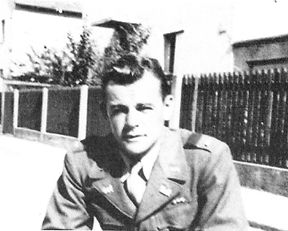
The 188th Engineer Combat Battalion was formed at Fort Devens, Massachusetts on September 9th, 1943. The noncommissioned cadre were from the Louisiana maneuver area. The majority of the recruits were from the New England area. Basic training in infantry skills, and combat engineering skills were conducted. At the conclusion of this thirteen week training period you could consider yourself as being on the way to the status of a combat engineer. The battalion conducted maneuvers in the mountains of West Virginia in January and February of 1944. On completion of training there, the battalion was moved to Fort Dix, New Jersey to continue our training in combat engineering skills and techniques.
In the latter part of June, the battalion moved to Camp Shanks New York, to prepare for movement overseas. Shortly before midnight on July 23rd, the battalion boarded The Mauritania along with thousands of other troops, for the movement to England. The Mauritania was one of the premier ships of the Cunard White Star Line. It was the fastest ship of its class in the world. It had a British captain and crew, but the gun crew was composed of American sailors.
We departed the port of New York at 9:15 a.m. on the morning of July 24th. The ship was unescorted as The Mauritania could outrun anything in the German navy. The ship zig-zagged across the Atlantic Ocean arriving at Liverpool on July 31st. Prior to arriving at Liverpool and moving down the Irish Sea, I saw a dark line on the horizon. One of the ships officers was standing nearby. I asked him just what it was and he told me it was the coastline of Ireland, and it was about eight miles away. Sometime later in a letter to my parents, I told them of the sighting. My father in an answering letter said “You saw the coastline of Ireland, and it was eight miles away. Son you have been closer to Ireland than any Riley in the last one hundred and sixty nine years.” My great great grandfather had emigrated to America as a bonded servant at the age of fifteen in 1775.
We left the ship on August 1st and boarded a train for Nantwich, a town in central England. A motor convoy carried the battalion to Duddington Hall, where we were to continue our preparation for combat in France and beyond to who knows where. An Engineer Combat Battalion is highly mechanized, and the next three weeks were spent in acquiring the vehicles, equipment, and tools for the battalion. We had left the states with only our personal weapon. Everything else was left behind. The vehicles were stored at depots like Aintree Race Track. There were vehicles of every classification stored there, and they numbered in the thousands.
In a Combat Engineer Battalion, every squad of a line platoon has a two and one half ton truck for personnel and equipment. Additional vehicles are required for the Supply Sergeant, Company mess personnel, stoves, etc. and various vehicles for officers and others. In all, each line company can have as many as eighteen or more vehicles and trailers. Vehicles for the battalion staff, medical department and supply will add even more to the total required. The channel crossing was made on Sunday August, 27th, and we anchored overnight at Utah Beach in the Cherbourg Peninsula that evening. While in England, we learned that the battalion would be a part of General George Patton’s Third Army. Now that we landed in France, our first job would be to catch up to him, as his army had broken out of the Cherbourg Peninsula and was moving east across France.
We began our movement on August 29th, and as we passed through the town of St. Lo, we could see the damage wrought on that town. There was not one building that had four walls standing. The three or four French civilians that we saw were wandering aimlessly, as there was no place to go. The first day we traveled two hundred and thirty five miles from our departure point. We were out of gas and waited three days for fuel [German gasoline] to continue on our “catch up”. We then traveled another one hundred and sixty miles, arriving at a town near Troyes, France. While stopped there, we had our first encounter with the enemy. A five man reconnaissance patrol from B Company, led by a platoon lieutenant, met a group often or eleven SS troops. The patrol captured three of the enemy, and killed one. We had no casualties from this first encounter with the enemy.
Then the fifth of September, we were on assigned our first job at Joinville, France, on the Upper Mame River. It was the first of many bridges to be built by the Battalion in the months ahead. The damaged bridge was of masonry construction, and the first job was to clear the rubble in the foundation areas, to provide a solid, stable foundation base for the wooden bridge bents to be built at the site. Twenty four inch I beams were to be used as the bridge stringers. Suprisingly, these were found in the local area. The existing masonry piers were utilized after some cleanup and repair. The bridge was completed on September 12th, and placed in service when the 79th Division crossed it with their light tanks, and artillery.
All the material for the two bridges, and canal rerouting were from nearby areas. I tip my “helmet” to the members of these reconnaissance teams that locate acquire and arrange for transporting of this material to the job site. I never was a member of one of those teams, but I know what an important part they play in the success of any construction. The design of the bridge depends on the material they locate. The length of the bridge spans, and the number of stringers per span, and other vital construction items, depends on what they find and deliver.
The Battalion then moved to the Moselle River where the 4th Armored Division had built a tread-way bridge. Our task was to replace this bridge with two bridges, a class 70 and a class 40 bridge. Work started on September 13th as previous reconnaissance by the battalion staff had been completed prior to the arrival of A and C companies, who were to construct the two bridges. A low level timber bridge was to be built along side the recently installed tread-way bridge. A combination of various sizes of I beams were used as there was an insufficient number of any one size for the complete bridge. A trademark of combat engineers is their ability to adapt the design with the materials at hand. The two bridges were completed and ready for traffic at midnight on September 17th.
From September 13th to October 18th the battalion swept two hundred and seven miles of
mined roads, and filled craters, removed road blocks and cleared mine fields. These operations cost the battalion thirteen casualties, and three deaths. The losses were sobering, and caused a change in our tactics of removing mines and anti-personnel devices. All were to be detonated in place when located, no exceptions. We had additional casualties in spite of this. The Germans had ingenious ways of disguising these deadly devices. Most of the casualties we suffered in our activities in Europe, were the result of mines and anti-personnel devices.
The Germans excelled in their use of land mines, and anti-personnel devices. They were ingenious in their placement and disguising of these deadly devices. The German land mine was a finely machined device. The fuses for their land mines were either pressure type, or pressure release type. Both were very effective. The anti-personnel devices were pressure release types. That is, if you stepped on, or a vehicle ran over the triggering device, they exploded with a deadly force when you moved your foot, or the wheel weight was removed as the vehicle moved. Other anti-personnel devices utilized trip wires to detonate them. The most infamous anti-personnel device was a “Bouncing Betty.” When actuated, the explosive charge was elevated to waist height and then exploded. The “Bouncing Betty” was the most feared of all the devices. I have seen, too many times, the crippling, deadly results of their activation.
One of our most catastrophic events with land mines and anti-personnel devices was in the Foret de Haye, between Toul and Nancy, France. This was the site of a German officer training center and proving ground. Imagine the methods of placement and disguising of these mines by German officers, striving for a high mark in their classroom lessons. We had three deadly activations of mines and anti-personnel devices while working in this area, for a total of thirteen casualties. Removal and destroying of these devices was a dangerous job, but it had to be done, and it was the job of the combat engineer to do it.
The Battalion continued to build bridges, repair roads, and all of the other tasks pertinent to being a combat engineer, as we continued to move east across France. Every bridge construction presented new difficulties, but each and every one was solved by the men on the job, and we continued our move east. We had been assigned to support The Fourth Armored Division on our arrival in France, so every bridge job was a “hurry up job”, as the armor was always waiting to cross the river and hammer the enemy. We never kept them waiting too long.
The Battalion continued building bridges across the Moselle River at various locations. As the bridge at Flavigny was nearing completion, heavy rain, which had been falling for a week, caused the river to rise six feet in forty eight hours. This rapid flow of surging water threatened to scour the footings under the bridge bents. There was danger that the bridge might collapse. Work to save the bridge was constant, night and day. The footings were reinforced, and after many hours of anxiety the bridge was saved.
The XII Corps of The Third Army had taken up a defensive position east of Nancy and our drive was stopped. The divisions were rested and re-supplied for the battle yet to come. In early November, while in the Nancy area, word was received that the commanding General, George S. Patton would honor us with a visit. That announcement sure started a commotion. General Patton is well known as an advocate of a full and proper uniform at all times. We had been in France for two months, and not every soldier had a full and complete uniform, especially a necktie. Other items of clothing could be borrowed from another soldier, but each of us only had one tie to start with, and none to lend.
A combat engineer is an ingenious individual, and we soon came up with a solution for the missing neckties. A suitable facsimile could be fashioned with a pair of G I socks. Not a work of art, but it could probably make it in a “walk through” review. It did. General Patton presented Colonel Allen with the Battalion colors, and made a short speech commending us for our performance as a part of the Third Army. We appreciated his visit and his remarks on that occasion.
Early on the morning of November 8th, the artillery illuminated the sky, and we were headed east once again. B company moved to the town of Vie sur Seille where C company constructed a bridge across the Seille River at the town ofChambrey. A company began clearing mines for a bridge at Nomeny, and pile driving began for the bridge. In eight days they had completed a bridge two hundred and twenty five feet in length over the river.
More bridges were constructed on the Saar River, near Diedendorf, Al beschaux, and Neufvillage. Road repairs continued at several locations including damages by bomb craters. B company began construction of a fixed bridge to replace a Bailey bridge at Keskastel. They were within a day of completing the bridge when word was received to stop all construction and prepare to return to the Company area. When I asked about completing the bridge, I was told “your orders are to stop construction and prepare to move out. Some other engineer outfit will complete the bridge, as I doubt that we will ever return to this area. We never did return to this area.
On December 20th we began a bumper to bumper movement of vehicles and personnel -NORTH. We traveled twenty four hours a day, full headlights at night. From time to time we had to move to the side of the road, to permit armored units to pass through us. It seemed that armored units were the ones most wanted first. During one of the stops to permit armored units to pass, I was asked by one of the men where we were headed. I told him that I had not been given that information before our departure. I knew that did not satisfy him. I told him that if we survived this mission, that someday in the future, after the war, we would probably think of this moment as we sat in our rockers, with our favorite libation in hand, and smile. I wonder if he ever did, I know I have.
The seriousness of the German counteroffensive was made known to us at one of the later halts in our movement north. While the Battalion waited at Longuyon France, for one day we were further briefed on the happenings ahead of us, and learned that we were to be assigned to support the Fourth Armored Division in the effort to relieve the units defending Bastogne. That meant we would be in the thick of things, and we were as soon as we arrived.
The Battalion moved from Longuyon to Aubange. A company was to construct a Bailey bridge over the Sure River at Martelange, Belgium. After waiting a day south of the town while the Fourth Armored Division cleared out the Germans, construction began at 7am on the 23rd of December. There were some incoming rounds of mortar fire, but no casualties at the bridge site. The bridge was completed at noon, and placed in service immediately.
For several days there was nothing but fog. The ground combat activities continued, but
all aerial activity was at a standstill. Finally the fog lifted one morning, and the sky was clear. Then we heard the roar of airplane motors. Looking up, we saw the sky was filled with airplanes – Our airplanes. Imagine an expressway, four or five lanes wide in each direction. The first wave of planes were all flying east, literally wing tip to wing tip as we viewed it with the naked eye. We looked up into the sky at the wonderful sight, and shook our fists and cheered like fans at a football game.
The first waves of bombers. Liberators, and B52’s, filled the sky. What a most welcome sight to behold. These were followed by low level bombers and fighter planes that attacked the German lines, that were no more than a hop, skip, and jump from our lines. The German soldier in those positions must surely have thought, “What the hell am I doing here!” These bombing, strafing runs continued from dawn to dusk. The air was continuously filled with planes. One wave coming to punish the Germans and return waves, not as orderly, returning to base for refueling, and reloading of bombs and ammunition for the next trip. What a sight to behold, and one that is indelibly impressed on my mind, for the rest of my life. The odds on the Germans expanding The Bulge must have been shortened as a result of the excellent work of the American and British Air Forces on that day, and the days following.
The American forces defending Bastogne were bolstered by the air drops of supplies by parachute when the skies cleared. Parachutes were of various colors to indicate the type of supplies they were delivering. I am sure some of these parachutes landed in the areas occupied by the German forces. That is understandable because their and our forces were so close. I collected a number of these empty parachutes. The supplies had been removed by the time I reached them. I cut them into smaller sections and mailed them home to my wife. She was an excellent seamstress, and created handkerchiefs, scarves, babushkas, and pillow cases for our family, friends, relatives, and neighbors. So the parachutes went on to a further use after they had done their primary job.
B Company was assigned the mission of out-posting the town ofMartelange. Our platoon was approaching their assigned position at a road intersection north of the town and were challenged, and ordered to halt. Passwords and the usual questions about city and baseball in America. The challenger was satisfied, and we were told to advance. After a few steps, we were once again ordered to halt. It was then that I could see a tank, partially obscured by a small building and a tree. When I looked up at the tank, the muzzle of the gun seemed to be about a foot in diameter, pointing right at me. A voice from within the tank said “I would suggest that you discard or pull up that long coat you are wearing, up to your waist and secure it. Right now you look like a German soldier.” It was far too cold to discard the coat, so I quickly tucked it in at my waist. The next day I traded the long coat for a mackinaw, through the good graces of our supply sergeant. We moved on to our assigned area, and took defensive positions.
At first light a column of American tanks moved down the road toward us, and then stopped as they saw us. An officer in the lead tank asked if we had heard any activity in the town just ahead of us. He was advised that we had heard vehicle movement during the night. With that he ordered the column to move, and it proceeded into the town ofBigonville, Belgium, which was held by the German army. The sounds of battle were soon heard. Sometime later. Fourth Armored Division soldiers were bringing captured German soldiers into our area, where they searched them for weapons, and then assembled them for delivery to a prisoner of war holding area. Our mission was completed and we returned to our company area.
The next day, December 24th, Christmas Eve, the battalion, together with the 249th Engineers, was placed in the line east ofMartelange. The Fourth Armored Division had progressed nearly to Bastogne, and was ready to breech an opening in the German defense. The two engineer battalions were to take the place ofCCR of the Fourth Armored Division, which was to move east, and sweep around the left into Bastogne. Under cover of darkness we moved up on line and began the process of digging in at our defensive positions. The snow was deep, and the night was very cold. Machine guns were set up and bazooka teams were positioned to prevent any breakthrough by German tanks.
All night long the whine of outgoing artillery was heard as they passed over us. But there was no whistle of incoming shells to our defense position. However, there were flares launched into the sky by the enemy. They illuminated the area as if it was daylight. When the flares would burst we froze in place to prevent any detection of our presence. There were no untoward incidents during our stay at our defense position. At noon we
were relieved by elements of the 6th Cavalry Division, and we moved to a rear area, where our cooks had prepared a most welcome Christmas dinner. That Christmas Eve has never been one of my favorite memories when measured against all of the others in my lifetime.
The maneuver by the CCR of the Fourth Armored Division of moving out as we moved in was a successful one. The next day, December 26th, they pierced the Bulge, and the city ofBastogne , and the American soldiers defending it were relieved. Bastogne was important to the German plan because it was at the center of five roads. It was very important to control the city and the five roads in the German plan of attack, to divide the Allied forces. The campaign to stop the German advance was a success, and we were a part of that success. The war moved on as we once again were headed east.
The fighting was fierce and the weather was extremely cold to the point of bitter cold during the month of December. I believe that we accomplished things that none of us thought we were capable of. The German High Command placed the best they had in the line, and we beat them-There was still a lot of fighting ahead of us, but I believe the German High Command realized after their defeat at Bastogne, that the tide of the war had changed, and the Allied Armies would prevail. I believe that they would have surrendered then, rather than suffer the complete destruction of the German homeland. Hitler had nothing to gain by agreeing to a surrender, so the war went on for four more months.
All of this happened sixty nine years ago, and I am now ninety one years old. In retrospect my feelings now, as they were then, are that I am glad that I did not miss it, but I would not want to go through it again.
 SUBJECT: Lunch with the Ambassador
Date 4 February 2013
Location: Embassy of Luxembourg, Washington, DC
Ambassador Honorable Jean-Louis Wolzfeld invited the following personnel for lunch at the Embassy to commemorate the donation made to the Army Historical Foundation.
 The Army Historical Foundation was represented by General (Ret) Creighton Abrams and Mz. Rachel Hartman, Director, Major and Planning Gifts.
Prior to this presentation the Veterans of the Battle of the Bulge (VBOB).together with the Embassy of Luxembourg, made a joint pledge to donate funds to the Army Historical Foundation, the VBOB donation had already been made so this luncheon signified the joint effort had been completed.
Colonel Douglas C, Dillard (Ret), National President represented the VBOB at the luncheon.
The three photos reflect the presence at the luncheon of the following:
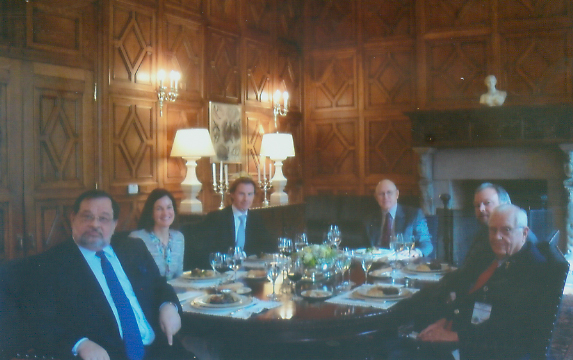 Photo 1. Ambassador Wolzfeld, Colonel Dillard, Mario Wiesen, Consul, General Abrams, Olivier Baldauff, Deputy Minister and Mz Rachel Hartman.
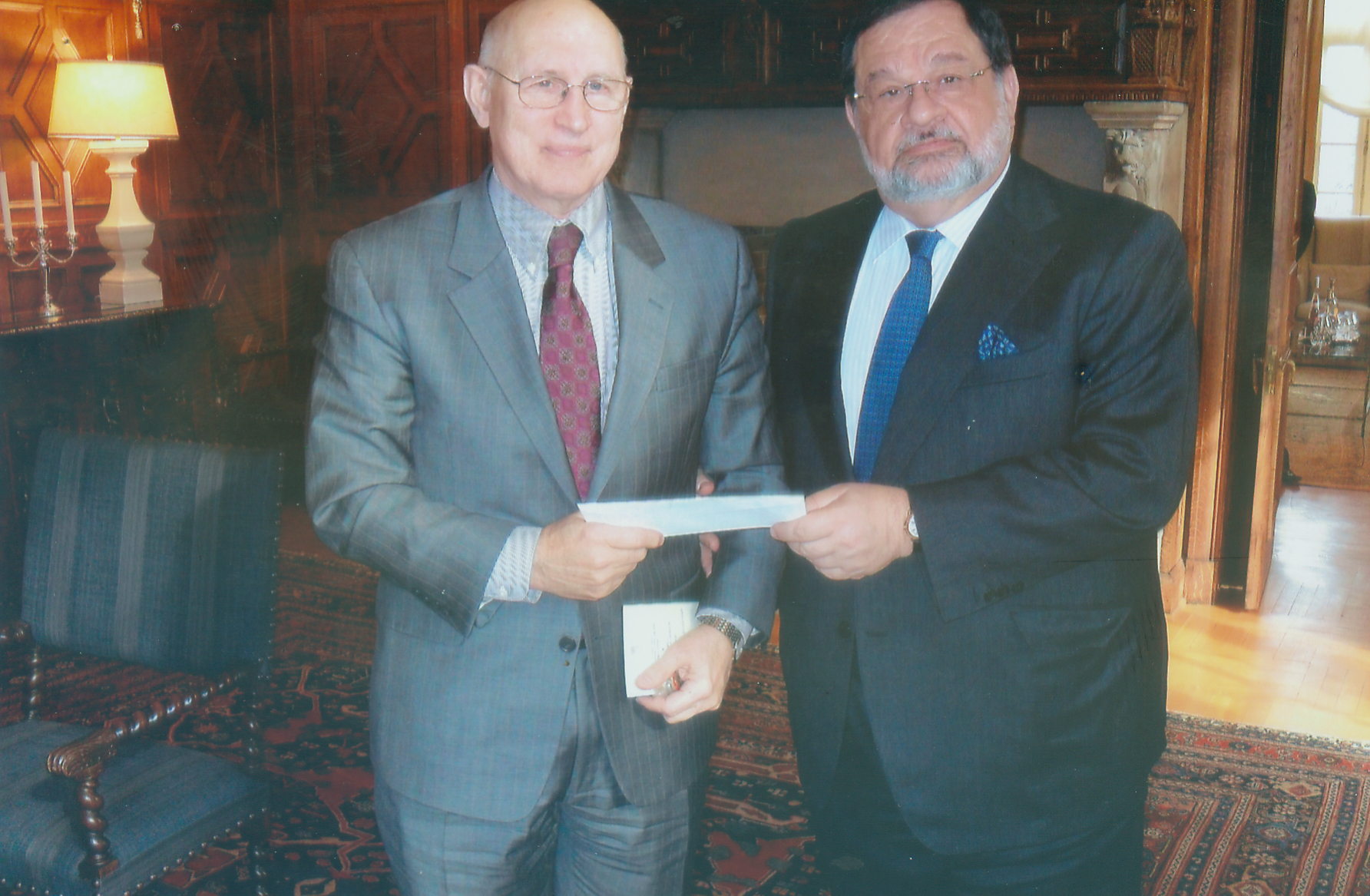 Photo 2. Reflects the donation presentation to General Abrams by Ambassador Wolzfeld.
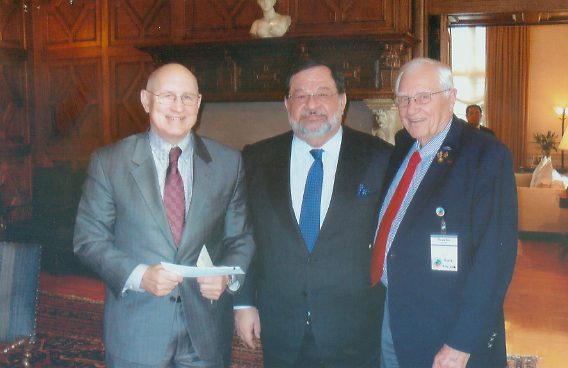 Photo 3. Reflects the presence of General Abrams, Ambassador Wolzfeld and Colonel Dillard celebrating the closing of this joint effort.
Additionally, the Ambassador spoke of commemorating the 70th Anniversary of the Battle of the Bulge in 2014 by holding an event at the Embassy of Luxembourg. More planning will ensue for that event.
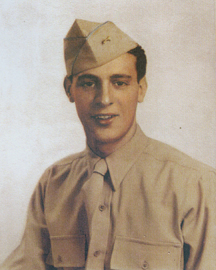
After the Bulge was blunted, that is the Germans were placed in retreat or captured, since the foxholes did not have running water etc. we had not washed. We were in the same clothes worn when we left Haverford West, South Wales, UK 6 weeks or so before. Some soldiers may have had an opportunity to change clothes. We didn’t. If you were to look at my hands, the only clean parts would be my fingertips where the dirt and grime would wear off from use in handling my rifle, ammunition and a month or so of living outside under bad conditions.
One day we were transported about 10 miles behind the front lines to a temporary Quartermaster operated washing and change of clothes-station. They had set up a truck alongside a small stream. The truck was equipped with water heaters and showers. There were small tents at the front and rear of the truck. Small groups were let into the first tent and given instructions in very colorful language “take off all your clothes” you will not see them again. “If you have any valuables hold them in your hand.” “When you enter the shower find someplace where they may not get wet”. My “long Johns” felt like a part of me. I had sweat in them, froze in them and did everything in them. I mean everything. When I took them off it was like peeling off some of my skin. So there we were naked and shivering waiting for more instructions. All our clothes were on the ground (dirt) and we were freezing. It was winter and we were nude in a forest by a stream.
We were then given instructions as to what was going to happen next. Once again instructions were given in colorful language. It seems that no one would pay attention unless you spoke that way. We were told it was to be a three-minute shower. You would go up the steps into the shower cubicle, which was built into the truck somehow. The water would come on. You would have one minute to wet yourself, followed by one minute to soap yourself and then one minute to rinse. We were reminded that if soap was still in your eyes or anywhere else “too bad”. The water would be shut off anyhow. Pick up your valuables (family photos and other items of value) then go down the steps into the rear tent.
As I went down the steps from the shower into a cold tent someone handed me a set of new clothes and shoes without any regard for size. We were all nude wandering around that tent bumping in to one another asking anyone what size they were given and “could we trade”. I ended up with very narrow shoes. (They were probably 11 and a half-triple A). They curled up in the front and seemed to say “hello”. Did you ever try to dress and/or bend in a crowded room of nude men or try putting on a pair of shoes? We were then ushered outside the tent, which seemed extra cold because our pores were now wide open and we weren’t wearing the dirt-clogged underwear etc. As dirty as my “long Johns” had been, I longed for them at that moment.
Because we were a company of about 250 men it was a slow and long process to shower and process everyone. Some of us wandered down the road to a bar that somehow was open. It didn’t take much cognac, so for the first time in my life I got drunk. I hardly remember getting in the truck to return to the front lines. I can’t remember where I went. I thought about it later and realized it was dangerous being on the front line and not really having all my senses.
S/Sgt James K. Cullen, 3rd Armored Division, 36th Armored Infantry Regiment, Company E
Click on the link below to read the story.
Our father, John David Foley (may have gone by last name “Moody”), enlisted at Camp Upton, NY in 1944 and separated from Ft. Dix 02 June 1946. He fought in the Ardennes, Central Europe and the Rhineland (33 WD 45 as amended). He is pictured with the 37th Armored Group (or the 37th division of another unit?) in the photo below (1st row, 6th soldier from the left, dark hair).
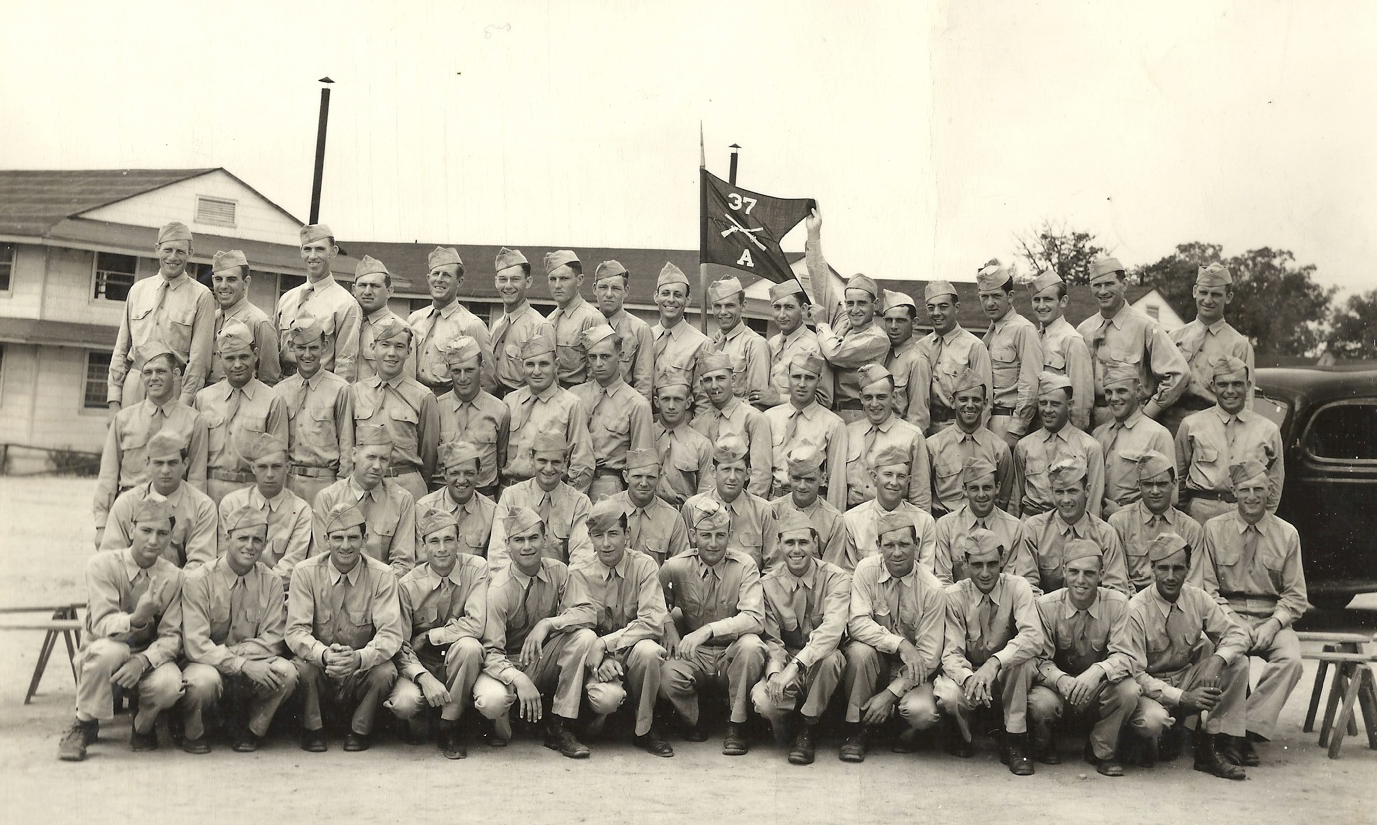
His discharge papers have him designated as being in the 273rd Infantry, 69th Division, but that division did not participate in the Battle of the Bulge, so he may have been reassigned to them. In this case, we do not know his original unit. Our father is deceased (1973), and there are no relatives who can be contacted. My two sisters and I are hoping to find someone who might have remembered “Foley/Moody” or who served in any of the same units our father served in. Please feel free to contact me if you have any information to share. We would be thrilled to hear any ‘nugget’ of information you might have.
Janet Moody, 3 Stuyvesant Oval #9E
New York, NY 10009
Phone # (212) 217-0999
Email address: jmoody12@rcn.com
Click to listen to the Hymn to the Fallen
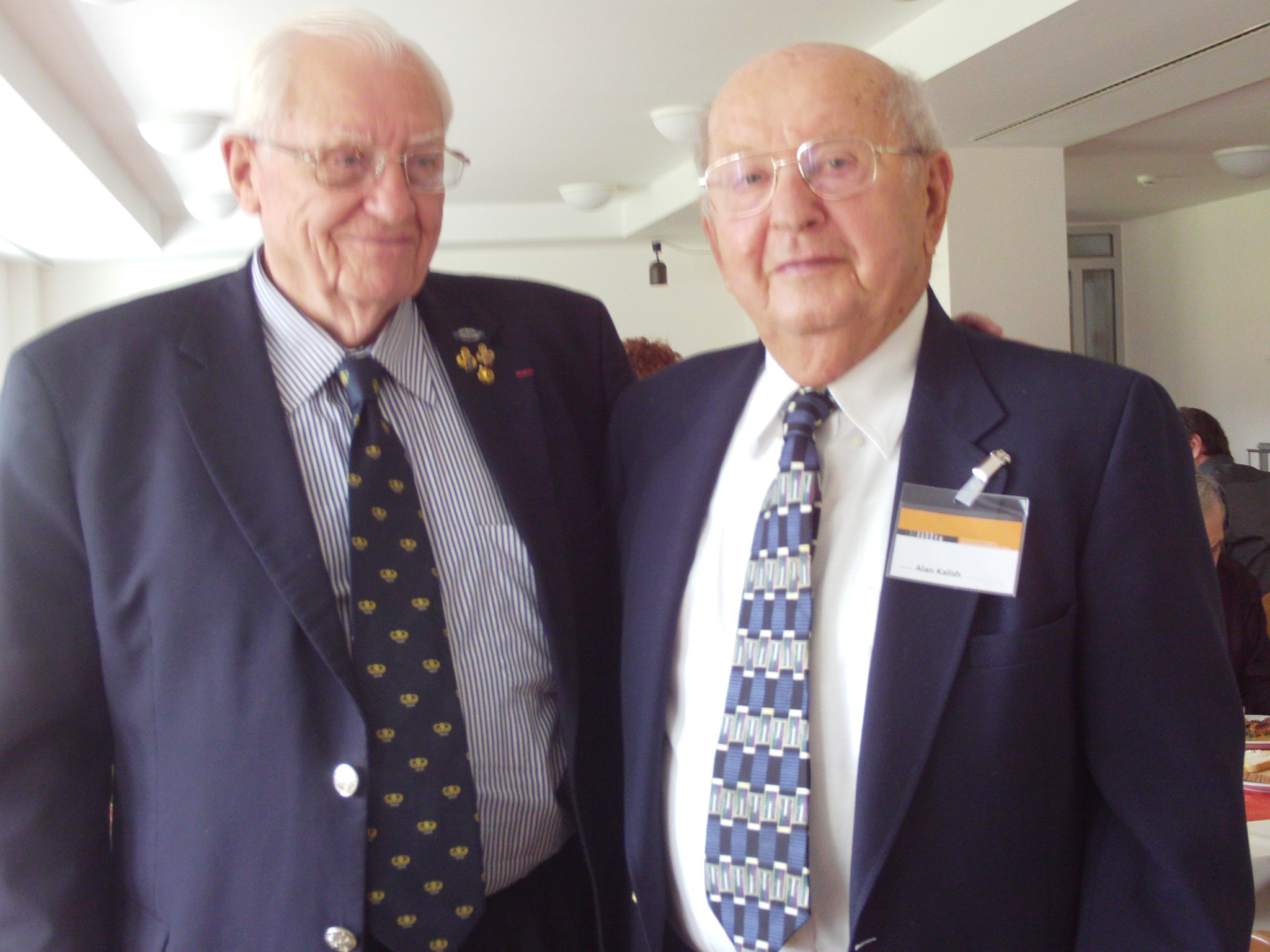
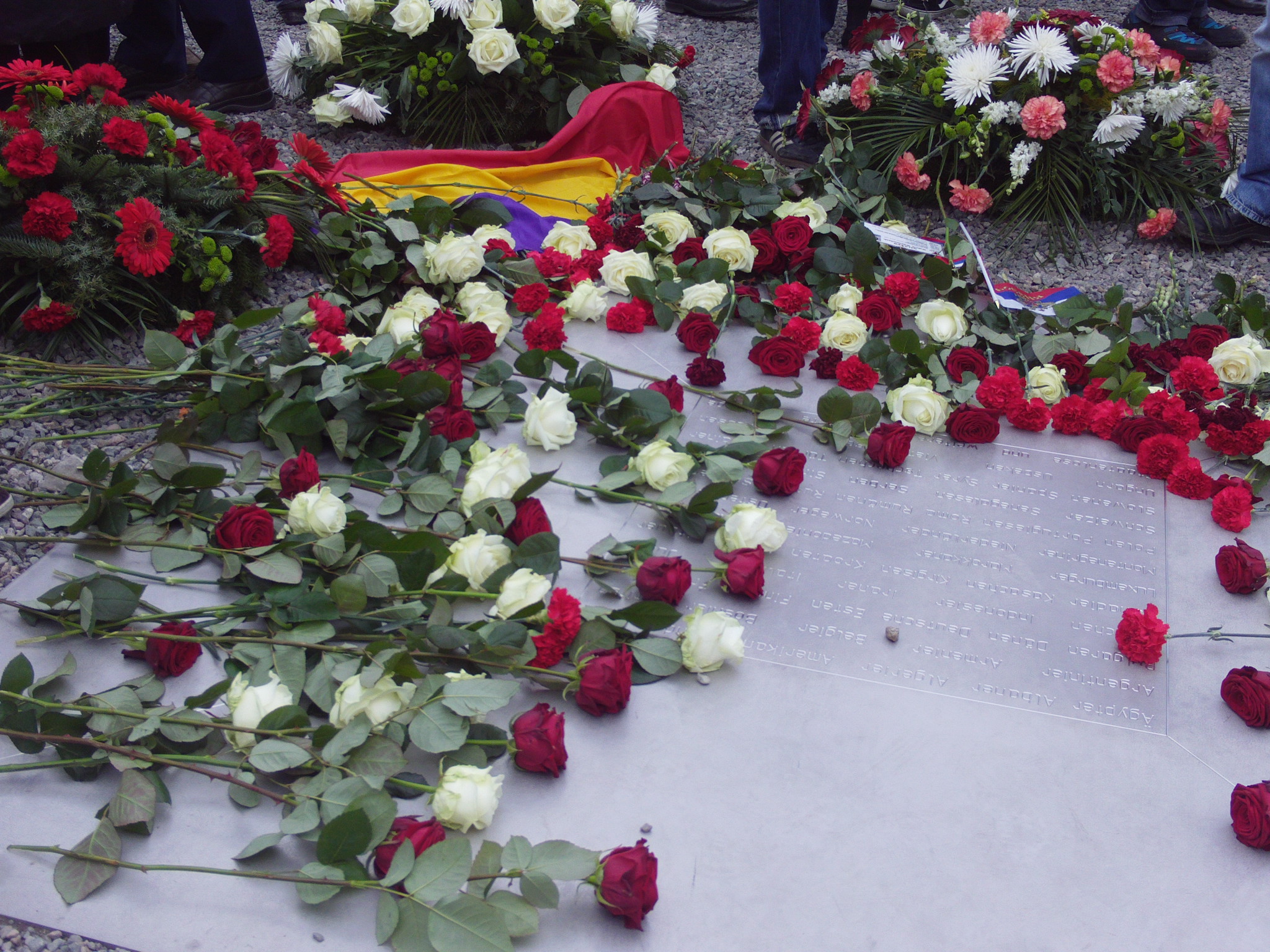
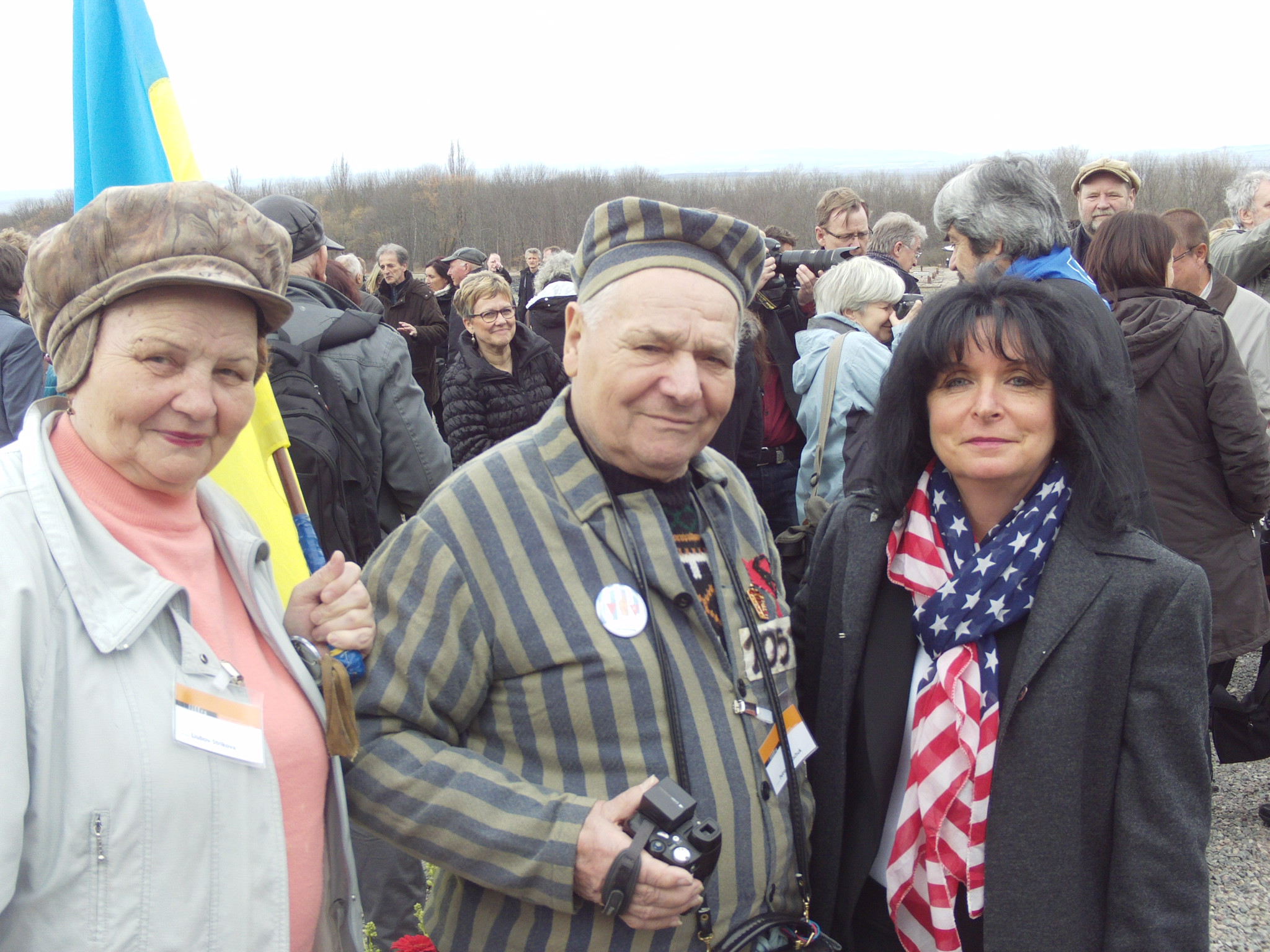
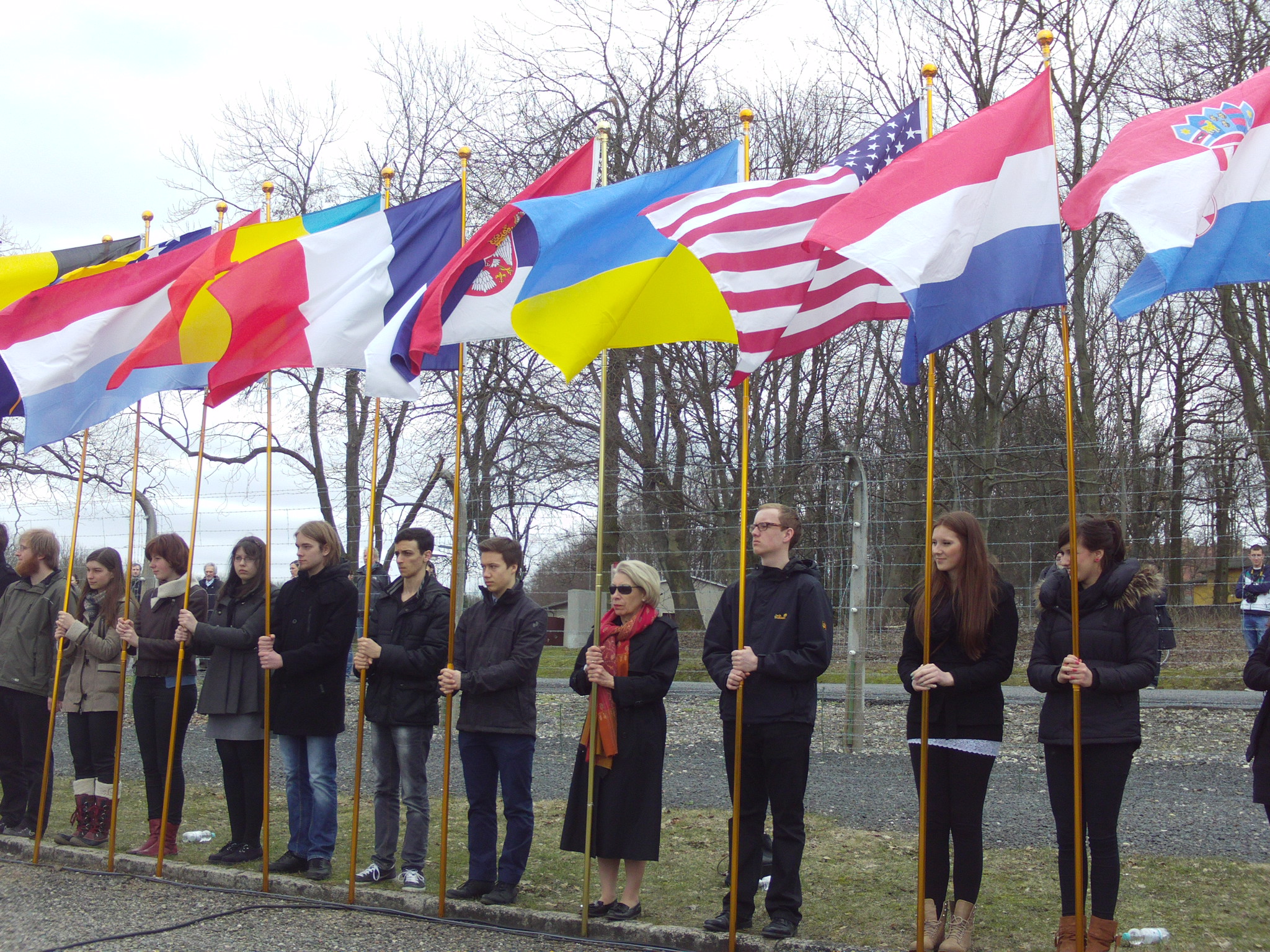
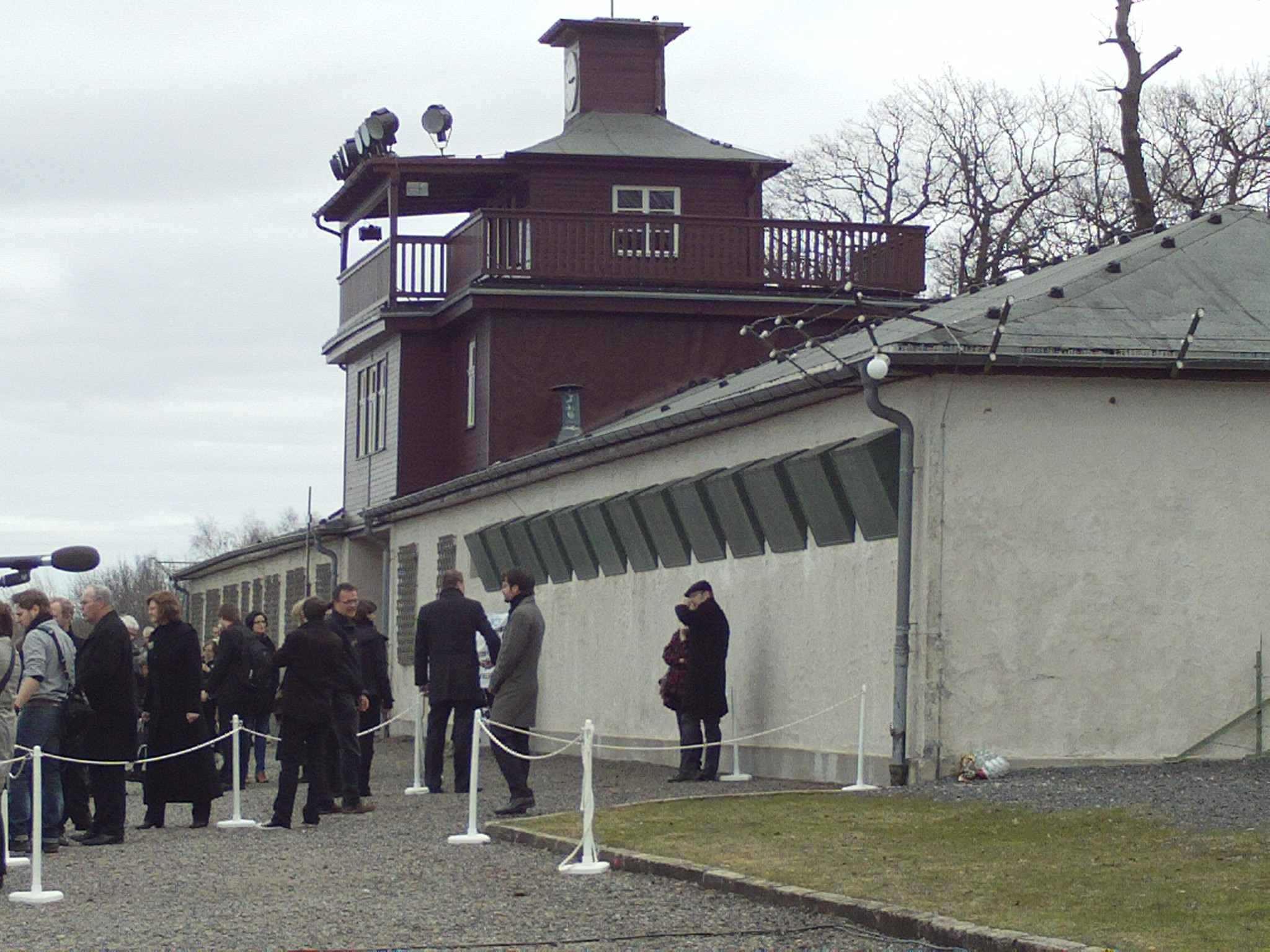 Doug Dillard, 82nd Airborne and his wife Ute attend ceremonies on April 6, 2013 commemorating the 68th anniversary of the liberation of Buchenwald concentration camp. All of these events are very emotional because we meet families from Holland, Belgium, Germany, Italy, Czech Republic, Poland and Russia and all have sad stories of the lost loved ones.
Photos and articles were submitted/prepared by Doug and Ute and translated into English by Doug’s Belgian friend Patrick Brion. Click on either English or German to read the three articles.
We need a well, filled with confidence
Emotions and unforgettable moments lived by many…
Retracing tracks by a young American…
Welt mit Vertrauen
Erschütternde unvergessliche Momente erlebten wir gemeinsam
Spurensuche eines jungen Amerikaners
Dear Veterans of the Battle of the Bulge
I am a young Belgian interested in the history of World War II. I finished my studies of history last year in University of Louvain, Belgium. My dissertation is about the relations between the Belgian government and the disaster people after the Battle of the Bulge. Now, I work again on this study in order to publish it. I will see some archives in Washington DC next week for that matter. The history of the Battle of the Bulge is really my passion. I am a member of a Belgian association specialized in this matter called CRIBA, Centre de Recherches et d’Interprétation de la Bataille des Ardennes (http://www.criba.be/).
Since I am graduated, I have done different jobs in Belgium and in Scotland. Now, I travel around the US for a period of 6 months to improve my English and to learn more about your country. My main goal is to work after that in Bastogne, Belgium as guide in a Museum or on the battlefield. I have already taken some contact with the future managers of the new Museum dedicated to the Battle of the Bulge that will be set up there next year. I would like to take advantage of my presence in your country to see Museums talking about WWII but also to meet veterans of the Battle of the Bulge. I know that it will be more and more difficult for me to meet them in Europe because the trip to go there is quite long and they are getting old unfortunately. Meeting some of these actors who made the history of the Battle of the Bulge would be a great experience for a future guide. I have the last opportunity to meet them in the US during my trip and I would really like to take it.
Last weeks, I have stayed in Long Island where I have been to the Northport VA Medical Center Home and to the Long Island State Veterans Home in Stony Brook. I have met there some WWII veterans but none took part to the Battle of the Bulge. It was interesting anyway. After some administrative clearances, people of the staff introduced me to them. Here are the references of the staff who guided me:
Before going back to Belgium in September, I will go to NYC, Washington DC, Nashville, Lafayette, New-Orleans, Las-Vegas and maybe in other places such California, Oregon, Chicago, Memphis, etc. I would like to hear from any veterans so I can hear their stories. I would like to express my gratitude for all your help in this matter. Please contact me as listed below.
Mathieu Billa
18D Berismenil
6980 La Roche-en-Ardenne
Belgium
mathieubilla@hotmail.com
312 420 6454
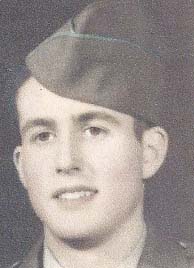 Remembering World War II and the Battle of the Bulge
by Philip Walsh, 2nd AD, 66th AR, Co C
I was 18 years old when I got my draft notice from President Franklin Roosevelt. It was 1943. The notice read “greetings from President Roosevelt” and went on to say I was drafted to the US Army. I had never been away from home before and I wondered if I would return home to Maine.
I was sent to Fort Devon’s, Massachusetts, for a few weeks where I received my army uniform and medical shots. I recall walking down a narrow hallway and got shots in both of my arms. The fellow in front of me passed out after receiving his. I can still hear the guys who had already got their shots saying “you will be sorry.” They were right. They also warned me to watch out for the square needle that’s left in overnight. I found out to my relief they were just kidding because I was a new recruit.
From there I was sent to Fort Knox, Kentucky, for 21 weeks of tank training. I remember being homesick, went to see the doctor, a major, who gave me some pink pills and said I would be fine. I wasn’t. I was still homesick. When our training ended we were sent to Fort George Meade, Maryland, for advanced training. Then I was sent to Camp Shanks, New York, to board the Aquitania for Europe.
I recall when we landed in Greenock, Scotland some Scottish girls greeted us and gave us muffins filled with meat. I took one bite and threw it out. It tasted awful to me. We left Scotland by train to England. By the time I arrived in England I was no longer homesick. It was more than 6 months since I left Maine. The war was underway, and by this time I figured I’d never get home alive.
When I was sent to France I was assigned to Company C 66 Armored Regimen, 2nd Armored Division. Afterward I was deployed to Omaha Beach in June – six days after D-Day. When I landed I asked the Beach Master if many men were killed. He said if anymore were killed no one would have gotten ashore. I remember one solider, in particular who landed on the beach with me. He was from the southern part of the States and was assigned to another tank because tank commander, Lt. Johnson, also from the south, picked him for his crew because of the connection to the south.
This was the first day in battle for us. Lt. Johnson’s tank was heading down a road between a row of hedges rows and ran over a mine. The explosion blew a track off the tank. The crew climbed out of the tank, started to crawl on the ground and a mortar shell landed on the back of the soldier from the south. All that was left of him was a piece of his fly and belt buckle. It was terrifying. Later I was told that Lt. Johnson was planning to get married in Paris after the war and arranged to have his bride’s wedding dress made from a parachute. Unfortunately he was killed outside of Berlin at close range by one of Hitler’s Youth with a Panzer Faust bazooka after he stepped outside of his tank.
We were never told where we would be deployed or given any details. That was one thing I didn’t like about the Army. After Omaha Beach we were sent to another location in France. We were on the front line for 21 days with the Germans firing at us from a train with artillery guns. I remember it sounded like a freight train coming at us. Three crew members and I barely left tank for the entire 21 days. It was too dangerous to stay outside for any length of time due to the constant shelling from the Germans. We had to be extremely careful.
The ground around the tank was all torn up from shelling and the mud was a foot thick. Every time someone left the tank they would get about two inches of mud on their boots. I remember getting mud dropped on my shoulders whenever the tank commander, a schoolteacher, climbed back into the tank after checking our surroundings. I was seated at the machine gunner’s seat and there wasn’t any room to move. It was very tight quarters inside the tank. I also recall when the lieutenant was injured after a shell struck the side of the tank when he was underneath trying to cook a meal with a Coleman Burner. He was taken to the aid station.
We had an opportunity to take prisoners. Seven Germans waving a white flag tried to surrender to us. One of our crew members fired at them and they took off.
After 21 days in France we were on the move again, this time to Germany. We arrived to a location that looked like a park and were able to sleep outside on the ground. One morning when I awoke, I noticed the tank was leaking. I looked inside and saw about three inches of gasoline on the bottom of the tank. A new replacement had changed the fuel filters incorrectly on both Cadillac engines.
Our next deployment was to Bastogne for combat at the Battle of the Bulge where I remained for the duration of the conflict. It was winter, freezing cold, and I drove an open top half track 100 miles in the pouring rain to Bastogne. Somewhere along the way I drove off the road. I was very tired, soaking wet and it was difficult to see because there were no headlights. I accidentally backed into Captain A.Z. Owen’s tank. He hollered “get that man’s name.” I was afraid he would send me to jail. He didn’t do anything.
When we arrived at our destination near Bastogne we were exhausted and cold. We pitched our pup tents in the freezing temperatures and went to sleep shivering. What amazes me now as I think back about sleeping in soaking wet, heavy Army clothes with my shoes frozen to the ground is that I never caught a cold.
Our tank was parked next to a farmhouse. The family living in the home felt sorry for us staying outside in the cold and they invited us in to dry our clothes and get warm. We stayed with them for several nights. Unfortunately one of the soldiers flirted constantly with the homeowner’s wife. The husband got fed up and told us all to leave.
One time we liberated a couple of chickens and some vegetables from a Belgium farmhouse and I cooked it in a 5-gallon can. You cannot imagine how good this tasted on a cold day especially after living on K and K rations. It was the best chicken soup I had ever eaten. A captain from Georgia said to me, “Walsh where did you get the chickens from?” Another soldier spoke up and said he got a package from the states. This seemed to satisfy the captain who helped himself to the soup without asking any more questions.
Later during the battle I was asked to drive this same captain in a jeep to a command post set up in a house near Bastogne. When we arrived we saw the T/5 Sergeant who had flooded our tank with gas when he was assigned to our crew in France. He was on duty at the command post and did not salute the captain in my jeep. The captained yelled to the T/5 sergeant “Salute me.” He obeyed.
When the Battle of the Bulge ended, I was deployed to Berlin. We were the first troops to arrive in Berlin after World War II ended. I was transferred to the 12th Armored Division and sent to Marseilles, France where I prepared to go home. It was 1946. I am proud to have served my country, but I wouldn’t want to go through this again.
In the past, the term “combat arms” referred to the infantry, cavalry and artillery. Later, the “cavalry” was replaced by the “armor” branch.” Services such as engineers, ordnance, signal and others were considered to be supports for the combat arms. However, historians have recorded that many supporting troops became combat troops during the Battle of the Bulge. The same was true for administration personnel including those in combat arms units.
On December 16, 1944, Combat Command B (CCB) of the 9th Armored Division (AD) was preparing for an attack with the 2nd Infantry Division to capture the Roer River Dam. That mission was cancelled and, for the next several days and nights, CCB of the 9th AD and CCB or the 7th AD fought alongside in Belgium delaying the main enemy attack. It ended when both units withdrew on December 23, 1944 from St. Vith, Belgium.
During that period, CCB of the 9th AD had no contact with their 9th AD headquarters which was in Luxembourg. A part of CCB task force was the 14th Tank Battalion (Bn). Captain Frank Simons commanded the Bn Headquarters Company whose enlisted staff maintained the records of the battalion – the movements, locations, casualties, losses and the important Morning Report which is often a source for military history. At one point, Capt. Simons ordered his clerical personnel to exchange their pencils for their side arms (weapons) and join the tanks and infantry of CCB to stop or delay the enemy advance.
I was a tank platoon leader in the 14th Tk Bn with five tanks and 24 men. My combat orders and missions changed frequently during the combat as our higher command attempted to stop the enemy and armor attacks. On day I was ordered to protect our 9th Armored Engineers who were preparing a roadblock to halt an possible or anticipated enemy attack. This type of operation had not been part of our many months of training. How was it accomplished?
The platoon leader and the other two tanks in his section moved into enemy territory to select a location from where they could observe an approaching enemy and warn the engineers.. As for observation, only the tank commanders can observe since the gunners, tank gun loaders, drivers and bow gunners are inside the tank with their hatches closed. Consequently, tanks are highly vulnerable, particularly to infiltration by small groups such as an enemy infantry squad, So, the tanks were positioned to observe but also, that if hit by a surprise attack, the platoon leader could engage the enemy to cover the withdrawal of the other two tanks.
The tank platoon sergeant and his second tank remained with the engineers who were preparing the roadblock. Once the platoon leader had his tanks in position, his next action was to establish radio contact with the platoon sergeant, who could than alert the engineers. He made contact with his own tank and with another of this tanks to provide a back-up in case of a communication problem. Incidentally, higher authority had ordered “radio silence” which meant we could receive messages (such as orders) but could we could not transmit messages. Under certain conditions, there is a reason for this restriction. However, since the platoon leader was the “higher authority” in this combat situation he changed to orders to meet the need and the combat situation.
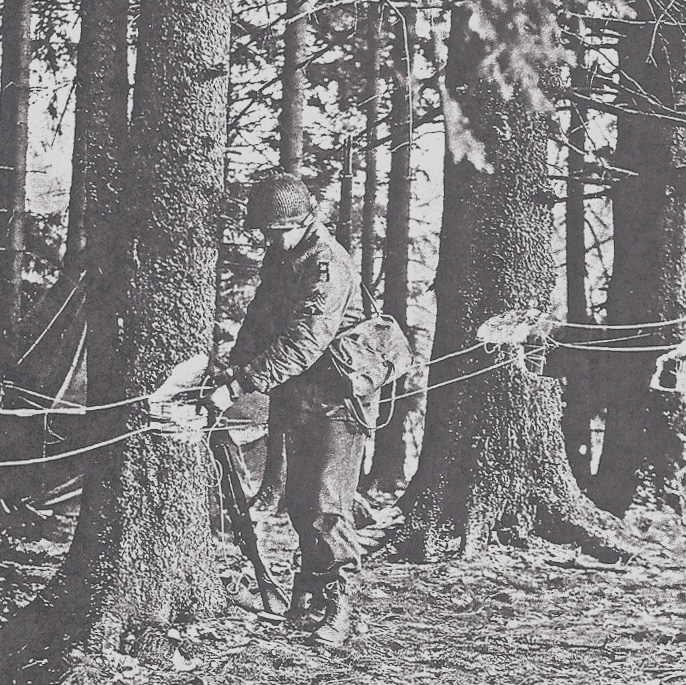 The illustration shows the engineers at work preparing and wiring the trees alongside the road so they could be blown to block the passage of vehicles.
The surrounding terrain was unfavorable to tracked and wheeled vehicles. This was an action under combat conditions. The engineers along with the tankers were engaged in a combat action. In this action, the tank platoon sergeant informed this platoon leader when the engineers had completed placing of demolitions. The three advance tanks then withdrew back to the engineer location and the leader reported the situation to higher headquarters. He was given another mission. It is not known how the roadblock was manned to detonate the charges since, to be effective, a roadblock should usually be covered by fire.
As a tactical note, when an enemy column is stopped by a roadblock, the defending unit should be prepared to first disable a vehicle in the rear which prevents the withdrawal of the vehicles between the disabled vehicle and the roadblock.
In a later operation during the Bulge, the engineers were placing demolitions on a bridge. This required them to enter the bitter cold water of the river. You can bet that tanks in their dry locations did not envy the engineers!
by Dee Paris, 9th Armored Division, 14th Tank Battalion
I have been totally involved in doing four documentaries over the last seven years. It’s been a lot of work, but fullfilling. Teaching kids the high cost of freedom has been, and continues to be, my mission. This new fourth documentary is truly unique. It is unique for TWO reasons:
ONE: It features citizens, in this case, living mostly in Belgium and Holland who remember our WW II dead at the Henri-Chapelle Military Cemetery in Belgium by “adopting” graves there of these American soldiers they never knew, only known to them as liberators of their country. Heart warming stories told by dozens of adopters from four generations, ranging in age from seven to ninety, are revealed in the film. They remember these liberators of their country by visiting the graves, often placing flowers there from time to time.
TWO: As the producer/director of this film, I was also an American soldier in WW II,
who helped bury these thousands of American heroes at this cemetery, in its wartime temporary state. The permanent cemetery was built after the war. When doing the film, It was a moving experience for me to realize that I may have helped bury these very soldiers who were adopted by the citizens who participated in this documentary!
This moving documentary will enlighten Americans…. the vast majority I have found know nothing of this honorable practice taking place over the last sixty-eight years! Editing is nearly complete and DVD replication will be very soon.
This film, along with my other three, will be aired on Pentagon Channel that reaches all of our military bases around the world as well as aired on cable stations, Satelite and Comcast……altogether reaching 35 million households! It will be a sporadic non-exclusive schedule for one year….extended another year, if I choose. There is no remuneration from it, but good exposure.
You can order your copy now with a check made out to Let Freedom Ring and send to the address below. Cost: $20.00 plus $5.00 S/H. If desirable, credit cards can be processed through the website listed below.
George Ciampa
LET FREEDOM RING 501(c)(3) 100% non-profit organization
3304 Whiffletree Lane
Torrance,CA 90505
310 539 4345
310 408 2345 cell
gciampa@sbcglobal.net
www.letfreedomringforall.org
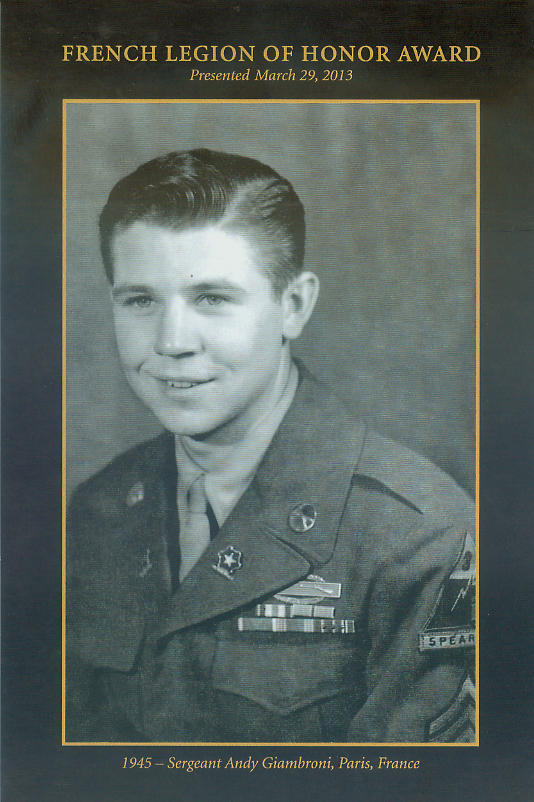
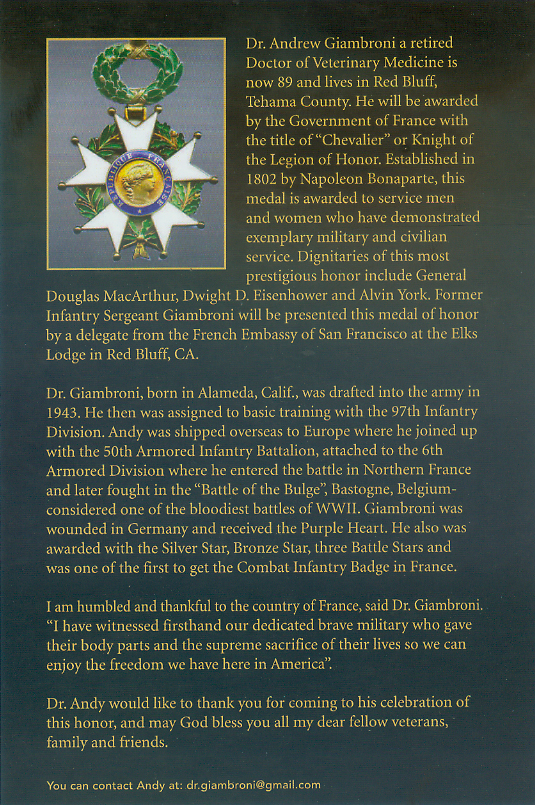
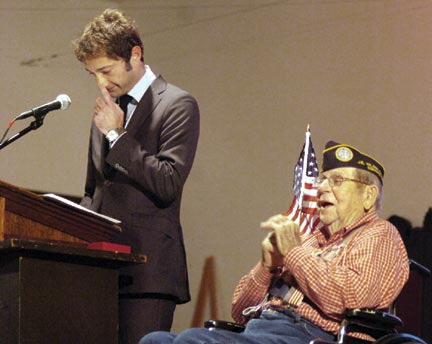 Andy Giambroni, right, of Red Bluff, takes in a speech from Romain Serman, the counsel general of France in San Francisco, during a ceremony Friday evening at the Elk’s Lodge in which Giambroni was decorated with the Chevalier or Knight of the Legion Medal of Honor.
Daily News story and photo by Andre Byik