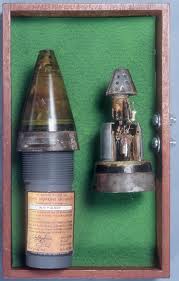
It was at Simmerath, Germany where I first saw the proximity fuse in use by a new type Tank Destroyer. It was larger and distinctly different from any TDs that I had seen. The bogie wheels were larger and evenly spaced. It also mounted a long barreled 90mm gun. Later, I found that this was the M-36 TD.
I was intrigued by the consistent height of the air bursts–all appeared to explode about thirty feet above the ground near the Siegfried Line pillboxes at the base of the slope, about 600 yards from our position. When I asked the gunner how he set his fuses so accurately to get such uniform air-bursts, he replied that a magnet in the shell’s nose caused it to exploded automatically at the desired distance above the ground.
I said that it could not be a magnet–it would have to be done by some type of radio signal. But a radio transceiver (transmitter and receiver) built into an artillery shell — impossible! I had no ready answer and learned only later that my initial assumption had been correct.
Through our binoculars we observed German ambulances making multiple daylight runs to the Siegfried pillboxes at the base of the slope. This appeared suspicious and we thought that they might be bringing in ammunition, food or other supplies in the ambulances, even though this would have been a violation of the Geneva Convention—most German regular army units were usually quite scrupulous in abiding by its dictates. The proximity fuse may well have been the reason for all the ambulance runs that we had observed.
The US began work on the proximity fuse in 1940 and successfully brought it into operation in late 1942. The Germans and British had been working on the fuse for several years, but had failed to develop it. It was first used in the ETO on 12 June 1944 against the buzz-bombs in England and was later in use at Antwerp. US navy gunners had used it against Japanese planes in January 1943, from the USS Helena.
In chapter 4 of “War as I Knew It”, General George Patton stated “the night of December 25 and 2 6 we had used the new proximity fuse on a number of Germans near Echternach and actually killed 700 of them.” This action was during 3rd Army’s move north to Bastogne, and was the first documented use of the fuse against ground forces. It is my belief that we had seen the proximity fuse in use several weeks earlier, even though many WWII authors have stated that it was first used on the continent during the Bulge.
This was well before the Bulge, and should remove all doubt that its use at Simmerath was possible. My belief is reinforced by the explanation of its operation by the gunner, and—although flawed–was a reasonable explanation from an unsophisticated gunner! Because the fuse had been used in England and Antwerp, this Tank Destroyer may have been there and could have carried some proximity rounds to Simmerath. Regardless of how they arrived, I firmly believe they were there and that I had seen the proximity fuse as previously stated!
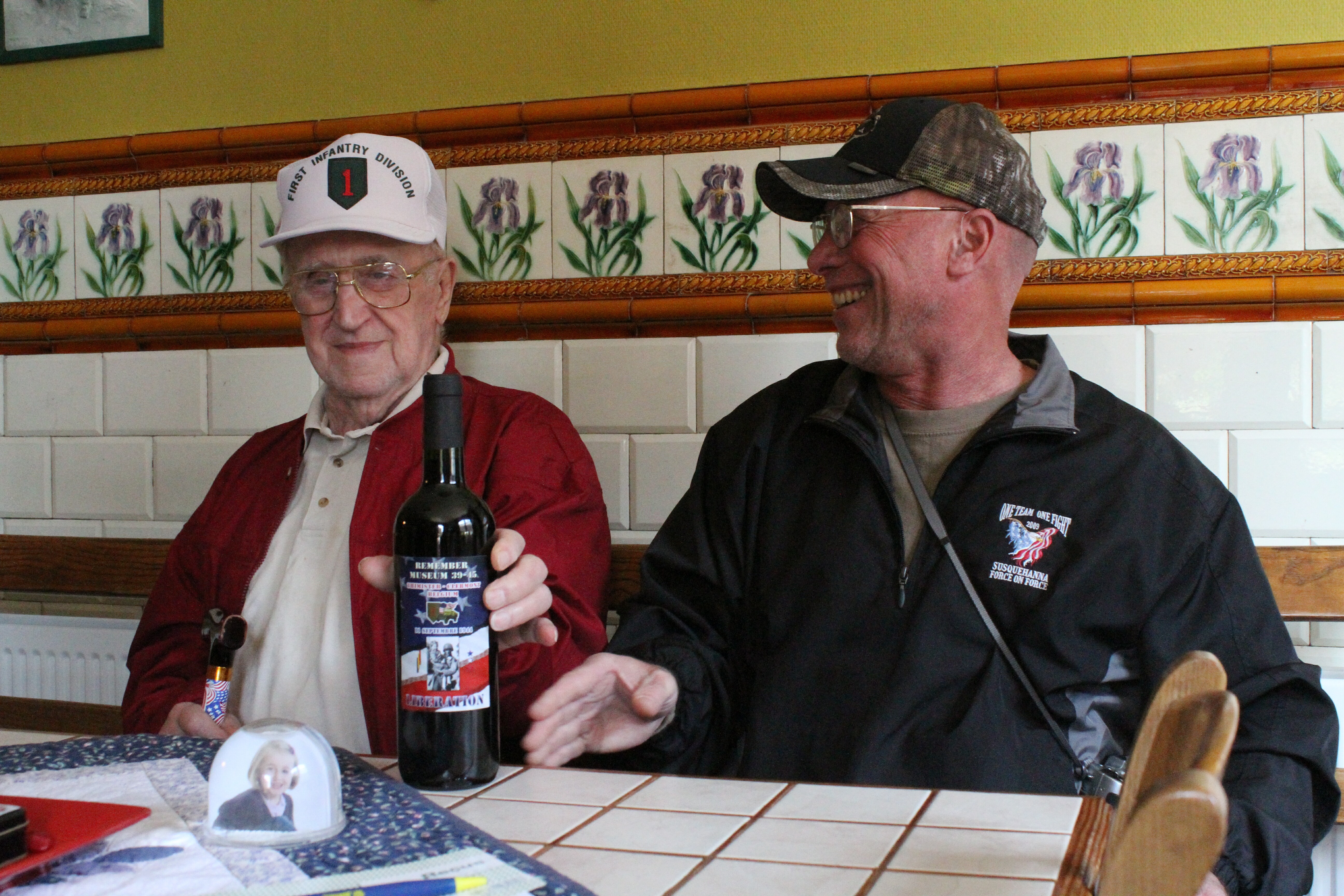
This is the story of how VBOB veteran Bob Pidcoe returned to Europe in 2013 as Guest of Honor at the prestigious Memorial Day ceremony in the American Battle of the Bulge Military Cemetery of Henri-Chapelle. Afterwards he made a pilgrimage visit to his former battlefields with his children and younger generation friends from other veterans families. This trip was their idea. They very much wanted to honor Bob and his fellow World War II soldiers and go back with him to Europe to learn about the battles and experience the battlefields with him. They contacted me and asked me to help them customize and organize a tour for Bob. So I contacted Patrick Hinchy, one of the most experienced veterans tour guides in Europe. Thankfully he was free and willingly agreed to help me plan a tour specially for them, and then to guide it.
Bob is now 90 years old. This modest, unassuming man who is great company and has a fine sense of humor, was an HQ Company corporal in the elite 1st Infantry Division (‘The Big Red One’), 26th Infantry Regiment (‘Blue-Spaders’). He was awarded 7 campaign ribbons, a Bronze Star and a Purple Heart. Bob was truly one of the Greatest Generation, just ordinary people called upon to do extraordinary things, the men fighting not for fame and recognition, but because it was the “right thing to do”.
After the war, so typical of those ordinary men of the Greatest Generation who had achieved so much, he returned home to Pennsylvania and just got on with his life. He got married and raised two sons (with a firm hand, he smiles). He worked at the Williamsport Paper Box Co. and then for the United States Postal Service for many years from which he retired. He enjoyed taking fishing trips to Canada and devoted years to the Boy Scouts of America. He was a Scoutmaster for 10 years and then a Committee Member for eight years, mentoring young boys into young men, teaching and instilling the Scout’s code of honor. Now in his golden years, he enjoys going to the café for breakfast with the gang, gardening and wondering how he can afford another tractor.
But the spirit of the Greatest Generation is still alive and well in 90 year old Bob. He did not hesitate when this European pilgrimage trip to the American Battle of the Bulge cemetery of Henri-Chapelle in Belgium for Memorial Day was suggested to him by his son Bill, himself a Vietnam veteran, Bill’s wife Brenda and younger generation friends Deb and Nevin Dressler who have previously accompanied and looked after Bob on veterans trips to DC. Nevin’s father was a veteran too who landed on Utah Beach, Normandy on July 13 1944 in 795th AAA BN defending Ninth Air Force “Advanced Landing Grounds” (ALGs) close to the frontline from Normandy through the Southern Bulge to Germany. They said they wanted to take him back to Europe both to honor him and his fellow soldiers but also to be with him in the battlefields and try and understand better what the soldiers had endured and achieved.
Also in Bob’s group were two other younger generation couples – Jim and Janet Kearney (Jim’s father was in Battery B, 557th AAA BN, 84th Div and awarded a Bronze Star while fighting on the Roer River, on the northern side of the Ardennes) and David and Jeanne Hughes (Jeanne’s father, Thomas Doheny, was in 978th FAB and landed on Omaha Beach June 25 1944). From Normandy, he went to Aachen and the Battle of the Bulge and finished in Germany at the Elb River. Their West Point graduate daughter has continued this military tradition. She was an Army MP up to 2008 and served in Kosovo, Iraq and Afghanistan. Bob’s Battle of the Bulge Memorial Day tour was going to be a very moving, emotional and unforgettable experience for all of them. Here are some of the highlights through excerpts from Deb Dressler’s lively and colorful diary of the trip. . . .
In Normandy, we went to the Normandy American Cemetery and Memorial located directly above Omaha Beach. Bob assisted with the flag raising at 2 different cemetery sites then laid a bouquet of flowers at the foot of the main statue with pebbles from Omaha Beach inlaid on the floor around it. By this time a crowd of people were gathering to meet our hero and thank him for his service. A young teen age girl asked to have her picture taken with Bob. She was very emotional.
At a restaurant near the American cemetery, we were joined by Denise Oger – a 77 year old Belgian lady who runs CRIBA (Center for Research & Information of the Battle of the Bulge). Her words to Bob: “You liberated us; we can’t do enough for you.” She told us the story of “her” GI. When she was 9 yr. old, the GIs came to her town for R&R and stayed several days. They had a place where they danced and played American music. Denise hid in the back, since she was too young to participate. But a certain GI came to her and danced with her. She felt very special. When the GIs were ready to leave, ‘her’ GI came to her to say good-bye. She later learned that he was killed shortly after, stepping on a mine. After 69 years, she still had tears in her eyes as she told us the story of ‘her’ GI.
On Memorial Day, we went first to the American Cemetery at Neuville-en-Condroz for a private ceremony.
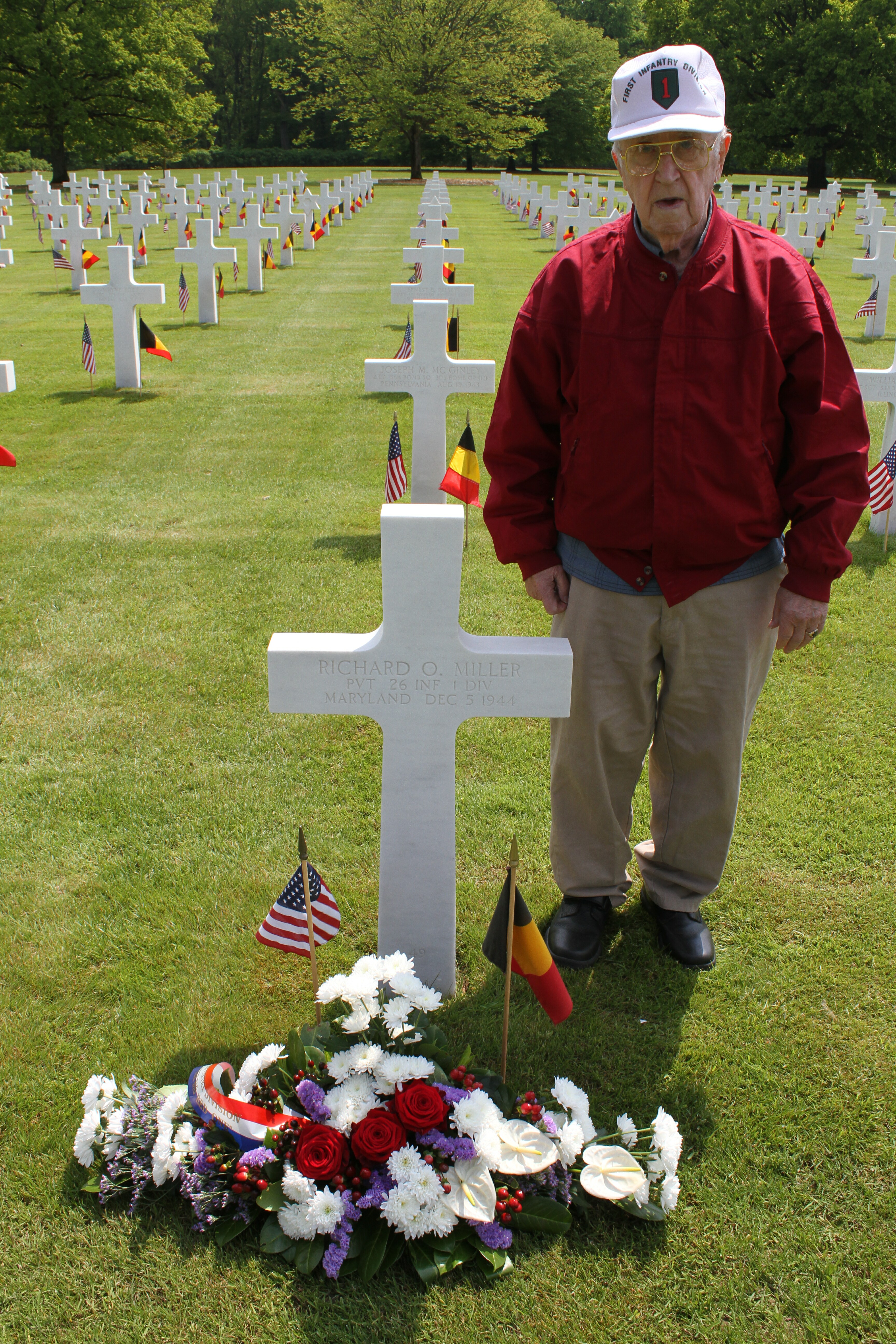
Bob laid flowers at the grave of ‘Blue Spader’ soldier Richard Miller, in honor of all ‘Blue Spader’ 26th Regiment soldiers killed.
There are 5211 graves in this cemetery. A Japanese man asked to have his picture taken with Bob and honored him like a hero. Bob’s comment: “Holey Moley!” That is equivalent to “Awesome, Wow, etc.”, only in Bob’s language
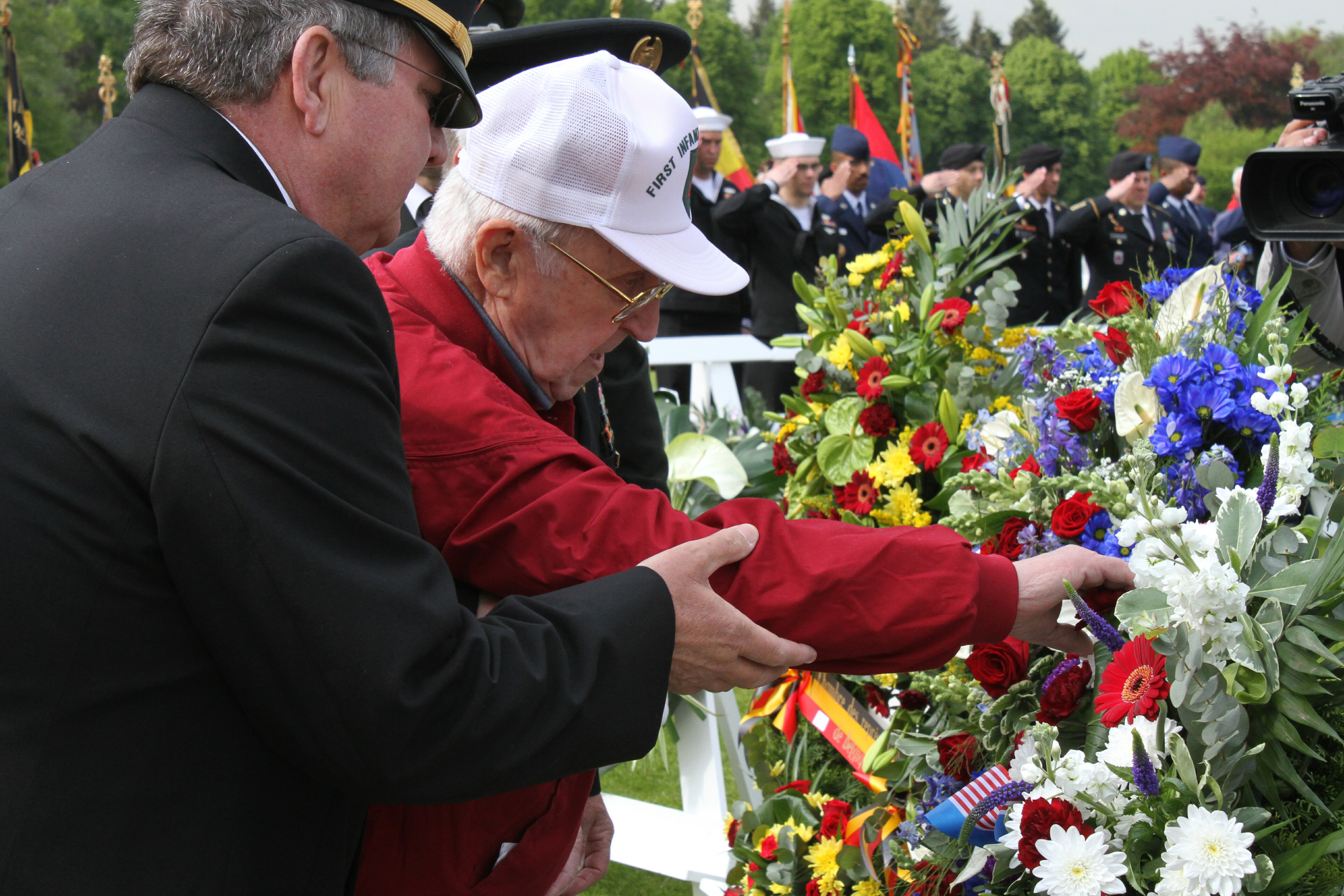
Bob laying wreath
Later that afternoon, we participated in the spectacular Memorial Day ceremony at the Henri-Chapelle American Cemetery. It is a large cemetery (7,300 graves) located on top of a beautiful ridge. Bob was given a medallion by Rear Admiral Messerschmidt. He also talked with many other dignitaries, Generals and veterans and was interviewed for television. Bob laid a 1st Division wreath – accompanied by two Generals. He was the only living veteran that participated in this very moving service. There were military bands, Color Guards from different countries, flags at half staff until the end of the service, speeches by dignitaries and two national anthems (US and Belgium). It really was a special privilege for us to be guests of honor there. There were several thousand people in attendance. It was an amazing experience.
We continued on to Aachen, Germany, from where we would spend the next few days touring the Battle of the Bulge. Bob came through to Aachen on a small road during the war. He could not believe what the city looks like today, commenting “Oh my God!”. He remembers seeing nothing left of the city when he fought there.
We visited the Mardasson Memorial in Bastogne, a large stone memorial with names of the states & Divisions that fought in the Battle of the Bulge. Bob had his picture taken by the 1st Division name. At the Memorial, Nevin talked with a young couple, Kristina and Daniel, who asked to meet Bob. The girl was a German who had married an American. She said to Bob, “I am not your enemy.” Bob’s reply, “The German people treated us well.” With tears flowing, they gave each other a hug and had a picture taken together.
Bob visiting M&Ms museum
One morning we went to the M & M’s Museum (the owners are Marcel & Mathilde Schmetz). 1st Division soldiers were billeted at their farm during the war, and left their equipment behind when they had to advance quickly into the Bulge. But so many did not come back. Marcel was a young boy at the time, but remembers it well. Marcel and Mathilde then collected everything left behind and made a memorial in their barn, which they called the Remember Museum. Bob’s comment on seeing the museum: Holey Moley!! Mathilde was our guide since she spoke English. She told of Marcel’s family hiding his17 year old brother in the walls of the house for 16 months so the Germans would not find him & conscript him. Their museum is 20 years old and now quite extensive. It has a Red Ball Truck and all visiting veterans sign the truck. Mathilde and Marcel have special exhibits dedicated to the forgotten ones: grave diggers, medics, Rosies, and black soldiers. And a monument outside of barn dedicated to the animals used during the war: horses, dogs, & homing pigeons. They told us there was a German jail for the pigeons so they could not be used to carry messages. They also have dresses made from the parachutes. Marcel made exact replicas of a tank and V1 Buzz Bomb from wood.
While we were there, Marcel encouraged a group of school children to ask Bob questions about his experiences during the war. Some of the questions were:
• What are your feelings now? Bob – ‘This is great. I’m amazed at all the differences. Aachen was flattened when I saw it last!’
• Were you scared? Bob: ‘Everybody was scared.’
• Do you have night mares? Bob: ‘No night mares- I try to forget.’
• How did you feel when you got home? Bob: ‘My parents were happy to see me.’
Bob describing the path
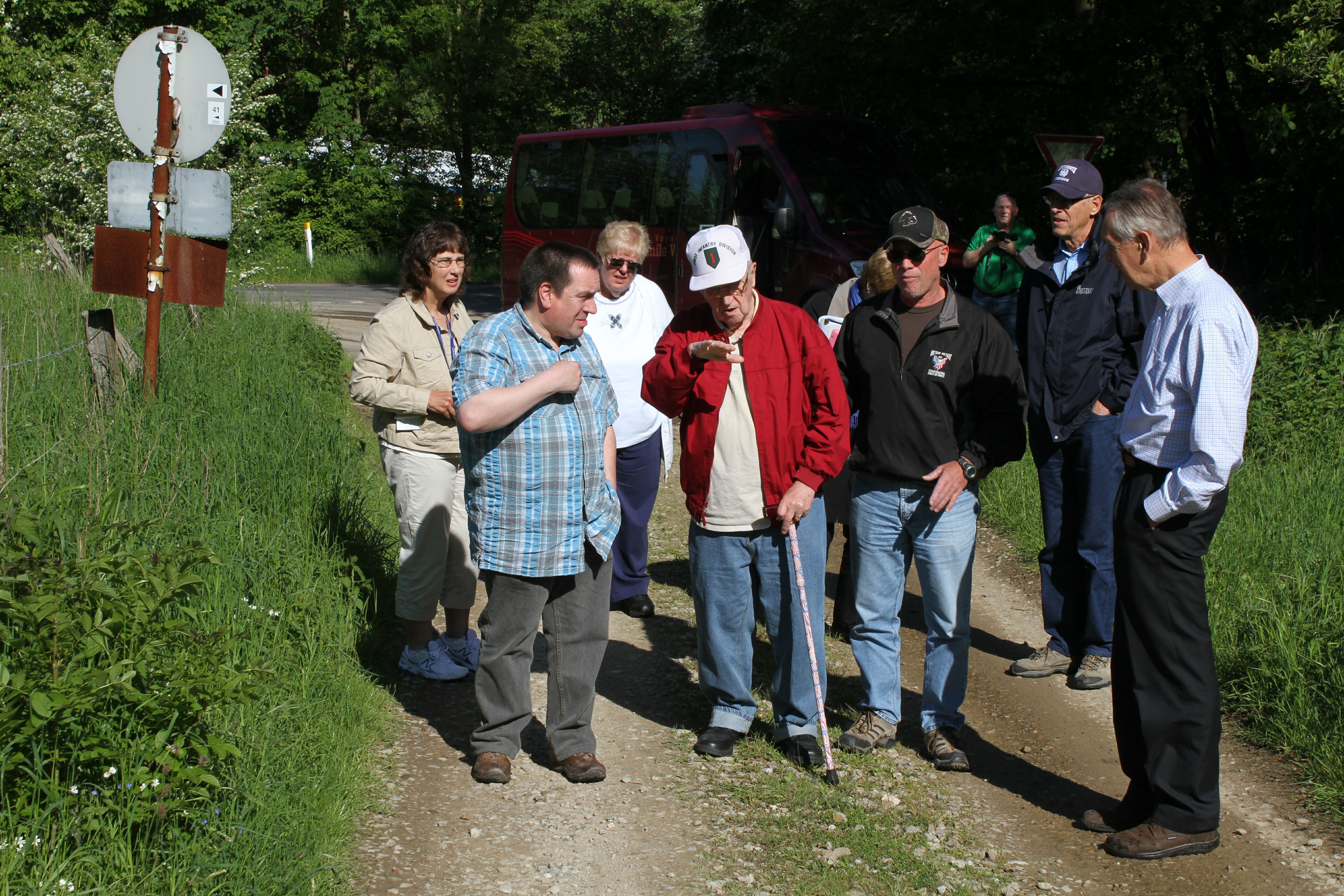
We arrive to Schevenhutte in the Hurtgen Forest – a place that Bob requested to visit. We look for the small narrow path leading up a hill that Bob remembers. Two people from our group check out the path with instructions from Bob. He remembers that the path went up hill, bent to the left, leveled off in a small clearing with trees on both sides. They come back and say it is exactly as Bob described. The whole group is overwhelmed with the success of it. Bob describes this victory as the highlight of his trip. He tells us that there was a German in a fox hole on the right side of the hill radioing info to German artillery on other side. But after the radio man was pinpointed, he didn’t live too long. This was where Bob was hit by a splinter from a tree burst and wounded in the upper leg/lower groin area.
When our trip came to an end, we all agreed that we had the trip of a lifetime. We saw and experienced so many wonderful events that our minds could hardly take it all in. Patrick was a fantastic guide, with a wealth of knowledge & patience. Our driver was excellent. The whole group became friends very quickly and really enjoyed each other’s company. We will certainly miss one another, but have wonderful memories to look back on. Thank you Bob, for allowing us to make this journey with you – you made it very special.
Written by Doris Davis with special thanks to Deb Dressler for her journal of the trip.
Photos by Doug Mitchell doug.mitchell@t-online.de Grosslangenfeld, Germany
Donald H. Heckman of Allentown and a member of the Lehigh Valley Chapter, VBOB, was recently awarded the French Legion of Honor. He joined the Army on March 29, 1943 and served until December 28, 1945. He was a radio operator with the 702nd Tank Battalion, Headquarters Company, attached to the 80th Infantry Division.
In 1997 Donald and his wife Betty returned to retrace his WW II experience via a three week auto trip planned by daughter Judy Greenhalgh and her husband George, both associate members of the Lehigh Valley Chapter.
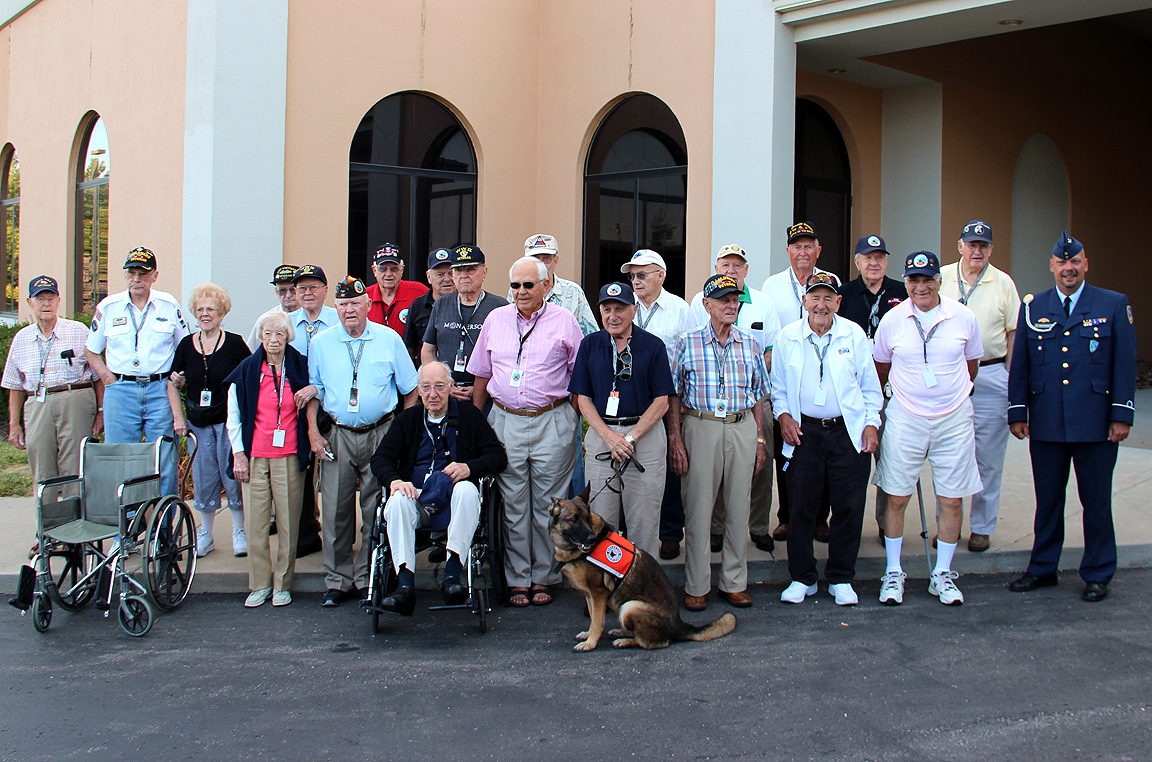
Ada Heckman, Charlotte Loukas, Arthur Loukas, 83rd ID, Dick Williams, 80th IDJohn McAuliffe, 87th ID, David Bailey, 106th ID, Joe Landry, 776th FABTom Chambers, 9th AD, Carl Shell, 9th ADWilliam Gilliam, 2nd AD, Elizabeth Beckett, Dorlas GilliamTom Ingram, 90th ID, Mike Levin, 7th ADSherry Klopp, Jim Klopp, Eldon Gracy, 87th InfD, Frank Trautman, 106th InfDAdrienne Hopkins, Dan Santagata, 5th IDBecki Willard, Dottie Stitzinger, Jack Stitzinger, 87th ID, Tom Hoke, 87th IDFour generations of the family of Kate Nolan, 53rd Field Hospital
[l-r]
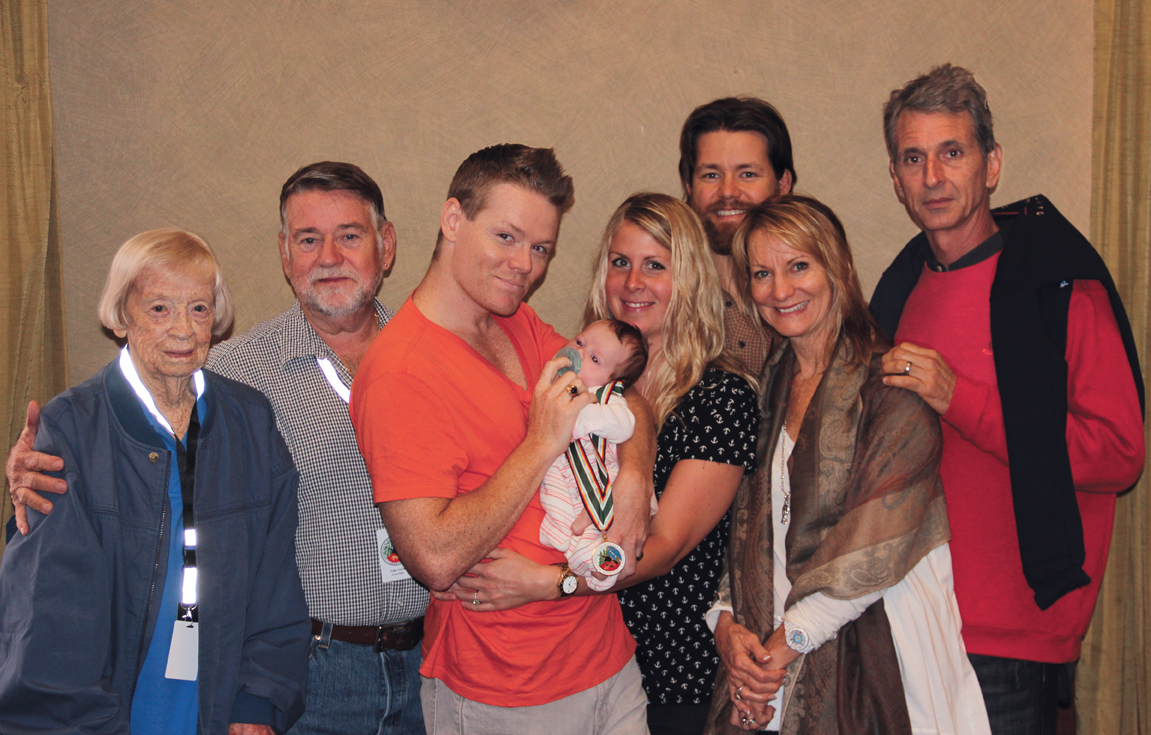
Kate Nolan, John Nolan (son), James Barr ( grandson & Grace’s son), Logan Renee (great grandaughter), Nicole Barr (James’s wife), Evan Barr (grandson and Grace’s son), Grace Barr Wadman (daughter), John Wadman (son-in-law).
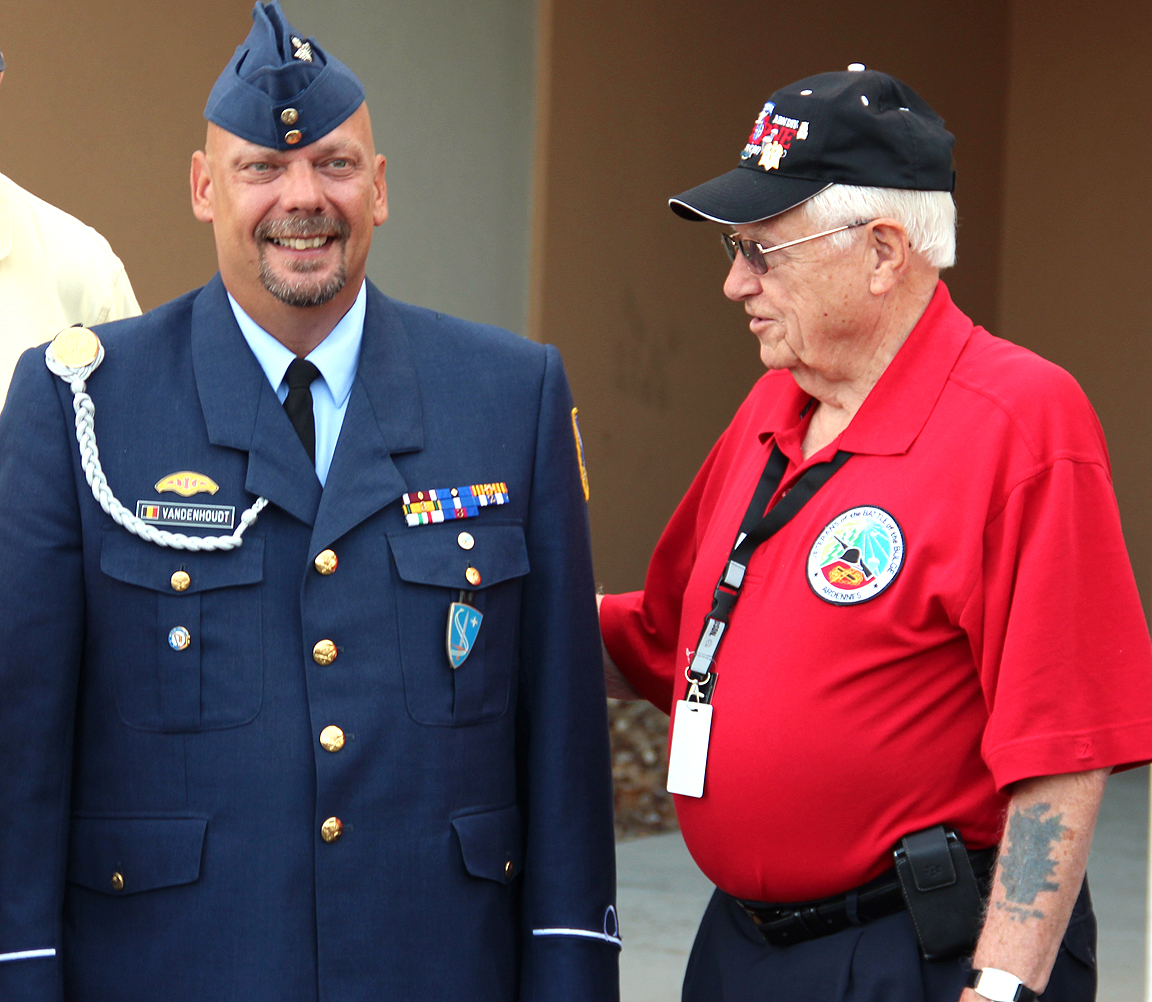
Marc Vandenhoudt Financial Officer, Defense Attache Office, Belgium Embassy Washington DC, Doug Dillard, VBOB PresidentVeterans going to Fort LeavenworthA reunion of Vietnam War helicopter pilots was simultaneously going on at our hotel, and one night at happy hour they saluted our vets. We salute them with mutual admiration.
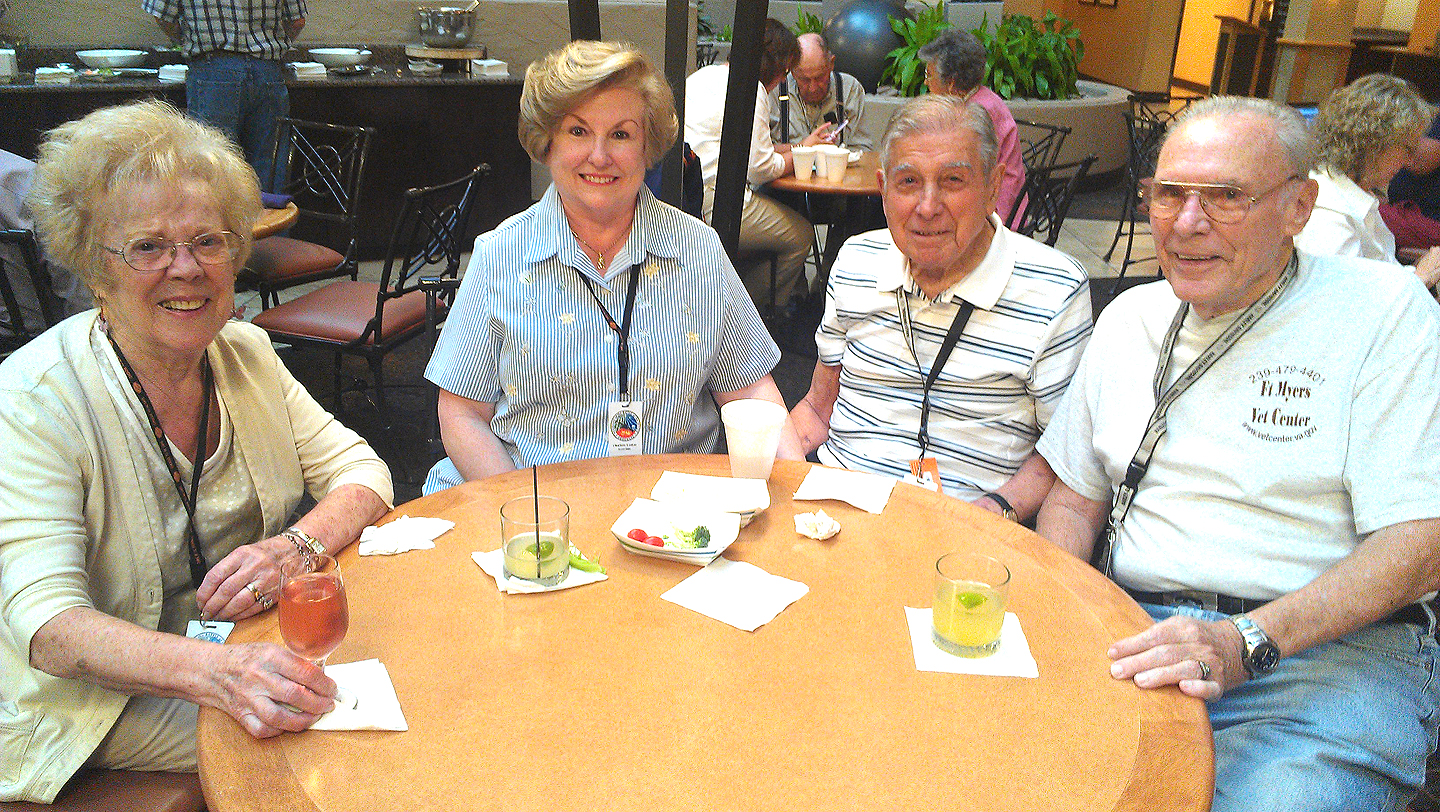
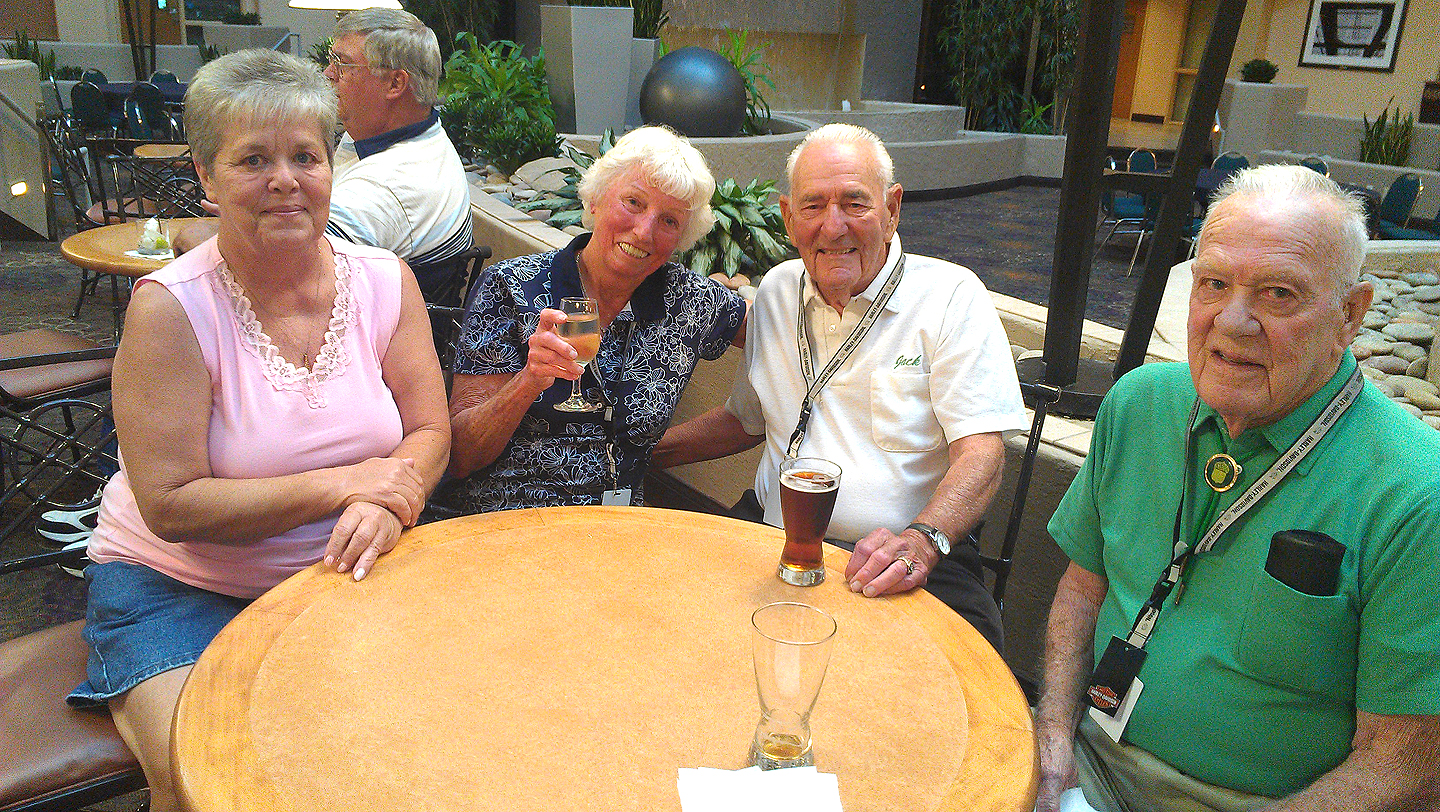
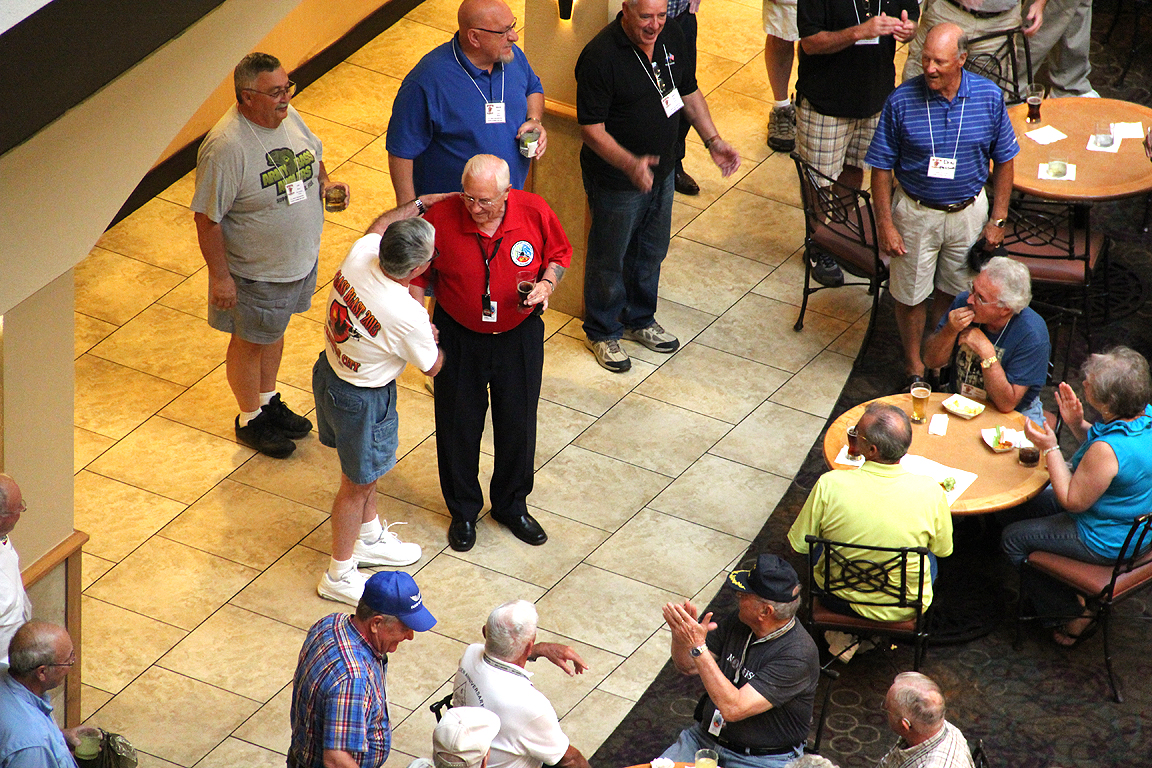
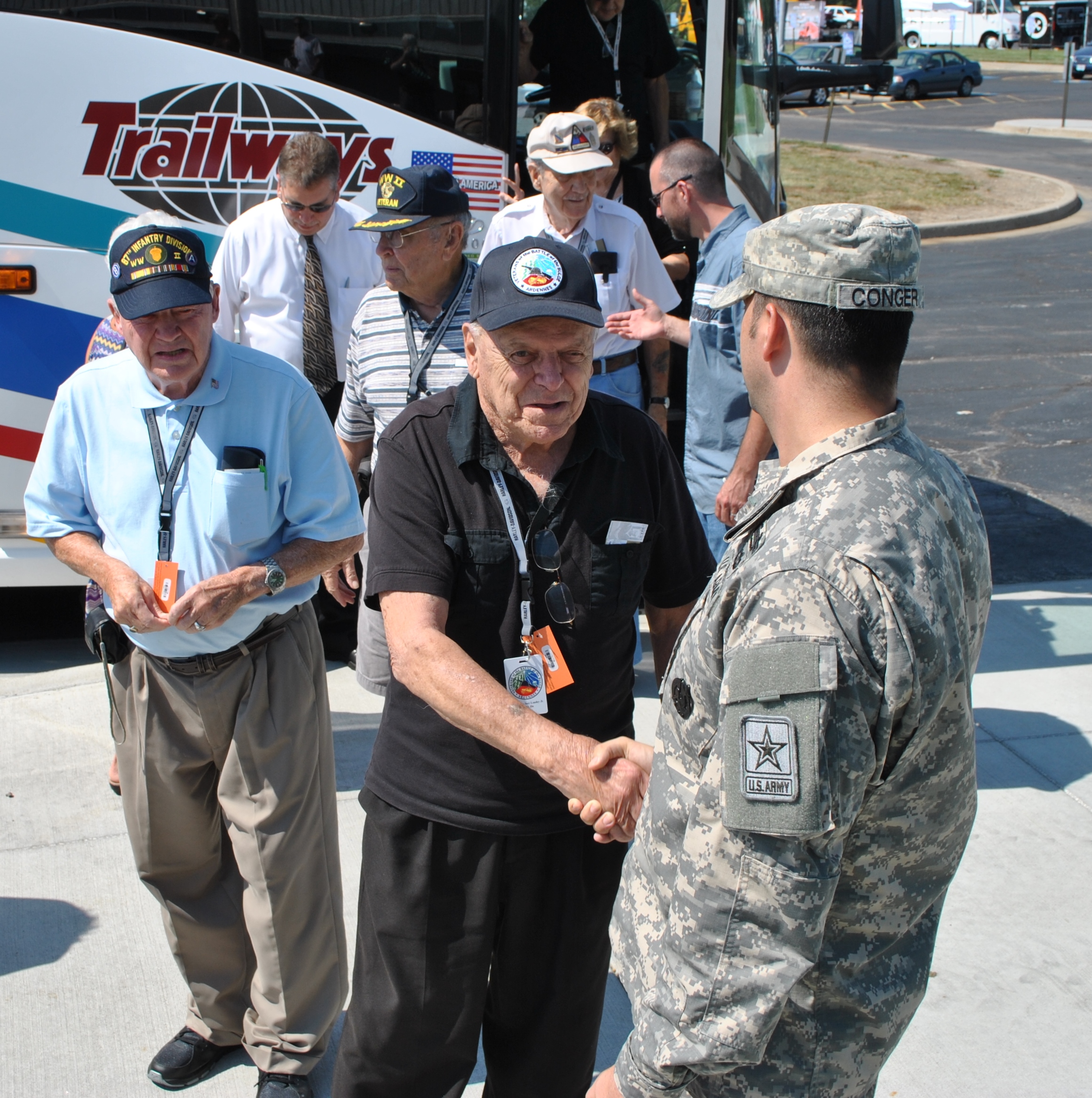
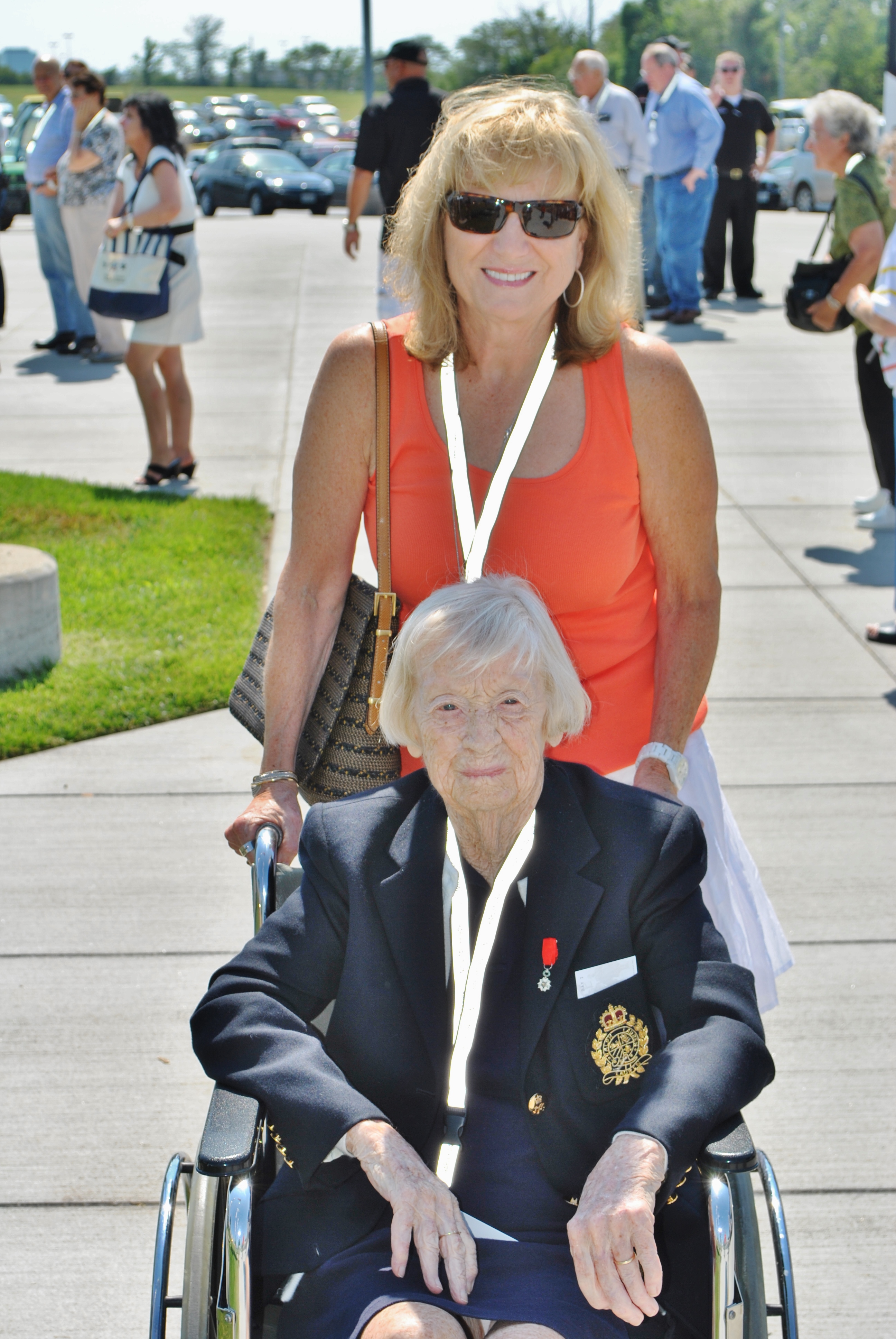
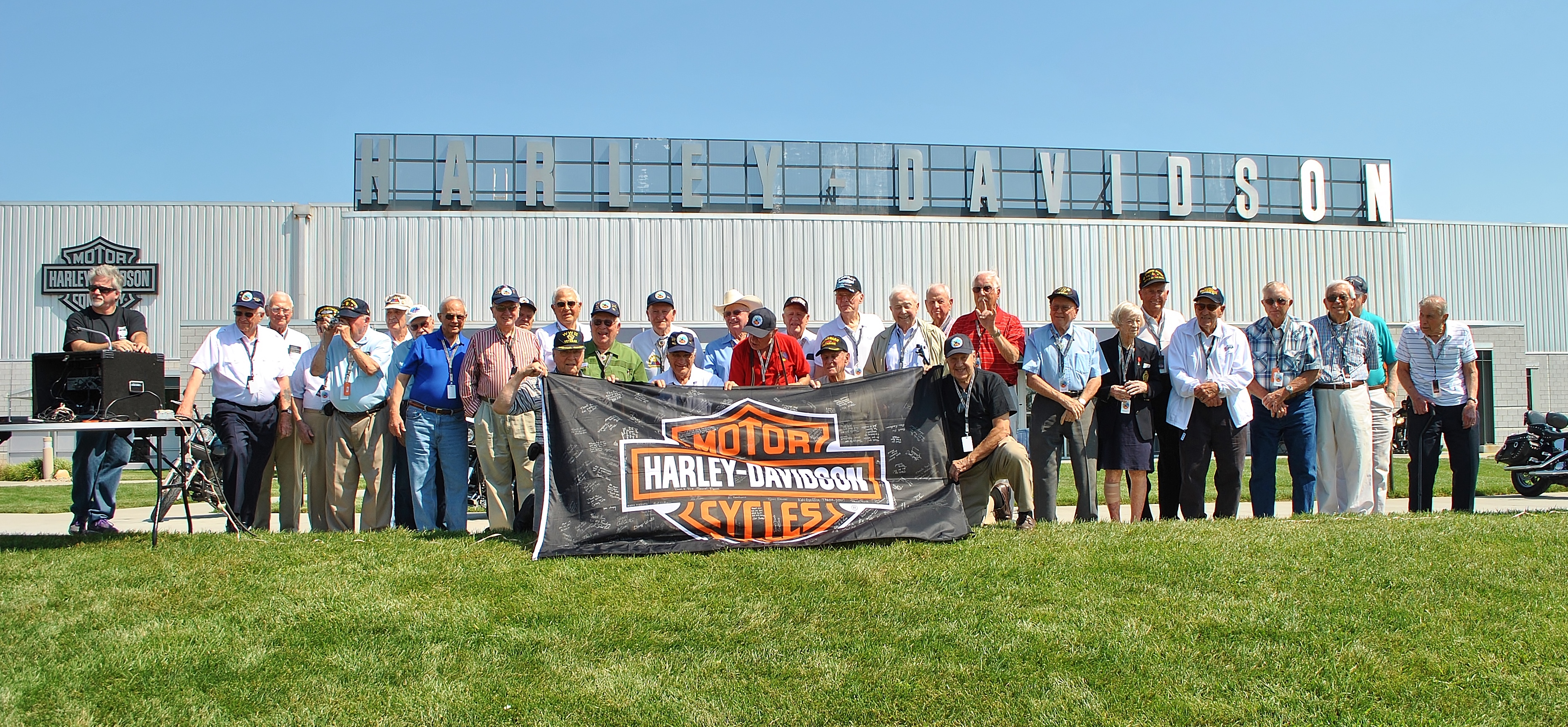
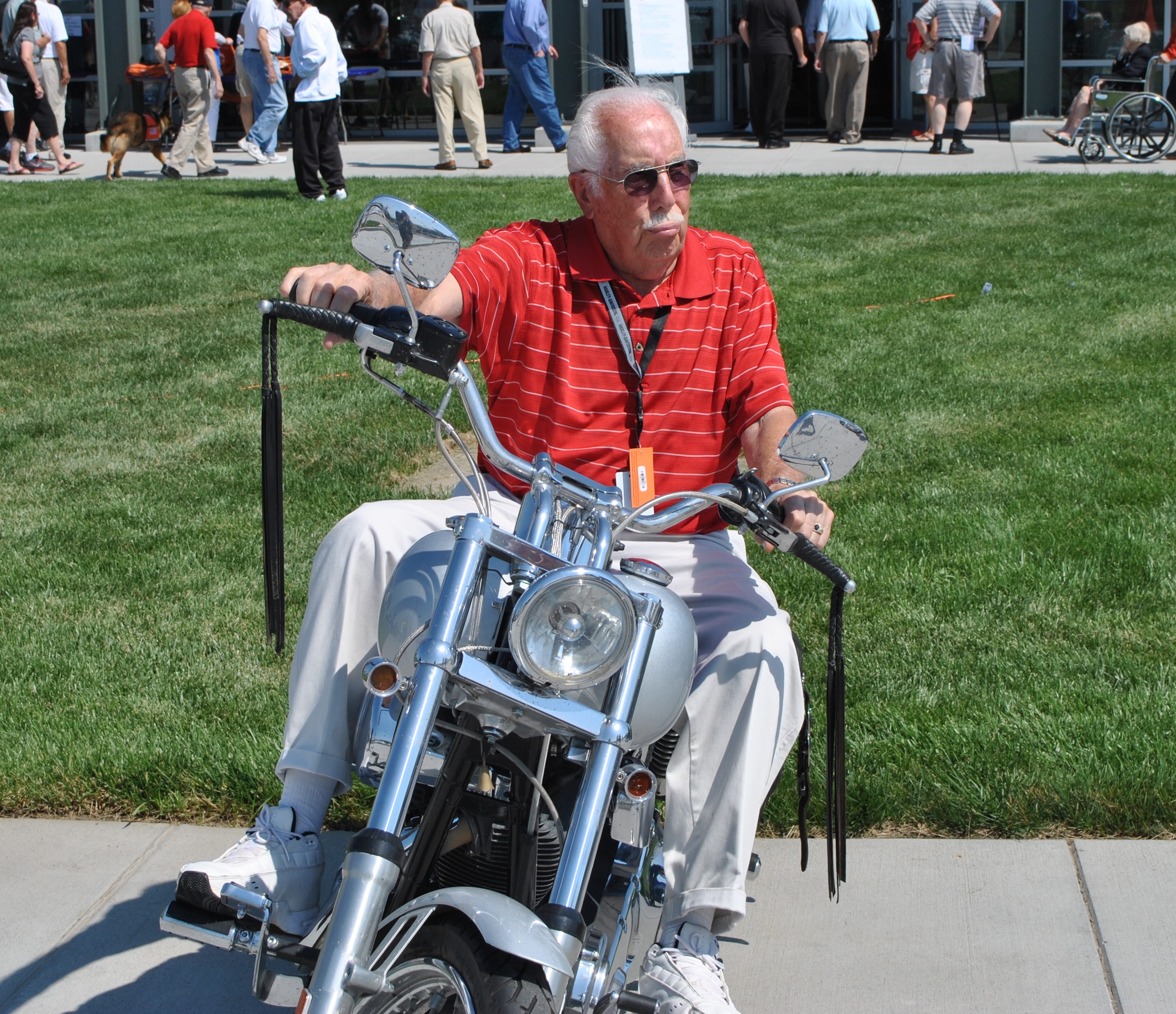
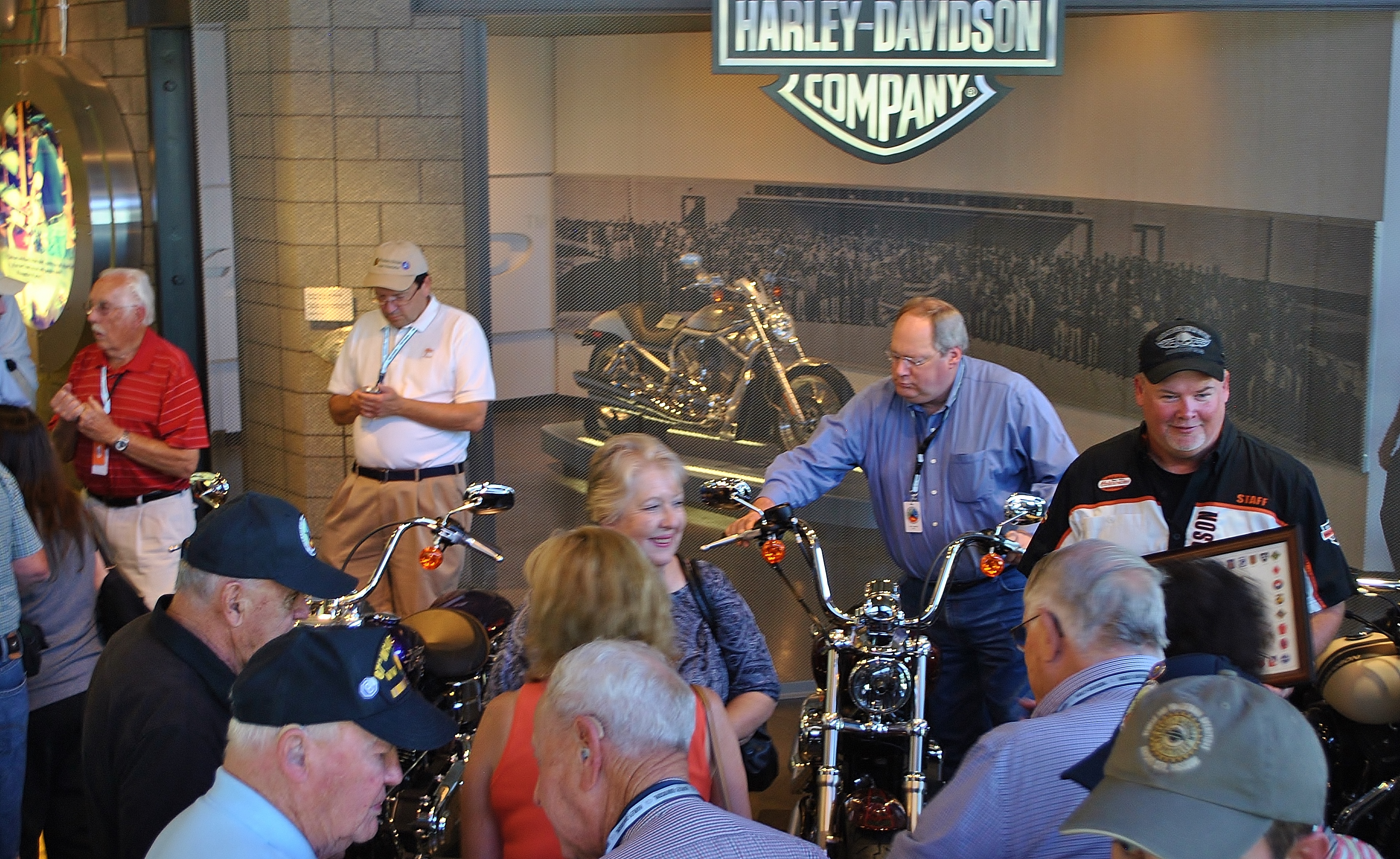
During our 32nd annual reunion, which was held in Kansas City, MO the Harley Davidson people at the Power Train manufacturing facility and the Worth Dealership rolled out the red carpet. In addition to a tour of the plant we were presented with a Harley Davidson flag containing the signatures of the workers followed by a barbeque.
The following is a note from the workers, “I am glad the group enjoyed the visit. I was certainly an Honor to have your group visit with us and we certainly enjoyed hosting them. Personally, thank you for making contact with me so many months ago and allowing me to assist you in the planning. I’ve talked to many of our volunteers working that day and we all have great stories we heard from the group. They are a unique and irreplaceable part of history”.
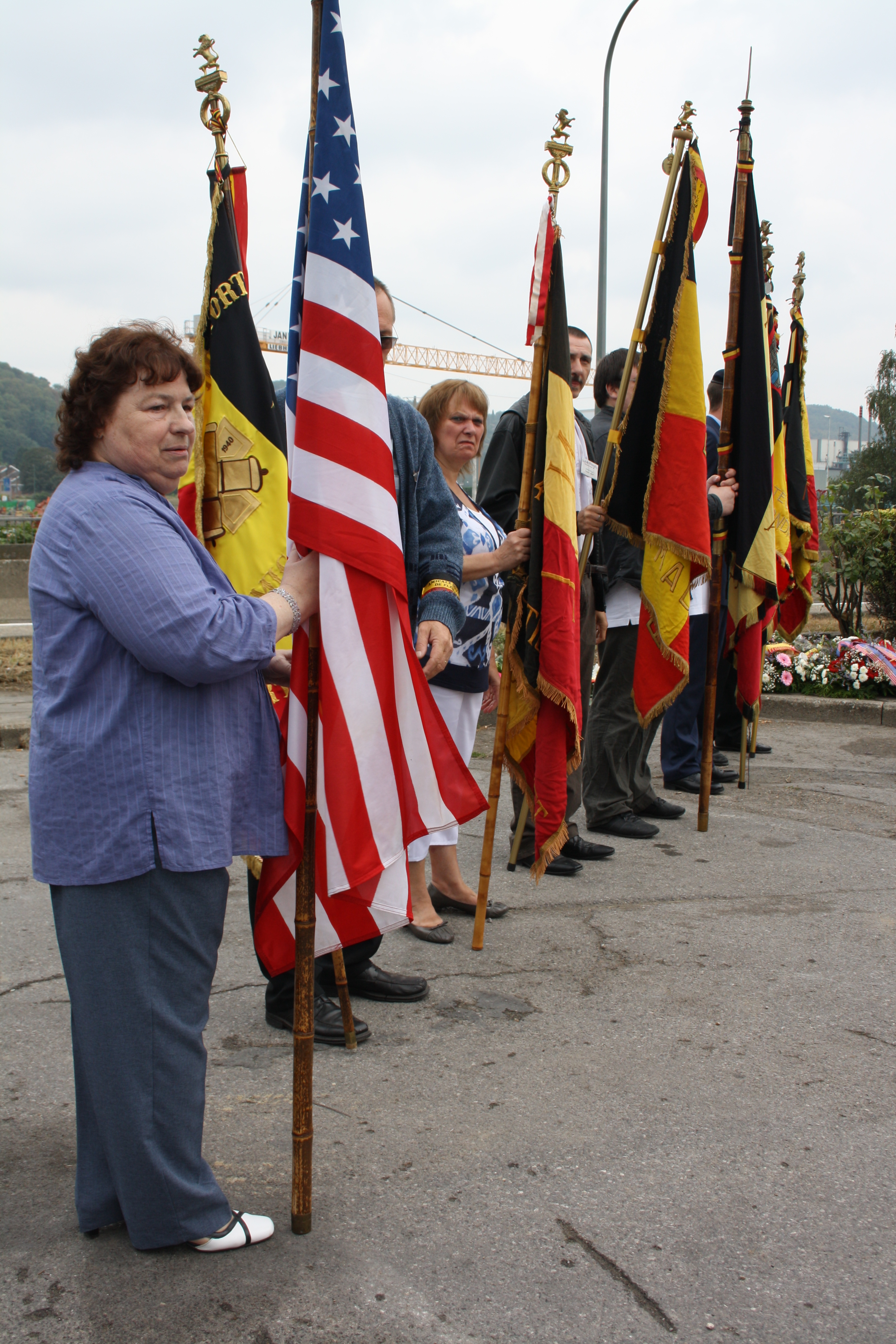
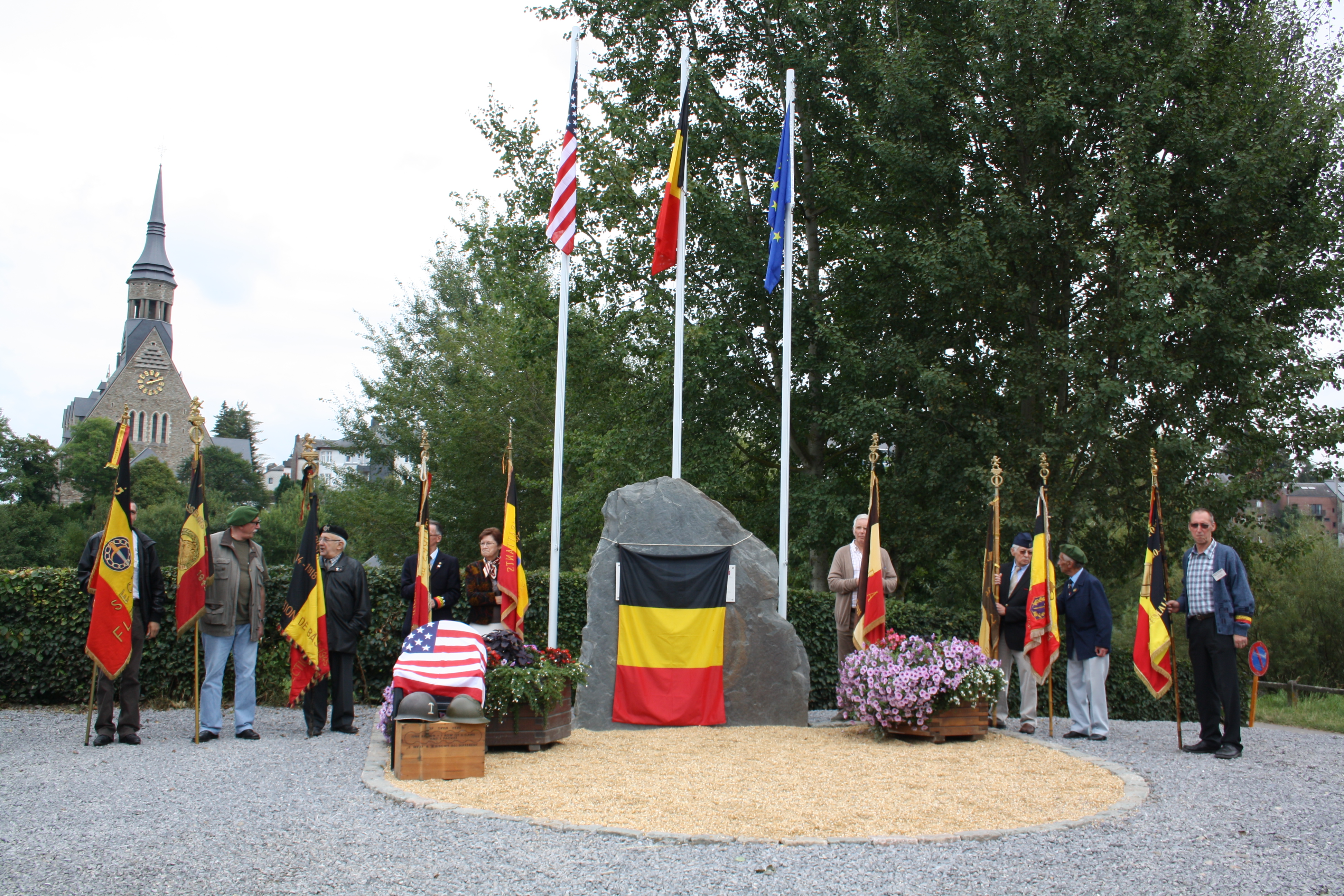
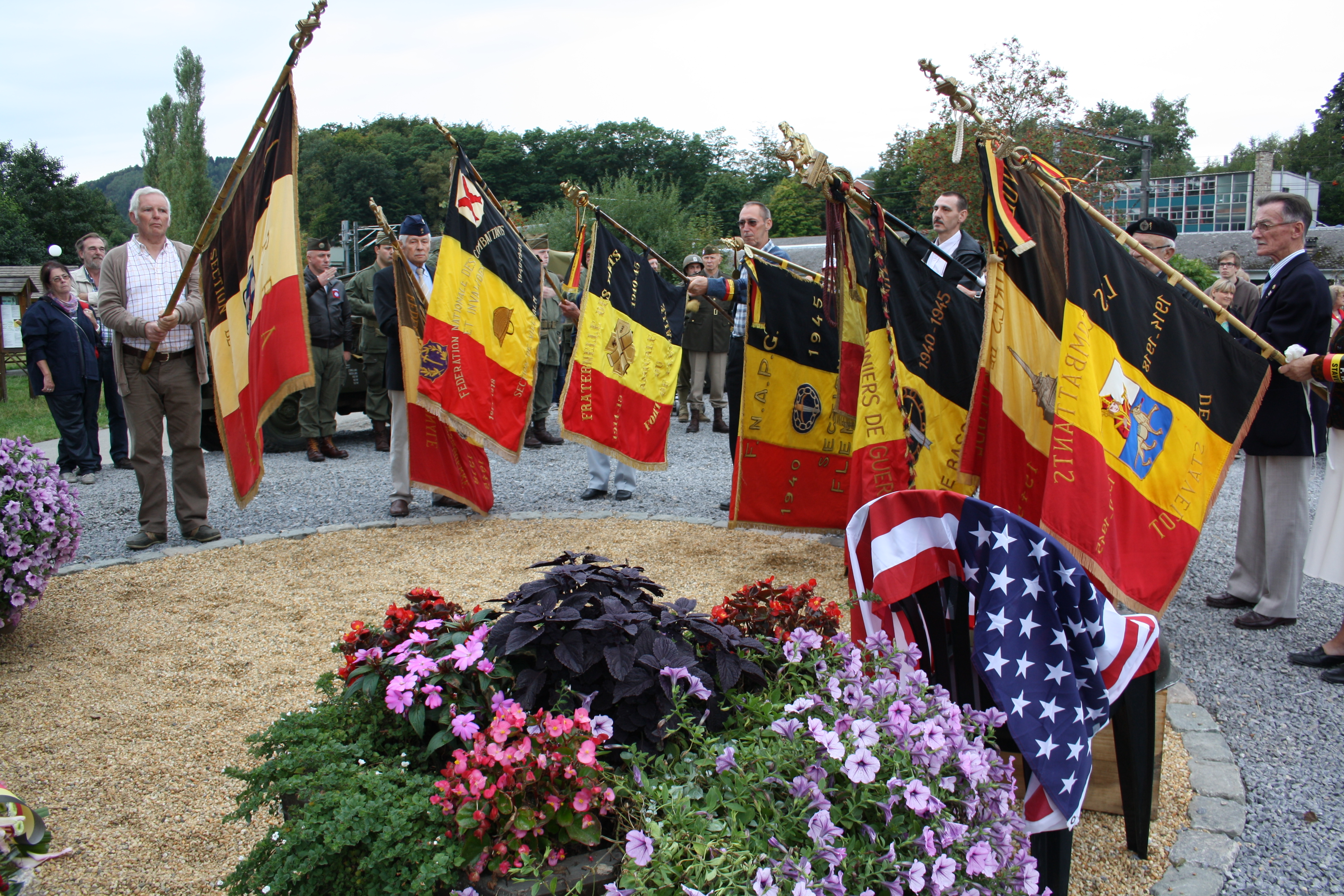
Saturday, September 7th was a day where Belgium people were present to remember the sacrifices of young US servicemen, fighting to liberate Belgium in 1944. Two ceremonies took place that day. The first ceremony was organized in a little suburb of Liège, close to the Meuse River.
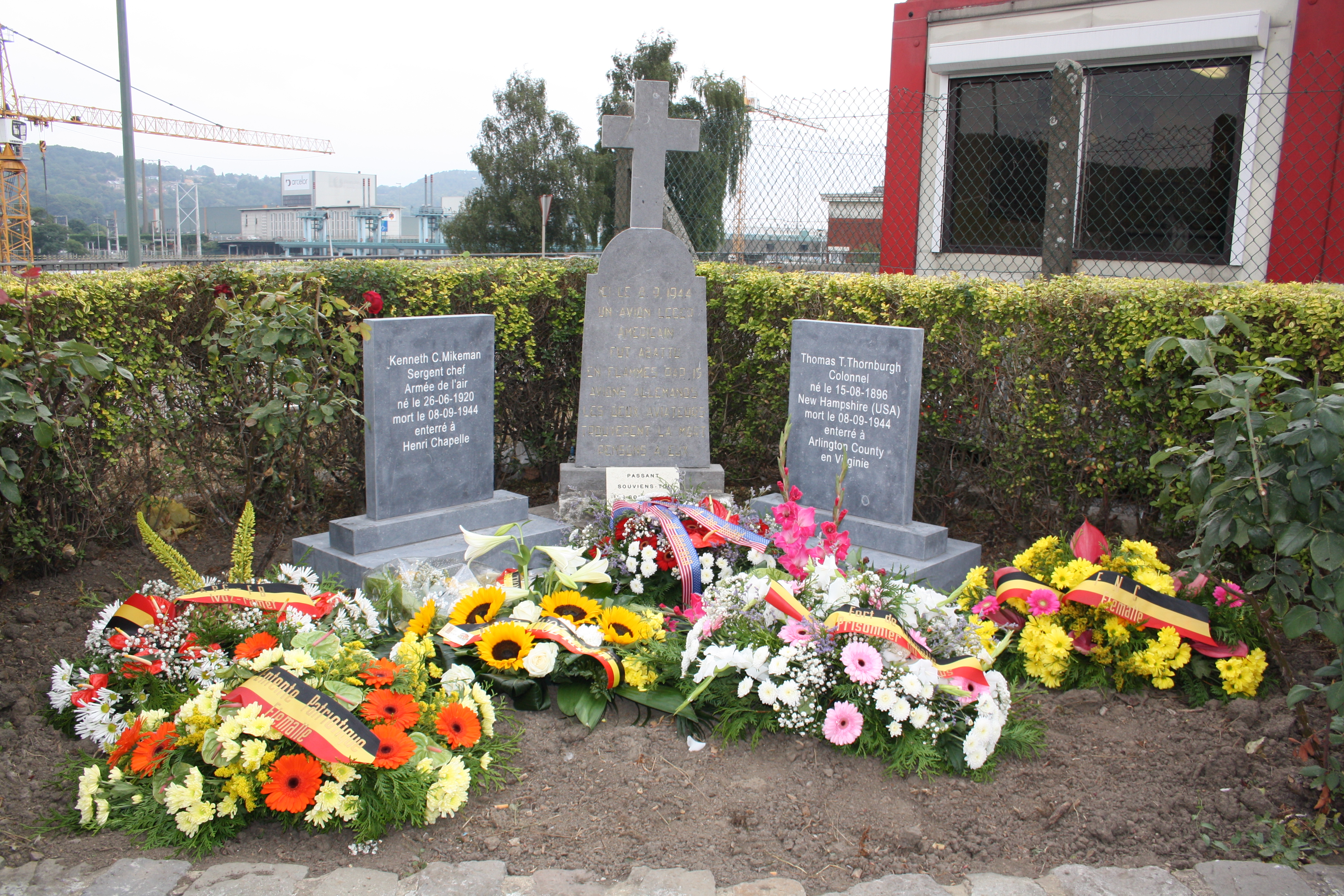
The L-5 observation plane, belonging to the 153rd Liaison Squadron, 67th Reconnaissance Group, flew a mission on September 8th, 1944 over theMeuseRiver area, when it was attacked by +/- 15 Me-109s.
Last year, the Belgian “Fort de Flèmalle” association organized a small remembrance ceremony, but the names of the two killed soldiers were unknown since the day their plane crashed.
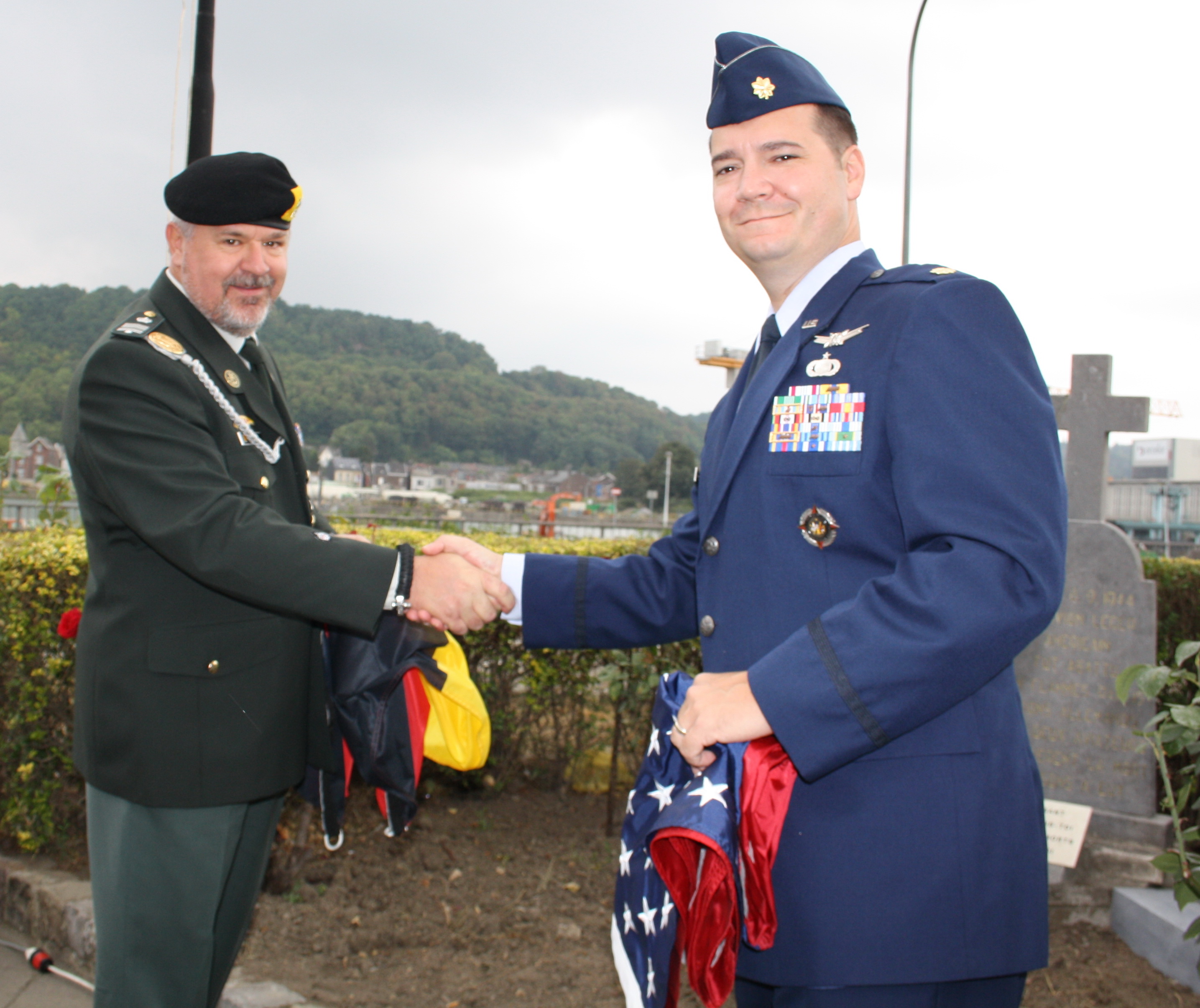
Patrick Brion, a Belgian army NCO, started researching the history and on Saturday, September 7th 2013, two new stones were unveiled, with the names of the soldiers.
S/Sgt Kenneth C. Mikeman, the pilot, still buried at the Henri-Chapelle cemetery in Belgium and LtCol Thomas T. Thornburgh, buried in Arlington, will never be forgotten. In a moving ceremony, in the presence of local dignitaries, Major Sidoti (US Embassy Brussels), Adjudant Patrick Brion and the members of various associations, the monuments were unveiled. The presence of the USAF Spangdahlem Honor Guard added even more symbolism to a great morning of remembrance.
In the afternoon, another important ceremony was held at Rencheux, Vielsalm, a place where during the harsh winter of 1944, the last German offensive struck hard. The 82nd Airborne Division, with its excellent combat record in Italy, Normandy and the Netherlands, was rushed into the Battle in Belgium, starting December 18, 1944.
A and B Companies of 1st Battalion 508th Parachute Infantry Regiment plus attached elements of 307th Airborne Engineers and 319th Glider Field Artillery Battalion, all belonging the famous “All American” 82nd Airborne Division kept the road bridge open for the 7th Armored Division and the remains of the 106th Infantry Division, allowing them to form a new line of defense.
After the safe withdrawal of some 15.000 men across the Rencheux road bridge, the three bridges at Rencheux were blown. The defending units of the 82nd Airborne Division withdrew on Christmas Eve. In January 1945 Vielsalm could welcome the same units again, clearing the area of the enemy.
The monument that was unveiled by the city of Vielsalm and members of the C-47 Club organization shows two plaques, honoring the soldiers who defended the bridge; and a second plaque for the soldiers who were able to cross the bridge. In the presence of many guests and the Spangdahlem Honor Guard, the ceremony came to its end.
A day like this shows that the people of Belgium remain committed to remember the sacrifices of the US soldiers, who came to liberate the country.
Philippe BASTIN RueDr.0lyff19A 4570 MARCHIN BELGIUM phil.bas@skynet.be Member VBOB
Dear Mr Santagata,
firstly,1 hope you and your family have not had problems with the storm and that you are all in very good health !!
My name is Philippe Bastin and 1 live in Belgium, a few kilometers from Bastogne .
Philippe Bastin with Sergio Moirano
I am interested in the history of the second World War .because I have in my family an Gl, Sergio Moirano (80 Th Division) ,who participate in D-DAY June 6 landing on Utah Beach and the Battle of the Bulge with the Third Army of General Patton.
Sergio is still alive and lives of 5 km from my home.
For this reason I searched for my collection of signed photos of U.S. veterans and I would like to have a signed photo of you at the time of World War II.
This will be a great honor for me!
Thank you in advance and wish you a very good health for your future and all the best for you et your family.
BLESSINGS IN THE “BULGE”
by Patrick J. Kearney, 11th AD, 55th AIB
It was December 30, 1944, and the 55th Armored Infantry Battalion was ready to move out. We had just entered Belgium at Florenville the previous day, and had passed through Jamoigne and Neufchateau before arriving at Ebly for overnight encampment.
As we prepared to depart for Vaux lez Rosieres and the front lines, we observed a lone jeep driving the entire length of our column, which stopped at each half-track. When the jeep arrived at ours, we saw that its passenger was our battalion and CCR chaplain, Lieutenant Regis J. Galvin, who was a member of the Order of Friars Minor (the Franciscans).
Chaplain Galvin
Father Galvin was wearing his chaplain’s stole and helmet, and he greeted us all with a smile and some kind words. He then spoke of the work we were about to undertake, and asked everyone to remove their helmets and to bow their heads. Our chaplain then gave General Absolution to the Catholic soldiers, and a blessing to the Protestant and Jewish soldiers, in our half-track. None of his spiritual sons were forgotten before their “baptism of fire” in the Battle of the Bulge!
But our chaplain’s deep concern for our spiritual welfare did not just end on the eve of battle. At lulls in the fighting during the “Bulge”, Father Galvin drove up to our position on the front lines, donned his alb, stole and chasuble, and celebrated Mass for us on the hood of his jeep. His presence on the battlefield was a great comfort to us – as were his prayers for the souls of our buddies who had been killed in action.
August 20 marks the 25th anniversary of the death of Father Galvin. His genuine concern for others was the hallmark of his ministry as an Army chaplain. And his deep regard for others is only surpassed by the high esteem in which he is still held today by those “Thunderbolts” whom he served. Pro Deo et Patria!
By: Chandra Capps Kendall, Associate, Daughter of Chandler H. Capps, Jr. 28th Infantry Division, Battle of the Bulge Soldier (deceased)
Soldiers, Veterans. While we enjoy our everyday activities and lay our head on the pillow each night, they are the reason we can enjoy Freedom and sleep without worry. These are the men and women who defied fear and looked death in the face. Back home, they had families that loved and lost. They had courage, endured extreme cold, fought the perseverance and engineering of the German’s, faced Japanese suicide bombers, POW camps, and countless other odds that were given them. I am talking about our WWII Veterans. We can never repay them for what they gave us, priceless freedom. The average age of a WWII Veteran is 91, and we lose over 600 of them every day.
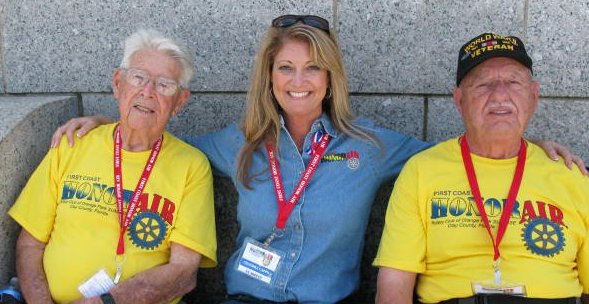
In thinking of how I could do my part in thanking them, I became a volunteer for the Honor Flight organization. This organization takes the Veterans to Washington DC to see their WWII Memorial, Arlington Cemetery, Korean War Memorial, Vietnam Memorial, and the Iwo Jima Memorial. They are often greeted by school children who thank them for their service, 3 star Generals, and often Bob Dole, who will stand as long as he can to greet them, and then return to his wheelchair. This trip is free of charge to the Veteran. I serve as a Guardian on the flight, assisting the Veterans with their needs, whether it is pushing their wheelchair, getting them food, helping them on and off the bus, tending to their needs. The Guardian does not go for free, we pay all our expenses. I would like to say a special thanks to Southwest Airlines, who donate several tickets per flight to the Veterans. These flights are all over the United States, and Southwest is very generous in honoring our Veterans. I have had the privilege of taking some of our Veterans from Georgia, Florida, and South Carolina on these trips.
The Veterans are often surprised that I would take time out of my schedule to volunteer to help get them to Washington. I am amazed by their surprise. They endured the hardships of war, freezing foxholes, enemies firing at them, wounds, taken prisoner, leaving loved ones, seeing their comrades die. I can never feel as though I have done enough, this is the least I can do.
As we reflect on the upcoming Veterans Day, lets remember the 291,557 of our young men and women in their prime who gave their lives in battle on foreign soil during this war, and lay in still unknown graves, and beneath the white crosses, the brothers, sons, nephews, cousins, and future generations that we lost, as well as countless others who were wounded and still carry the scars today, mental and physical.
These are truly great men and women, and when they are gone, a part of our hearts, history, integrity and courage unlike any other will be gone forever.
If you or a WWII Veteran you know has not been to their memorial in Washington, please contact honorflight.org or call 937-521-2400.
Warren Jensen was awarded the French Legion of Honor from the Consul-General of France, Mr. Roman Serman, in San Francisco on May 27, 2013. Mr. Jensen was a gunner in the 793rd Field Artillery Battalion, XIX Corps Artillery. The unit was equipped with M115 8-inch tractor-drawn howitzers. They supported the 2nd Armored and the 29th, 30th and 83rd as well as other Divisions.
Warren landed on Omaha Beach (at Easy Red) in June, 1944 shortly after D-Day. His campaigns included Normandy, Northern France, Ardennes Offensive, Rhineland and Central Europe. He served in the Battle of the Bulge from 16 Dec ’44 – 03 Feb ’45. He was part of the 1st Army and then eventually with the 9th Army. He was in Giessen Germany on VJ Day.
(Note: Warren is the current Secretary/Treasurer of the Chapter. He was also a founding member of VBOB National.)
William (Bill) Armstrong was awarded the French Legion of Honor from the Consul-General of France, Mr. Roman Serman, in San Francisco on May 8, 2013. Bill was in the 26th Infantry Division (Yankee Division) and landed in France at Utah Beach on Sept 7, 1944. The 26th ID was involved in the Battle of the Bulge from Dec 19, 1944 until Jan 25, 1945 while in Luxembourg. They were engaged in combat in six countries, France, Luxembourg, Belgium, Germany, Austria and Czechoslovakia. Bill says he was extremely proud to have served with the Yankee Division.
(Note: Bill is a former President of the VBOB Golden Gate Chapter.)
The Legion of Honor Award was created by Napoleon in 1802 to acknowledge services rendered to France by persons of exceptional merit. It was presented to Warren for his service in the liberation of France.
Article and photos submitted by Doris Davis, Associate
My company C was sitting in Stavelot, Belgium with orders to defend the town. Here we watched the troops of the First Army retreat and knew this alert would not suddenly be removed like it was in Carentan and Avranches, both in France. This was definitely the real thing as our guys had patrolled the area for German paratroopers only a few nights before but didn’t find any. Two hours before the initial enemy attack came support from one company of the 7th Armored Division arrived to help us in the defense of the town.
The attack came from the 150th Panzer Brigade using either American origin or German equipment disguised as American. The shelling started just daybreak and I was walking to chow with Russ Beamer of Dellroy Ohio. He and I left for the Army together and went all through the war together. I asked Russ, “Do you think we will ever see Carroll County again”? He replied, “Carl it doesn’t look very good now”. The fight was continued from early morning until just before noon. At this time and upon advice from the commander of C company we left Stavelot.
I was driving the command car as John Higgins the regular driver was in the hospital and my 2 1/2 ton truck was broken down and led our company out of Stavelot. As we were going out of Stavelot the Americans had set a huge gasoline dump on fire to keep the Germans from getting the gas. Our convoy went about 10 miles to a town called Spa that was First Army headquarters. Our acting C Company commander Lt. Joe F. Chinlund of 1323 Eddy St Chicago, Illinois told First Army headquarters that we had just got shelled out of Stavelot. They told Lt Chinlund that they didn’t know that the Germans had counterattacked and were that close. With those just written few words I believe our current company C was the very first to come in contact with the Germans in the Battle of the Bulge.
Our company C was relieved of its commitment to defend the town of Stavelot by the 117th Infantry Regiment of the 30th Infantry Division. It was rumored that Germany’s highest armored division was in the area and that our company of 150 men would be completely wiped out if we were to become involved with them. This rumor later became history as the Malmedy Massacre was only about 10 miles away. We left half of our equipment and vehicles in the town as we left and we picked everything up a week later traveling through miles of newly won German territory.
Wesley Hillary was later awarded the Silver Star for his action in the battle. Under intense enemy fire and in an exposed position he continued to operate his 50-caliber machine gun and destroyed three or four enemy half-tracks, knocked out several machine gun positions and many of the enemy’s personnel. Part of the company was now with the 47th Infantry Regiment near Monschau and they prepared a bridge for demolition and guarded it. They were under enemy artillery fire and contacted enemy patrols on many occasions. They also took positions in some other bridges near Arville and guarded them against the Northern thrusts of the German Sixth Panzer Army.
Able Company held a barrier line which ran from south of Liege to Arville to the vicinity of Jalkay south of Spa along with a third section of Baker Company. The line was under attack by enemy aircraft constantly. H and C companies water points which were listed as lost or now located and found to be supplying water for the first and second infantry divisions. Company C had moved into buzz bomb alley at Verviers. The town was under fire by the German railroad guns and approximately 150 German paratroopers who spoke English and carried forged documents disguise as Americans, were in the city.
On Christmas day as the 101st Airborne Division battled in encircled Bastogne, the battalion was relieved of its assignments to the First Army and V Corps and was sent to the Third Army’s VIII Corps. By the 27th the move to the southern flank of the bulge was completed and A company reinforced a bridge at Bokair to carry a class 40 load. The following day the battalion CP was moved to St. Renig, France.
On December 29 our battalion went into direct support of the 87th Infantry Division and the battalion CP was moved to Bouillon, Belgium and later to Herbeaumont, Belgium. Work with the 87th consisted of just about every type of engineering work possible. B Company quickly constructed a barrier line to protect the divisions left flank on New Year’s Day 1945. A company constructed two bridges both over the divisions MSR. The gap was 40 feet the first day and the remaining 20 feet was bridged with a single span timber bridge with a 30 class capacity. They teamed up with the infantry for the construction of a second bridge, the span was 110 foot class 40 triple single Bailey bridge. Extra outposts were setup between the bridge and the enemy. Company C and their direct support was given the job of clearing the roads from St. Hubert to the front. The Germans had just withdrawn from the area and as usual left minefields, obstacles and booby-trapped items. Besides the roadwork, roads were covered with thick layers of ice and snow. During this operation in this area T/5 Leland Aring of company C was awarded a Bronze Star for his work in clearing booby-trapped items.
Baker Company continued to work on the divisions MSR during this period. The entire unit was constantly with the members of the 87th division. The 87th pulled out alone on January 17 and our battalion was now to give support to the paratroopers of the 17th Airborne Division. This was an extremely hard task due to the fact that the divisions engineers the 139th engineers A&B battalions had few trucks or heavy equipment. This left the entire responsibility of the job ahead directly to the 202nd Engineer Battalion. While with the 17th Airborne Division our division constructed two bridges in the forward area a 30 foot class 40 single Bailey bridge by company C on January 21 and a 60 foot class 40 double single Bailey on January 27 by company B.
The same problems that were faced when with the 87th were again faced with the 17th. The hardest job was clearing the remains of the city of Houffalize. The city when in enemy hands was under heavy attack by allied aircraft and the roads were impassable because of huge craters and rubble from bomb buildings. Heavy snowdrifts covered the entire area and besides all these obstacles mines had been placed throughout the entire area. A company was in direct support of the division and that it had established their CP in Boulangerie, Belgium and the battalion advance CP was located in the same town.
All other companies worked constantly in the divisions’ forward area under enemy observation and mortar fire. In one case Andy Yoder of A Company was credited with taking an entire town alone with his bulldozer. He was busy doing his work, as advanced elements of the 17th Airborne Division move cautiously in. Relieved of duty of the 17th Airborne Division our division continued to work in the VIII Corps area until February 5 when it was reassigned again to the 9th Army and attached to the XVI Corps, 1153rd engineering combat group.
Suffering that the men endured during the battling in the Ardennes forest is something that cannot be described to its fullest extent. The men themselves are the only ones who will ever know just how miserable life was during that time. No matter how much clothing was put on it was still impossible to keep warm. Trench foot and frostbite were common
The Battle of the Bulge is now finished and what had started out to be the German’s greatest victory had turned into a smashing defeat. The American forces had suffered terrible casualties some 80,000 men were included in their casual list; the Germans have lost some 90,000 soldiers in the campaign which made our heavy casualties look a little less terrifying
In closing please forgive me if the article I have written to you about the events of the 202nd Engineer Combat Battalion played in the Bulge seems a little too long. You see I’m proud of everything our battalion did during this historic period of time besides being honored and thrilled with what my own see company did and what part I had a
I’m proud and honored to have served.
Help keep America free!
Cross The Rhine With Dry Feet – Courtesy Of The 9th Armored Division
Bobby Cobb
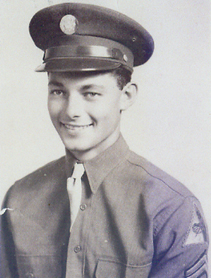
December, 1941, shortly after December 7th, Pearl Harbor Day, Bobby enlisted as a volunteer for which his mother had to signed for to enlist. Was sent to Camp Beaugard, Louisiana just south of New Orleans. The first week of January, 1942, was sent to Ft. Riley, Kansas and arrived on a cold winter snow day with 2-4 inches on the ground to CRTC (Cavalry Replacement Training Center) the old horse Cavalry. After several months of training, was sent to one of three main camps of Ft. Riley – – Camp Funston. We had been in training for the 2nd Cavalry Division, which was to be sent to the Philippine Islands to reinforce the 1st Cavalry Division. The Philippines fell to Japan – – this changed things.
2nd Cavalry Division started the movement to armor. We were organized as the 92′”‘ Cavalry Reconnaissance Squadron with horses, jeeps, and 6-wheeled half tracks. Later, we became the 89th Cavalry Reconnaissance Squadron Mechanized, part of the 2nd Cavalry Division, assigned to the 9th Armored Division and began to train in all seriousness.
We ended up in full desert training from there the 9th Armored Division was sent to the swamps of Louisiana for training in 1944 – – towards New York for shipment overseas. On the trip to New York area, “E” Troop, the assault gun (75M) howitzer, light tank, designed for speed-close infantry support and street fighting) was notified that we were now on DS – – meaning Detached Service to the 99th Infantry Division which was in England for the invasion of Europe.
From New York, we (“E” Troop 89th Cavalry) boarded the Queen Mary for overseas duty and landed in Glasgow, Scotland – – (2&1/2 days) – – boarded the famous “Flying Scott” train which could really fly non-stop South Hampton, England, a seaport in southern England and 18 miles across the English channel to France. On arrival, “E” Troop by platoons were placed in tents with 12 cots for beds with a large coal-fired stove for heat. From here “E” Troop went north in England to a very large open field which us assault gun tankers were told to pick out our tank, clean the preservation coating from rust, fuel the tanks, with trailers, for the return trip to the area near South Hampton. That field was loaded, row after row, with our tanks as far as the eye could see.
On arrival, we loaded the tanks and trailers with fuel, ammunition, 75MM, 50 caliber machine- gun ammo and Army “C” rations for a week for a crew of 4, plus water cans. June 6th, 1944, “D” Day, headed for France – third wave. Landed 3 degrees off course – – landed at the point which divided Omaha and Utah beachheads. Headed inland towards St. Lo, France (hedge-groove country) where the battle for St. Lo ended in final victory after four weeks. Stalemate of battle after invasion of France followed – – finally the American Army broke out of stalemate and a running gun battle continued for France wherein over 400,000 German Troops were captured and we, “E” Troop of the 89th Cavalry Reconnaissance Squadron ended our DS (detached service to the 99th Infantry) and rejoined our Squadron and the 9th Armored Division at Metz, France near the border of Germany. Regrouped, took on supplies and toured the French Maginot Fortress facing Germany.
Later, the 9th Armored Division was assigned the area along the border of Luxemburg/Germany, Eternack the Southern end – St. Vith on the northern end, a 60 mile stretch. “E” Troop was stationed at Bovange, Luxemburg. Midnight of December 16,1944, we, the 1st Platoon tanks of”E” Troop DS service assigned to “A” Troop of the 89th Cavalry Reconnaissance Squadron for the duration of the war, were ordered to Etenternach, Luxemburg, the southern end of the “bulge” to help stop the German advance south as the great “battle of the bulge** had begun. Following this stop, my tank and my companion tank commander, Floyd Nichols, were to requested to rejoin our assigned “A” Troop if we could find them as they were scattered from hell to breakfast as were so many other members of the 89th Cavalry & 9th Armored troops. Our two tanks joined others scattered Troopers on a hit and run retreating battle towards Bastone, Belgium where we joined the besieged troops of Bastone. After the seige at Bastone was broken and the beginning of the end of the “Bulge” Battle, fresh troops from the US took up the battle to push the Germans back into Germany, word was spread throughout the battled area that the 9th Armored Division troops were to gather in the area SE of Leige, Belgium, to reorganize, received replacement men, equipment, and supplies. Afterwards, the 9th Armored Division received its orders to go the attack once again. The target industrial city of Colonge, Germany.
The battle for Colonge lasted about 4 days and, at Midnight, my tank and my sister tank commander, Floyd Nichols, led Combat Command “A” of the 9th Armored
Division, on our continued attack south n the West bank of the Rhine river. At Midnight, March 4th, 1945, my tank and sister tank of Floyd Nichols, circled the town of Remagen, Germany, and continued on into the valley to the Rhine river where we found the Lundenburg, passenger/railroad, bridge still in tack across the Rhine River. We notified our platoon leader, S/Sgt Bill Douglas, by radio of our position and that the bridge was intact. We were told to hold our positions until we heard from him. 2&1/2 days later we met the lead elements of the 27th Armored Infantry Division of the 9th Armored Division whose orders were to take the bridge.
After we crossed the Rhine river, my tank and my sister tank of Floyd Nichols, led Combat Command “A” of the 9th Armored Divison south on the East bank of the Rhine river fight gun battles along the way to Koblenz, Germany to help General Patton get across the Rhine river. Afterward, our two tanks led Combat Command “A” towards Limburg, Germany where a good battle ensued. Afterwards we pursued north, fight small battles on the way to the industrial city Leipzig where a great weeks battle followed. We captured 122 German 88 Artillery guns – that is how hard they defended the city. This was the last big battle of the war for us.
We then headed due south to meet the Russians, which we did. Later, continued our march south, our two tanks leading Combat Command “A” towards Czechoslovaks where Combat Command “A” setup headquarters in the resort city of Carlsbad, Czechoslovaks. My tank and sister tank of Floyd Nichols continued on east where we ended up in the capital city of Prague, Czechoslovaks where we received word to “cease fire” the war has ended. The celebration was on.
Later, “E” Troop (my Troop) was assigned to Bayreuth, Germany, due west of Czechoslovaks, the home of the famous German Lica camera factory, which was empty, as our city of occupation. Here, we found 2200 displaced Polish men, women, & children which I later be came in charge of and finally, after several months, I escorted them to Warsaw, Poland.
As the occupation continued and men started to leave and return home as they became eligible, I was promoted to First Sergeant. Later in 1945,1 was directed to Camp Strike near the port of Cherburg, France and was in charge of soldiers scheduled to return home. I later got to schedule my own return to the US and aboard the Cruiser USS Portland. On arrival in New York City, I was put in charge of a Troop train of soldiers with their discharge papers and saw that at designated stops (4) I made certain that each received his discharged papers and left the train. The last stop camp Robinson at Little Rock, Arkansas where I caught another train to Oklahoma City and a cab to home. All this was in December, 1945. January 8, 1946, Louise and I were united in marriage in El Dorado, Arkansas and settled in Oklahoma City.
Enclosed is a copy of some of my achievements in service.
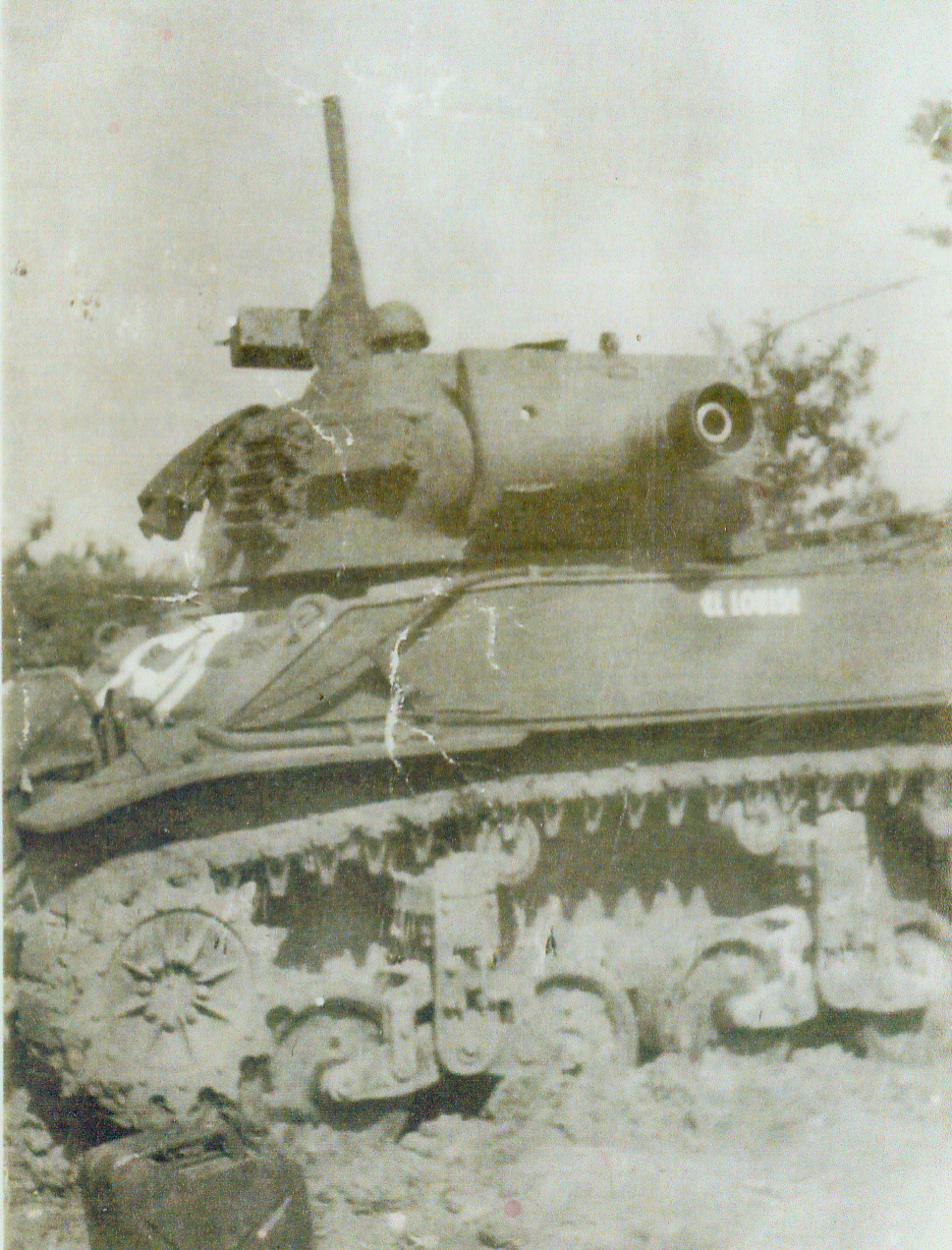
I never lost a tank or crewmember during the war. (the tank had a lot of battle scars)
1941 Entered Military Service at Shreveport, Louisiana Mother Required to sign for my entering the service
Honorable discharged as First Sergeant Dee. 1945
Received the following during four years of service:
3 Bronze Stars for bravery under enemy fire
1 Purple Heart – Germany 88MM shrapnel North of Limburg, Germany
Presidential Unit Citation for The Battle of The Bulge
Awarded Government Citations for Service By: The Country of Luxemburg, The Country of Belgium, The Country of France
Our tank after the Battle of the Bulge
PS: In four years of service – – two years of training together my tank crew was
Walter Bagley – – Tank Driver – – Pennsylvania; Odell Meyers – – Gunner – – Iowa;
Joseph Beneke – – Gun loader and manned the 50 caliber machine gun – – New Jersey; And – – Bob Cobb – – Tank Commander