All posts by admin

Gerald Pankop Remembers the Bulge

Pankop recounts combat experience at Battle of the Bulge
By Danielle Smith, The Paper-Wabash, IN – June 1, 2011

Gerald Pankop, 85, is one of the lucky men that returned home after spending time in combat at the Battle of the Bulge in Belgium during World War II. After being injured by a mortar, he was honored with the Purple Heart and Bronze Star for his bravery and sacrifice. Pankop voluntarily enlisted at 18 years old in 1944. “They rushed me through training and sent me over to the Battle of the Bulge,” Pankop said. “They needed men because they were losing so many.” Pankop entered the First Army, 99th Division, 393rd Infantry, as a buck private and came out as a private first class. He explained that part of the reason he moved through the ranks so quickly is because they were losing soldiers at such an alarming rate.

“There are 2,000 men in a regiment, we lost about half of our men,” he said. Pankop credits his survival to his short stature. He was offered an opportunity to make sergeant, but that would have required him to move to the front of the platoon. Surprisingly, the officer allowed him to decline the offer, which earned him the right to stay in his safer position in the back. “I was short so I was always in the back, sergeants are up front in danger,” he explained. Short men were placed in the rear of the platoon because they tend to walk more slowly. “That’s probably what saved my life is being in the back all the time.”

During his time in Belgium, Pankop only received three hot meals, two of which were boxed meals. The third was on Christmas Eve. An officer sent Pankop and other men to a church where they were served a full Christmas dinner, complete with steak and mashed potatoes. Following the meal, Pankop complimented the cook. “I said ‘That’s the best meal I’ve had for I don’t know how long’, and the cook said ‘Oh, you like horse meat, huh?,” Pankop recounted. A disbelieving Pankop looked behind the church where he was greeted with the sight of the heads, skin and bones of the horses they had just consumed.

Pankop also recalled seeing a steam-powered truck traveling up a hill in Belgium. The truck had wooden wheels and a boiler in the back to contain the fire that powered it. Pankop and his companions watched as the driver exited the truck and threw more wood on the fire to allow the truck to continue up the hill. “I said ‘Man, we don’t have anything like that back home,” he recalled.

During Pankop’s time in Belgium, they slept in snowdrifts and never had an opportunity to change their clothes. He was there in December during intense combat. He recalled an instance where he and some comrades were standing nearby while some , searched a recently captured German bunker in the ground. “There were seven or eight of us standing outside leaning on our rifles and the Germans threw a big mortar shell in there and it knocked all of us on the ground. I had two phosphorous grenades and it knocked the bottom off of one of them. Phosphorous burns you something terrible, you can’t hardly stop it. I was laying there and I hurt so bad I couldn’t even throw it away and I kept hollering for someone to come get it. Finally one guy did come over and grab it and throw it as hard as he could,” he recounted. “After things quieted down a little bit the medics came up and they only took two us and left the rest of them lay.”

After 30 days in combat, Pankop returned home. “There’s a Henri- Chapelle Cemetery in Belgium that has 9,000 of our troops that got a Purple Heart but didn’t get to come home. I don’t know why but I think of that so often. I guess I just got a little blessing along the way and I got to come home and get married and raise four children,” he said. Much of Pankop’s war memorabilia is on display in the Northfield Jr./Sr. High School’s library.

Belgian Royal Family Honors VBOB

H.R.H. Prince Philippe and H.R.H. Princess Mathilde of Belgium, and Major General Michael S. Linnington, Commander of the Joint Force Headquarters National Capital Region participated in a wreath laying ceremony at the Battle of the Bulge Memorial in Arlington National Cemetery on Sunday, June 26, 2011. The event honored the fallen heroes in America’s largest land battle in history.

The Crown Prince and Princess spoke individually to all Bulge veterans present in recognition of their service to their country and Belgium during World War II. The Prince, the next heir to the throne, was very cordial and warmhearted in his remarks to the Veterans and responsive to their comments.

We at VBOB were indeed pleased at our large representation of Veterans and Associate Members of the Veterans of the Battle of the Bulge along with their friends and family who also attended this special event.

Also present for the ceremony were H.E. Steven Vanackere, Deputy Prime Minister of Belgium, Ambassador and Mrs. Jan Matthysen, Military Attaché Mike Delobel and other Belgium dignitaries.

The Prince and Princess participated in a public wreath ceremony at the Tomb of the Unknowns prior to the commemorative event at the Battle of the Bulge Monument in Section 21 of Arlington Cemetery.

The royal couple came to Washington with a delegation of 300 Belgian business men to help create investment and trade for Belgium. The princess married into the royal family in 1999 and now lives the life of a modern monarch, raising four children, embracing causes, and preparing to be queen one day.

We at VBOB are indeed proud to have this famous young couple as our friends.

J. David Bailey, National President, VBOB

The following photos were submitted by Robert Rhodes.

Prince Philippe presenting the wreath
Princess Mathilde, Prince Philippe, J. David Bailey-106th ID, George Chekan-9th ID
BG Mike Delobel, Defense Attache, Defense Attache's Office, John Bowen, Associate
Major Patrick De Smedt, Assistant Defense Attache, Defense Attache's Office, Maurice "Dave" Bach-84th ID
1MC Luc Leys, Warrant Officer, Defense Attache's Office, Dee Paris, 14th Tank Bn, 1MC Domenique Van Eeckaute, NATO Sea Sparrow
Mr. Steven Vanackere, Deputy Prime Minister of Belgium & Minister of Foreign Affairs, J. David Bailey-106th ID, George Chekan-9th ID

Golden Gate Chapter, CA–Memorial Service

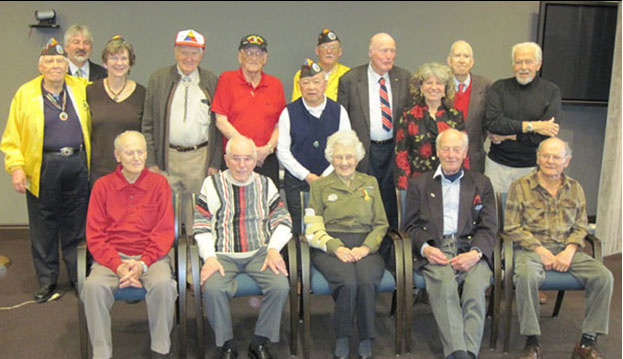
The Golden Gate Chapter held their Memorial Service on December 11, 2010 at the Fort Miley (SFVA Medical Center) in San Francisco, CA.

(Standing left to right) Martin Turkington, Honorable George Schmit (Luxembourg), Doris Davis, John P. Althuizen, Warren Jensen, Dean Woo, William Armstrong, John H. Rousch, Dame Rita Bral (Belgium), Tom Morgan, John Vassalo
(Seated left to right) Russell Hardeman, Mort Tallen, May Alm, Bob Bee, George Shilla

Student Interviews Richard Wheeler

Interview: Survivor of the Battle of the Bulge
by Anna Davis

I have always been intrigued by the people who lived through and survived World War II. I enjoy watching the HBO series “The Band of Brothers” directed by Tom Hanks and Steven Spielberg. A particular battle that was life threatening for many American troops was the “Battle of the Bulge.” This particular battle took place in Belgium and included 52 days of combat. The troops who fought during this battle were not properly equipped for the weather and the temperatures were extremely cold. I wanted to know the details about the conditions of the “Battle of the Bulge.”

I casually know a man who attends my church named Richard Hugh Wheeler. Every Sunday, he is the gentleman who greets and opens the doors for everyone. By purely looking at his physical appearance, I would have never guessed he was 86 and a WWII veteran. When I learned he actually survived the “Battle of the Bulge,” I knew he was the perfect candidate for my interview. When I asked if he would oblige me, he was very enthusiastic. Mr. Wheeler was a credible source because he was a participant in this renowned event and lived through a very challenging time period. The interview took place in person on March 3, 2011 at the Wheeler residence.

The first couple of questions I asked Mr. Wheeler were background questions to lead up to the “Battle of the Bulge.” I wanted to know prior experience, skills, and the branch of the army he served. He told me he was 20 to 21 years old during the war. Mr. Wheeler was a trained paratrooper with a total of nine jumps, one into combat. He chose to be a paratrooper because it paid $60 more per month than other positions. Mr. Wheeler said his mother specifically told him not to be a paratrooper, but he became one In spite of her request. Mr. Wheeler was in seven battles including the “Battle of the Bulge.” He received a battle star for each of the seven.

Mr. Wheeler was in the Ardennes Forest during the “Battle of the Bulge,” and I wanted to know about the conditions of the Ardennes and what part of the battle he experienced. Specifics were important to me, so I could make a mental picture. He began by telling me that there were 52 total days in the battle, but his platoon was only there for thirty six. However, those 36 days were the most difficult days compared to any other combat Mr. Wheeler experienced. For the entire 36 days, the troops were outside. December of 1944 is still on record as one of the coldest winters in Europe’s recorded history.

The average temperature ranged from 10 to 20 degrees below zero. All the men were without winter clothing; Mr. Wheeler was only in his jump gear. It is beyond my imagination to think about how cold it was. Also, Mr. Wheeler did not have any gloves even when there was snow on the ground. Somehow during this time, Mr. Wheeler manage to save all his extremities. He still suffers from frostbite damage today, but it is his interior circulation that is the reminder. Everyone slept in “fox holes” which the troops dug with their personal shovels. These holes were not works of art; they were about 18″ by 20″ and just deep enough to crouch in. There was no wandering around and talking to friends. A person spoke when spoken to, advanced when commanded, and did not even sleep until told to do so. Mr. Wheeler was not even allowed to make a fire, or else the enemy would spot him. For all 36 days, Mr. Wheeler barely slept at all. Most of the time all he did was move forward and dig more fox holes, and fire at an often unseen enemy.

Next, I asked Mr. Wheeler about his hygiene. He only had one pair of clothes at the battle, and he slept in a dirt hole. I wondered if he ever bathed. Mr. Wheeler said only once did the group shower in 36 days, and that it was against his will. One of the men in Mr. Wheeler’s company had an Infection called scabies. Everyone was commanded to shower. There were showers set up outside and everyone had to strip down completely. The temperature was still ten below. Mr. Wheeler said “that was when I thought I was going to die.” Showering was not worth it in the intense cold. The men got their clothes washed, but not dried. I asked him how he managed to get his clothes dry in the extreme cold. He said you just had to lay on them over night.

I was curious to whether Mr. Wheeler was ever without food. Among all the discomforts of being cold and dirty, hunger was not an issue. He was always supplied with “K” or “C” rations. Both of these are bundles of food that provide three daily meals. The letters do not stand for anything, they are just the letters of the alphabet. Mr. Wheeler was not supplied with gourmet hot steaming food, but he was not hungry.

When I asked Mr. Wheeler how he had been able to survive the bitter cold and uncomfortable sleeping conditions, he said his basic training prepared him well. With a lot of discipline, and learning not to complain, he was suited for the roughest of situations.

After talking to Mr. Richard Wheeler, I have a much better understanding about what WWII veterans went through. I was mortified to think about the cold, and everyone’s personal hygiene. Mr. Wheeler also mentioned a story of a fellow soldier who urinated in his fox hole. The next morning, his legs were frozen to the ground. I respect Mr. Wheeler’s ability to live through the conditions he described. Overall, I felt my interview with Mr. Wheeler really helped my search and elevated my personal opinion about WWII veterans. I greatly appreciate the time Mr. Wheeler dedicated to me and all the information he was willing to supply.

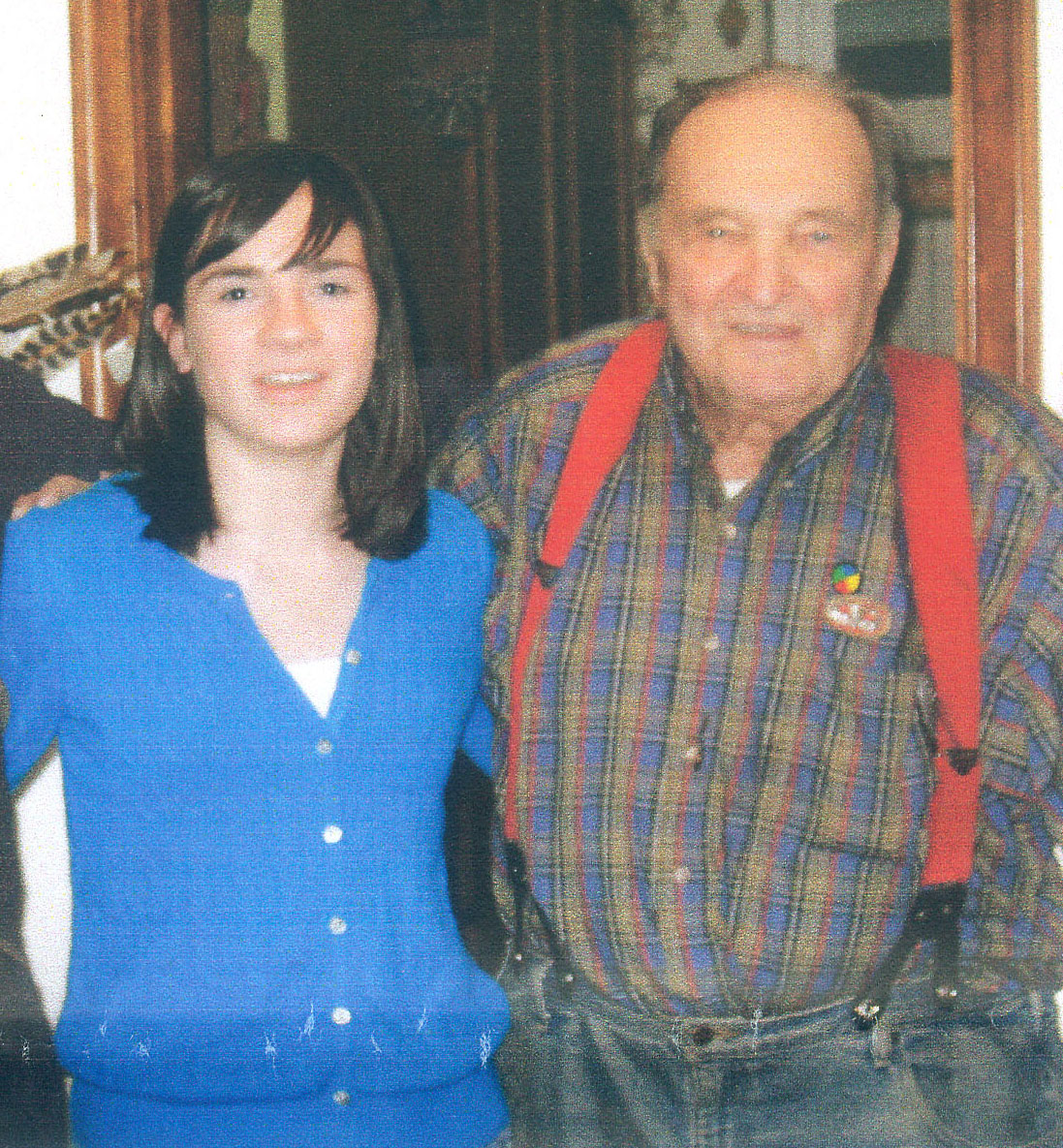
Anna Davis and Richard Wheeler

Bulge Veteran Honored by Associate Member Daughter

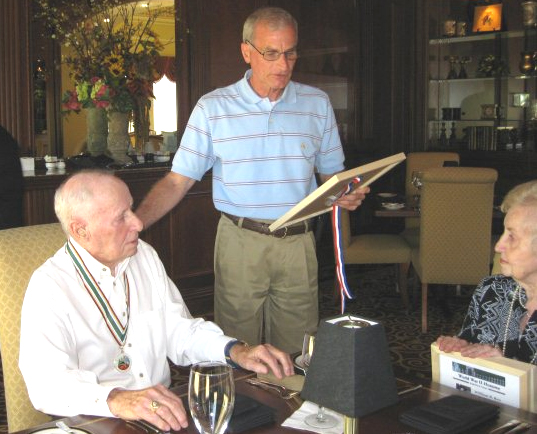
Linda Rea, daughter of William Rea, who fought in the Battle of the Bulge, flew home in April to surprise her Father. She enrolled him as a Member of the Veterans of the Battle of the Bulge, (VBOB), she herself joined as an Associate Member. She gave her father a Battle of the Bulge lanyard medallion along with eight other medals from WWII including the Soldiers Medal. In addition Linda made arrangements for Senator Mike Fasano of Florida to present her father with a Veterans of the Battle of the Bulge certificate.

(l-r) William Rea, Senator Mike Fasano, Linda Rea

Later on Linda and her father visited with Jack Ness, another veteran, of that horrific battle and William presented Jack with a Battle of the Bulge lanyard medallion.
Read story

Belgian Adopts US Soldier’s Grave

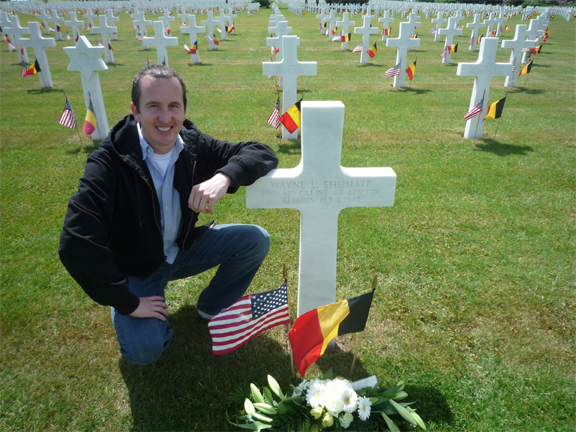
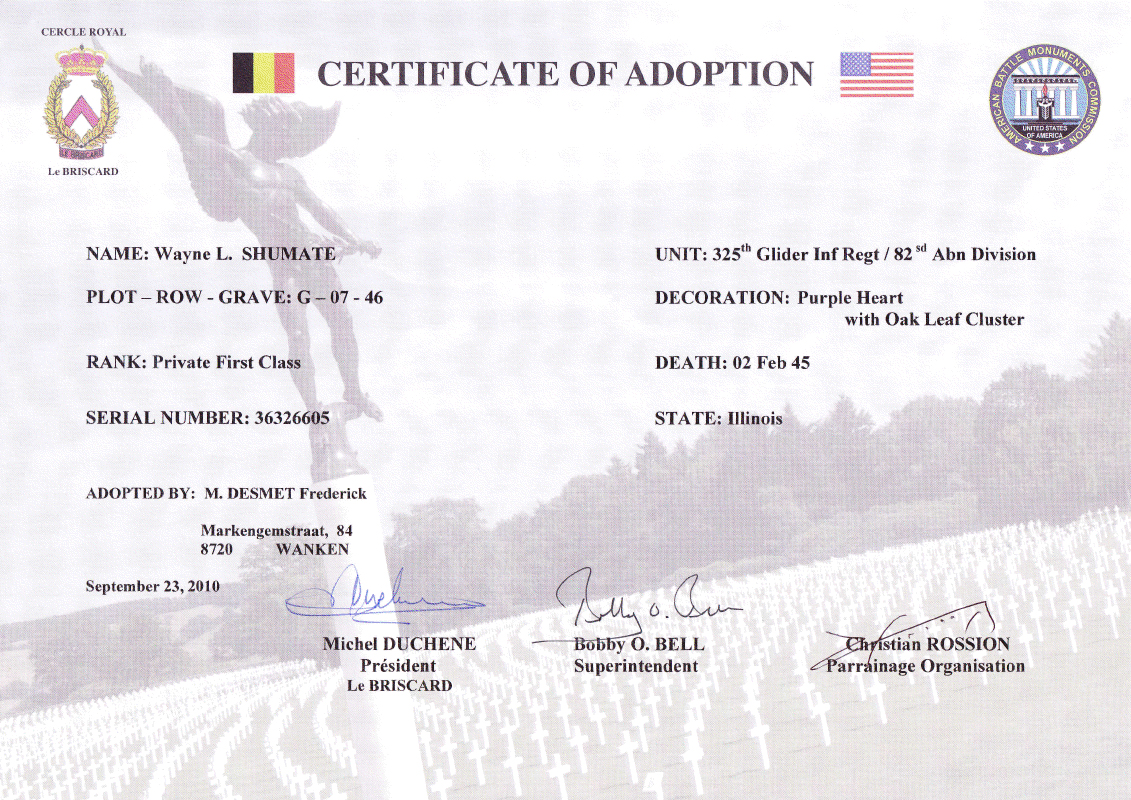
Frederick Desmet, a Belgium citizen has adopted the grave of Wayne L. Shumate, a United State’s soldier who fought in the Battle of the Bulge. Frederick is one of many Belgium citizens who pay homage to their fallen heroes. Every year these goodwill ambassadors visit the site of their adopted grave to show appreciation for their liberation from tyranny.

Frederick at Wayne's Grave-Henri Chapelle Cemetery, Belgium


Grave Adoption Certificate

Congratulations – Wayne Field, Pres. Rocky Mountain Chapter

Wayne Field, President of the Rocky Mountain chapter, and a disabled Army veteran who served in the 6th Armored Division from Colorado Springs, CO won gold medals in three swimming events at the 30th National Veterans Wheelchair Games, from July 7-9, 2010 in Denver, Colorado.  Attracting nearly 600 athletes each year, the National Veterans Wheelchair Games are the largest annual wheelchair sports event in the world.

Wayne was one of 12 gold medal winners of the 2007 Games to appear on special Cheerios boxes, which were sold at VA medical centers throughout America to promote the ’08 Games in Omaha, Neb. He has won more than 200 gold medals in 25 years of competing in national events like the Veterans Wheelchair Games.

Congratulations to a true champion!
Read about Wayne

Wanted – Information From Jewish Bulge Veterans

Lara Center is writing an article about Jewish soldiers that fought in Luxembourg during the Battle of the Bulge. The article will be published in the “Jewish Veteran”, the official publication of the Jewish War Veterans of the USA.

Lara worked with Roland Gaul, curator of the Musée National d’Histoire Militaire in Diekirch, Luxembourg and was the recipient of the 2009 Secretary of State’s Award for Outstanding Volunteerism Abroad in Europe for outreach and education work.

Contact Lara Center at:
2717 Westford Ct
Falls Church, VA 22043
cell phone 571-319-7075

VBOB Present at Amvets Convention

Chapter 30 President Barry J. Veden Speaks at AMVETS Convention

On Saturday, June 4, 2011, Chapter 30 President Barry J. Veden spoke to the Indiana State AMVETS Convention in Indianapolis, Indiana. His talk was on the Battle of the Bulge and the men who fought in it.

“I was humbled and felt honored to be speaking to the AMVETS attendees,” Veden said. “They are such an honorable organization and perform wonderful work for our veterans. I was proud to be able to represent, not only our northern Indiana chapter, but all of the men who fought so valiantly during the largest land battle ever fought by the United States Army.”

At the conclusion of his presentation, a booth was set up where Veden was able to sign copies of his book, My Heroes, a compilation of interviews with 30 members of Chapter 30. The book was published in 2004, and since its original publication, 19 of the men interviewed for the book, including his father Edward (28th Inf. Div.), have passed away. “I feel blessed that I was able to conduct the interviews when I did so that those men’s stories about World War II and the battle they fought in will not be forgotten,” the Chapter 30 president said.

AMVETS is an all-volunteer organization originally formed on December 10, 1944, in Kansas City, Missouri. On July 23, 1947, President Harry S. Truman signed Public Law 216, making AMVETS the first World War II organization chartered by Congress.


Belgium VBOB Chapter Remembers Our Fallen

Memorial Day 2011 Henri Chapelle Cemetery, BE

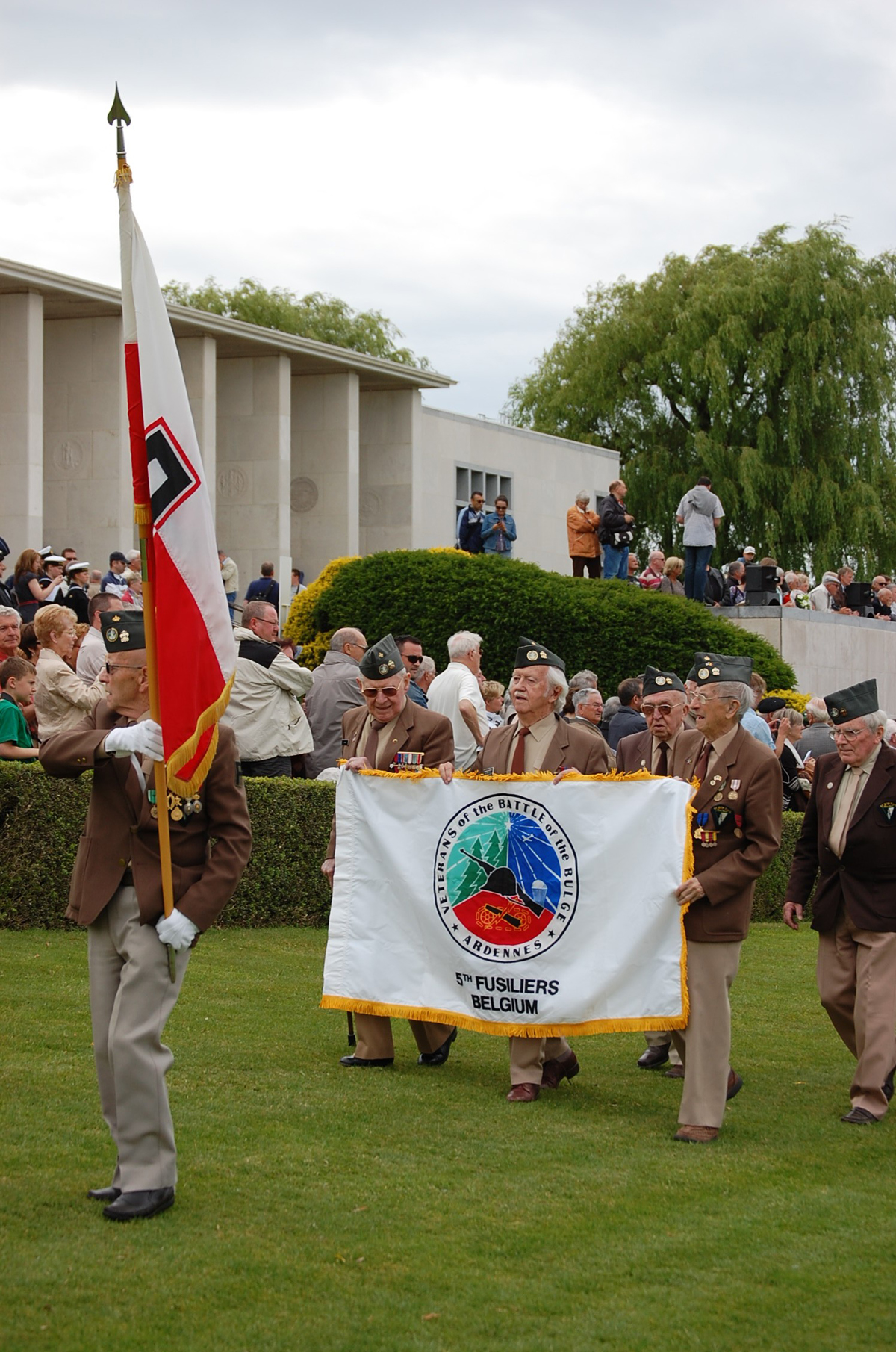
Members of the Belgian 5th Fusiliers and many other Belgium citizens pay their respects at the Henri Chapelle Cemetery, Belgium on Memorial Day. Carrying the Veterans of the Battle of the Bulge Flag are from left to right: Robert Lemaire, Marcel D’Haese & Jean Bartet. Christian Jacob is carrying the “A” flag.

Information submitted by Henri Rogister

Chester P. Sloan – Coventry, England – 1945

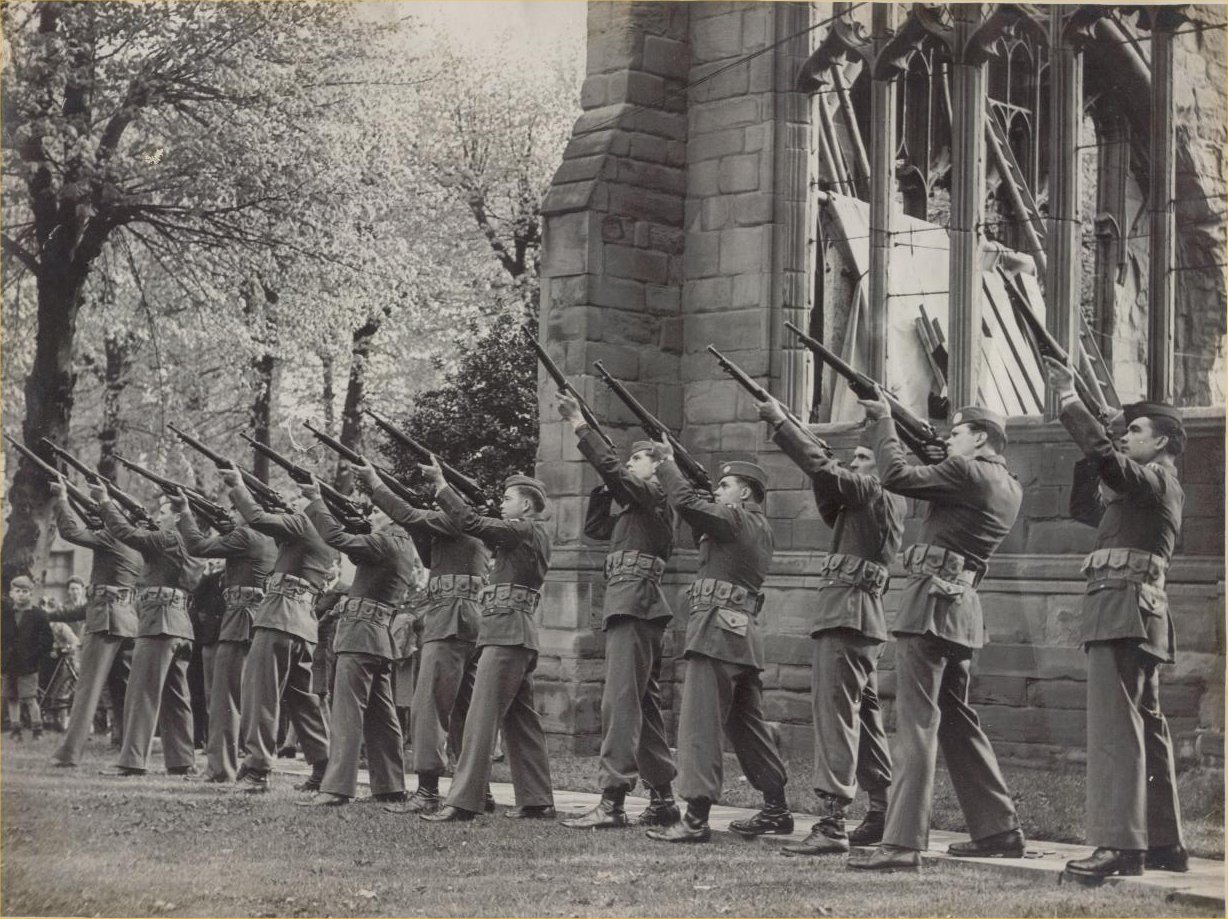
Hundreds of citizens from Coventry, England attended a memorial service for Franklin Delano Roosevelt on April 13, 1945. The service was held in the ruins of the Coventry Cathedral, which was destroyed by a German bombing raid in 1940. US soldiers honored their president with an honor guard and gun salute.

In the above photo the sixth soldier from the right is Chester P. “Buck” Sloan, 2nd Infantry Division, 38th Infantry Regiment, 1st Battalion, Company B.

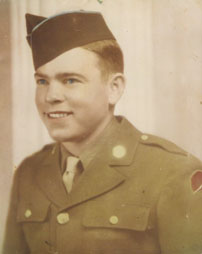
Chester P. Sloan

George Wisniewski – WWII Reenactor

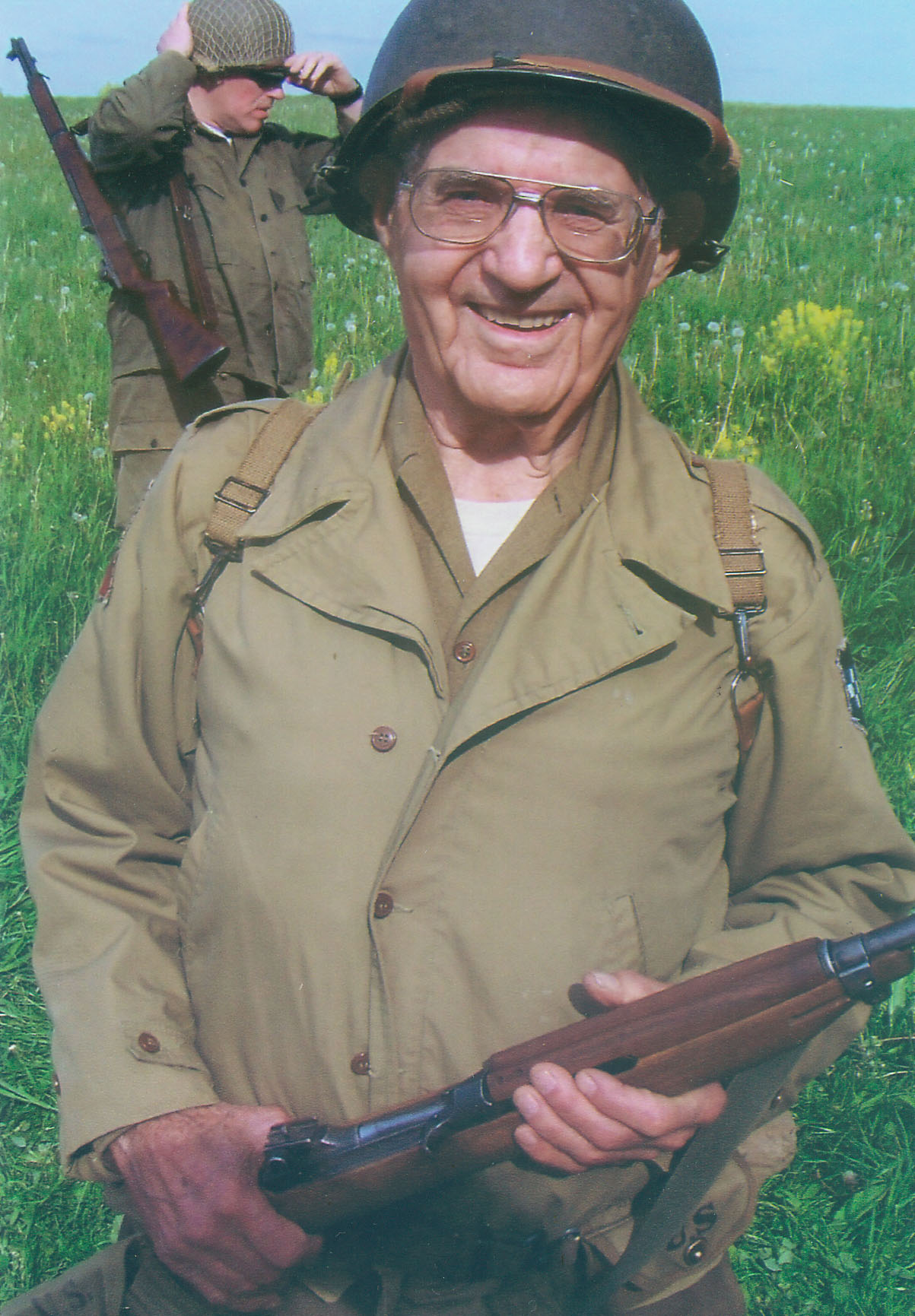
I live in Erie, PA and am a member of a World War II re-enactor group: the 99th Infantry Division, 393rd Regiment, Easy Company. This group was formed in 1999; I joined them in 2003. The actual 99th first saw action in World War II at Elsenborn Ridge in Belgium in December 1944. Their nickname is “Battle Babies.” As a replacement, I was sent to the 7th Armored Division in France in September 1944. I was with the 7th Division until June 1945. After a couple of real close calls – one with “Screamin’ Meemies” in Holland and one at Manhay, Belgium, on Dec. 24th, 1944. I earned five battle stars during my tour with the 7th. I was transferred to the 2nd Armored Division for occupation duty and was discharged in Pennsylvania on Dec. 30th 1945. I can still wear my Class A uniform from 1945.1 wore that in my first parade with the 99th re-enactors in 2003. The younger ones were concerned about me at first but found that I could keep up with them. I had to get another uniform for field duty and all the rest of the military gear. I also collect items for our “Living History” displays that we do for different groups. In our group, we have two jeeps, a member with a .30 cal. machine gun and another who has a B.A.R. Our group participated in several battle re-enactments. My favorite re-enactment was one near Detroit in which there were five battles and plenty of American and German World War II vehicles. In 2006 and 2007, we hosted in Dunkirk, N.Y., battles re-enacting the raid on Dieppe, France, and the landing on Utah Beach. In 2009, the 99th hosted our first “Bridge at Remagen” battle re-enactment at Tidioute, PA on the Allegheny River.

George Wisniewski 7th Armored Division, 48th Armored Infantry Battalion