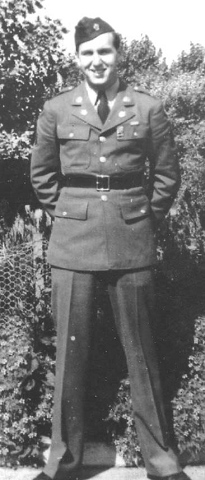
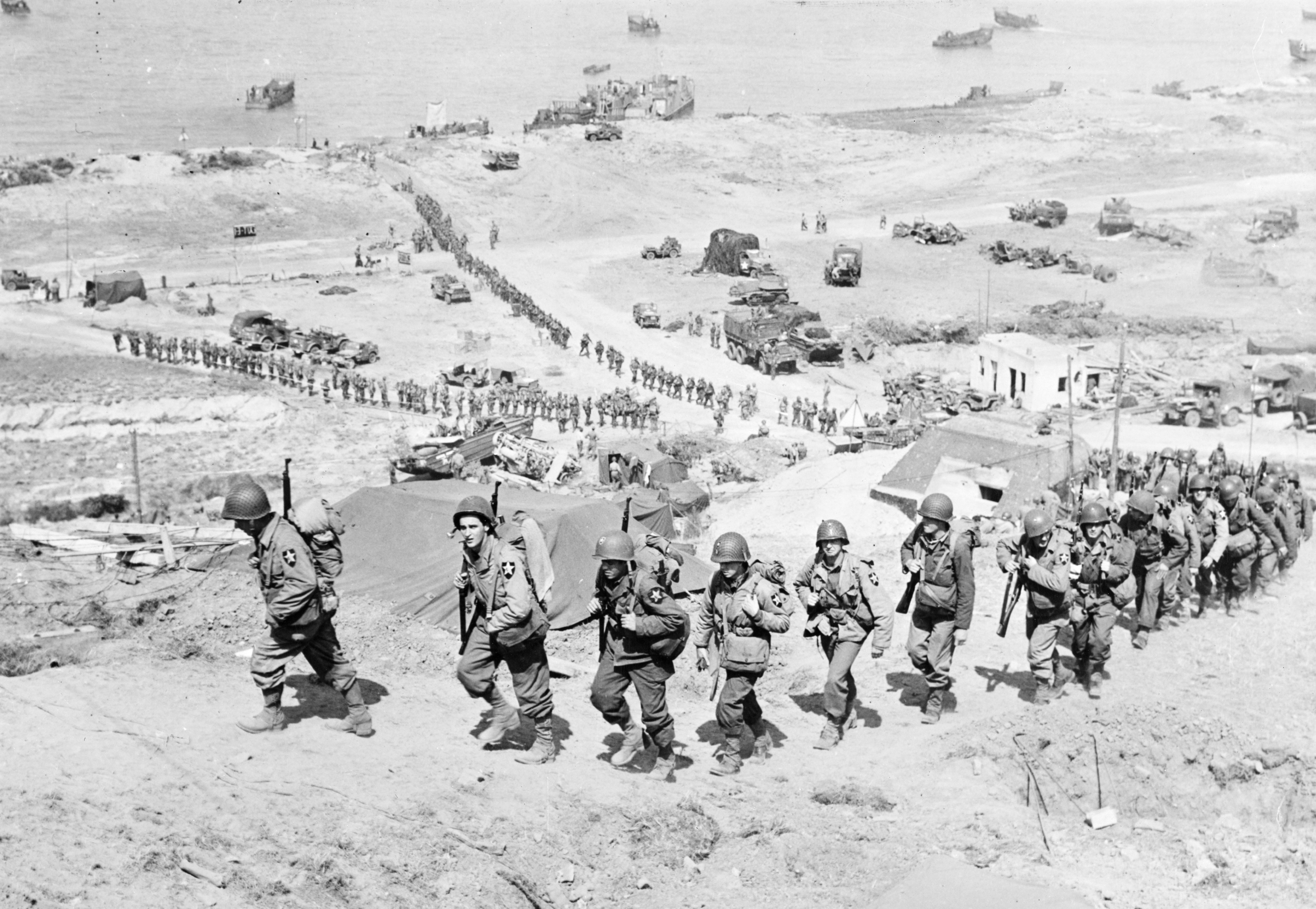
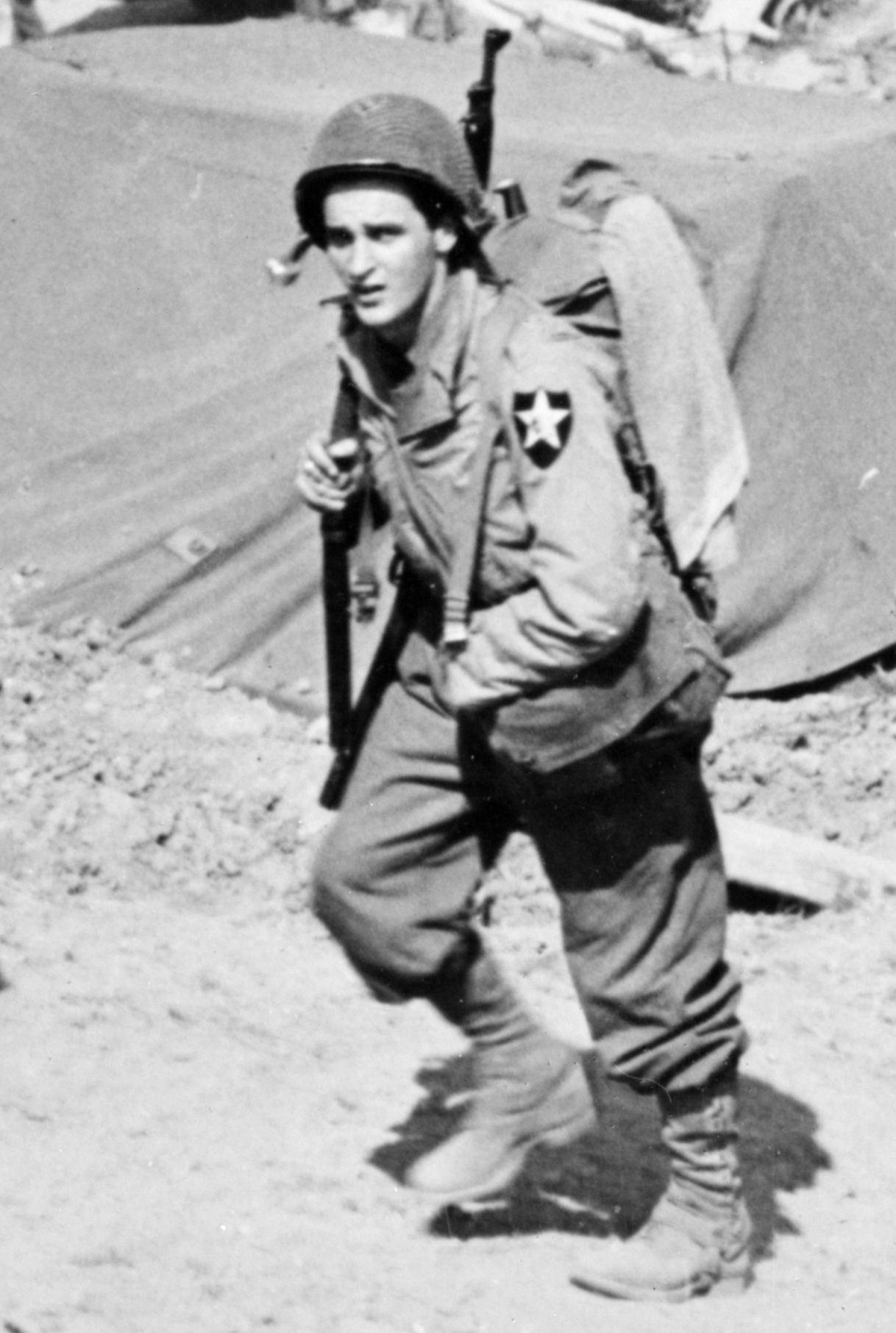
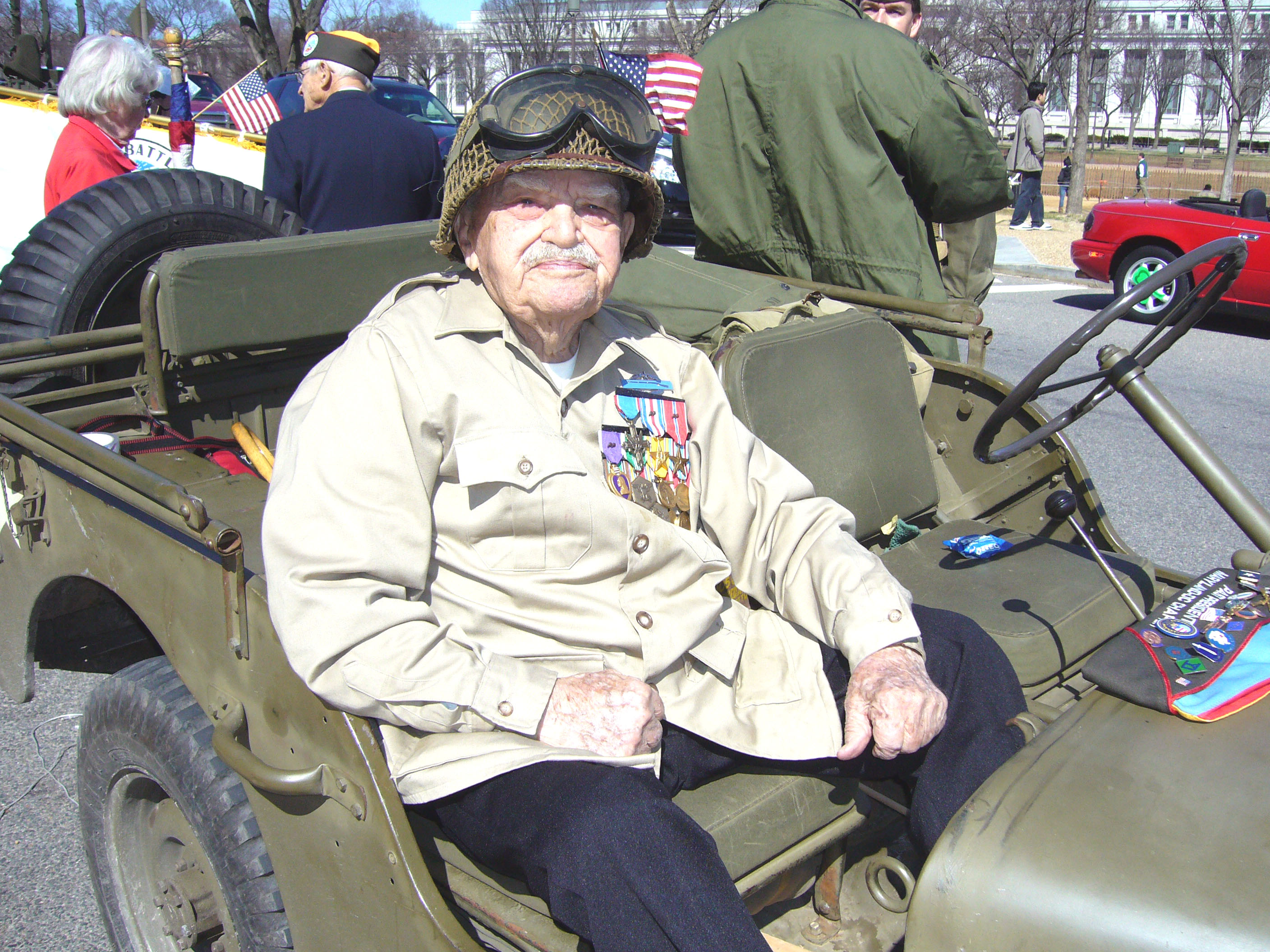
Irving Locker, a resident of Florida, who served in the 116th AAA Gun Battalion, VII Corps, 1st Army during the Battle of the Bulge received this prestigious award earlier this year from the French Consulate of Miami, FL. Irving’s story
Veterans who live in Florida can obtain details by clicking on the following links: Application Proposal
Veterans living outside Florida should contact their closest French Consulate for details. Consulates are located in Atlanta, Boston, Chicago, Houston, Los Angeles, New Orleans, New York, San Francisco and Washington DC.
The Veterans of the Battle of the Bulge at our 30th Annual Reunion were in for a treat! Our registration headquarters was the Hilton Garden Inn and upon arrival were given a wine and cheese reception. A spirit of comradeship soon followed and our organization made a special presentation to Ashley Woitena of the Columbus Convention and Visitors Bureau, for her forbearing spirit in making our visit so worthwhile.
The Veterans and Associate Members of VBOB will cherish the memory of the wreath laying ceremony at Fort Benning, Georgia where an invocation was delivered to perpetuate the memory of the sacrifices made by by those who served during the Battle of the Bulge. Details of the wreath laying ceremony are included in Fort Benning’s newsletter, “The Bayonet” click-here
Fort Benning is well known as a self-sustaining military command and has served as Home of the Infantry since the early 20th century.
Located right outside Fort Benning’s gate we visited the National Infantry Museum and Soldiers’ Center — a Tribute to Heroes. Inside we found a plethora of exhibits including six galleries each representing a different era in Infantry history from the Revolutionary War to the desert wars. This Museum is well designed for self-guided tours and trained docents were stationed through the museum to direct us, answer our questions and enhance our experience.
We Visited the National Prisoner of War Museum, which tells the story of the prisoners of war throughout American history. Located at Andersonville, Georgia this site also includes the infamous Civil War Prison.
Probably the occasion we will most remember was when we departed from our hotel to the Little White House of Franklin D. Roosevelt and his Memorial Museum in Warms Springs, Georgia. We were escorted from our hotel by a large motorcycle brigade of the Patriot Guard of Georgia who stood at attention at the entrance way as we approached the Little White House. David Burke, interpretive park ranger, with the help of others arranged for a memorable day.
Georges A. Hoffman, Honorary Consul, Grand-Duche De Luxembourg and Colonel John W. King III, Commander, Ranger Training Brigade, Fort Benning were our guests at the banquet.
Looking back, travel and change of place imparted new vigor to the minds of we Veterans and Associate Members of VBOB.
Join us in Washington DC from December 14- 16, 2011 to honor all who made the supreme sacrifice by attending wreath laying ceremonies at the World War II Memorial, VBOB Memorial and Tomb of the Unknowns, both located within Arlington Cemetery.
The longtime Weymouth, MA resident was one of many troops who were hurriedly sent to Belgium’s Ardennes Forest in December 1944 to stop a desperate German desperate offensive. But Marks was among a handful who took a secret weapon – radar.
Now 88, he fought the war as a radar operator with the 126th AAA (anti-aircraft artillery) battalion, one of a few special Army units stationed in England and then Antwerp, Belgium, to shoot down German V-1 rockets.
My name is Mike Smeets, 40 years of age and a (spare-time) historical researcher from the Netherlands. For many years already I have been studying the actions of the infamous Battle group Peiper and its US adversaries during the Battle of the Bulge, December 1944 – Jan. 1945. I have had the privilege to receive the support of many veterans from both sides, as well as civilian time-witnesses. I also visited the battlefield(s) numerous times as I live only about one hour drive by car from where it all happened. I heard and read the stories of courage, duress and horror and every time became more convinced that these stories should be preserved for the future and the sacrifices not forgotten.
I also adopted two graves at the US War cemetery at Henri-Chapelle, BE and visit them as often as possible. Although during the last few years several books were published who deal with the Northern front of the Bulge, it still is a somewhat forgotten chapter. For many Americans and Europeans Bastogne still stands synonymous for the US victory at the Bulge. In fact – the German push in the Northern sector was the most important one!! Krinkelt/Rocherath, Bullingen, Dom Butgenbach, Stavelot, La Gleize and Stoumont are only a few names where heavy battles to place and many lives lost!
I am aware that there are other researchers and authors who are also keeping the history alive and preserved for future generations. Please contact me if you can supply information about the battle at the above mentioned towns and villages against the German 1st and 12th SS Panzer divisions (also including the fights against these divisions in the southern sector at Lutrebois/Lutremagne/Losagne/Remonfosse/Saiwet and Hill 535). It would be very much appreciated!
Mike Smeets
Akkerwinde 27
6374 RD Landgraaf
THE NETHERLANDS
In recognition of the service to our country during World War II members of the Maryland/DC chapter will be seated at a locally sponsored table at the Veterans’ Muster, which will be held at Timonium Fairgrounds in Maryland on October 5 & 6, 2011.
Prior to the Battle of the Bulge the last time the two brothers saw each other was in 1943 when Daniel was shipped over seas to England in preparation for the Normandy invasion. Richard was shipped overseas late in 1944. Each knew the unit in which their brother served. In January of 1945, during the Battle of the Bulge the 7th Armored Division, in which Daniel was assigned, arrived in Luxembourg. Daniel recognized the markings on several supply trucks as belonging to the 99th Infantry Division, the division in which Richard was assigned. He asked if Richard, his brother was here and shortly thereafter the two brothers met.
My grandfather was PFC George Tammara who served in the 1st Infantry Division, 26th Infantry Regiment and fought in the Battle of the Bulge. He was later wounded and killed in Germany, probably after crossing at Remagen. He is buried in Delaware County, PA at Mt Lebanon Cemetery.
George Tammara
Please contact me if you knew my grandfather. I am local to the Philadelphia area and would like to get more information if possible to complete what I have researched so far.
Thank you very much
Randolph George Tammara
Telephone 215-880-8536
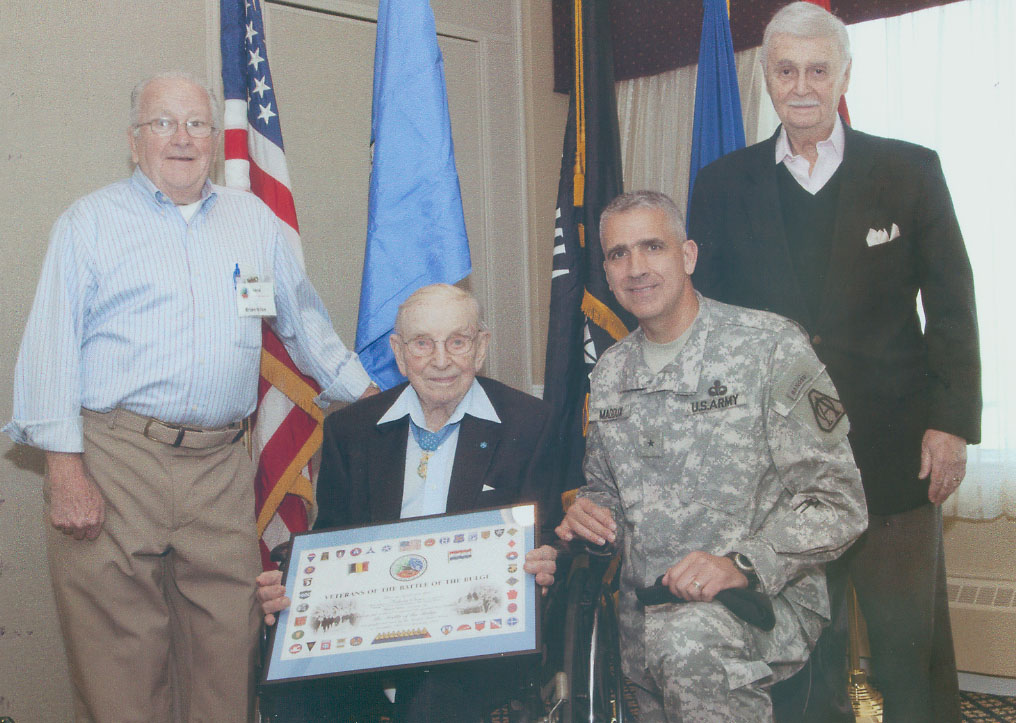
At the monthly May meeting, of the VBOB Picatinny Arsenal, NJ chapter #54, Nicholas Oresko the oldest living Medal Of Honor Recipient was honored by the chapter. Present at the meeting was the Post’s commanding officer. Brigadier General Jonathan A. Maddux to participate in honoring Mr. Oresko.
(from left): Brian Gillen, Chapter President; Nicholas Oresko, CMOH Recipient; BG Jonathan A. Maddux, Commander Picatinny Arsenal; Al Sussman, 106th Infantry Division
Nicholas Oresko who is 94 years old and in good spirits and physical condition, lives alone in an assisted living facility since the passing of his wife several years ago. Being 94 hasn’t stopped him from driving a large Lincoln sedan and having a lovely lady as a friend of many years. It was inspiring to be present to see a former Master Sergeant who fought in the Battle of the Bulge being honored by his combat comrades. Born in Bayonne, New Jersey on January 18, 1917, Nick Oresko enlisted in the Army and after basic training was sent to Europe in August 1944, two months after the Normandy landings as a platoon leader in Company C, 302nd Regiment of the 94th Infantry Division. In December, his division was deployed in support of other units forced to withdraw in the early days of the Battle of the Bulge. On January 23,1945, near Tettingen, Germany, Master Sergeant Oresko, platoon leader with Company C, they went in an attack against a strong enemy position. Deadly automatic fire from the flanks pinned down his unit. Realizing that a machine gun in a nearby bunker must be eliminated, he worked his way ahead alone, braving fire, which struck about him until he was close enough to throw a grenade into the German position. He rushed the bunker and with point blank rifle fire killed those occupants who survived the grenade blast. Another machine gun position opened fire on him, knocking him down and seriously wounding him in the hip. Refusing to withdraw, he placed himself at the head of his platoon to continue the assault. As withering machine gun and rifle fire swept the area, he struck out alone in advance of his men to a second bunker. With a grenade, he crippled the dug-in machinegun position and then wiped out the troops manning it with his rifle. Although weak from loss of blood, from four wounds, he refused to be evacuated until assured the mission was accomplished. M/Sgt. Oresko killed 12 Germans, preventing a delay in the assault and made it possible for Company C to obtain its objective with minimum casualties.
For his actions, he was presented the Congressional Medal of Honor nine months later, on October 30,1945 by President Harry Truman at the White House.
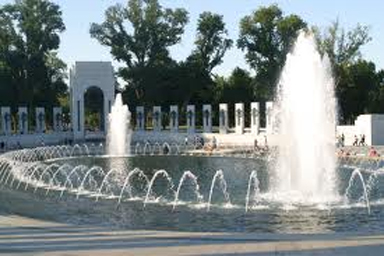
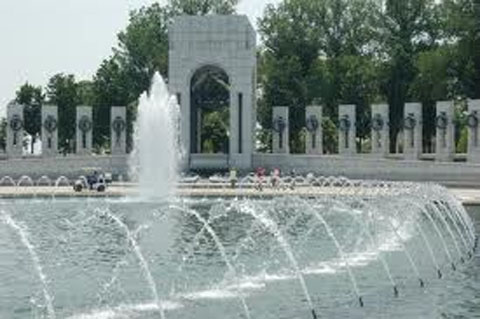
The World War II Memorial in Washington DC is a beautiful and solemn tribute to all who served their country during World War II. Veterans, have you been to the World War II Memorial in Washington DC? If not click here
Edward R. Radzwich, 26th Infantry Division, 101st Infantry Regiment, Company I
Edward Richard Radzwich, the designer of our Veterans of the Battle of the Bulge Certificate, died unexpectantly, under his magnolia tree on 9 July 2011. Ed conceived the design of the beautiful VBOB certificate on the back of a long Japanese calendar. Ed, faced with the dilemma of over 2,000 units that received the Ardennes Campaign credit and how to represent them, decided that each soldier in his unit would have had to have been attached to one of the major units (12th Army Group, or First, Third or First Allied Airborne Armies, or six Corps, or 33 Divisions or the units of the Eighth or Ninth Air Forces that supported the Bulge).
Thus, Ed took to cutting and pasting small copies of these major unit patches that fought in the Bulge and the flags of the United States, Belgium and Luxembourg. Photos from the National Archives Signal Corps Photo Collection to illustrate the harshness of the weather and the trudging through the forests satisfied with the concept and the wording it was turned over to a graphics artist and design company to finalize the design and prepare the artwork for printing. To date 8,000 of these Certificates have purchased by Bulge Veterans or their families in the Bulge Veterans name. The Veterans of the Battle of the Bulge are indeed indebted to Ed Radzwich for this Certificate of recognition for those who served in the Battle of the Bulge.
Ed Radzwich was born into a coal miner’s family in West Hazleton PA. He was an active Boy Scout, attaining the rank of Eagle Scout. A gifted high school graduate in the depression era and unable to afford further education, he saw the United States Army as his opportunity. He enlisted as a Private in May 1934 in the Chemical Corps. He completed service but was recalled from the Reserves in Feb 1941. Ed was selected to be one of the first groups of enlisted men to attend the new Officer Candidate School under BG Omar Bradley, at Fort Benning GA. Ed was being fitted at the tailors in Columbus GA, for his “Pinks & Greens,” Officer’s Dress uniform, when the news came over the radio that Pearl Harbor had been attacked, He graduated Infantry Officer Candidate School (OCS) class 41-3, one week after Pearl Harbor, Class 41-3 with a 2nd Lieutenant’s Commission.
He was assigned to the 26th Infantry (Yankee) Division, at Camp Edwards, Massachusetts, that December 1941, at the time when most of the unit was given leave for the Holiday’s. As a newly minted 2nd Lt, Ed was assigned as officer-in-charge of most everything on the post since virtually all of the National Guard officers had taken leave. Ed, undaunted, using his intellect and initiative, rose to the occasion, and performed in a superior way with little of no guidance. This was to become a hallmark of his service. He was to be as one of the first Ranger trainees to attend the First Ranger School, Camp Forrest, Tullahoma, Tennessee, in early 1943, where he graduated as a Ranger in the First Ranger Class. Ed was to remain with the “Yankee” Division throughout WWII advancing to Captain and Company Commander, I Company, 101st Infantry Regiment, prior to the unit leaving the states for combat.
Ed was one of the few company commanders to go into combat as a Company Commander and to come out of the war with the same company, which he led through the Campaigns of Northern France, Rhineland, the Battle of the Bulge (Ardennes) and central Europe. He was given R&R leave from Fulda Germany just before May 1945 and celebrated VE Day in New York City with his wife, Mary.
Ed was an outstanding Company Commander as attested to by his men, always leading from the front. For his heroic actions in combat he received the Distinguished Service Cross, Silver Star with two Oak Leaf Clusters, Bronze Star with two Oak Leaf Clusters, and Purple Heart with two Oak Leaf Clusters. He also received two awards of the Army Commendation Medal. He was most proud of his Combat Infantryman Badge. Ed was a true hero.
After the war he was offered a Regular Army commission on 5 Jul 1946. He was assigned to US Military Government in Korea Jul 1946 – June 1949 and because of his six month’s experience, as a youth, working in a coal mine in Pennsylvania, he was put in charge of all the coal mines in Korea. He also served as Army Instructor, NJ National Guard Sept 1949-May 1951; Battalion Commander 33 RCT, Panama Canal Zone, Jul 52 – Jan 1955; Chief of Civil Affairs, Assistant Chief of Staff G-5, Eighth Army, Korea, Feb 1957 – Jun 1958; and G-3, Second US Army, Reserve Components, Fort George G. Meade, Jul 58 – Feb 1961. He retired as a Lieutenant- Colonel in Mar 1961 with 25 years of service.
On August 8, 2003 Edward Radzwich lost his beloved wife, Mary. They had been married 64 years. He is survived by three children, Gloria, Virginia and Edward Jr., two grandchildren and three great grandchildren.
Honors & Citations:
Distinguished Service Cross, Silver Star w/2 Oak Leaf Clusters, Bronze Star w/2 Oak Leaf Clusters, Purple Heart w/2 Oak Leaf Clusters, Army Commendation Medal w/ Oak Leaf Cluster, Combat Infantryman Badge, Presidential Unit Citation. Installed in Infantry OCS Hall of Fame, Ft Benning, GA, March 1959. For his outstanding contributions and decorations as a soldier, LTC Edward R. Radzwich was elected to membership in the prestigious Legion of Valor. He served our country with great distinction. He was an outstanding patriot.
Sources: Michael Samberg, who served as an enlisted man under Captain Radzwich during WWII and John D. Bowen, VBOB Recording Secretary.
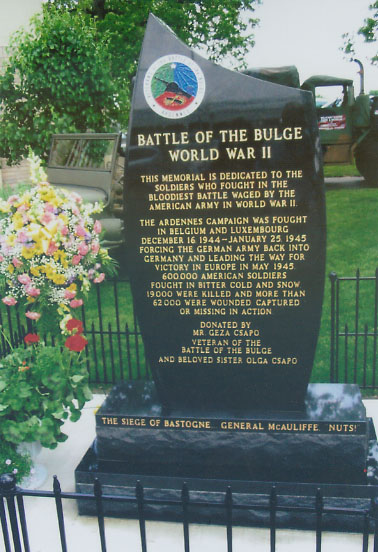
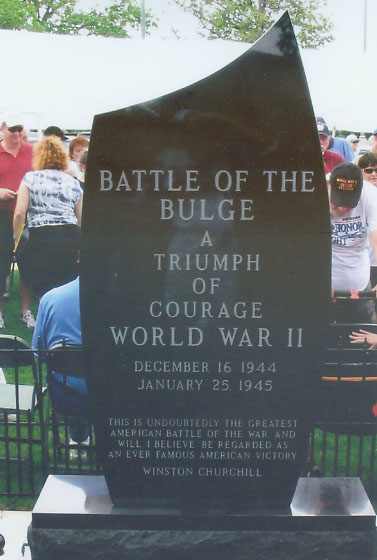
Monument Dedicated May 31, 2011
Military park unveils new memorial for Battle of the Bulge
by Kevin Allen, South Bend Tribune Staff Writer
Photos by Robert Franklin South Bend Tribune
Former British Prime Minister Winston Churchill called it “undoubtedly the greatest American battle” of World War II and an event he believes would “be regarded as an ever famous American victory.” It was the Battle of the Bulge – 40 days of fighting in the bitter cold of December 1944 and January 1945 to force the German army out of Belgium and Luxembourg in what was Adolf Hitler’s last best chance to turn the tide against the allies.
The American triumph over the Nazi onslaught led the way to victory in Europe the following spring and now the Battle of the Bulge is memorialized at the Military Honor Park and Museum next to South Bend Regional Airport. Park and museum officials hosted a ceremony Monday afternoon to unveil a granite monument dedicated to the 600,000 US soldiers who fought in the bloodiest American battle of World War II.
One of those US soldiers, Geza Csapo, of Osceola donated money for the monument. Csapo, 85 served in the Army from 1943 to 1945 and fought in tanks during the Battle of the Bulge. “This is a much-needed addition to the park”, he said of the monument “I dread to think what the world would be like today if the Germans had won”. Csapo said he was caught by surprise when the German attack began December 16, 1944. There wasn’t much time to think about the significance of the battle. All I remember he said “it is early one morning night turned into day”.
Frank Firtl a Mishawaka resident who worked in intelligence and reconnaissance for the Army during the Battle of the Bulge said the sky that morning looked like Disneyland on the Fourth of July.
Csapo came close to dying during the battle as a German soldier aimed a bazooka at his tank. Fortunately for Csapo he fired a shot before us German soldier did. Firtl, 94 also had several close calls as he moved behind enemy lines as a scout. He suffered a fractured skull and a blown out eardrum later in the war when the jeep he was riding in hit a land mine in Germany.
Louis Kobold another Mishawaka resident who fought in the Battle of the Bulge wasn’t able to witness the monument’s dedication Monday, he died in December 2009. Kobold’s family however was on hand for the event. I am sure he’s looking down and smiling at what happened here today his son Mark said. Louis Kobold nearly lost his feet to frostbite at the Battle of the Bulge and as a result he had trouble with his feet for the rest of his life. He also suffered a shrapnel injury there and slivers of metal continued surfacing in his hip for years after. His widow Dorothy said he kissed the ground when he returned to Mishawaka. But he never talked about the war he just hoped his children would never have to experience anything like it. They just want to come home get married and have children Dorothy Kobold said of the World War II veterans. They wanted to have a normal life because war was never normal.
Csapo said he reacted similarly when he returned stateside. I never said a word he said my children didn’t even know I was in the war until they were grown. But after talking about his experiences on a canoe trip in Michigan he said the stories poured out as if a damn had broken. Csapo quickly found it was important and therapeutic to pass on the history. With the new monument his contribution to keep that history alive will be permanent.
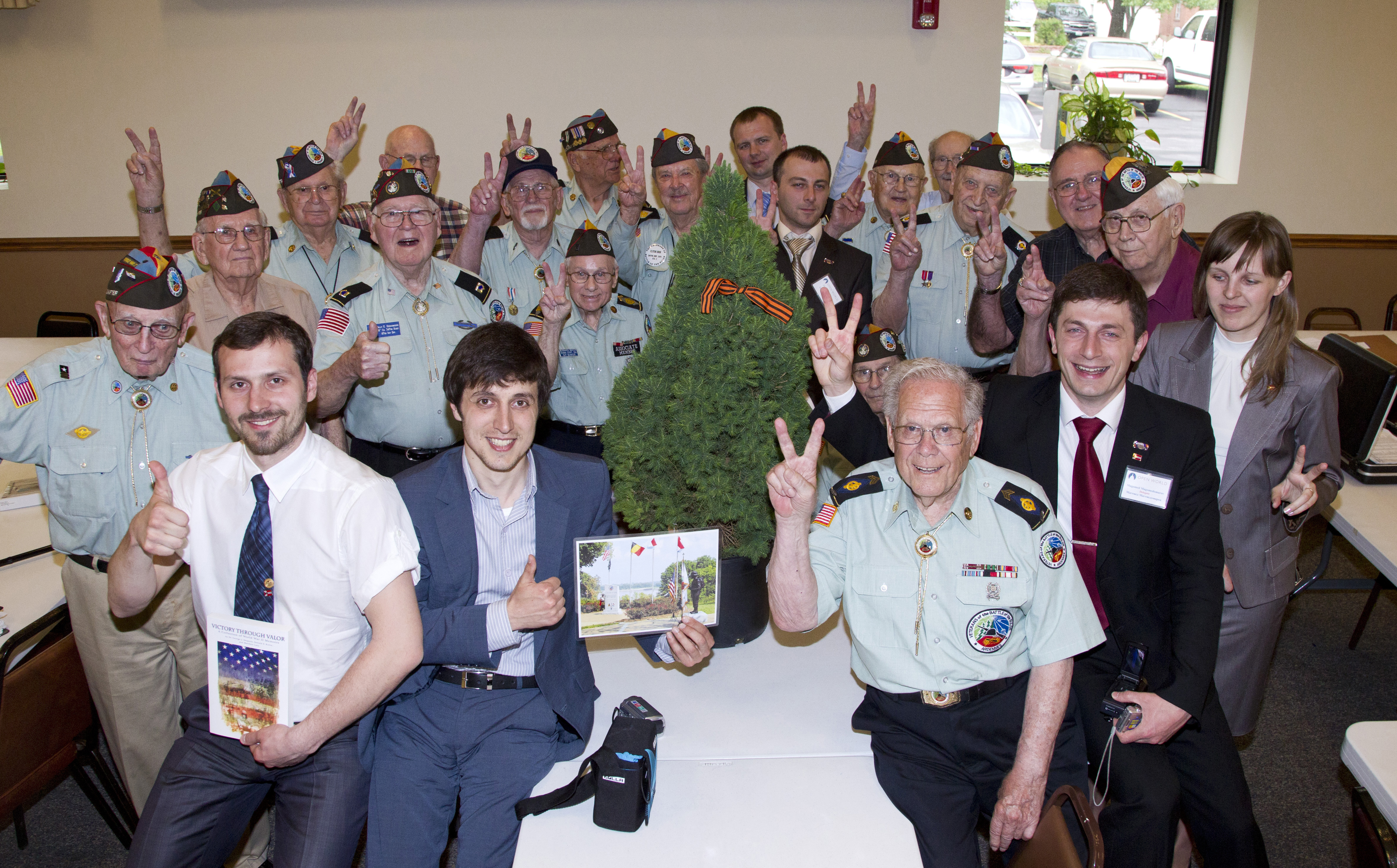
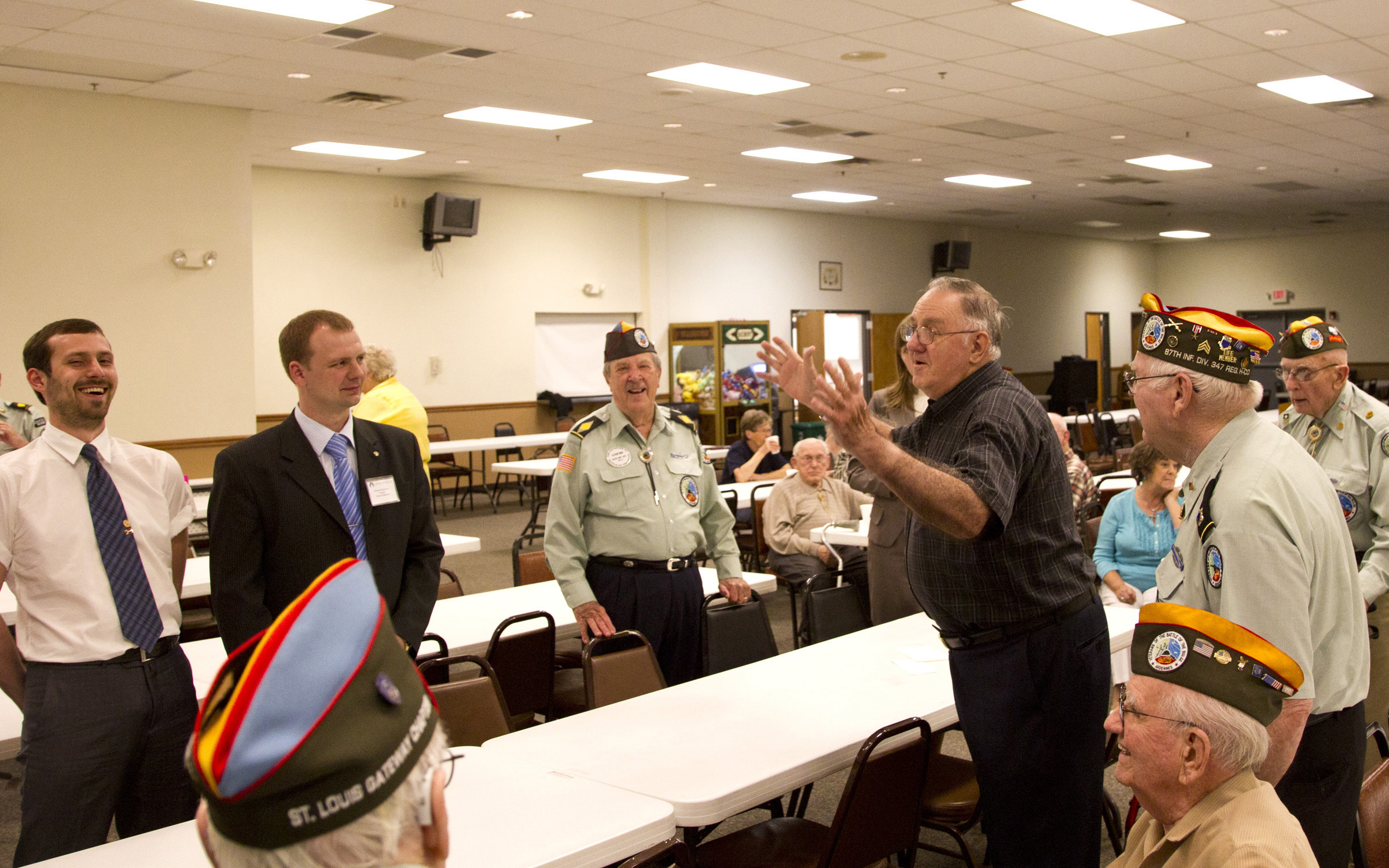
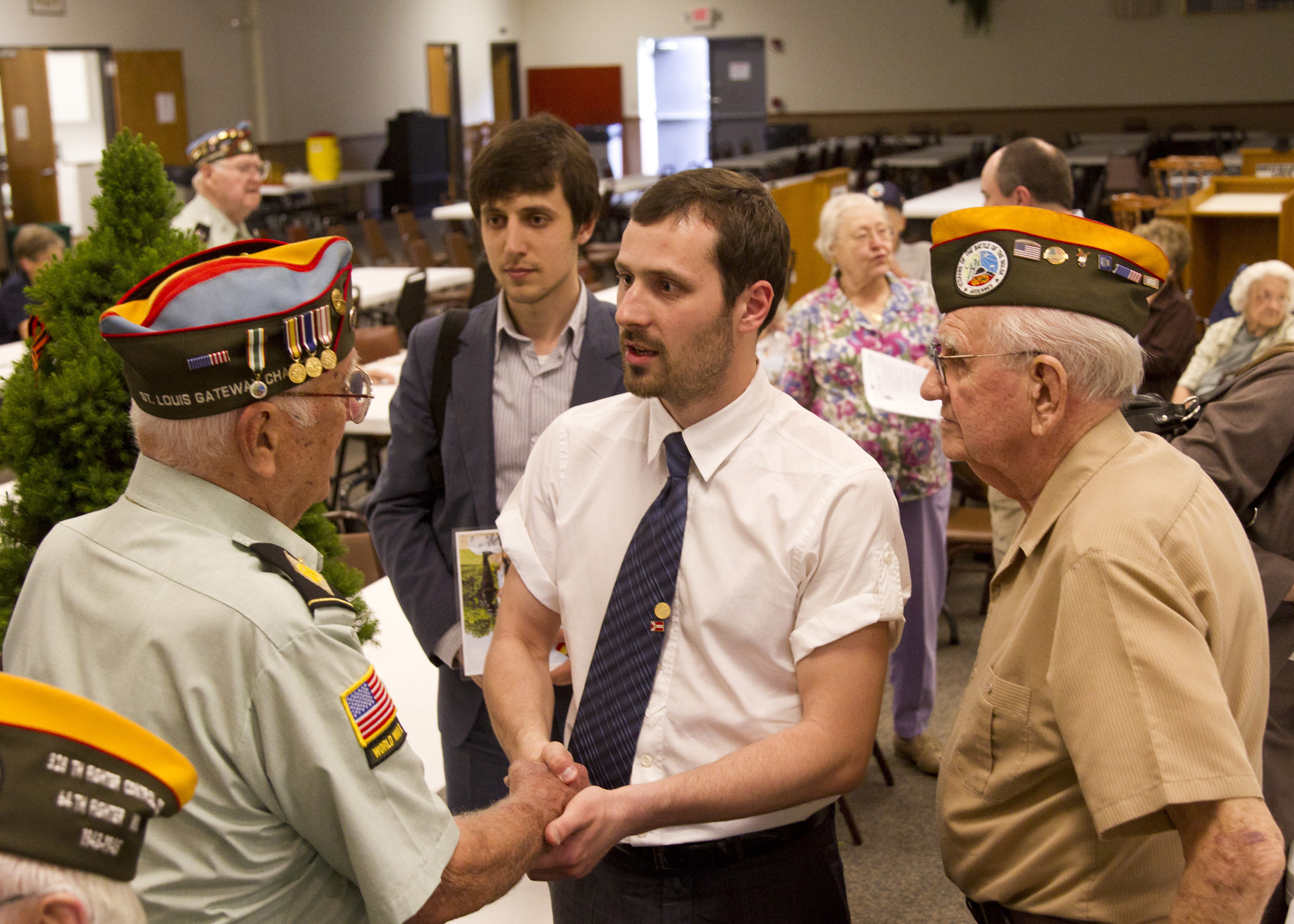
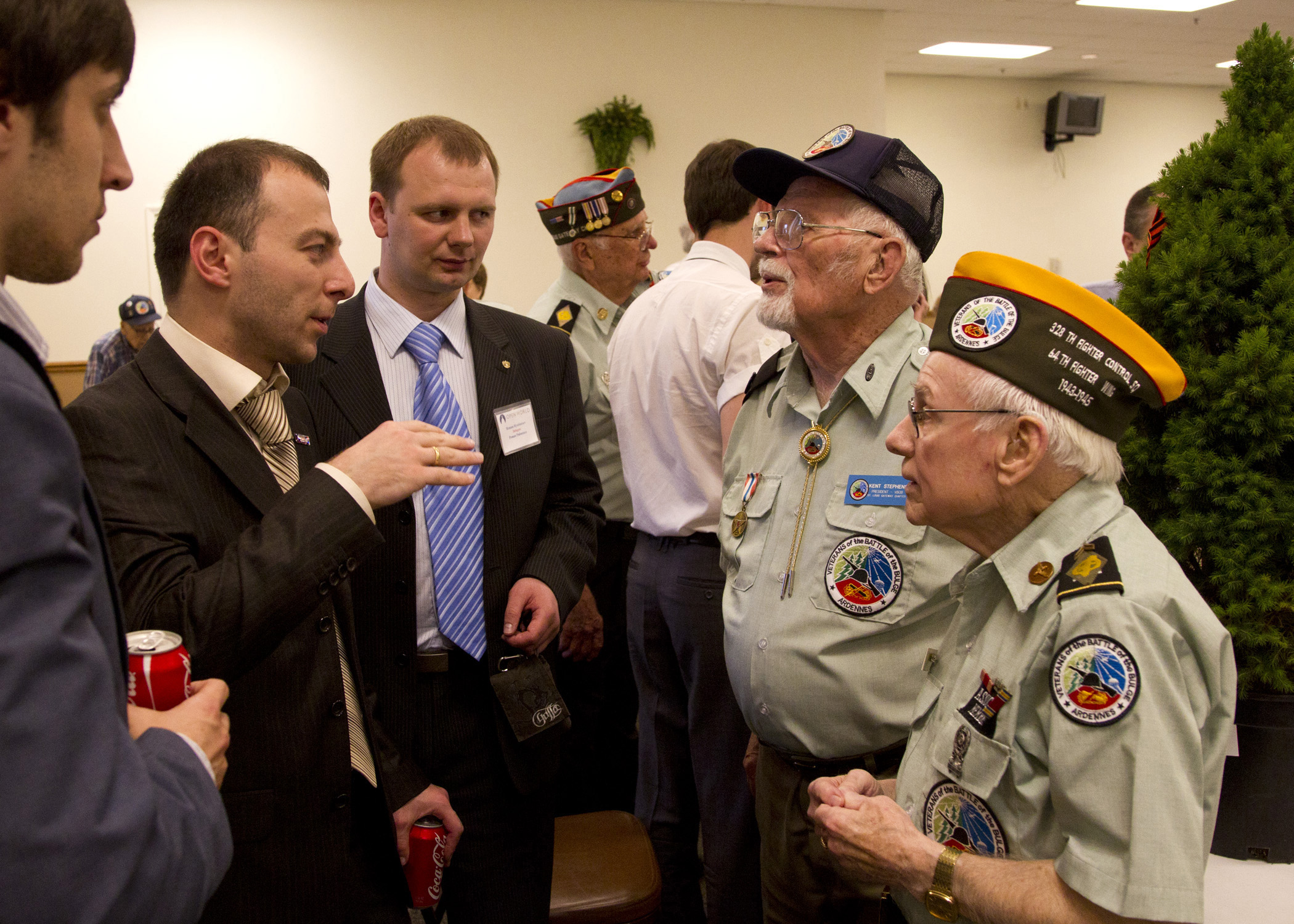
The Gateway Chapter was pleased to have a visit of a number of delegates from the Moscow School of Political Studies at the May meeting. The Russian visitors met with about 25 members to thank them for their service in World War II and hear their recollections of meeting Russian soldiers during the war. To honor V-E Day (May 8), the Russian delegates presented the Chapter with an evergreen tree, which was planted near the Battle of the Bulge Monument and WWII GI Statue in Jefferson Barracks Park a few days later.
The Russian delegates were llya V. Savchenko, Timur Botvin, Roman Ryabintsev, Georgy Kaytukov, Magomed Magomedomarov and Natalya Paleeva.The veterans, in return, gave the delegates a copy of our book, “Victory Through Valor: A Collection of World War II Memoirs,” and a photo of the Battle of the Bulge Monument and World War II GI Statue. The visit by the Russian group was through the auspices of the University of Missouri–St. Louis’ Center for International Studies and coordinated by Professor Jerol Enoch.
Photos by August Jennewein/UMSL
Veterans in above photo: Ray Saul (4th Infantry Division), Dick Cotter (26th Infantry Division)
Bernie Schwender (78th Infantry Division), Richard Coyle (28th Infantry Division)
Billy Stiegemeier (87th Infantry Division), Barny Baker (328th Fighter Control Squadron)
President Kent Stephens (26th Infantry Division), Don Green (106th Infantry Division)
Clyde Erb (26th Infantry Division), Eugene Ganz (1st Infantry Division)
Glen Jarvis (467th AAA AW), Marvin Korte (84th Infantry Division)
Ralph Forys (26th Infantry Division), Stanley Gibson (99th Infantry Division)
Harold Mueller (110th AAA 90MM MBL), Rusty Pendleton (11th Armored Division)