Category Archives: Veterans’ Stories

179th Field Artillery Battalion – James McCabe

James M. McCabe

The 179th FA Bn landed on Utah Beach, Normandy, France on 13 August 1944 as part of General George S. Pattern’s Third Army and attached to Fourth Armored Division. Our first brush with the enemy came the following night. We had our first fire mission on 22 August 1944 at dusk. Our artillery battalion stayed at Bois-ie-Rot, France from 22-24 August, m a short time we destroyed fourteen artillery pieces, horse drawn train and several hundred Germans, m this position the 179th had three men killed. I looked in a burned out German tank and observed one of the tank crew that had burned and about all that was left was his intestines still in place looking like link smoked sausage.

The 179th FA Bn was assigned the task of holding outpost at Fresnes-ne-Saulnois, France from 19-24 September 1944. Under dense fog a German tank was firing down on us from the hill above. Our artillery started firing point blank at the tank. The climax came on me fifth day when it was determined mat Germans were preparing a strong counter attack. I manned an outpost several hundred yards from the Battery with my machine gun in place and dug a two man foxhole. My partner and I sat back to back to observe both directions. It was raining steadily and mere were two of our men with bazookas about fifty feet away. About mid-aftenoon you could hear tanks beginning to rumble. It was overcast and still raining. Tanks were on our right moving toward our outfit I was continually praying to my God for help. There were several tanks in mat group. The clouds began to part In a little while, a squadron of P-47 fighter planes was circling overhead waiting for a clearing. It wasn’t long before they started diving on moving tanks with machine guns firing and well-aimed bombs stopped me German tank movement. One of the planes didn’t come out of the dive and exploded on contact with the ground. While this was taking place, there was much smoke and explosions. The 179th FA finished the task. The 35th Infantry Division relieved the 179th before nightfall. The 179th was recommended for the Presidential Citation for defense of this critical spot. The 179th had two men killed.

The 179th went in a holding position at Athienville, France from 28 September to 1 November 1944. On a quiet Sunday afternoon in mid-October, I was writing a letter home. I was sitting in a vehicle that my machine gun was pedestal mounted on. “B” Battery commanding officer was strolling around me battery area and stopped and was talking with me. At this time we heard me chatter of machine gun fire and roar of planes. I manned my machine gun and told the battery commander to get in my foxhole. The battery commander was larger than I and had difficulty squeezing in my foxhole. Scanning the sky, I saw German ME-109 fighter plane coming my way at tree top level to my left. I started firing just before the plane crossed in front of me. My tracers showed mat the plane was being riddled by machine gun fire and started a nose dive. The plane crashed landed about 300 feet to my right, exploding on impact with the ground. The battery commander was pleased with me results that Sunday. Five ME-109 fighter planes were attacking our area and five planes were shot down. On the first day of November 1944 the 179th  FA left Athienville, France, going toward Germany.

On the afternoon of 19 December, the 179th  FA left position Maginot Line at Rimling, France where our batteries were firing across the German border. We were unaware at me time that we were headed for the Battle of me Bulge in Belgium and Luxembourg. During the period of 11-17 December, me 179th FA Bn was called upon twice to furnish five percent of its table of organization strength for infantry replacements. In addition to my machine gun duties and because of me ammunition section manpower shortage, I was called on to assist the ammo section with unloading, stockpiling and delivery of 97 pound projectiles plus powder charges to the battery gun section. During the Bastogne mission, the 179th FA Bn was firing over 1,000 rounds of 97 pound projectiles in a 24 hour time frame. The temperature got down in the range of 13 degrees below zero and mostly in the zero range while supporting the 4th Armored Division during the Bastogne mission. The snow was deep and we used quarter pound TNT charges to break me crust of the ground in order to dig foxholes. My shoes cracked where they bent and hurt my feet I cut strips from a wool blanket and wrapped my feet and stuffed them in my oversized rubber boots. My blood soaked woolen underwear would freeze to my backside and with any movement, I could feel and hear me cracking. I was evacuated on 31 December 1944 by the battalion medic. Arriving at the hospital in Luxembourg City, I was put in a bathtub and warm water was continuously poured on my backside and me underwear was cut off a little bit at the time until it was all removed. I was then sent to a convalescent hospital in Nancy, France. When I was finally healed and I was released from the hospital back to duty, I returned to my outfit I have many more memories of the Battle of the Bulge and me 179th FA Bn travel across Europe from Normandy to Czechoslovakia, with Luxembourg, Belgium, Germany and Austria in between, that I could ever put on paper!

The end of January, the Bulge was no more and the 179th went in the holding position from 1-24 February 1945 at Siebenater (Bockholz), Luxembourg near the German border. “B” Battery moved in this large field that was covered with snow that was pretty deep and had small raised up mounds scattered around the field. Since we were in a holding position the kitchen truck set-up and began serving us hot meals. After a few weeks, the rains came and me snow melted. The small mounds scattered m the field turned out to be dead German soldiers. On 24 February 1945 we moved out of this area and went into Germany supporting me 4m Armored Division.

In Germany around March 1945 while stopped on a road in the country-side for a period of time, an enemy soldier (sniper) began firing on our column from a field. I kept looking and preparing to fire my 50 caliber machine gun but couldn’t see him. Firing continued at intervals and one of me artillery gun crew called out that he saw the sniper rise up and shoot He instructed me to watch his small caliber tracer mat he was going to fire. I watched me location of the tracer, which appeared to be near some small bushes located near what looked like a drainage ditch. After a few minutes I saw the sniper rise up to fire again. At this time I fired a good many shots because of the distance between the sniper and myself. After firing, I didn’t see me sniper again. In a few minutes I saw our half-truck going in the direction of where I had fired with the executive officer and several non-coms. They got out of me vehicle and were standing in a group looking down watching the sniper die. They got back in the vehicle and went back to the front area of die column. The incident was never mentioned, even though many of the battery had seen what happened. About 30 or 40 years later, I asked one of the non-coms (who later became first sergeant) who was in the half-truck checking on what I was shooting at, if I had dreamed that incident His reply to my question was, “That incident was no dream. I have waited all of these years for you to ask me about it” He said, “The German soldier mat I had shot was nearly cut in two and he had the SS tattoo showing mat he was one of Hitler’s elite troopers.” He also said that the German soldier had a P-38 pistol (hat was hit with one of my shots.

On 1 April 1945, Easter Sunday, in a small town or village near Frankfurt, Germany, our battery had pulled out on the road from the field, where we had bivouac me night before. While waiting for the Battalion to move out, I had my K-ration breakfast. Our vehicle was one of the last in column. The rest of me Battery and Battalion were stretched out through the town. There was a small low fenced in apple orchard next to me road and a barn with an open hayloft feeing me road. I had a nature call and stepped over me fence thinking I was out of sight At this time, what sounded like a German burp gun (rapid fire) started shooting and dirt was flying all over me. I looked up toward me barn and the open hayloft and saw some German soldiers around what seemed to be a jammed burp gun because it was not firing anymore. I jumped me low fence, climbed on my vehicle and started firing my 50 caliber machine gun. In a very short time the bam and hayloft were in flames. There was no activity seen in me hayloft. About the same time, snipers throughout the town started firing on our column which had started March order. Machine guns throughout the column started firing on the snipers as we went through the town. That night* we were a distance from me town that we had left and you could still see the red glow of fire in the sky.

In Germany around April 1945, we were going up a hill and it had been raining. Dead German soldiers had fallen all along the edge of the road, probably from machine fire from our tanks or fighter planes. I was manning my machine gun mounted on the tractor pulling our 155mm howitzer. Vehicles in front of us had made a rut, sliding a little bit sideways; one of the dead German soldier’s head was right beside the rut The large tires on our 155mm howitzer were sliding in line with the soldier’s head. I couldn’t look at what I thought would happen. I didn’t look back. The sight of our sliding howitzer will always be in my memory. On our drive through Germany about March and April, we came upon and near several fenced in barrack type buildings housing prisoners of war soldiers, labor camps and others. I remember this British POW running up to me with a big hug. He was so happy to see us! Reaching in his pocket, he came out with a large brass nut (about me size of a quarter + or -) with brass buttons soldered on each side, probably from his overcoat I asked me POW what it was and he showed me it was a cigarette lighter he made while a POW. With tears in his eyes he handed it to me and said, “I want you to have it” That cigarette lighter was prized by me for many years and was misplaced several years ago. I hope mat it will show up eventually.

I went into one of the labor camps occupied by laborers from countries Germany had invaded I assumed. They worked and harvested me farms and also did factory work. All of them we saw were very happy to see us. The first thing mat they asked for was cigarettes. We were able to give mem some. One of them wanted us to see me barracks or someone in there. We couldn’t understand what he was saying and he motioned for us to follow him. A couple of us followed behind him and went in this long barrack. Inside were two rows of double bunks with some of them occupied. The smell was like nothing I ever encountered. By mis time we bade mem good-bye but couldn’t get out before receiving many hugs.

Our column was stopped along the road in one of me small towns. Off to my side of the road was a mound of dirt and a small homemade cross marking a grave. Walking along me road going in the opposite direction from us were two men with sticks to assist mem in walking. They hobbled up to our vehicles, pointing to their mourns, indicating they wanted food. Both men were nothing but skin and bones. They were given food and the look on their faces said it all as they walked away in their striped clothes. It seems like many of me fenced in barrack type camps were located in East Germany. When you would see these men in striped clothes, it would mean that they were out of one of the camps. Usually the guards in these camps would leave just ahead of the advancing allies. Some of the camps were probably more humane than others. But, the one with that human waste smell in close quarters will stay in my memory. I was told about one and saw the pictures of skin and bones with heads attached and stacked like cords of wood, hardly recognized as humans, waiting to be tossed in a furnace had to be the worst. At the end on VE day, 8 May 1945, the 179th FA Bn was near Zechovice, Czechoslovakia (7-10 May). There was dancing in me streets by the Czechs and we were all very happy.

We moved back to Germany as military government forces (10 May – 1 June, 1945). We ended up in Bogen, Germany located on the Danube River, 1 June 1945. We set-up road blocks on all roads coming from die east, and we detained German soldiers who were fleeing the Russians. After searching them, they were moved to me fenced in compound with barracks located near Bogen. “B” Battery was housed in a former two story court house in Bogen. After a couple of weeks the Germans stopped coming and me compound was full. My buddy, Joe, and I were picked along with others to pull guard duty in me convoy transporting me German prisoners to a destination unknown. One morning before daylight, a large number trucks, jeeps and men assembled at me prisoner compound to start loading prisoners. The German prisoners must have sensed where they were going. At the start of the loading, one of the prisoners dashed around to the dark side of the truck and disappeared in the darkness and couldn’t be found. The convoy was loaded without any other mishaps. Jeeps with two men were scattered throughout me convoy. Dawn was breaking as we headed toward Austria. The convoy was going a pretty good speed when one of me prisoners jumped off the truck. The convoy couldn’t stop. Our jeep was near the end of the convoy. Every few hours the convoy would stop for periods of time. I assume for directions and nature stops. On one of me stops, we were in me mountains on a narrow road with a cabin close by. Someone came out and one of the prisoners asked if they had water.

They answered, “Yes”. After consultation, six were allowed to go inside me cabin; we could see the front and back with no problem. After a little while, March order was passed through the column to be ready for movement in a few minutes. We called to me prisoners that we were ready to go. They came out but I counted only five getting in the truck. I called to my buddy, Joe, who was close by the cabin. He went inside and lifted a spread on the bed that was hanging to the floor and called to come out. The prisoner came right out and climbed into the truck. In a few minutes the convoy started moving out.

We traveled a few more hours and came to a fairly big town. I think we were still in Austria near Czechoslovakia border and in the Russian zone. The convoy pulled over and stopped while still in the town. While stopped several civilians were talking to the German prisoners on the truck. They left in a short time and men an elderly couple appeared. The lady was crying as she held one of the prisoner’s hands. They stayed a long time holding hands and crying. I mink h was one of me prisoner’s parents. After being in this location close to an hour, the convoy moved out Traveling several miles (I believe we were led by Russians) and we came to a barbed wire fenced in compound. The Russians were taking charge of the prisoners as we unloaded them. Several of the prisoners tossed men-watches to the GI’s standing by the vehicles. I guess they preferred me Americans over the Russians. After all of the prisoners were unloaded, we followed me Russian vehicles a short distance to me buildings (I believe it was a Catholic convent) By this time it was night Armed Russian soldiers appeared along with nuns with rings of keys (I mink it was two nuns.) In my memory I picture a two story building with a long wide hall and rooms on each side. We probably had about 30 men including guards and drivers. There was a sort of a line following behind the Russians and the nuns. The rooms appeared to be locked. You could hear frightened children crying. There were women and children who had probably taken refuge at the convent If the rooms were empty two men would drop off and the line would be shortened. If me room was occupied, me Russian soldier would motion them to leave. If the door was difficult to open, he would point his gun at the lock and make the nun that much more nervous, indicating that he would open it with the gun. Finally, our turn came. Our room was occupied by a mother and several children, who had started crying when the soldier motioned for them to get out In a few minutes the mother and children came out carrying their few belongings. The Russian soldier motioned for Joe and me to go in. The soldier and the nun continued down the hall with the GI’s that were left. Joe and I were standing in the doorway looking at that mother in the hall trying to comfort those crying children. Joe looking at me and said, “Mac, we can’t do this.” I was thinking the same thing before he said a word. We walked over to that mother and children and motioned for them to go back in the room. The look on their faces was truly mat of deep appreciation. The mother and children returned to their room and the crying had just about stopped as they closed me door. Later on I heard a shot and have always wondered if mat was a room the nuns couldn’t get unlocked. We spread our sleeping bags out in the hall and went to bed with our shoes off and our clothes on.

After eating our K-rations breakfast, we returned to Bogen, Germany and continued our Army of Occupation. After a few months, we received orders to travel to Marseille, France, to board the ship to the Pacific. While waiting for the trip to Marseille, the war in me Pacific ended. Our orders were not changed, so we still went to Marseille to await our turn for travel to the states. After arriving in Marseille, Joe and I had duty at the Officers Club which was okay. After a month or two, I was sent to the Rivera on the Mediterranean at Nice, France. I had duty at me Motor Pool driving a jeep to check service stations gas consumption. I had a private room with meal service in a large hotel which was great After a couple of months, I received a call from the Battery and went by train back to Marseille. We boarded the Liberty ship back to the states. We landed at Newport News, VA after nineteen days at sea. Then we headed to Fort Bragg for discharge.

At wars end, the 179th Field Artillery Battalion final report showed the following:

•  48,996 rounds of 155 mm Howitzer projectiles were used against the enemy

• 2,350 tons weight of this ammunition

•  266 days of continuous combat

•  Over 1,000 prisoners captured For its World War II service, the 179th Field Artillery was awarded combat participation credit for five campaigns: Normandy, Northern France, Rhineland. Ardennes-Alsace, and Central Europe. It was also awarded the French Croix de Guerre with Palm for action at the Moselle River.


Dream of a White Christmas? – Robert Cragg

The Bulge, No Need to Dream of a White Christmas
by Robert Cragg, 26th ID, 104th IR, 2nd Bn, HQ

Lieutenant Jim Bailey was a terrific officer; a good leader, brave, cautious, considerate, knew his business and above all was well thought of by his superiors and subordinates. Yes, he was adept at politics and well aware that risk to life and limb was inversely proportional to the distance one was from the front lines. The success of our patrol group under Bailey’s leadership did not go unrecognized throughout the Regiment as well as the Division. It is not surprising then, in retrospect, to understand how, in the several days we were in Metz, Jim had talked the Colonel into including a Special Patrol Section in the 104th Regimental Headquarters Company. And just who formed the group ? Bailey as leader; Jack Bombard, Tech Sgt (Bailey’s former Platoon Sergeant from “G” Company); Phil Lounsberry; the “Chief, Ed Limes and myself The others from our original group remained with 2nd Battalion with Sgt. Bob Snyder as leader.

The change for us was that, when not on patrol, we were a bit further from the front lines. However; our patrol objectives became somewhat more difficult since we were now responsible to a higher echelon of command who were greatly more critical about obtaining results.

Luxembourg was well into winter when we arrived – it was cold, the ground was snow covered and it continued snowing off and on until we left in late January. Our quick change in orders didnt allow time to outfit the troops in winter clothing – many were without overcoats and had only medium weight or fatigue jackets and none of us had decent foot wear such a “snow-pacs”, although a few did scrounge galoshes. I was lucky because I had in some way obtained a set of tanker’s coveralls and jacket. These were ideal as they were heavy cotton twill lined with a wool blanket – warm, weather resistant and permitted maximum flexibility and comfort. Within a day or so after engaging the Germans we were issued white camouflage suits – a mixed blessing; when in snow – great; but with dark woods as a background, you stood out like a sore thumb. On patrol we rarely wore them.

The Kraut offensive was six days old and the confusion of their whereabouts was great – our Intelligence did not know just where they were. Accordingly, our orders were direct – Go north, through the snow storm until you bump into them. We had been sent forward of the column of Battalions, the 2nd leading, and observed a column of Germans proceeding south. After we reported to Regimental Headquarters the 2nd Battalion engaged the Germans as they came face to face going opposite directions on the same road. Combat again; fighting in Lorraine was tough but the Bulge was rougher and tougher. It seemed everything was against us: the weather – snow and bitter cold; the terrain -rugged hills and dense woods; the enemy – fanatic troops, SS, Parachute and Panzer Divisions who were feverishly fighting in a tremendous effort to split the Allied Forces in two and drive a wedge completely through Belgium to Antwerp. The further north we advanced the stiffer the resistance became.

Christmas Eve, 1944, found us in Grosbous, Luxembourg, a few miles north of where we had first engaged the enemy. The line companies were several hundred yards forward attempting to drive the Germans from other villages, Dellen and Eschdorf. Our section and a several others were in a house still occupied by the owners – a family of four; two parents and their daughters in their early teens. In one of the “Care Packages” I received from home had been a doll or some other small gift to ” – give to a little French girl”. I believe some others had a trinket or so which we all gave to the Luxembourg lassies together with “Ho-Ho’s and Bon Noels” all around. Phil and I attended a Christmas Eve Service conducted by the Regimental Chaplain in a barn complete with cows, a couple of sheep and the aromas attendant to such a location. The hood of the Chaplain’s Jeep served as the altar as we sang a few carols with the strained chords of a portable organ as accompaniment, the Chaplain delivered a short message (which I don’t recall), no collection was taken and the service was hastily disbanded because some invasive artillery was landing too close for comfort. The barrage ceased shortly after returning to our billet and I was writing letters when Bailey called us all together. I was shocked when he informed us that someone had attempted raping one of the little girls. Not an adult but barely a teenager. Crap what next! Fortunately, this little girt suffered no apparent physical damage; emotional, who knows.

One by one we were taken face to face with the girt for identification of the culprit. Of course we were nervous, for who could predict how accurately an emotionally upset little girt could identify a stranger’s face that she had seen only in a darkened room. However, she identified the same individual repeatedly. What a sad way to celebrate Christmas. The end of the story – the culprit was subsequently court-martialed and sentenced (I believe to execution). Amongst others I testified at the proceedings held in Grosbous in January, 1945. Dellen, Luxembourg was a picture perfect Christmas Day, 1944 – snow covered the ground under a magnificent, cloudless blue sky. Bailey had come across a camera and film so we had a photo-op. Also, one of the residents, who had elected to remain during the battle, shared some of her freshly baked cookies with us. Really nice, as I’m certain the ingredients were difficult to come by. The clear skies made it possible for our air force to actively return to the skies – and that they did ! We had ring side seats as they pounded the enemy positions with devastating strafing and bombing runs. This. to us, was like manna from heaven – too bad the pilots couldn’t hear our cheers.

At this time we were on the right flank of the 4th Armored Division as they were heading toward relief of the troops surrounded in Bastogne. On December 26 the 2nd Battalion forced a crossing of the Sure River at Esch-Sur-la-Sure and continued north, leaving the Division’s entire right flank badly exposed since the 80th Division, on our right, was unsuccessful in their attempts to establish a bridgehead across the Sure. Of particular concern was a tunnel through the mountain east of Esch-Sur. On the night of December 27 Bailey was ordered to send a patrol to reconnoiter the road from Esch-Sur to the intersection of the north/south road just beyond the tunnel. We were badly informed about the lagging 80th Division and the fact they were still south of the river. Thinking this patrol would be a piece of cake, since we had been instructed to avoid fire fights, just Bailey, Phil and I journeyed forth.

The two lane road clung to mountain on one side and dropped off to the river on the other. Bailey was to bring up the rear while Phil was on the river side and I was on the inside of the road. Our plan was to continue until we met the enemy; if and when we did it was every one for himself to return to headquarters with the information. We truly thought any contact we made would be with troops of the 80th Division.Since the bridge leading out of Esch-Sur was demolished we had to scramble across the river as best we could to pick up the road on the far side. Going east we spotted a number of land mines spread around but came across no troops; we had some concern about the tunnel as it would be ideal for concealing Kraut troops and tanks but so far so good. Our good luck petered out just as we approached the tunnel when a loud “Halten zee !!” was shouted. Hearing no password in reply the Germans opened up with an MG-42 machine gun. As planned Bailey, bringing up the rear, and Phil, on the river side of the road, took off; me -1 did my best to merge into the mountain side. An MG-42 has a rate of fire of about 2000 rounds a minute; with a tracer every fifth round each burst looked like a thin beam of white tight going down the road. It seemed I was pretty well trapped as the escape route was some distance away across the line of fire and across the road.

Although I was happy for contributing to the Red Cross since it appeared highly likely I might shortly be in a position to receive some of their POW packages; my immediate thoughts were how to get out of this predicament. One thing the Chief had taught us was patience – keep quiet and dont do anything rash. Sure enough, shortly the curiosity of the Germans got the better of them; the firing stopped and one or two came out to investigate. It was my opportunity -1 jumped up, dashed across the road firing my “grease gun” toward the tunnel mouth, went over the bank and down toward the river. In the mad scramble I lost my helmet, grease gun, one boot and a couple grenades – fortunately the Germans were probably just as surprised as I since they gave no chase. Later I caught up with Bailey and Phil in Esch-Surjust as they were reporting to the CO and suggesting that I probably wouldn’t make it back. The next day I scavenged some replacement equipment; but, the Chief, whose grease gun I’d borrowed, was a bit upset because I couldn’t come up with another. We returned that day to take and hold the tunnel until reinforcements arrived.

Early in January, 1945, Bailey got great news that he was one of the first to be given a 30 day rotational leave and would be transported to continental USA, courtesy of the Army, for some welcome R & R. When he left Sgt. Jack Bombard assumed leadership of our group. As we got closer to Wiltz, a good sized city for Luxembourg, German resistance stiffened, the fighting was fierce and advances very limited. By this time it was evident the German effort to break through to capture their initial objective, Liege, would not be accomplished. Therefore, they were forced into the position of salvaging what they could while protecting their flanks so that some order could be maintained in their withdrawal. Wiltz, which was our primary objective, a hub for several important highways was situated atop a mountain and commanded all the surrounding terrain. It was mandatory for the Germans to defend it at all costs – which they stubbornly did. Such a situation dictated constant patrolling, seeking out locations and disposition of enemy forces; maintaining contact with other outfits on our flanks and guarding against any surprises initiated by the Germans. Conditions were miserable -cold, snowy, thick woods and difficult terrain; the Germans had their backs against the wall and were determined in their fighting to prevent us from getting a strangle hold on the neck of the Bulge.

They were aggressively patrolling. On more than one occasion we encountered their patrols, at times almost bumping into one another. Any firefights were usually short and in all we only had one fatality, a replacement with us just a couple of days, whose name I don’t recall. Our missions on these nightly patrols were pretty much the same each time we went out – probe around trying to find weak points in the German lines, try to pick up a prisoner, locate their heavily defended positions, etc. This latter was usually easy, however nerve racking, since the Germans were quick to use flares at the first sign of any activity to their front. As soon as they heard any noises or thought they saw any movement, up went the flares followed by raking small arms and machine gun fire together with supporting mortar shells if necessary. It could get a bit testy.

One night after being driven back by harassing fire we were returning to our lines, following a trail through the woods as a couple of men in camouflage suits approached. It was nutty, we literally bumped into them – not knowing if they were friend or foe. One of our guys challenged them for the password. Their reaction was to scramble and shout a few commands in German – we hit the dirt and several shots were fired. Now it was a game of hide and seek – they wanted to return with a prisoner, just as we did, but no one wanted to take their turn in the barrel. In the dark of the woods our patrol was separated and shortly I lost track of the German I was following and found my way back to the command post. The only other who had not yet returned was Jack Bombard. Some time later he straggled in, a bit worse for the wear; a couple from the German patrol had gotten on his tail and had a merry chase through the woods before he ultimately gave them the slip. An incomplete mission – the only comforting thought was that the Germans were no more successful than we in picking up a prisoner.

Due to the stalemate at Wiltz the Regimental CP remained in Esch-Sur over a week. This was terrific when we weren’t on patrol as we were billeted indoors. Esch-Sur was nestled among the mountains which folded together in such a manner as to cause one to wonder how to get into or out of the town. Along the river the mountainside was nearly vertical for several hundred feet. We were in a house adjacent to the river bank and took comfort in the belief the mountainside would shield us from any artillery or mortar fire. Sporadic artillery fire did rain on other sections of the town but none came close to our billet. Thus we felt quite comfortable in undressing down to our long Johns when slipping into our sleeping bags – the first we’d had such a luxury since mid-December in Metz.

This worked well for a couple of nights and then our house took a hit by a white phosphorus shell into the window of our room. Set the room on fire, which spread to a jeep parked by the front door, and urged us to scramble with whatever few possessions we could quickly gather up, which was precious little. I got out with only what I was wearing. Lost were my weapons, clothes, shoes, helmet, personal items and maps that I had been collecting of where we had been; gone but not forgotten. Can you imagine the lot of us running down the street in our bvd’s in the middle of the night when the temperature was well below freezing, dodging incoming artillery and trying to find another shelter ? You’ve got the picture. It took a couple of days but the supply sergeant rounded everything up, less a 0.45 automatic for me.

Jack Bombard was a good sergeant but he didn’t have the Regimental S-2 Officer’s ear as Bailey did. After the middle of January we had fewer regimental patrols and were shortly transferred back to our original battalion headquarters companies. This was a rude awakening because 2nd Battalion Headquarters was located in Budershied, a small town further forward. The town was exposed and under direct observation by the Germans resulting in constant artillery fire; in fact, it was such a hot spot it became known as “88 Junction”. Several days after we arrived Wiltz was taken and once again we advanced as the Bulge broke down and the Germans retreated toward their homeland. By the end of January we were out of it and about to be trucked south to positions along the Saar River in Saariautem.

The six weeks we spent in the Bulge were the most difficult of our time in combat. The weather was against us – snow was all over, the temperatures extremely cold – water would freeze in your canteen and the artillery constant, heavy and very accurate. Our clothing was not suitable for such conditions – overcoats were so bulky body movement was dangerously impaired; it was difficult, almost impossible to manipulate a rifle with one on; gloves were neither warm nor weatherproof; shoes froze stiff and galoshes were impossible to wear. True to Army efficiency, we finally got sno-pacs to replace our combat boots the day before we were sent south – it then took some time to get combat boots back since our new zone was too warm for sno-pacs. On the plus side many things were done well by the Army. In our Division, mail and packages were delivered almost daily, cigarettes were plentiful, we normally had sufficient rations (not hot meals but food at least) and newspapers – “Stars and Stripes”, “YD Grapevine” and “Yank” magazine were delivered regularly.

After four months in combat I became a changed person, no doubt we all did. It’s curious what over sixty combat patrols will do for one. Combat is a frightening business, indeed, and at times terrifying. Yes, I had confronted death often, face to face; yet I was one of the lucky ones because I walked out of the valley. I was scared – all of us were; it would be difficult to believe anyone who claimed not to be. It wasn’t the possibility of instant death that was most frightening, but of being severely wounded – losing limbs, receiving disabling head and abdominal wounds, becoming a basket case, spending hours in severe pain as the battle continued, ending up a burden to society – that was very scary. Most always the front put on to joke about our situation, make light of the last patrol or anticipation of the next one, was just that; a front to masquerade the fact we were scared. After all, most would do anything to avoid looking bad in the eyes of his buddies and fellow infantrymen.

Witnessing death; injuring, maiming and mutilating human and animal bodies was an accepted occurrence and practice. Participating in the destruction of persons and properties became a way of life -it was destroy to avoid being destroyed. Many perspectives, attitudes and actions changed. Early on, patrols were undertaken with a very cavalier, “hell-bent-for-leather” acceptance; “Let’s move it, by George, we’re going to do this thing and the devil take the hindmost”. Now we approached our missions with more thought and caution, (I hesitate to suggest more maturity. Is there a mature way to wrack havoc and death upon your foes?), more planning as to what each was to do if things went right or wrong and more concern for others and a better understanding as to how other patrol members would react. It’s not certain that we performed our jobs any better since we had lost some of our prior elan and were less flamboyant in completing our missions. However, it is certain that none of us backed away from any of our responsibilities.

And, finally, I came to an understanding just how fragile life is and that death does not respect age, sex, race, social status, education or any other security blanket to which we might cling. No, I did not become a “foxhole” Christian; after all, I had been brought up in a family that believed in God and Jesus Christ and stressed the need for including Christian principles and teachings in all areas of our lives – they also believed regular church attendance was absolutely necessary. My faith was strengthened during these months and I truly believed we were fighting for a just cause. Yes, I had changed – hopefully for the better.

Life in the 11th AD – Homer Olson

My Life in the 55th Armored Infantry Battalion
by Homer Olson, Company B

On December 7, 1941, came the bombing of Pearl Harbor by the Japanese. This changed everything for the whole world and us. Our government rationed many things to the civilians; every thing went to the military.

In March 1942, I went to work for the northern oil pumping wells with Ralph Bennett. That was a good job and we got along well together. Many of my friends were volunteering and being drafted into the military. I don’t like water, so I didn’t want the Navy. Because of my bad ears, I couldn’t get into the Air Force. So I waited for the draft. I turned twenty years on September 15,1942.1 was put in class 1 -A and passed my physical in Erie, Pennsylvania on November 4.1 left on the train November 18, from Ridgeway, Pennsylvania because we lived in Elkco. That day, I kissed my mother and hugged my dad for the first time in my adult life. It was a sad day for them and for all of us. Our induction center was at New Cumberland, Pennsylvania. We were there for three days getting our uniforms, shots, and etc. We were put on a train and four days later we were in Camp Polk, Louisiana. It was a big camp, with two armored divisions there. I was assigned to Company B. 55th Armored Infantry Battalion that I stayed in for the next three years. (They broke us up in August 1945 down in Austria).

We took four months of basic training, there at Camp Polk, and then went on the Louisiana maneuvers for two months. It was pretty rough on most of us – we were busy all the time. We learned to shoot and qualify with the M-l rifle, all of the machine guns, pistol, mortar, hand-grenade and etc. We did a lot of close order drill and many road marches. The longest was a 30-mile hike, with light packs. I didn’t like the bayonet drill and was glad that I never had to use one.

The weather was wet and chilly there and 1 caught a cold and high fever. They put me in the hospital for a few days. That is where I spent Christmas of 1942. We learned a lot in those first few months. A big thing was learning to live together in close quarters. Most guys were great, but there are always a few “bastards.” Some got homesick. I never did, but did get lonesome some times.

About once a month, everyone got kitchen, police, latrine duty and a twenty-four hour guard duty. This is where I learned to clean toilets. On one wall there were three long urinals. Another wall was the sinks and mirrors and on another wall were ten commodes. The showers were back in farther. That place was a madhouse. Every morning, after breakfast, you had no privacy and you couldn’t be bashful. Each company had their own bugler and all the calls were with a bugle. Reveilles, chow call for three meals, and work calls at 8:00 AM and 1:00 PM. Retreat at 5:30 PM and lights out at 9:30 PM with Taps at 11:00 PM. We got up at 5:45 each morning and breakfast was at 7:00. In that hour and fifteen minutes you got dressed, stood reveille, made your bed, mopped the floor around your bunk, made sure your clothes were okay and shoes shined, and fifteen minutes of calisthenics. It sure was a different life style, but it went pretty well if you made up your mind to it. I got a ten-day leave and came home in April after the Basic Training was over.

Pay day was the first day of the month. Fifty dollars in cash was what you got paid. After deductions of insurance, bonds, and laundry, $35.25 was left. Sometimes they would pull a “short-arm” inspection on pay day. This was to check for venereal diseases. The uniform for that hour was shoes and raincoats. A doctor would be sitting on a chair in our day room. We lined up outside and when you got in to see him you opened you raincoat and squeezed you penis. If there was any fluid, you went on sick call and didn’t get paid.

In May and June we were on maneuvers in Louisiana and West Texas. Lots of mosquitoes, snakes and dust. When this was over, we moved to Camp Barkeley, Texas near Abilene. I was assigned to a half track there and became a driver. I liked this better, as I always liked to drive anything. That fall, I was sent to Fort Knox, Kentucky to mechanic school for three months. Gene Foster of B Company 55th AIB was also there and we got to know a couple of girls in Louisville. We would see them on weekends, sometimes.

While we were in Fort Knox, the 11th Armored Division moved to the Mojave Desert near Needles, California for desert maneuvers. When we were done with school, I got my papers, train ticket, and also a five-day “delay in route”, so I went home for three days. On Christmas Day of 1943,1 was on the train headed for Needles. We finished maneuvers in February and went to Camp Cooke, California near Santa Maria. We went to Los Angeles and Santa Barbara some weekends. Usually, we went to Santa Maria. Many of my friends were Italians and we would go to Santa Maria for Italian food on Saturday night and then to the Palamino Bar. If we didn’t catch the bus back to Camp, we would sleep in the USO Club on a pool table or a chair.

Early in September, we were put on a troop train headed for Camp Kilmer, New Jersey and then overseas. That was a nice train ride. It was a long train with two steam engines on front and five steam engines pushing in the rear. We went through thirty-seven tunnels, going from California to Denver. There were two kitchen cars in the middle of the train. The front one served the front half of the train and the back car, the back half. We ate well, two times a day. They stopped once a day and we got off to walked and exercise. It took six days and five nights to get to Camp Kilmer, New Jersey. After a few days passed, we went by train to New York and on to a ship, the USS Hermitage. It was an experience, having your name called and walking up the long “gang plank” and knowing that you were leaving your homeland. The duffel bag that we carried was quite heavy. They put us on a deck down below the water line. It was crowded. The bunks were five high. The lights were not bright enough so that we could read a little and play poker and shoot crap. These were on the floor wherever we could find a place to put a blanket down. There were poker games, going on some place, twenty-four hours a day.

There were five thousand of us on this ship and they told us there were sixty ships in the convoy. Each ship was a mile apart so we couldn’t see all of them when we were allowed up on the top deck. We had a Navy escort: the Destroyer Escorts. They would zigzag between the ships looking for submarines. I got a little sea sick at times, but not bad. We got fed twice daily and I could usually eat a little. We ate standing up with our trays on a bar. You had to hang on to the bar, your tray, and hit your mouth with your spoon. The ship was rolling in some direction all the time.

We were thirteen days on the ship and landed in Southampton, England around October 3rd. They put us on a train and took us to a small camp between Tisbury and Hinden, about ninety miles from London. We didn’t do much training in England, just a few hikes now and then. Over a period of time we got our equipment which consisted of tanks, trucks, jeeps, half-tracks guns, ammunition, and rations.

We were given some two-day passes. I went to Bristol once and London twice. One pass that I had to London, was the day before payday and then payday. An English pound was worth $4.09 at that time. The first night that we were there, the price for a woman, all night, was one pound. The next night (payday) the price was four pounds. We didn’t bother the women that night.

Early in December, we crossed the English Channel. The drivers went with their vehicles, tanks, half­tracks, trucks and jeeps in a “landing ship tanks” (LST). The front of the LST opened up and we drove up into it and turned around so that you faced out. This way you could drive straight out onto the beach when they opened up. We were on this ship for twenty-four hours and landed near Cherbourg, France. We drove to fields near Rennes, France. It took three days for our division to assemble there.

That night, out in the channel, there was a submarine alert. They stopped the ship and killed the engines. We were “bobbing” around out there in that flat bottom ship. Each driver had to pull a two-hour fireguard in the tank deck with a guy on each end. My time was midnight to 2:00 am. It was hot down there and very strong gasoline fumes. I got seasick and “threw-up” a few times, until there was no more to come up and I just “gagged”. I was sure glad when 2:00 am came so I could lie down again.

After the division got all together, we started to move inland. Then an order came down to change course and go North. When we got up to Rhiems, France we heard about the German breakthrough in Belgium – making what they called the “Bulge”. We hit snow and cold weather up there. From here on things and places are vague and hazy. I know that we spent Christmas day in Belgium somewhere. It was cold.

We were in reserve for a couple of days and then they gave us a small town to take. We didn’t get it that afternoon. We had a counter attack that night and the Germans took nineteen guys from our company prisoner. I remember that one guy was taking twelve German prisoners back and one was wounded and couldn’t walk fast enough, so he shot him there on the road. I thought to myself “what the hell is going on here? This is terrible”. After awhile, you get used to these things and if you want to survive you can become pretty cruel.

The Germans had Bastogne surrounded for many days. Most of the 101st Airborne Division was in there. The 4th Armored got in there first from the south. We got in a day or two later from the northwest. That was a happy day for everyone.

We started moving again, taking small towns, clearing woods, and slowly closing the Bulge. It was cold and the snow was quite deep. There was lots of frostbite on the fingers and toes. We threw away our shoes and cut up GI blankets into strips about six inches wide and wrapped our feet and legs. We then put our feet into four buckle overshoes, which we had. I went to the Aid Station one time and they painted my toes with something. I just lost a couple of nails. At one time, I had on two pairs of long underwear, two pairs of pants, two shirts, a woolen GI sweater, and a field jacket. It is unbelievable what the human body can stand – both mental and physical. Some people are stronger than others are – so some “broke down” – it was nothing to be ashamed of. I know that prayers helped a lot.

Every letter, that I wrote home, I asked Mom and Dad to send gloves, handkerchiefs, and socks. I carried them in my seat cushion, in my halftrack, and gave most of them to my buddies. They nicknamed me “Mother Olson”. One time, I asked Mom to send us a chocolate cake with frosting and walnuts on top. She did and it came in about five weeks. The walnuts were green with mold, so we threw them away and made quick work of that cake.

I remember one town near Longchamps in Belgium. We got the hell knocked out of us going in. We cleared the town and stayed there that night. The next day was bright and sunny. We could see some dead Germans laying in the snow, up in a field, near some woods. We found a long piece of rope and went up there. There were twelve lying frozen in many positions. Sometimes the Germans would “booby- trap” their dead. We would tie the rope around a leg and drag them a ways and make sure there were no wires attached to the bodies. Then we looked for watches and pistols. I remember one that I rolled over. His face was gone from the forehead down.

One time, there were several of us “dug-in” along a dirt road, in some woods with lots of pine trees. A jeep came down the road and stopped. It was a Lutheran chaplain from another unit. He asked if we wanted a prayer and communion. Of course we did. We were Catholics, Jews and etc. But it made no difference. We got on our knees in the snow with our helmets on, and weapons slung on our shoulders. He had some bread and bottles of wine and poured the wine in our canteen cup. A few shells landed fairly close but no one ran to their holes. He never stopped pouring the wine. We all felt better after he left.

One time they pulled us back in reserve for a few days. We got some replacements, supplies and hot food from our kitchen. We were “dug in” (two man foxholes). Anderson and I usually dug in together (he was a swell guy). He drove second track and I drove first track. We were getting a lot of artillery and mortar fire. Also, the Germans had a weapon that fired a shell like a mortar or a small bomb. We called them “screaming mimis”. They mostly came at night and scared hell out of you. We were cold, wet and lying in our hole one night when things were coming in pretty heavy. I started to shake and shiver and just couldn’t stop. I said, “Andy, I can’t stop this shaking.” and started to cry. It was all getting to me – especially the cold. Andy held me – lit me a cigarette and we talked. After a while I calmed down. Anderson was a great guy. As were all of our guys,. We loved and depended on each other you couldn’t make it alone,

One night, at this same place, Andy and I were leaning against my halftrack. We could hear a mortar shell coming (they came slow). We didn’t have time to get in our hole, so we dove under the track. The shell landed four or five feet away in the snow and mud. It didn’t explode; it was a “dud”. The book wasn’t open on our page that night. We survived. One afternoon, later on, we had taken this small town and we were getting some machine gun fire from some woods. Our company went to clear the woods and had to stay there all night. They called on the radio to bring up some rations and ammunition. They said the field might be mined. Andy and I gathered up supplies and put half in his track and half in mine. We thought that one of us should get through. We ran side by side and both got through. We tried to follow our same tracks back and about halfway back, Andy hit a land mine with the left track and caught fire. I stopped, he jumped out and ran to me and we made it back.

Somewhere along about this time they had brought up a portable shower unit. They had big tents and many tank trucks with water and it was hot. We went back and got showers and new clothes. Boy, they felt good. We hadn’t taken a shower since we left England two months earlier. That is the only good thing about fighting a war in the wintertime. You didn’t stink much and the dead bodies didn’t stink either because they froze quickly.

We closed the “Bulge” late in January and hit the Siegfried Line in February. The snow was melting and there was lots of mud. I developed a fear and hatred for the snow and cold that winter and it will stay with me forever. After the Siegfried Line, we started the “spearheads” to the Rhine river. Our objective was the city of Andemach, a city north ofCoblenz. We cleared the city with help from another unit.

They then pulled us back a few miles to a small town. We were there five days, while the engineers built a “bailey bridge” across the Rhine. Owens found a German motorcycle there. Each morning, he and I would ride it to Andemach and get wine that we had found in a cellar. We gave wine to anyone who wanted some and it tasted good. The house that our squad took over, to sleep in, had a radio and we heard some music for the first time in nearly three months. (American music from Paris)

They built the bridge across the Rhine under a smoke screen and we crossed it in a smoke screen. An experience that I’ll never forget. We started the “spearheads” again and one time we were cut off for three days. They dropped us supplies from the air. Gasoline was the big item and we go that in thousands an thousands of five-gallon cans. I saw General Patton twice. Once in the “Bulge” and once on a “spearhead”.

We had the Germans on the run now. They were running out of gasoline and food, so they were using a lot of horses to move their guns and supplies in wagons. They were being strafed by aircraft and shelled from our artillery and the roads jammed with dead horses, humans and everything. At times, we could not go around them and had to run over the bodies. On these “spearheads,” we came to and released prisoners from POW (prisoner of war) camps and slave labor camps. These were sorry sights. They were so happy to see us. We knew that the end of the war was getting near, and all of us were praying that we could make it now that we had come this far.

We were in the mountains before we dropped down into Linz, Austria, on the Danube River. A small town, Wegshied, we came to in the afternoon. Lots of SS there and putting up a stiff resistance. We got some houses burning so we could see better, when it got dark, we used our cigarette lighters on curtains and etc. S/Sgt. Elwood G. Cashman, my squad leader, got it here. We felt so bad with the end so near. We finished clearing the town. The next day they sent my platoon (five half-tracks), out on a mounted patrol, down a dirt road for a few miles. We hit no resistance and found nothing. While we were gone, they shelled the town with artillery. Another guy had pulled his half-track under a tree where I had been. He got a direct hit and the halftrack was half-gone. He was lying on the ground dead. I thought to my self “God still has plans for me. That could have been me.”

The war ended for us at Linz, Austria, on the Danube river. It was a beautiful city. In spite of the pain and suffering of a war there is a good side. I had many fine friends while in the military and we had many laughs and good times. This friendship has lasted over the years. We can feel it at our reunions.I must say, that we had fine officers as our leaders. Three of them were killed. Most were wounded. Captain George Reimer, our Company Commander, was and is a good man. I think he was wounded four times.

There was a concentration camp near Linz, called Mauthausen. That was a terrible sight and smelled too. Dead bodies all over and the rest were half-dead. They must have killed and burned thousands of people there. We sat in a field for several days after the armistice was signed on May 8,1945. We started “occupation duty” in a small town, Reid, Austria.

I got a three-day pass to Paris late in may or early June. We went to Munich, Germany by truck and got on the train there. The train was full of GI’s going to Paris or Luxemburg. When we got to Paris, they had a place where they gave each one, with a pass, one carton of cigarettes, soap, razor, toothbrush, toothpaste and a comb. Most of us had our own, so we sold those things to French civilians for a good price. We also had German pistols to sell. I had five. The Frenchmen took us to a cafe where we went back in a comer and piled our pistols on a table and ordered a drink. They were looking over the pistols and the fellow across the table from me (one of us) shot himself in the left hand: They called the military police (MP’s) to take him to the hospital. We gathered up our pistols and got the hell out of there fast. It was illegal to sell these pistols. We went to a Red Cross hotel, got our room, and we never heard anything about it. I had a little 25-caliber automatic, in a shoulder holster, which I wore under my shirt. We weren’t supposed to have concealed weapons, but we weren’t too well liked in Germany. So many of us carried something.

The three of us went to a club, that night. Each of us bought a bottle of cognac and a bottle of champagne at $4.00 a bottle. One of the sergeants got pretty drunk and went with a woman for the night. Baldwin and I went back to our hotel room. We saw the sergeant at noon the next day. He was sick and broke. She had “rolled” him for all his money. We each gave him some money. We saw many of the sights in Paris and had a good time there. One afternoon, I was walking by myself, there was a park and it had benches along the side walk. Two women, professionals, were sitting on a bench. We talked a little and “pidgin English” and I went with the older one to her apartment. We went through a door, into a hallway, and got halfway up the stairs when the front door opened and a man came in. I thought that it might be a “set-up”. I unbuttoned my shirt and took out my little pistol. When she saw it, she got excited and finally got through to me that he lived downstairs. I wouldn’t have shot anyone, but I would have scared someone. Everything turned out okay. She was good and knew her business.

When I got back to my company, in Austria, they were loading up the tanks and half-tracks onto freight cars and shipping them back to France. The 21/2 ton trucks they drove back in convoys. I got in on this and there were two drivers to a truck with an officer in charge of each twenty-five trucks. The convoy stretched out for miles. Weaver and I were together and we were three days getting to a racetrack outside of Paris. We got into Paris again that night and caught the train back in the morning. When we rode trains over there, we rode in 40 & 8 (40 men or 8 mules) boxcars. There were no passenger cars this time. We each carried our own bedrolls and rations.

We were then sent to occupy Friestadt, Austria. There was a “displaced persons” (DP’s) camp there. (people from other countries that worked for the Germans.) They were being sent back to their own countries. Wally Laudert and I got in on one trip that was hauling DP’s to Yugoslavia. There were many trucks and each had two drivers. We went over the Alps into Northern Italy and then into Yugoslavia. Several times a day, we stopped the trucks for “piss call”. This was quite a sight. We unloaded the DP’s in a field, near a town, there Marshal Tito’s troops set up machine guns around the DP’s. We stayed there in our trucks that night and were sure glad to leave the next morning. We made this trip early in July and on July 4th we received snow. The first and only time, that I have gotten into a snowstorm in July.

We now were sent to occupy Ebbenzee, Austria. There was a big POW camp there and we had ninety thousand German prisoners to guard. They had “work details” outside of the Camp each day and my job, on most days, was to go to the main gate and draw and sign for six prisoners. They would go to the “wood yard” and cut firewood all day. They cooked on wood stoves in the camp. I carried a sub­machine gun and they didn’t offer to run away. They were eating pretty well there. In august 1945, they broke up the 11th Armored Division and we were sent in all different directions to other units. We had been together for three years. Some others and I were sent to Czechoslovakia to a town near Pilsen to the 8th Armored Division where I was there a couple of weeks and then went to

Germany to the 83rd Infantry Division. I was put in a service company of the 329th Infantry Battalion. I was driving a truck again. John Singletary, who was “ration breakdown man”, and I would drive to Deggendorfto the railroad each morning. We picked up the rations (food) for the 4th Infantry Company and deliver them to four different towns, that they were occupying. This was good duty. John and I had our room up over the kitchen. The cooks slept there too. So we always had food like oranges, apples, bread and peanut butter in our rooms. Some women would come each night and if they stayed too late, they would stay all night. Civilians had to be off the streets from 11:00 pm till 6:00 in the morning. This is where a woman slept in my bed, one night, when she stayed too late. I never touched her. She looked to rough for me. When I woke up, in the morning, she was gone. I have told this a few times and people don’t believe it. But it is the truth.

We were being sent home on the point system. So many points for service in the States, months overseas, for each Battle Star (I have three), and etc. Anyway, I had sixty points. The 358th Engineer Battalion was being filled with sixty pointers for going home. So they sent others and me to the 358th in some town in Germany. We did nothing there.

One afternoon, an old man was leading an old skinny horse up the street, followed by some old women, with pails and pans. They went to the town square and killed the horse. They cut it up and divided the meat. I didn’t go up to see this – it wouldn’t be a pretty sight. I am fortunate and thankful that I have never been that hungry. In this land of plenty, most people will say that they wouldn’t do this, or they wouldn’t do that. But that is “bullshit.” This county would be the worst, because we are used to having too much. They would get on their knees or kill for a piece of bread. On the day after Thanksgiving, we started our journey home. We were taken to the “tent city” camps, near Rheims, France. These camps were named after cities in the U.S.A. There were units coming in and going out every day. I went into Rheims a few times. Rheims was pretty well cleaned up by this time. The Rheims cathedral is a beautiful church and wasn’t damaged much. We went in and sat down for a few minutes. We were here a couple of weeks and then were moved to a “tent city” camp near Le Havre, France. This was on the coast. We could look down and see the city and the ocean. These “tent cities” were called “cigarette camps” named after cigarette brands. I’m not sure, but ours was “Lucky Strike” or “Pall Mall”. I still had a couple of extra pistols and sold them here. We were allowed to take one home and they were going to pull a “shake down search” on the ship.

All around these camps were signs that said, “one drip and you miss the ship. So if you got the “clap”, you stayed there for treatment. We had a “short arm” inspection the day before we boarded ship. One day they told us that our ship was in and we would be loading up in a few days. On the afternoon of Christinas Eve, 1945 we went down and boarded ship. No trouble walking up the “gang plank”, this time. The duffel bag was lighter and we were going home. We left that evening and went up into the North Sea and around the north of Scotland. They announced over the speakers that there would be a turkey dinner the next day for Christmas. We hit a winter storm that night and all Christmas Day. So many got seasick and couldn’t eat their dinner. I ate some but not much.

This ship was the SS Argentina. It was a nice ship and not too crowded. There were seven thousand of us on it. Our trip lasted seven days before we reach New York on the morning of Jan 1, 1946. Most of us were on the decks so we could see the Statue of Liberty and watch the tugboats pushing us into the pier. It was quiet and no one around because it was a holiday. Later in the day, we were taken off and put on a train to Camp Kilmer, New Jersey again. From there the train sent us to our “separation centers” in our different states. I went to New Cumberland, Pennsylvania again. There, we were “processed out.” They told me my gums and teeth were bad and if I stayed a few days they would fix my teeth. I said, “give me that honorable discharge and I will get my teeth fixed at home, myself.”

On January 5,1946,1 received my discharge, $300 mustering our pay and train ticket to Kane, Pennsylvania. This ended my short military career, three years, two months, and one day. I wouldn’t take a million dollars for the things that I learned. Things that I saw and did. I learned more about discipline, which we have to have in, our homes our work and ourselves. I rode the train all night to Kane. I got home Sunday morning, January 6.1 surprised Mom and Dad. We were happy and had a good cry.

My WWII Flag, Jesse Bowman, 87th ID

I was drafted into the U.S. army on March of 1944. My basic training was done at Camp Walters Texas for 16 weeks and from there I went to Ft Mead, Maryland. I went there to be part of the replacement for another division that was shipped to Europe. Instead I went to Ft. Jackson, S.C. to join the 87th  infantry and I had several weeks of additional training. The entire 87th division went to New York and we were deployed to Europe on October, 1944. I was trained as a gunner operator of an 80mm mortar with company D, 345th infantry of the 87th division. I fought in me battle of Morcy and then on to the Ardennes Forest and the Black Forest. I also fought in the Battle of the Bulge, St. Vith and then we crossed the Moselle River into Koblentz on the Rhine River and finished up our fighting in Plauen in Northern Germany, which is near the Chech border. The war ended and I was able to find a German, Nazi flag, which I brought back to the states from the city of Plauen.

While I was in Ft Bragg, I went to a military supply house and I bought a box of shoulder patches that represented most all of the attending military groups that fought in WW II. This included the Army, the Navy, the Air Force, the Marines and the Coast Guard. To me this flag represented the men and women that fought and won WWII. I did not win the war, you did not win the war. We all won this war together. The flag hung in my basement for 50 years as a reminder of the lives that were given for freedom of all that was involved in the winning of WWII.

The local drug store owner in the town in which I have lived for 70 years has a museum, which represents many businesses that were located in Granite Falls, North Carolina, from years ago. He was told that I had missed Nazi flag in my basement and he wanted to see the flag. He asked if he could have it so he could place it into the museum and I of course said yes. He and his wife took it to a local company that cleaned, framed and sealed the flag for future generations to see and it remains in that museum which has a huge selection of antique, vending machines.

Above is a photo of the booth in the museum, which shows my barbershop as it was in the 60’s and the Nazi flag hangs on that wall today.

For you WWII veterans, see if you can find your shoulder patch in the picture of the flag.

Robert F. Kauffman, 3rd AD, Retaking of Grandmenil

Personal Reminiscences and the Retaking of Grandmenil


We left the La Gleize area after having participated with the 30th Division in a blocking action to contain the German Panzer column that was trying to break out to the North. We were Company D, 2nd Battalion, the 36th Armored Infantry Regiment, of the 3rd Armored Division.


 The column of half-tracks moved to a new location where the vehicles coiled, regrouped, and waited for the orders to move to our next engagement. It seemed as though we never really knew precisely where we had been, or indeed, where we were at that moment, and certainly not where we were heading. The state of not knowing seemed to be the unchallenged domain of the ordinary Infantryman.


 When orders did come to move out, everyone mounted up and our half-track crept slowly onto the roadway and fell into its assigned position in the Company order of march. Our half-track was D-23 with the name Dracula painted on its side. The significance of that name always defied me, except that it began with the letter D representing Dog Company. The number 23 meant that we were the 2nd Platoon, 3rd Rifle Squad.


The experience of life in the half-track, while traveling from one sector of the front to another, was an experience of a life with a quality all of its own. It might be, perhaps, more historically desirable to say that this squad of men now moving to its next engagement sat grimly and stoically in two ranks, silently facing each other on those steel seats in the open half-track, blessedly, this is blatantly untrue. In facing the dread of the unknown, one of the most marvelous salves for the pain of the fears, anxieties, and wonderings is the very diversity of human nature itself. It is that diversity with the spontaneous contribution that each individual makes that is in part the secret of the astonishing resilience of the human spirit. So, when I remember the hours that we had together in that vehicle, they were hours that were very much alive. There was always the reliving of the last battle, but then there would also be the teasing, the arguing, the joking, and usually some horseplay along with the somber moments that each of us in turn would have.


 In the Command position in the front of the half-track stood our Squad Leader, Sgt. Fickel. He was a man whose courage, conduct and performance never gave anyone license to take any liberties whatsoever with his unlikely name. He had a very strong sense of propriety and an equally strong sense of responsibility for his squad. The very qualities that made him a good Squad Leader also had aspects to them that brought amusement, and as is ever true, it is the humorous aspects that we remembered most vividly and enjoyed recounting the most.


In Stolberg, before he became the Squad Leader, Fickel was possibly the assistant. We were holding a house that was in a forward position. The only thing that separated us from the Germans was a glass and debris strewn street with the body of an American soldier lying right in the midst of it all. The machine guns were located in the front windows of the house, while those of us who were not on duty lived and slept in a back room on the second floor. The only accommodations that we had were a table and several chairs, but to the Infantryman, this was sheer luxury. If we sat on a chair, we were not permitted to lean back so that the chair would rest only on the two rear legs. This, Fickel insisted was not only improper, but was also damaging to the furniture, notwithstanding that parts of the house had already been blown out by shell fire and much of the rest of the house was in disarray because of other damage.


 To show his concern for our well being, he told us one day that in order to relieve the monotony of our usual rations he would prepare a very special treat. Replacing his steel helmet with a chef’s hat, he went rummaging through the 10-in-1 rations that we were issued, along with those of other squads, gathered every candy bar, every cracker, fruit bar and countless other food items, broke them up, mixed them together, and then heated this conglomeration and pronounced it a “Pudding”. We were then requested in command tones to eat it. Seated around the table with the four legs of every chair planted firmly on the floor, we ate this treat with varying degrees of enthusiasm.


A short time later we were alerted to move out of this position, that by now we had come to consider a place of luxury. Gathering our gear together, we made our way out of the rear of the house, through the back yards and over numerous fences and then through the ruins of a factory building to our half-tracks. We then moved to some high ground outside of Stolberg. Dismounting, we made our way past huge slag mounds, slipping into water filled shell holes, all the time trying to avoid tripping over what seemed to be miles of communication wire, since by this time darkness had already set in. We entered into a wooded area where we were to relieve another unit, and one by one, the squads were dropped off along the way to their assigned positions until we were the last to be placed. It must have been one of the dogmatic rules of our Company that the 3rd Rifle Squad must be assigned to the most remote and isolated spot that could be found. By this time we were well inside the woods so that the only way we could keep together was by maintaining actual physical contact because of the unusually dark night. Finally, after many whispered exchanges and many delays, we were finally led two by two to the foxhole assigned us and relieved those men who had occupied it. Fortunately, those whom we had just relieved had left some of their blankets in the bottom of the foxhole. This hole was located at the far edge of the woods area.


Moving into a strange area at night is always a most disconcerting experience because of the tension of not knowing precisely where the enemy is and how and when they will respond. It is then that the imagination really gears up and begins churning out all sorts of possible scenarios.


The foxhole assigned to my friend John Emmurian and I was a very shallow log and earth covered hole, barely large enough for one man. Because of the precarious nature of our situation, John and I decided to alternate in sleeping and standing guard. He would sleep first for two hours while I would pull guard, and then he would take his turn.


As I sat on the edge of the foxhole listening and watching, things began to settle down and become quiet as everyone adjusted to his new position. Sometime later I began to hear the sound of combat boots crushing dried leaves and the sound of breaking twigs from within our defensive position. As time went by, there was the sound of more scurrying about and this alarmed me because it seemed so careless of men who were experienced combat soldiers. I was sure that if this would continue there would shortly be a German flare hanging in the air over us. These sounds not only continued, but the tempo increased and I also began hearing the most uncommon sounds along with some very strange oaths filtering through the darkness. Trying to restrain myself to keep quiet, I thought, “What in the world is going on?”


It was then that I felt a sudden discomfort come over me. And then, just as quickly, I was seized with fiery convulsions in my lower abdominal region. All of a sudden the whole scene became clear; along with my comrades, I had been smitten with what each of us must have been convinced was terminal diarrhea. It was Fickel’s devilish concoction! Knowing that I was entrapped inside the webbing and straps of my combat harness, and also knowing that it would take superhuman effort to extricate myself quickly from all that paraphernalia, there was but one thing to do and that was to become momentarily hysterical.


At once all of those uncommon sounds and those very strange oaths not only became understandable, but also quite reasonable. Sometime later as I resumed my guard duties, I felt stirring at my feet and I perceived that John had awakened. There was the sound of movement in the foxhole and heavy breathing as John had evidently been smitten too, and awaking in an unfamiliar place, not knowing immediately where he was, had begun trying to escape from the foxhole. The sound of the struggle became altogether fierce as he tried to untangle himself from the G I blankets and make his exit. Then there was quiet followed shortly with the most pathetic and lamentable groans of dismay one could ever hear.


As the sun rose the next morning, it rose on a weary, weakened squad, but, remarkably, a squad that in these few hours of arriving in a completely strange position, now defended ground that had already been thoroughly reconnoitered. Every foot of ground within that position was now completely familiar by virtue of the numerous compelling excursions made across that treacherous landscape. For that memorable night, Sgt. Fickel would not soon be forgotten.


 Fred Dorsey was a quiet South Carolinian who had the great misfortune of not being able to read or write. This meant that he would have to constantly humiliate himself and ask someone to read to him the letters from his wife. It would not be an unusual sight to see Fred huddled with someone in the corner of the half-track to help him with his letters. He would take one of us quietly aside and we would then read to him those letters from his wife; loving words in which all their dreams and hopes and desires were shared, and we could not help but feel like embarrassed intruders in that sacred and intimate province that belong to husband and wife alone.


Fred seemed always to be occupied with a leather holster that he was making for a pistol that he had. Almost every spare moment would find him working on it with an intensity that was almost unnatural. I doubt whether that holster was ever finished, because within a short span of time, Fred would be lying beside a dirty black hole in the snow where the last earthly sound that he would hear was the whisper of that falling mortar shell.


There was no man that could orchestrate the feelings of everyone in the squad, as could George Sampson. He could plunge us into the very depths of the gloom of homesickness by simply reaching into his inside pocket and pulling out his small harmonica and playing for us some melancholy tune. And just as quickly we could be laughing and singing to one of the many novelty songs that he knew and of which he seemed to have an unending repertoire. Charles Craig was a large and gentle Missourian who found it impossible to be either impolite or discourteous, but that gentleness could explode into fearlessness if the situation arose. However, Charles made one serious error when he told us that he had studied geology while in college. We would take great delight in reminding him how eminently qualified he was to be an Infantryman, since digging holes in the earth was one of our majors too. 


Harry Clark was the family man in the squad. Coming from Alabama, he was also our beloved Rebel. His voice would rise in octaves as well as decibels as he would be constantly forced to parry the thrust of supposed Yankee wit. (His particular nemesis in this matter would usually be Jack Buss.) Harry always enjoyed telling us about his football exploits in his high school days, and when the occasion arose, he delighted in displaying his dancing prowess with the least possible incitement. When he would break into one of his light-footed jigs, we thought this absolutely remarkable considering his advanced age of thirty-two years. 


Although Jack Buss had been wounded at La Gleize, it would be unfair not to mention him at this point because of his contribution, no matter how questionable, to our squad in our half-track experience. Jack was the unquestioned scholar in the squad, and would not let us forget that his college career had been interrupted so that he might be with us. He was also the master provocateur. He seemed to find a strange and perverse delight in making a deliberately outrageous remark, usually in Harry’s direction, which he knew would turn that half-track into an inferno of debate, and then he would sit back and joyfully keep the fires of controversy stoked until we who were but the witless, khaki clad dolts had exhausted ourselves, and our miserable arguments. Then he would stretch himself out to his full intellectual stature and with his inestimable knowledge, he would ruthlessly flay this poor, unlearned peasantry whom the misfortunes of war had inflicted upon him. 


Traveling in an open half-track in the wintertime is a bone-chilling experience. This fact will bring you face to face with one of the most monumental challenges that you can expect to confront. Sooner or later you will be innocently overcome with the simple desire for a cup of hot coffee. Since convoy travel in combat areas means interminable stops and starts and delays, time to make a cup of coffee should be no real problem-that is until you try it. 


Among several of the squad members I was jokingly referred to as the “fastest coffee maker in the Army.” If this was a fair reputation, it was one that was earned with much travail and frustration, developed principally during this type of travel. 


As soon as the half-track would stop, I would leap out, fill my canteen cup with water, arrange the heating material, and get the fire going. Then I would hunch over this hopeful enterprise, peering into the depths of the cup waiting, coaxingly, for that first bubble that would indicate that the water was starting to heat, all the while looking over my shoulder nervously for any sign of convoy movement. Then invariably, simultaneously, bubbles would begin breaking the surface of the water, there would be excited shouts all along the roadway, engines would begin turning over and half-track door would begin slamming the full length of the convoy with a rapidity that gave the sound of falling steel dominoes. Grabbing the searing hot handle of the canteen cup, I would kick out the fire and begin pursuing the escaping half-track, hoping that my friends would not pull the stunt that seemed to bring them an endless source of amusement, and that was to slam the door in my face before I could mount and then watch with glee to see how fast and how far I could run without spilling any of the contents of my cup. When they would finally relent and I would bound on board, I would usually find myself standing in the back of the half-track clutching a cup of lukewarm water. But nevertheless, undaunted, I knew that the next stop would finally bring success and I could finally put my lips to that cup of delicious hot Nescafe coffee. 


Are these simply the irrelevant activities, along with the personal idiosyncrasies of a squad of men marking time before being plunged into the next battle, perhaps, unworthy of reciting? No! The sum total of all those things provided those essential ingredients that always served so beautifully to insulate the mind from that unspeakable dread that was ever present, lurking, waiting to overtake and to possess our thinking.


As our convoy continued slowly along toward Grandmenil, just before dusk, we came upon a sight that was startling because of the horrible implications of the scene. In a small wedge-shaped field by the roadway were the hulks of four burned out tanks, two German and two American. These tanks must have met suddenly and in complete surprise in that very small area. They stood there, muzzle-to-muzzle and hull-to-hull, having destroyed each other at point blank range. One can only imagine the horror of those last few seconds as each crew tried frantically to survive such an impossible moment. The unopened hatches were mute testimony to the futility of their desperate actions. One tank stood with a pyramid of molten metal beneath its rear engine compartment, looking as though it were the excrement of the tank itself, as if the vehicle had ingested the white hot metal that had destroyed it and then in its death throes, deposited it on the ground as it died within the perimeter of that small pasture. 


Darkness now settled over the convoy of half-tracks as it rumbled and screeched its way through the hills and forests of the Ardennes. But as we traveled that night, there was one great, profound truth that began to emerge in all its loftiness and with all its triumph. This was Christmas Night, and this great truth is that there is absolutely nothing that can overpower that indomitable spirit of Christmas. Neither the fresh recollections of our engagement at La Gleize, with its inevitable casualties, nor that ugly scene of those four charred, armored mausoleums as they stood silently on that postage stamp size battlefield, nor the dread anticipation of what lay ahead in the darkness, could suppress the joy of Christmas, because somehow we found ourselves in the cold darkness of that open half-track standing and singing Christmas carols. 


We approached the wooded ridge overlooking the village of Grandmenil in the early evening. The convoy of half-tracks left the roadway and began coiling among the trees, while we on board hurriedly gathered our equipment and prepared to dismount. What lexicon is adequate to describe the feelings that a soldier endures in the silent turmoil of his own heart when he approaches this moment. The unreal world of that half-track would now be translated into the harsh, ugly, reality of war, with the shouts, the explosions, the screams, and that almost terrifying staccato of the German Schmeisser machine-pistol. 


With several bandoliers of ammunition crisscrossing your body, a full cartridge belt around your waist, the tug of the weight of several hand grenades in your pockets, and added to that several bazooka rounds, there is a momentary feeling of self-sufficiency – very momentary. 


After falling out on the roadway, there was the usual milling around, with both Noncoms and Officers darting back and forth as last minute arrangements were made. Each of us was wondering about the real nature of the mission, and at the same time also, confident that we would find nothing out about it. 


Finally, after what seemed to be ceaseless waiting, the tanks began positioning themselves at intervals along the roadway, and then sat with their engines idling. While the Infantry was waiting to move out, we knew that our 2nd Platoon would follow the lead platoon which would either be the 1st or the 3rd, giving us some solace that would not last for more than a few minutes. 


As the signal was given to move forward, the column began emerging from the cover of the woods. Ahead of us was a long descending roadway with the village of Grandmenil lying at the foot, already on fire from the artillery shells that were falling into it and the reports of the explosions echoing back and forth across the valley. 


One of the most irritating things for an Infantryman, who must work with tanks, especially at night when a quiet approach was so essential in the attack, was the incessant screeching of the bogey wheels of the tank. This sound was so loud and aggravating, even drowning out the noise of the tank engine, that you were convinced that every German soldier within a radius of 500 yards had now been alerted, and each one of them was peering over his rifle aimed directly at you. Nevertheless, in spite of that grievance, the very silhouette of that grotesque looking steel companion, with its cannon jutting like a feeler out into the darkness, was a very comforting sight, if not sound. 


To the right of the road there rose a rather steep wooded embankment, which fell off ahead of us quite abruptly down to road level. On the left side of the road was an equally sharp drop off. The embankment to our right served one negative purpose in that it robbed us of that split second warning that incoming artillery fire gives. In an instant, the roadway was erupting with exploding shells. Fortunately, there was a rather deep ditch on the right of the road where some of us found shelter. The volume of incoming fire was astonishing, and what compounded the awfulness of it was that it was our own artillery falling short. The dismay and the anger that one feels in such an ordeal are inexpressible. With shells falling in so fast and so close that the very heat could be felt, the feeling of helplessness is maddening. Tank Commanders could be heard over all of this noise screaming into their radios to lift the fire because it was falling on our own men. Cries and angry screams were rising all along the column, and especially among the forward platoon, which caught the brunt of the fire. The casualties among that lead platoon were so substantial that it could no longer function in the lead capacity, and our platoon passed through it and all the carnage that the damaging fire had inflicted on that lead element. 


The column again began to move forward toward the village. By this time the embankment to our right disappeared to road level, and now, in fact, the roadway was built up several feet above the level of the adjoining fields.


With our squad now in the lead position and our Platoon Sgt. Pop Waters at the very front, Pop gave the signal for the column to stop. He had noticed what appeared to be an outpost position dug into the side of the road embankment.


Pop Waters was an extraordinary soldier who did almost every thing unconventionally. We suspected that he was never issued a steel helmet, because all he ever wore was the G.I. wool knit cap, and all that the cap covered was a rim of reddish hair around his balding head. Before combat, back in Normandy, he had been a Pfc. BAR man who had a reputation for not caring too very much about anything, much less the rigors of military discipline and routine. But as the Division moved from the Normandy Beachhead to the Siegfried Line, Pop also moved from Pfc. to Platoon Sgt. Pop was one of those rare men with intuitive sense that some men, without any benefit of leadership training, come by so easily and naturally. No matter what the circumstances, it seemed he instinctively had the right response along with the courage to execute what needed to be done. He was a legend in the Company, but unfortunately never received proper recognition. It was a most reassuring sight to see that little guy with the wool knit cap, because then we knew all was well. 


When the column stopped, Pop took two men with him, George Sampson and Aloyisius Kampa, down off the roadway to the field level where the outpost was. Dug into the embankment was a hole in which two German soldiers sat sleeping with their rifles locked upright between their knees. Pop simply reached in with a hand on each rifle barrel and jerked them from their grasp. One soldier reacted in such an animated manner that Kampa interpreted his movements as hostile and shot him dead. The other man was taken prisoner in a state of absolute panic. 


The column again resumed its movement which would carry it the final 200 yds. to the village. By this time our squad had now spread out around the lead tank, with some of our men on both sides of the tank. In such situations, tension begins mounting to levels that are almost unbearable because you have no illusions that you will simply walk into the village uncontested. Very quickly the tension was broken with the unearthly scream of direct fire and a shattering explosion with an earsplitting metallic ring, as the lead tank was hit. The driver immediately threw the tank into reverse, and those who survived the hit began trying to escape the doomed vehicle. With the tank in reverse, it careened backwards off to the right of the roadway with me in its path, desperately trying to get out of its way. It is a most frightening experience to be caught in the path of an abandoned, out of control, 32-ton monster that is bearing down on you. After the tank left the roadway, it circled in tight circles in the adjoining field and then burned. To the left of the tank, at impact, was Charles Craig. In trying to get out of the line of fire, he jumped into a hole beside the road, which happened to be occupied by a German soldier, and killed him. 


The squad, being without its tank, moved off the left side of the roadway about 20 or 30 yards, to the dark shadows of a hedge line, waiting to decide what to do. We were there only a very short time when an officer approached us; it happened to be Maj. McGeorge. Several of us had been at his side one time during the La Gleize action as he stood by while several of his tanks were destroyed on a roadway that was impossible for them to leave to avoid the fire. We remembered the agony of that man as he counted the survivors of those tanks on that day, and, we saw the geniuses of that officer. Remarkably, at this time, he asked us if we would not join the other tanks because they needed the Infantry support. This Major asked us, he didn’t order us, but the earnestness of his plea was more forceful than any command could possibly have been. He also told us that he would reorganize the attack and have the tanks leave the roadway and move in abreast in the final rush to the village. This was done with one tank to the left of the roadway and the other tree tanks off to the right of the roadway, moving at a rush to the first buildings at the edge of the village. The tanks moved rapidly, delivering a heavy fusillade of fire as they made that final lunge to the village, with the Infantry following close behind. Our squad was dispersed among those tanks on the right of the intersection, with the foundation walls of those first houses as our line, also extending off to the right along a fence line. The firing was very intense, with cannon, machine-gun and rifle fire being poured into the village, intermixed with the responding German fire. 


One man who made his mark early in this action was a man who constantly boasted as to how much he hated the Germans. Whenever we were close enough to their position, he took great delight in shouting his feelings to them in the loudest and most colorful language. He was a good, reliable, and completely unselfish soldier. After I had been wounded in Normandy, I returned to our Company just after they entered Germany in early September. As of then, till some time later, all I had to wear was the old, flimsy field jacket. The weather became quite a bit colder and uncomfortable as the weeks went by. One night when we were in position outside of Stolberg, this man disappeared from our position; several hours later he reappeared and without a word, simply threw a mackinaw at me. I found out later that he had crawled out into a “no man’s land” area, which was under constant fire, to one of our knocked out tanks, located this mackinaw and crawled back with it. His name was Fred Suedmier.


Fred had his moment this night when a group of German soldiers was found to be in a small depressed area between some of the foundations just ahead of us. With fires in the village flaring and then dying and flaring again, it was at times possible to catch glimpses of some of them trying to flee to a more rearward position. Suedmier positioned himself prominently on a pile of rubble, and with the ever present trickle of tobacco juice at the corner of his mouth, began shooting and spitting and lecturing at the top of his lungs. He seemed to take particular umbrage at their dietary preferences and also at their hereditary flaws, because he continually taunted them with, “Come on you Kraut eatin’ sons of bitches, why don’t you come out and fight?” 


What with Suedmier’s performance and a feeling that we were in a pretty strong position, there was a rather light hearted atmosphere among us, especially after we had been there some time and someone called our attention to one house to our right rear that seemed to have been relatively untouched. The question was asked if anyone had checked out that house, and it was found that no one had been in it. A few men then entered it and in a short time emerged with at least ten or twelve German prisoners who had been in there all the while. There was quite a bit of joking and laughing as this party of prisoners was formed up to be taken back to the rear. After that was taken care of, several of us took a position lying behind a small earthen mound by the fence line to the right of the destroyed houses. As we lay there, there was an instant of activity right behind us. Then someone spurted right between us and with a few wild leaps disappeared into the darkness in front of us. This must have been one member of that party that had surrendered who had decided to make a run for it, and the fact that the action developed behind us caught us so totally by surprise that not a shot was fired. 


At about this very same time we heard a commotion behind us and found out that a new company was moving in behind us. It was a Company of the 75th Division. The fact that they were a new unit became quickly identifiable because of the way they were setting up. As the commands were shouted about, everyone was being addressed most formally. It was Sgt. so and so, Cpl. this and Cpl. that, and this gave the whole setting somewhat of a Basic Training atmosphere. This, too, added to what turned out to be a totally unwarranted feeling of confidence and light heartedness in our situation at the time. 


Ahead of us we could hear the sound of vehicle movement, an indication that the Germans were about ready to make their move. It sounded as though they were attempting to bring a tank around to our right flank where, if successful, it could have been extremely damaging. Our Platoon Leader, Lt. Mellitz, recognized this and called for the bazooka team, which happened to be George Sampson and me. He told us that he wanted us to move up the roadway, which ran off to the right, and to position ourselves so as to be ready to intercept the tank if it approached us from that direction. As George and I moved out, we passed another bazooka team and I tried unsuccessfully to cajole them to go with us to back us up in case the first shot missed; this they declined to do. But no sooner had we reached a suitable place when we were recalled. 


Occupying the tank on the left side of the intersection as we entered the edge of the village was an officer by the name of Capt. Jordan. He had ordered Lt. Mellitz to have our unit push further into the village. When George and I returned to the spot where Lt. Mellitz was, along with other members of our squad, we found out about these new orders. As we waited there to form up, there was a further exchange between Jordan and Mellitz. Mellitz called over to Jordan and asked him if he intended to send his tanks with us. Jordan replied that they would not be going with us, whereupon Mellitz asked “Then what will we have for support?” Jordan responded, “You have your rifles!” The reply that Mellitz then made would become his epitaph. “I’ll do it, but I don’t like it!” Within less than five minutes after he uttered that remark, he would be dead. 


After that conversation between Mellitz and Jordan, Lt. Mellitz formed us up and he led off with several men on the left side of the street and a few of us on the right, in the opening stages of this new attack. We hadn’t moved more than a few yards down both sides of the street into the village when there was an explosion of unusual force. It must have been a round of high explosive from a nearby German tank. That shell left Lt. Mellitz dead, as well as a man by the name of Lester Wertman, and a number of our men wounded, so the attack never really got under way. 


George Sampson must have been hit by a piece of flying debris that struck him in the arm with such force that it knocked his rifle out of his grasp. Convinced that his arm was broken, he made his way back to where Sgt. Fickel was, and reported his condition. Hoping against hope that his arm really was broken, was a short lived expectation because Sgt. Fickel told him to raise his arm, and when Sampson obediently raised it, Fickel informed him that his diagnosis was faulty, since he could not possibly have raised it if it had been broken. Sampson immediately compounded his problem by informing Fickel that he had lost his rifle in the course of that action, when it was blown from his grasp, and he wasn’t sure exactly where it was. Sgt. Fickel told him in no uncertain terms that the rifle was his full responsibility and no matter where it was, Sampson would have to retrieve it or suffer the consequences. By now the tank fire was supplemented with machine gun fire that was raking the street through which Sampson would have to crawl in order to find that errant rifle. Picking his way through the rubble, in the face of the continued fire, this good and obedient soldier somehow found it and brought this treasure back to display to his pleased Squad Leader. 


It was quite obvious that the round fired from that tank was the opening phase of what would certainly be a German counter attack, because we could sense the initiative being assumed by the Germans. Within a short time, in addition to the machine gun firing a grazing fire down the main street of the village, there was a gun that opened up on our left flank, and shortly thereafter another off to our right front. The fire from these flank guns converged behind us. The firing escalated considerably with direct fire now being thrown at tanks to the right side of the intersection, and within a short time the three were damaged to the point of being unusable. Our squad, by this time, had taken up positions inside the rubble filled foundation walls of the house in front of those disabled tanks. It seemed now that an all out infantry assault would be imminent. With the intensity of the fire, our position soon became untenable, and an order was issued for us to cross the street into the rubble of the foundation of the house directly in front of the tank occupied by Capt. Jordan. 


Crossing a street that is covered with machine gun fire is an unenviable prospect, especially when there are four or five men who must cross. The first man might take the enemy by surprise, but after that it can be a deadly situation. One man crossing a street strewn with debris and lots of broken glass makes as much noise as a whole squad under ordinary circumstances. Not being able to get a running start, but having to crawl over a foundation wall and immediately into the street carrying a Bazooka or the bazooka rounds, in addition to the rifle and the other gear, along with that psychological impediment of knowing that you must pass the bodies of your own two comrades as you cross that piece of ground, makes that short expanse seem a mile wide 


Fortunately, the four or five of us who made that dash across the road made it without incident, and joined those few men who were already there. Among those who were there, inside that rubble filled foundation, was also a very badly wounded tanker with a sucking chest wound, who had earlier been dragged from one of the knocked out tanks. Harry Clark and George Sampson helped carry him back for the help that he so desperately needed. That would leave the number in that position yet further diminished. 


We could sense that the Germans seemed ready to move in for the kill, because judging from the sounds, they couldn’t have been more than a house or two away. Captain Jordan, fully aware of our predicament, called to us and told us that there was really only one alternative, and that was to call fire down on our own position. At this point, those few of us who were there, felt so sure of the impending assault on our position, that we had little trepidation whatsoever about this. At least we knew that we would have some warning about the incoming barrage, giving us time to press into the rubble as hard as we could. Captain Jordan called in the co-ordinates for the fire, and, remarkably, it fell all around us, and not one round fell inside the walls of that foundation. Whatever reservations we might have had about the decision, it seemed to have done the job, because we did have a respite from any immediate action against us. 


One of the mysteries of that action that a few of us had wrestled with for years is, who had given the orders to withdraw, because unknown to those of us who were in that position at that time, not only had our Company withdrawn, but also the 75th unit that was behind us. To suggest that there was a mass abandonment of that position that night would be totally false for the simple reason, that there were too many men there who would never leave a position at all unless they were specifically ordered to do so. Some one gave the order. This was not an illustrious night for our unit, but whatever was done, was done at the behest of someone with authority. 


At daybreak, the order came to those of us who were there inside the walls of the rubble filled foundation of that house to fall back to a small stone barn that was to the left rear of the position we had been occupying. Again, who issued the order, I do not know, but I would adamantly affirm that there was not one move made on the part of those of us who were there that was not done under command. 


Once more we would have to brace ourselves to make a dash through that field of fire, which was laid down by that machine gun firing from our left front. The last few of us, who had been in that forward position, made the withdrawal without incident or casualty. When we reached the small stone barn, it was already occupied by a handful of men. Out back, behind this barn, was a light machine gun manned by two men; inside, there were several men in place in the hayloft in the top of the barn, and on ground level, the windows were also manned. In total, there couldn’t have been more than ten men now in that building. After having been up all night, and not remembering when we had eaten last, I was quite hungry and happened to have a small tin of cheese, the least desirable of all rations, in my pocket. I had just opened this can of cheese, when someone up in the hayloft called down that there was a German tank approaching down a roadway that ran east of the barn. (This would have been to the left of the roadway as we entered the village.) 


Soon a second tank was mentioned and then a third; by the fourth, my appetite was completely gone and I discarded the can of cheese. This counting continued until he had numbered thirteen tanks, each one carrying a compliment of Infantry. When this tank column was directly opposite us, one of the men on the light machine gun behind the barn opened up on this column. Several gun turrets swung over in our direction. One fired and with one round there were two dead men beside that weapon. As this column of tanks continued on its way, we knew that it would eventually bypass not only us, but would also move by the place where the half-tracks too would be cut off. This is what appeared to us as we witnessed the events in that barn.


As all of this was transpiring, there were some shouted communications between Capt. Jordan and the young Lieutenant whom I did not know, but who was now in command of our small detachment in that barn. Precisely what was said, we did not know, but from what we gathered, the Lieutenant must have suggested trying to return to the half-tracks, but Capt. Jordan must have ordered him to stay. The sum of it was that the young officer said that whatever we would do would be decided by those of us in the barn and no one else; most democratic, but a highly unmilitary concept. I must confess that the only time I ever voted in the Army was in that small barn, and the vote was unanimous to try to make it back to the half-tracks. 


With the events unfolding so rapidly, I believe we voted the way we did because of the electrifying effect that the news of the Malmedy massacre had on everyone. We had heard that the German units were killing prisoners, and some of our men had also seen some of the Belgian civilians that had been killed by the enemy in the La Gleize area. This, although not once mentioned, contributed most certainly to our decision. 


Since the German column was fully in view, we knew that getting out of that barn would not be a simple matter. One by one we made our way out of the barn, past the bodies of those two dead men on that machine gun, through a series of cattle fences, and then up that steep embankment that would bring us onto the elevated roadway. I knew that once we were up on the road there was a ditch on the far side that would offer some protection, but the question was, would the column take notice of this handful of men and do something about it. Fortunately, we must have been considered small prey, because nothing was done to hinder us. 


The burden of leaving a place that you have already taken is an immeasurable one, and that feeling, along with the sight that greeted me as I made my way back up that roadway was not only unpleasant, but even sickening. The ditch beside that roadway was littered with all kinds of gear, all of it just about brand new, that had been thrown away as the new troops had hastily retreated. 


When I got back to the half-tracks, I was surprised by the almost casual attitude that seemed to prevail there, in such a contrast to the desperate situation that we had just left and the serious threat that seemed to be developing so close at hand. 


There were already the brilliantly colored panels displayed on the vehicles for aerial recognition purposes, coinciding with the appearance of several P-38’s. I had always considered this aircraft to be the most beautiful and graceful in all of our aerial arsenal, and its appearance was a pleasant surprise. We had heard, however, that some P-38’s had caught one of our Companies in the Battalion and mauled it quite severely, so this tempered my feelings somewhat. One aspect of their performance, as they appeared to be working over the German column that was threatening us, was the contrast between the pilots of the P-38’s and those of the P-47’s. The P-38’s came in rather quickly and made dives that were quite shallow in comparison to the P-47’s. When the 47’s came in for close support, it seemed as though they circled endlessly, but when they came in, they came with long steep dives that seemed to make them most accurate and effective.


By this time I was feeling completely exhausted and so I climbed onto the hood of our half-track to rest, but no sooner had I done this when an irate officer, who I believe was a Colonel, pulled us in a Jeep. He demanded to know what we were doing there and why we were not down in the village. By this time the threatening German column must have been stalled by the air bombardment and eventually retreated. The Colonel told us that he would have the artillery pour smoke and white phosphorous into the village for about twenty minutes and then, without fail, we would take the place. 


Within a very few minutes we again were on our way down that roadway, this time in the daylight, moving at a very quickened pace. The whole valley was now shrouded in smoke, giving us some degree of protection. No sooner did we reach the edge of the village, when again we were greeted with heavy machine gun fire. The tanks, along with a few Bazooka rounds eventually silenced some of them, and we moved through quite rapidly. Once again we would have to pass the bodies of Lt. Mellitz and Wertman. The body of one man lay fallen over the hitch of a small trailer that had been abandoned in a previous engagement; the other man was right beside him. 


When we entered one of the first partially intact houses on the left side of the street, we were met by a Belgian woman, who had somehow survived that awful ordeal of fire. Standing in a large room with the floor literally covered from wall to wall with blood, she described a meeting that some of the German soldiers had in that room the night before, in which they were discussing the idea of surrendering. Evidently that counsel must have voted too, in favor of not being taken prisoner. What a haunting bit of information that was. We can only conjecture what would have happened if we had just prevailed a bit longer and more persistently. 


After we eliminated some of the machine guns that held up our initial entry into the village, the fire did subside a little, although there were other machine guns that continued to harass us continually. Later in the day we caught a particularly heavy barrage from what must have been that column of tanks that had withdrawn behind the village and then thrown this particularly heavy fire on us.


There was a troublesome sniper who made life rather difficult for us during the course of the night, especially when we were on guard duty by a water trough near the eastern entrance of the town. The next morning, we decided that he must have been in the steeple of the solitary chapel in the village, so we put a Bazooka round through the door of the church, and strangely, the sniper fire ended.


There was a particularly strange incident that occurred in the closing moments of the retaking of the village, when George Sampson and I were moving toward one of the few remaining houses in the village. We approached a side street, and literally bumped into an American coming up that side street, and who was it, but Major McGeorge, armed with nothing but his map case, and a .45. What a remarkable man!


That day we again mounted our half-tracks and headed for a rear area where we located inside a farm compound. This would be our first significant break since being committed in the La Gleize action. Since this was in a relatively well-protected area, our situation could now be much more relaxed, and this permitted us certain liberties that were otherwise unthinkable. The important one was simply to hook up the radio that we had, wiring it to the half-track battery and we could have the enjoyment of listening to music. 


After days and nights of that unceasing tension of the combat environment, we entered the kitchen of that Belgian farmhouse, we took off our gear, stacked it along the kitchen wall, slid onto the long wooden benches that surrounded the table, and just sat there wearily looking at each other. Someone had already hooked up the radio and brought it into the house and set it on the table in front of us.

The radio was turned to the Armed Forces Network Station, which was broadcast from London. What occurred next sounds so staged and contrived that I was reluctant to include it, but it was neither staged nor contrived, simply one of those inexplicable moments that life constantly produces. The woman’s voice from London then said, “I would like to dedicate this next song to the men of the Third Armored Division. The name of the song is “I’ll Get By.” “The words to that song were, “I’ll get by as long as I have you, through there be rain and darkness too, I’ll not complain, I’ll see it through. Poverty may come to me, it’s true, but what care I, say, I’ll get by as long as I have you.” At this time I was nineteen years old and single, but with me were a number of married men, some with children. The impact of that song at that moment was so emotionally devastating, so charged, that several of those men simply broke down, and without embarrassment, sat and wept.

Source:  http://www.battleofthebulgememories.be/



Frank Maresca, 75th ID at Grandmenil

What a Difference a Day Makes…..” (Grandmenil)

 This part of my combat experience is tightly interwoven with a song that was very popular at the time. Its title was borrowed to head this segment of our narrative.

I was in the 174th Field Hospital, which was a tent hospital located about 7 miles southwest of Liege. It was there that I first heard the song. Margaret Whiting was doing the vocal. Later on when I was evacuated through the Medavac chain to the U.K, I heard the song done by Vera Lynn.

 I give a full account of its impact on me in my description of what it was like to be wounded; to be piped through the Medavac chain, and hearing the news of the disastrous sinking of the MS Leopoldville in an Appendix at the end of this volume. We marched away from that haunting edifice. However, we kept looking back at it over our shoulders until we saw it no longer.

 We went down the right road of the fork, and soon were under a heavy canopy of overhanging tree branches. We marched for about 100 yards or so before we came upon a road that bisected our road from the right. Ours came to an abrupt end at the juncture of the two roads. The latter looked to be nothing more than a fire lane to me.

 Without hesitation we crossed over this road or lane, and went down a slight embankment, maybe two or three feet, to a semi open space, which happened to be under a rather heavy tree cover. I say semi because we were in, and amongst a strip of trees, both large, and small, that were not tightly packed together. They were spread out thereby providing pieces of flat open ground between the trees for men to dig in. The ground cover was a mix of fresh snow, and Christmas tree branches, and needles… Loads of needles!!!

 There is a modern day saying that if anything can go wrong, it will go wrong! Well, on the afternoon of the 26th December, the company peeked into Hell, and came away scorched! Here is how it happened.

 1st Lieutenant Markowitz went into the grove first. He took up a position near a clearing that looked out upon the valley in Which Grandmenil and La Fosse were located. A mountain spine across the valley ran parallel to the one on our side. A two lane, all weather road ran along the valley floor connecting the two villages. I judged it to be, at the time, about 25 to 30 yards in front of where we were to take our defensive positions.

 Markowitz put his back to the scene and facing us as we cambered down the small slope, barked, and waved his arms for one, and all the “Keep moving down to your right… all the way until we tell you stop”! “Keep moving! Keep Moo-ving!! ”

 We weren’t moving down to the right to suit the XO. We were beginning to bunch-up which was an absolute no-no. On seeing this, he began to yell and curse, and to question people’s ancestry. “What in hell is the matter with you men? Can’t you follow a simple order to keep moving? What do I have to do? Go down to the head of the column, and lead you like sheep?? Get the lead out of your asses and from between your ears and move, damn it!!!! MOVE!!!”

I wasn’t to far from him, in fact he might have been 10 feet in front, and slightly to my left. He was a short man, stocky built with a round face, reddened by a rise in temper. He sent someone; I think it was Hammonds, to go down the line to our right and to get the men in the line to move further on. Dispatching whomever may have saved that man from what followed! A clarification is in order at this point.

The Combat “A” plan called for us to link up with the companies on either side of us. In this case, mistaken, and or otherwise, the company on our right, as we faced toward the Grandmenil – La Fosse valley, happened to be “H” Company. This “crossover” between “H” and “F”, was part of the Clough legacy of confusion!

 By trying to maneuver to tie up with “H” Company, we pinched off Company “G”. In addition, failing to link up as we did, with “H” Company, we left two gaps in the 2nd Battalion’s Defense Line, i.e., one between Croix St Jehenne and Masta which was our real assigned area, and a 500 yard gap between “F” and “H” Companies, in the vicinity of Sur Charmont (see map for G1 and G2).

 The Germans were quick to see this debacle. Taking advantage of our mistakes in field maneuvers, they infiltrated a very substantial force through the gaps. This force later took up a strong defensive position in the Croix St Jehenne – Masta sector. Our assault on their defensive position will be described in another section of the chronology.

Markowitz waited for a minute or two before launching into another tirade. This time he was unstoppable. Every curse invented by man came out of him! Finally, in exasperation he fell quiet and began to make small conversation with the men near him. It was during this quiet moment that hell suddenly bounded onto the scene, uninvited. As Markowitz was gabbing with us, a shell whistled over our heads, and landed on the other side of the Grandmenil – La Fosse road. Its impact was judged to be about 100 yards from us.

 Markowitz blurred out, “What the hell is going on?” he said as he and the rest of us, straightened up! Before any of us could say a thing, a second shell came in and exploded between the roadway and our tree covered area about 50 yards from where we stood. Needless to say we ducked and or squatted down, taking some comfort that a small of bushes that could have passed for a miniature hedge row was shielding us from the blast of the artillery shell. This movement on our part was in response to a natural instinct and out of fear.

 “Hey! That was close!! Let’s get the hell out of here, NOW!!” roared the XO. We quickly wheeled about and started to move back towards the slope and the fire lane that served as the back border of the area that was to be our defense line.

 Two things must be said at this juncture of this narrative. The first is about the background of our officers. Only two were trained infantry officers: Captain Tingley and 2nd Lieutenant Olsen. XO Markowitz was a trained Artillery Officer. 1st Lieutenant Thompson was trained as an Air Force Anti-Aircraft Officer and Anti-Aircraft Officer. 2nd Lieutenant Monore was a heavy Weapons Officer.

It was because of his background that Marckowitz reacted so quickly. He recognized the straddling technique viz a viz those two shots. The second thing that must be kept in mind as one reads this portion of the chronology is that a good part of the company was still bunched up in the area running from the base of the slope down to where Markowitz stood. Reason: we were all waiting for the rest of the company to continue to move down further, connect with “H” Company and thereby make room for the rest of us. In the area just alluded to where all the men of the 2nd and 3rd Platoons who were somewhat mixed up because of the bunching. We were packed for the slaughter that was about to enfold us!

 Had the movement “to the right” continued unabated, it would have allowed the third and second Platoons and elements of the first and fourth to get in line; to thin out and just maybe reduce the impact of what was to suddenly befall us. It would also have closed one gap in our line and again just maybe (there’s that word again), reduced the number of casualties we suffered in closing the second gap in the day that followed this mournful day.

 With Markowitz’s yelling for us “to move back, lets get the hell out of here, go back, go back”, we turned and all at once began crashing into one another, so closely packed were we in that tight rectangular area. Then as we began to spread out and move towards the fire lane in back of us, the third shell whistled in! It hit amongst us!!! Instinct and fear made us react to each incoming shell. We hit the ground, sometime hard, and tried to burrow into that frozen ground. We didn’t care if we landed on our equipment, on one another, or what. The main thing was to get down! A number of times I thought that we went down before each shell hit.

 Almost immediately after the third shell struck, I heard someone cry for his mother……”Mommy, Mommy!” I heard someone else yell … “Oh, God, I’m hit!!!” Another… “Help me! I can’t move!” Screams, running feet and hard breathing were all around me. So was mass confusion.

The fourth shell landed right behind me as I was getting ready to “hit the dirt”! It lifted my legs into the air and the force of its explosion drove my head first into a pile of snow and fallen Christmas tree needles. Moments after the shell exploded I got to my feet. I didn’t wait around to examine myself to see if I had been hit or was bleeding. The shock of what was going on along with the will to survive must have numbed all my thinking. I was moving on adrenalin and instinct.

Keeping my head down but my eyes on the slope leading up to the fire lane, I drove myself to run as fast as I could in spite of the conflict that had suddenly arose in me: freeze and stay down versus get up, and run!!!

 T/Sgt Tierney, 3rd Platoon Sergeant was next to me on my left. Cpl Joe Gil, BAR Ammo Bearer was in my right. Tierney was beside me through the short savage shelling until it ended. Sometimes we were so close that we were looking into each others eyes. Sometimes we were so close that on one occasion I literally felled down right on his extended arm, and rifle.

 The fifth shell came whistling in! It felt dam close! I taught that it was going to go down the back of my neck, i.e., between me and the scarf that I had draped around it. It went off in back of me and to my right. I was stung with flying needles, bits of dirt, ice and rock. The blast threw Gil, or should I say pushed Gil partly on top of me.

 Now, none thing has to be said about comradeship, love your buddy, etc. All the time that we were in non combat status, every man in the company, with exception of the officers, drew closer together, willingly shared what they had with one another and looked out for and stood up for each other.

 Gil and I were close buddies practically from the day that I joined the company in August of 1944. We got along great! We got along great! However, in this fiery kettle, it was every man for himself! So, I pushed him off me as if he were a bag of horseshit, got up and ran for my life!

 Men were yelling and screaming when the sixth and last shell hit in front of me. I felt as if someone had hit the middle of my helmet with a hammer. The pain resulting from that sound and the shell’s concussion went through me, from the top of my head, and down to my toes. I shook and or vibrated all over. For the moment I felt as if I were flour being shaken through a shieve.

 The screaming and yelling had stopped. There were just moans mixed with the sweep of a sudden wind through the trees.

 I got up dizzy and staggered up the slope onto the fire lane. Some guys were with me on my right. Tierney was not with me! I didn’t wait to find out what had happened. I started to walk, then trot; then run. I must have put 100 yards between me and that hell of piece of land that we had originally planned to defend. Suddenly, I heard Markowitz’s voice yelling way in back of us to “Come back! Your buddies need you! Come back”!

 It didn’t take long to get back to that horrific scene. The first thing that I encountered was Tierney sitting on the left side of the road just before it intersected with the fire lane. His legs were outstretched in a V before him. He was not wearing his helmet and he didn’t have his rifle. His face was a mass of sweat. He was looking up the road from whence we had returned. He kept saying over and over “Those Sons of Bitches! Those Sons of Bitches”!!! I walked up to him and placed my left hand on his shoulder to give him some comfort. It was then that I saw what had happened to him. His left eye was partially out of its socket and resting just below it on his cheek. I squeezed his shoulder and someone behind me said “Don’t let him move! Help is on the way”! Just then a Medic came up and began cutting the left sleeve of his Combat Jacket. I kept my hand on his shoulder while the Medic cut the hole and administered a morphine shot. I left Tierney soon after that.

 The next sight that I saw was of Lieutenant Olsen of the 2nd Platoon. He was standing in the middle of the same road in a Napoleon pose. His helmet was sitting on the back of his head and his face was bathing in sweat. He was looking up at the surrounding tree line. There was a blotch of blood just where his hand was sticking in his blouse under his combat jacket. I walked up to him asked him “If I could help him”. He lowered his eyes only to say “No! I’m OK. Look after the others”!

 I turned from him and it was then that I saw S/Sgt Al Leight, 3rd Squad Leader, 3rd Platoon. He was seated, his back resting against a tree. There were men, some of them Medics, kneeling down around him to work on him and the others that were on stretchers grouped around him.

“God! Where did all this help come from all of a sudden”?

 Al had no helmet or any other equipment on him. Like the others, his face was covered in sweat. Unlike Tierney and Olsen, he was aware of what was going on around him. What caught my eye was the cigarette he had in his mouth. It was sort of stuck to his lower lip. It was hanging nearly straight down from his mouth which was opened at the time. The cigarette was not lit.

 As I looked at him, I taught that I noticed that he was missing one boot. I later found out that both of his legs below the knees had been nearly cut through by a direct hit. His legs were hanging by sections of torn muscle.

 Then I saw two sites that almost caused me to heave my guts! Two buddies of mine who were very close to me were being set down just beyond Al Leight. One was in very bad shape. The other from what I saw at the moment appeared to be dead.

 I walked over to where these two men were. The first was sitting up crouched over with both of his hands around his belly. His mouth was open with his lips drawn back revealing a lot of his teeth. His hair was down over his forehead and all wet from sweat. Steam was rising from him like the rest that were around him. Blood was oozing out from between his fingers. His eyes were popping out of his head and he was moaning…. “Ohooo! Ohoooo! …..Ohoooo! As I bent down to drape a discarded jacket around his hands! An artillery shell had disemboweled him. He was Tom Darlington, Pfc, Assistant Barman, 1st Squad, 3rd Platoon.

 He was one of the men that used to go into Pembrey, Wales, with Simoleon, Duffy, Jones and myself to drink limey beer and go back to camp singing while walking down the streets of the town during the blackout, arm in arm. He was one hell of a great guy!

 A Medic shouted for me to leave him alone and get the hell away from him. So I got up and turned to look at the other man that was lying on a GI blanket near Tom.

 He was without a head!!! I wasn’t quite sure who he was just then. At that moment I was beginning to taste my stomach as I had to choke down what was coming up!

 Just then a man came over and threw a tent half over him. He was followed by a Medic who was carrying his torn head which was partly wedged in his helmet. They discovered it stuck between a tree trunk and some branches. The helmet had been knocking out of shape.

The Medic put the man’s head down where it would normally be. It rolled out from under the shelter half and it was then that I recognized who he was. It was Bob Duffy: Pfc, Rifle Grenadier, 2nd Squad, 3rd Platoon.

 Duff and I had trained at Camp “Lousy Howzie”, Texas. We had gone on a three day pass to Dallas. We saw the city, drank beer, and got laid. We were inseparable! Back in camp if one was on KP, the got the same detail. I felt very empty at this point. It wasn’t a good feeling for me to have, in lieu of what happened next.

 It was just as I started to cast my glance elsewhere that a group of men came up carrying a man who was moaning, choking, and crying pitifully. It was Pfc Calvin Cummings, Barman for the 2nd Squad of the 3rd Platoon. They asked me to give them a hand with carrying Calvin.

 I quickly grabbed Calvin’s left arm and head which was pointing down towards the ground between the men that were carrying him. The guys that were lugging Calvin were all from the company. Unfortunately, I don’t remember who they were.

We laid Calvin down near where Leight was. I still had his head cradled in my right arm when we put him down. His glasses which he always wore were gone. He was bleeding from everywhere, his mouth, his nose, his chest, down the sleeve of his right arm. He was choking on his own blood! He turned his eyes to me and lifted his left arm and closing his hand into a fist, tapped me twice on my chest and then his eyes glazed over and his head jerked to the right, and he was gone!!!

 Calvin was a man from Missouri. I first met Calvin while at Fort George G. Meade, Maryland. We went through advance Infantry Training at Camp Howzie, Texas. He and I were amongst a dozen men who were placed in “F” Company when we came up from Texas to fill the gaps made by the mass transfer of men out of the 75th Division and the Company. We went over on the Franconia. We bunked together in the huts in the Harbor Camp outside of Prembrey in Wales of the U.K. We sailed on the Ill fated Leopoldville to France. We were “sardined” on the 40 an’ 8s to the combat zone in Belgium. Now, this! An end which neither of us taught would ever happen!

I had gone through a lot in the last hour: haunted with the fear of being shot in the back by a sniper hiding in the mansion; apprehensive over what was going to happen now that we were forming up to first hold and then to attack; the rain of artillery shells; the dash for life; the encounter with some of our wounded and now the death of two good friends.

 I lost control of the tight rein that I had on my emotions up to this time. I gently laid Calvin’s head down on a part of the GI blanket that was used to carry him up from the “Death Pit”. While on my knees beside his still form, I began to whimper, and then to cry. Someone put a hand on me, and told me to get up! “There isn’t anything more that you can do for him”. It was then that two men threw a black canvas like covering over Calvin.

 Trucks backed down to where the “quick and the dead”, the wounded and the dying were laid out along the side of the road. I took one more look at what was once a strong and vibrant man now tucked under a canvas. His left arm stuck out ending in a fist!

 As I type these words now some 57 years after this nightmare, I can still see Tierney, Leight, Darlington, Duffy in the throes of their suffering and or in the clutches of death. However, the memory that sticks with me the most is that arm sticking out from under the black canvas and the fist which knock a goodbye on my chest.

 They stacked the dead on the back of trucks like a core of wood. The wounded they loaded onto the hood of jeeps; into “meat wagons” and the back of Command Cars.

 The slaughter, the gathering of the dead, the wounded, the carting of them away was over in a matter of minutes! It was unreal! Those of us who were in on piece stood staring at all this as if we had not been a part of what had happened! It seemed to us as if we had been forgotten! No one was telling us to come here or go there!

 Then just as a numbness was setting in, someone barked an order for the no wounded, the able-bodied and those who were too stupid not to been hit, to go back down into the area where death and destruction had reined supreme for a while, and form up for roll call. They wanted to know who was and who wasn’t!

 In Memoriam

Before going on with the chronology on our combat time, I wish to say something about our fallen comrades. Those fine men, who were killed or wounded by artillery fire one day after Christmas in 1944, had yet to fire a shot in anger with the exception of S/Sgt Leight. They didn’t get a chance to find out what they were made of; mice or men; brave men or cowards.

They were for the most part some of the best that the Company had to offer. Many of them were held in high regard; were well liked by their fellows and would certainly have been selected for a leadership role when the time came.

They were cut down to soon, far too soon!

It would be a terrible sham; a stain on my personal honesty, and a disgrace therefore, if I didn’t set aside a special place in the history of “F” Company to remember them.

 “F” Company went into combat with 157 officers, and men. They had 6 Officers, 37 NCOs, 4 Technical grades and 103 Infantrymen. On that day that hell fell on them Captain Tingley and the men attached to his office, 12 men to be exact were not with the Company. They were engaged in important supportive duties such as serving as cooks, drivers, etc.

 The Company suffered 23 causalities on the afternoon of the 26th: 7 deaths and 16 wounded. Percentage wise, the causality load breaks down as follows:

Officers; 2 of 6 or 33%
NCOs: 7 of 37 or 19%
Ems: 16 or 103 or 15.5%

 Causality percentage for the Company: 23 of 145 or 16% (approx)

 When “F” Company followed 1st Lieutenant Markowitz down into the covered area to set up a defense perimeter, it did it out of the standing marching order, i.e., the 1st followed by the 2nd, etc. For some reason that I have not been able to fathom since I began writing this historical chronology some 13 years ago, the basis for the out of sequence order taken that day has escaped me. On that faithful day, the 4th Platoon followed by the 1st, then the 3rd and then the 2nd, trailed Markowitz down into that dark hole. The resultant: the 3rd suffered the most causalities.

 Here is the breakdown by platoons including the nature of the wounds and or the causes of the deaths. Data is presented in the platoon order used on that day.

4th Platoon:
2nd Lieutenant LaMar R. Monroe, neck wound.
S/Sgt Frederick O. Anderson, death from a head hit.
Pfc Daniel M. Fergus, leg wound.

1st Platoon:
S/Sgt Lyle A. Francomb, lower abdominal wound.
Pfc Jessey H. Allison, death from a chest wound.
Pfc James P. Haddad, death from a chest wound.
Pfc William C. Penn, stomach wound.

3rd Platoon:
T/Sgt Bernard J. Tierney, wound to the left eye.
S/Sgt Alfred C. Leight, severed legs below the knees.
S/Sgt Ellis L. Van Atta, wounds to head and neck.
Sgt Charles R. Clashman, death from multiple wounds to the head.
Pfc Clavin F. Cummings, death from multiple chest wounds.
Pfc Robert L. Duffy, death from severed head.
Pfc Herschell W. Sisson, death by concussion.
Pfc Donald Pruitt, wound to left arm.
Pfc John W. Officer, wounds to chest and legs.
Pfc Thomas V. Darlington, severe wounds to abdominal area.
Pvt Max Martell, wounds to both hands.
Pvt Dennis Profitt, multiple wounds to back and legs.
Pvt William Mc Crady, wound to right arm.

 2nd Platoon:
2nd Lietenant Kenneth Olsen, hand wound.
Cpl Curtis Smith, death from back and head wounds.
Pfc Lawrence W. Barnes, wound to face.

Source of “Friendly Fire” (Based on data supplied by Al Roxburgh)

According to the After Action Reports for the 25th to the 28th of December 1944, the 87th Chemical Mortar Battalion was supporting the 289th and the 290th Regiments of the 75th Infantry Division.

 Section 275 of subject report states that on 25 December 1944, a Chemical Mortar Company, Company “B”, which was attached to the Combat Command “A”, 3rd Armored Division, as was the 289th, was further attached to the 289th. As a consequence, after reconnaissance, it setup its mortar positions in the vicinity of SADZOT at 1515 Hours.

 By reference to the US ARMY HANDBOOK 1939-1945 as written by George Forty, Chemical Mortar Battalions were armed with 4.2 inch mortars capable of firing toxic chemical, smoke bombs and high explosive shell (HEs). These battalions served as the infantry commanders “hip pocket artillery”, capable of placing accurate and heavy fire on target up to the 5000 yard range. The Handbook contains a photo of the mortar and its crew.

 On the 26th of December, “F” Company of the 2nd Battalion, 289th Infantry, began to take up an assigned defensive position between Grandmenil and La Fosse. This position was parallel to the road connecting these two villages. Map below identifies this location as being near latitude 89 and between longitudinal line 55/73 and 55/74 on the map. The location was roughly 3 miles from the center of SADZOT. The center of this village is marked with a red dot on said same map. The number 6 on the map marks the approximate area where “F” Company was assembled. FL IDs the fire lane.

 Chemical Mortar Company “B” set up its mortar line on the outskirt of the village. (Their mortar line has been identified as MP on the map. Triangular lines, using the scale, below the map, show that “F” Company was within the mortar company’s firing range.

 The After Action Report for the 26th of December states in the second paragraph: “Company “B”, in operations with the 289th Infantry, 75th Division, fired 146 rounds of HE ….. unobserved fire on suspected enemy troop(s) assembly area in support of an attack by 2nd Bn, 289th Infantry in the direction of Grandmenil.

 Six (6) of those shell landed on the assembled “F” Company who were filing down into and under a strand of trees to take up a defensive position at the time.

Source:  http://www.battleofthebulgememories.be/
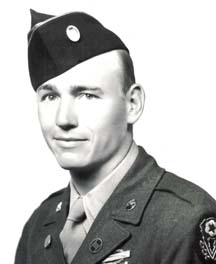


William B. Ruth, 3rd AD, World War II Diary

A World War II Diary –Battle of the Bulge

As you read this diary, much is written in the present tense; that is, as I wrote it during 1943 – 1945. Occasionally, you will find notations that I make in 1988 as I transcribed the diary in preparation for printing. December 16, 1944 – January 25, 1945

December 16, 1944: We have heard that the Germans have just begun some heavy action. We are told to get packed and get ready to move out on a minute’s notice. Our radio, which has been silent for over two months, becomes heavy with messages. The messages were trying to determine where the main thrust of the German attack was. Finally on December 20th we were told to move out. We picked up our tracks in a hurry. We were told over our radio that the Germans were shooting the works. Intelligence informed us that it was all or nothing. The Germans planned to take NO prisoners — it was killing or be killed. So, we were forewarned.

As we left Breinig and headed westward in retreat, it was a nightmare of muddy roads, bitter cold and heavy fog which limited visibility so that Carl Kieffer needed Tex and me to help him along the road. On many occasions we had to stop until vehicles in front of us were either winched back onto the road or, if mired too deep, they were left for the following maintenance crews to handle.

Tex and I being on the radio were hearing things we weren’t pleased to hear. Adding to the fog and pitch black night, hundreds of German buzz bombs were being sent our way. Several crashed nearby. We later heard from Captain Woods that one missed General Roses’s jeep by 100 yards and knocked his driver out of his vehicle.

There was an icy, paralyzing mist over the entire battle front, a cloud of fine driving snow that glazed the roads to slippery ribbons and many tanks, trucks, and half-tracks skidded off the roads. Snowdrifts covered extensive fields of anti-tank mines and hard frozen ground made digging foxholes a nightmare. The Ardennes look like a Christmas card, but it is agony all the way.

We have just learned about Company G being surrounded by Germans. After using up all their fuel and ammunition, General Rose ordered them to destroy their vehicles and, on Christmas night were advised to infiltrate back to friendly lines as best they could. 

NOTE: This action was later called “Hogan’s 400” and is in war movies today.

My diary here was written in January once we got a breather and the German attack finally was coming to a screeching halt. The diary says: When we left Breinig on December 20th, we retreated westward to Theux, Belgium. Here we bivouacked, using a textile mill wall as a windbreak. What a change. After being used to a warm bed indoors, here we are freezing as we try to get a little shuteye. There is so much fog we really don’t know what’s happening. Tex and I take turns manning the radio. Early next morning we take off, still foggy, cold and unsettled. We entered Spa, Belgium, and stayed in the “Casino de Spa”, a very ritzy place, which used to be one of the favorite gambling resorts in Europe.

I will never forget this place. Here we are, a war going on all around us, one big state of confusion and it’s Christmas Eve. The morale was a little low and someone found a whole truck load of champagne. Our Mess Sergeant, John Barclay, was preparing a nice turkey dinner. He started this about midnight, Christmas Eve.

By 2:00 a.m. we got orders to move out. The Germans were attacking. Unfortunately, most of the guys had been drinking champagne all night and weren’t in a position to perform their duties. Our Company Commander, Captain Paul Woods, was in a dilemma. How can I move all these vehicles when no one is in a position to drive? He asked us to radio Headquarters and explain the situation. We were given two hours to shape up. About 4:00 a.m. we were all ready to leave. Our mess sergeant had put the partially roasted turkeys in the truck. We got a message to unload. We did. The mess sergeant got the field kitchen going again. An hour later we were told to load again. Finally, by 8:00 a.m. we were told that we were safe; the German’s were knocked out by a company of our tanks.

We managed to enjoy our Christmas turkey. We left Spa about 3:00 p.m., December 25th. This day was the first clear day since the German’s started their attack. Our planes, for the first time, had an opportunity to fly their sorties. It was cold and crisp (about 10 degrees) and bombers left their vapor trails. Fighter planes all around us. Somehow, I felt the spirit of Christmas. Somehow, I felt this to be a beautiful day. Being so far away from home and under these unusual circumstances I had the Christmas Spirit.

About 6:00 p.m. Christmas evening we entered Louveigné, Belgium. (We came through this town in September.) We parked our half-track near the side of a Belgian house and immediately a man and woman invited us into their home for the evening. They not only wanted to show us their appreciation, but knew with us around they had protection. So here we spent Christmas night. They gave us supper consisting of bean soup and steak. (They went all out.) Steak was hard to come by. They wanted us to know they were treating us as if we were royalty.

The radio reports began to sound encouraging and we were now getting the upper hand of the Von Rundstedt counterattack. After supper we spent some time talking with this Belgian couple and later that evening they offered us a shot or two of Cognac. My, what treatment!

I had to stand guard at midnight. The night was clear, crisp, and beautiful. As I stood guard and looked at the moon, my thoughts were on home and wondering how my folks were spending Christmas. With the picture card setting I described earlier, I still was in the Christmas Spirit.

December 26, 1944: We left this Belgian family about noon, and traveled twenty miles farther south to a little town called Tohogne. Here again as we parked the half-track along side a house, we were invited to stay inside by another Belgian family. This family consisted of an elderly lady, and her son, who was an artist, and also a member of the Belgian underground. I will never forget this family. This little old 75-year old woman walked around the house constantly fingering her rosary beads. She was deathly afraid of the constant booming sounds of the nearby artillery guns. She and her 40-year old son (Lucien Dumont) couldn’t do enough for us. The lady was afraid the Germans would pick up her son. He had a radio transmitter in the attic and was tuned into Paris and London.

NOTE: To my children. It was this stop that I saw and admired the picture that Lucien had painted. He gave it to me and I eventually mailed it to Lale. It has been in our living room at Pinney Drive and here at the farm. It’s the picture of the water wheel and the line of trees. He signed this picture with the following comment: “Bien Amicalement a la fiancée Le William. Mai Eulalia. Avec mon meilleur bonjour mon eternelle reconnaissance.” Translated this means: The good friendship I have made with Eulaila’s fiancée. With my many good remembrances, I will be eternally grateful.

December 29, 1944: We left Tohogne about 1:30 p.m. We headed northeast for about twelve miles to a village called Bois et Borsu. Here we stayed at a farmhouse which showed no signs of the war nor did this seemingly well to do family seem to be war weary. They were not as congenial as other Belgians. Their name was Genon. We spent the New Year Holidays here. There is a nice little church here and I attended and heard my first High Mass in many a day.

January 4, 1945: We left Bois et Borsu and went back to Tohogne. I believe our Captain Woods felt this town wasn’t as friendly, that’s why we left. We didn’t stay at the same place but today paid the elderly lady and son Lucien a visit.

NOTE: I have all the letters I wrote to Lale. Maybe I should say she has them and is allowing me to use them to add to this story. The letters up to this date have very little information relative to the war because our mail was censored and we couldn’t say anything for fear it would fall into enemy hands. The contents of these letters consisted mainly of talking about our families and friends. A letter I wrote Lale on January 13, 1945, contains some information that I believe is noteworthy to record.

I quote a paragraph: “My latest news from home hasn’t been too encouraging. John getting ready to ship out; Bob being called into the service; my kid brother Paul about ready to enlist. It’s really unbelievable, but I guess we have to face reality. I know the Good Lord will watch over my brothers as He has done with me. I have the faith He will watch over us in the future.”The letter continues: “Dad’s new idea of V-mails is really working good. I received letters he wrote every day in December and he is keeping his promise and writing daily. (Even though Dad writes them daily, I get them in bunches.) Sure is a faithful dad, isn’t he?”

AUTHOR’S NOTE: Before I left for overseas, Dad and I figured out a code that would tell him where I was and any other brief message I wanted to relay. The code was this. I would spell out my message by using the first capital letter in a sentence. Then my second sentence, the first capital letter would be the second letter of my message. The first capital letter in the third sentence would be the third letter of my message and so on. Our code worked very effectively.

January 16, 1945:We left Tohogne and traveled about 15 miles to a little settlement called Grand-Trixhe. Here we are staying for a few days and expect to pull out tomorrow. Here we made friends with a lady and her daughter, who published a magazine. The lady’s hobby was spinning wool. It was very interesting to watch her. Took a picture of her spinning. They were a jovial pair. The group and I played Rummy and Casino with them. The elderly lady was quite a joker. She had a little dog called Fifi. Fifi was a playful little mutt. We witnessed some of the coldest weather yet. The scenery is beautiful. The radio reports the Russians are making a big push at present.

January 17, 1945: We left Grand-Trixhe and headed back to Bois et Borsu. I asked the Captain why these last several days we kept going back to previous locations. He said “This is the bitter battle for billets in the Belgian Bulge.” Then with a smile he said, “George Herman, there are spies around and we must continually move so the German’s can’t get a fix on our supplies with their artillery.” This got me to thinking. As Tex and I manned the radio, we knew of the Hogan 400 retreat. We were well aware of the Malmedy Massacre, where the Germans shot a complete company as they were being taken as prisoners. And to think I could have been assigned to this company (Reconnaissance Company). We were aware the 33rd Armored Regiment had been operating in the hottest sectors of the Ardennes offensive (Battle of the Bulge). We were assigned to the most important routes of advance in the early stages of Von Rundstedt’s drive. And as the reports trickle in, the 3rd Armored was doing a full part to pinch off and eliminate this salient. Men of the “Spearhead”, the real victors of this campaign, were coming out of a triumphant campaign, were coming out of action with weariness steeped in their bones and pain in their quiet eyes. We felt an abiding hate for the enemy.Well, here we are again at Bois et Borsu. The three little Genon kids were glad to see us again. We stayed at a different home this time, but made frequent visits to the Genon family.

We are told that we will be here for a week or ten days, unless the Germans pull off something else. Our captain doesn’t think so. He feels the Germans have shot their wad. We are noticing fewer robot bombs, the incoming artillery shelling have diminished and the Luftwaffe seems to be non-existent.There’s busy work around these days. Many of our trucks that have been carrying ammunition, gasoline and rations have returned to join us. They have been following their respective tank companies to be on the spot to re-supply them as they run out of supplies. The orders were to refit, repair, and replace, in order to start a spring offensive. There seems to be a new feeling in the air.

While here two things have happened with me. One, I had a surprise visit from Warren Griffith. Warren lived on Bentwood Street in Geistown, Pa. and was a friend of the family. He was John’s friend. They did a lot of singing together. Warren was with a field artillery unit and heard the 33rd Armored Regiment was nearby. Being a lieutenant, he was able to track me down. We spent an afternoon together. Naturally, we talked about what had just happened this past month. We talked about home, our families, and just shared a great afternoon together. He left me, heading for Luxembourg.

The other thing that happened was quite unusual and painful. While standing in chow line our Warrant Officer, Buster Dodson was standing behind me. Buster was a big robust man who weighed about 250 pounds and stood about 6 feet 4 inches. He grabbed me in a bear hug, and raised me off the ground. As he did this, I heard something crack. After being in pain for several days, I went to the medics. I learned that I had two cracked ribs. They taped me up so that I looked and felt like I was wearing a corset. It was very uncomfortable and limited my mobility. My buddies, Tex and Carl, got quite a kick out of this.

As it turned out, maybe this incident wasn’t all that bad. Captain Woods had a quota to send to Verviers on R and R (Rest and Rehabilitation). He felt the rest would do me good. So on January 28th I departed for Verviers. I spent three days here chumming around with Joe Orient. Joe was from Imperial, Pennsylvania (near Pittsburgh). This is not the first time I visited Verviers. In fact, I was quite familiar with this town. We liberated the town back in September. We stayed overnight here. A family treated us to a nice breakfast that time. I looked them up and visited with them. It was a very awakening experience for Joe and me.

They were so glad to see us. They, as many other French and Belgians, had adopted us. They knew our patch, they knew who the Third Armored was. They worried about us. They knew some of our units took a shellacking. They knew about Hogan’s 400 (G Company), Bastogne, Malmedy, and others. They were saddened to know that we suffered heavy casualties. They were so grateful to realize that we Americans, not once, but twice, drove the Germans from their country and town. They overwhelmed us with kindness. Yes, this was quite an eye-opening and sobering experience.

While here we saw Marlene Dietrich in person. We were impressed with her personality and her down to earth demure. We also attended a dance at the USO. All in all, I had a pleasant time here. I attended a few shows, and had my first ice cream since I left the States, and bought some souvenirs.

When I got back from Verviers, I learned that Warren Griffith was here to see me again. He left a note. I had a hunch he would return. Sure enough, yesterday about 10:00 a.m., Griff showed up. We spent several hours together. Another nice visit. After Griff left, Tex, Carl Kieffer, and I went to Huy. We had a nice time.

Source:  http://www.battleofthebulgememories.be/
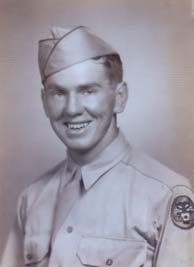
 

Richard Stone, 526th AIB at Houyire Hill

One day of Battle at Houyire Hill, January 3, 1945

This presentation is an attempt to give you an overall picture of “B” Company’s attack, its failure and possibly an explanation of what happened and why.

By December 24, 1944, the 1st S.S. Panzer Division is kaput. The 526th has helped to stop the best the Germans could muster in 1944. We have paid the price in men and blood for our battle star and Combat Infantry Badge.

 For the 526th and especially “B” Company the worst is yet to come. The German Army is not defeated and behind Colonel Peiper lay a veteran division pulled out of Norway for their drive into Belgium. They had taken the city of St Vith and now they were dug in on the high ground above Baugnez, Geromont, Otaimont and Hedomont. They are well equipped, well deployed and well dressed in their grey-green and white reversible uniforms.

The story really starts on the morning of January 2, 1945 when Colonel Irwin is notified that quote “in two or three days the 526th will conduct a raid using approximately 50 men.” End of quote. The company chosen for the attack is “B”.

 At about 11:30 the same morning the battalion is notified it would not be a raid but quote “A limited objective attack of company strength on Houyire Hill at 810007. The attack will be tomorrow January 3rd.

At 2 P.M. that day, Colonel Irwin reported to the 30th Division H.Q., here he was briefed and then went to the Regimental H.Q. of the 120th Regiment, our parent organization. There he received orders for the attack. It is now 3:30 P.M. At 6:15 P.M. he returns to Battalion C.P. and at a meeting of staff and Company C.O.’s issues orders for an attack at 8:30 A.M. January 3rd.

Also accompanying is in the attack area is “I” Company of the 120th Regiment. This is of considerable interest to us for two reasons.
1. We are now a part of and entered in the history book of the 120th Regiment and
2. The part played by the tanks assigned to “I” Company

I now quote from the history book of the 120th. “Company “B” 526th was to drive through Hedomont and Baugnez for the hill called Houyire 1500 yards S.W. of Baugnez. It was to be supported by artillery fire from the 1st Battalion and to be prepared to withdraw on orders. Company “I” of the 120th was to attack the area southeast of Otaimont. Its orders were to take prisoners and withdraw on orders to regular position.

Still quoting from their history. At 8:30 A.M. both companies moved out on schedule. The day was foggy, snowing and observation was difficult. Company “I” made good progress until they were well into German lines when the enemy opened up from well camouflaged positions that had been covered with snow. The tankers speeding through the town helped flush out the enemy and the company was able to extricate itself. Company “I” took many casualties and at 7:30 P.M. with 3 prisoners according to plan withdrew.

Resistance proved stiffer for Company “B” 526th. They reached Hedomont but just beyond ran into withering machine gun fire which made it clear the Germans intended to hold Houyire at any cost. Company “B” with at 5:30 P.M.”. End of report and quote.

Now let’s return to our story and the morning of January 3rd. We had been issued white long johns and white towels to put over our uniforms. We were issued extra ammo. I remember we commented about what good aiming points the green and white made. The C.P.’s have been set up; medical half tracks are placed for casualties.

Communication is to be by radio except for a wire line that is to be with Lieutenant Bernstein and the 1st Platoon. Captain Wessel will ride a tank with radio communication to others. It is cold, foggy, and snowing on occasion and visibility is limited. Our artillery from 1st Battalion 120th starts firing on predetermined targets and we are moving out.

At 8:30 A.M. and 8:40 A.M. the 2nd Platoon under Lieutenant Batt and 3rd Platoon under Lieutenant Halbin leave the line of departure in an area named Floriheid at 790033. They skirt a mine field at 790031 and head for Hedomont. The 2nd is on the right and the 3rd on the left.

Captain Wessel on his tank with the radio communication is to meet the infantry near Hedomont at point 795022. He arrives there too soon and is fired upon and withdraws to await the infantry. The 2nd Platoon has already taken three casualties from or own artillery and it has put a light machine gun out of action.

The infantry continues the attack and a German outpost starts firing and Joe Farina, the pointman, is killed. Felix Garcia returns fire and kills the German. The rest of the line moves forward until a machine gun opens fire. Warren Watson with Crugar and Gardiner giving covering fire kills the two machine gunners. Nearby another German jumping from behind a tree empties his burp gun hitting no one and is killed by bullets from several men.

It is now 9:15 A.M. and the infantry is in part of Hedomont. Captain Wessel on the tank platoon leader tank has made contact with them. He is to communicate with the C.P. using their SCR 238 radio. He has had no communication with Lieutenant Bernstein or the 1st Platoon. Apparently he has had none with his C.P. Time is taken here for reorganization of the 2nd and 3rd Platoons and the attack is continued.

At Baugnez 1st Platoon of “A” Company under Lieutenant Beardslee at 8:30 A.M. proceeded to 814020. They take two casualties from enemy artillery at 808023 but move on to set up flanking protection in a semi circle from 814012 to 814020. They are to receive intermittent small arms and mortar fire all day. They are finally ordered to withdraw at 8 P.M. and the last get back to their area at 10:15 P.M.

Things have gone very poorly with 1st Platoon under Lieutenant Bernstein. They leave Geromont proceed up the road to 810020 where they head south toward the objectif 810007 Houyire Hill. Enemy artillery hits soon after we leave the road. John Lopez is killed and Sergeant Magnuson is knocked for a flip but not hit by shrapnel and recovers.

We proceed on to 808015 where we are met by heavy machine gun and mortar fire from the woods ahead of us. The front line Johnny Hess, Ralph Iverson, Bill Duncan, D. J. Johnson and others are dead. The attack continues and one machine gun is captured and the two men are made prisoners. Some want to kill them but fortunately they are taken back otherwise 13 of us later captured would be dead.

Some are now in the woods and some of us are on the hillside in the snow. Art Allen come along side of me with his light machine gun. He is also out of ammo. He has already lost two loaders he tells me. John Bush is trying to work his way forward in front of us. He flops over in the snow dead. Art decides to go back for more ammo and a loader. I decide to try for the woods. It takes a couple of dive in the snow to escape an machine gun but somehow I made it. I later discovered the pants pushed under the long johns on my back have several holes in them.

It must be 9:30 A.M. Part of the platoon is in the woods and the rest are scattered over the hillside dead, wounded or pinned down. Back at Hedomont, the reorganization completed, the attack is continued and ordered. You continue about 200 yards to 797019. Here the leading squad becomes victim of a machine gun off to the right in a barn. Sergeant Schuster has been killed earlier by a hand grenade and now Sergeant Haefs, Bernard Ward, Warren Blankenship, Oliver Love, and Warren Watson are all hit. Sergeant Black returns fire with his machine gun but is also wounded with a bullet through his right eye.

The tank with Captain Wessel moves up to fire a couple of rounds at the barn with no result noted. The attack continues as far as 799017 but now we come under fire from another machine gun at 805016 which has also hit the 1st Platoon. Again the tank fires a couple of rounds with no results. We are pinned down and enemy mortar rounds are starting to drop around us. Artillery is called for but refused because men from 1st Platoon are in that area.

It is now 11:30 A.M. and Captain Wessel has had no contact with his C.P. in the rear at 790033 nor has he heard anything from 1st Platoon. He returns to the C.P. to make contact with Battalion. He is told to hold and defend Hedomont. He is also told the tanks will withdraw at dusk. He returns to Hedomont with the orders at 2:30 P.M. and then returns to the company C.P.

Meanwhile men of the 2nd and 3rd are trying to find any cover they can. Felix Garcia with bullets thumping around him decides to make a run for a barn. He makes it but his canteen doesn’t. In the barn are Sergeant Black and Walter Volinski both wounded. Joe Ricks from the medical detachment exposes himself to pull a man back to the cover of the dirt road. Just before he gets to the road near Lieutenant Halbin an enemy bullet kills him. Wounded men like Watson are trying to work their way back to the C.P. and medical assistance. Sergeant Horvat helps a badly wounded Sergeant Fazio back and returns to Hedomont with supplies. Lieutenant Halbin with a badly dislocated knee returns to the C.P. on way to an operation in Liège.

At about 11:30 A.M. when everything seemed to be stalled Colonel Irwin calls Lieutenant Batt away from 2nd Platoon and sends him to find out what happened to Lieutenant Bernstein and the 1st Platoon. He takes 3 men and goes to Baugnez. There he contacts Lieutenant Beardslee and 1st Platoon “A” Company. No one has heard from Lieutenant Bernstein since 8:30 A.M. Lieutenant Batt starts up the hill and contacts 3 men crawling back down who have been under the machine gun at 805016. They are from 3 different squads. One is a machine gunner who is out of ammunition. Lieutenant Batt asks how many men have been lost. They don’t know and say a lot. He can hear a fire fight going on up in the woods. He continues working his way up the hill and met some men with Lieutenant Johnson. None of these people had seen Lieutenant Bernstein since 8:30. Lieutenant Batt started to return and was pinned down for a time by machine guns at 805016 and 805018. They worked their way out and reported to Colonel Irwin. Lieutenant Johnson and the men and they build on the right flank of 1st Platoon “A” Company.

We in the woods find it is no sanctuary and we are trying to find any cover we can. At the same time with burp guns and hand grenades the Germans are trying to bring other machine guns in on us. Swanstrum and Sciarra working their machine gun help to discourage them. They are both to end up with shrapnel souvenirs. We are trapped and with no communication. We keep looking for the tanks or the rest of the company.

Finally Lieutenant Bernstein sends Warren Clutter out to make contact. He doesn’t get far before he is cut down. I just heard this year that he did make it back. Then Bernstein takes off heading down the hill but a bullet in his posterior puts him in a shell hole and he is later captured.

As we all remember shortly before dusk, the Germans started their counter attack with a barrage of mortar, rocket and artillery fire. The bombardment lasts 20 minutes. To those of us in the woods it was tree limbs, snow and metal coming down followed by hand grenades and burp guns. I take a bullet through my left foot and one through the right shoe. Near By Jim Coslett is cut up by four bullets and will die as a P.O.W. Behind me Sergeant Leo Day and Ralph Russel are killed. Sergeant Magnuson finally calls out Commeradon – the firing stops.

We are relieved of our cigarettes, candy, food, watches, etc. A German soldier about our age helps get my shoe off. We put the bandage on and he makes a tourniquet to slow the bleeding. We are marched back to an area where a medic looks at us but doesn’t do anything. There are 13 of us left. Eight of us have collected Purple Hearts.

We are sat in a semi-circle then taken to a small farm house where we are interrogated by a German officer who speaks very good English. He already knew more about us than we did. He told Lieutenant Bernstein “My men wish to honor your men for the bravery with which you fought but you never had a chance”. For us the battle is over.

 It is not over for the rest of you. Shortly before the barrage starts Ray Holderman, who has already collected one piece of mortar shell, decides they aren’t in a very secure place along side a small hedgerow. McCaslin, Morrow, Wood and Gattis all agree that the machine gun and mortars are getting too friendly and they manage to get back to safer ground. Cotton Potter discovers that the machine gun he has been packing all morning really wouldn’t have worked as a piece of shrapnel has destroyed the operating mechanism. Everyone is hunkering down now trying not to become a target. The cold is beginning to make itself known. Captain Wessel has a new radio and is just leaving the C.P. for Hedomont.

Now comes the bombardment and the tanks take off refusing to wait for any of our wounded. The counter attack comes. There are about 130 white clad Germans. They are hard to see. Orders are given to withdraw and by 5:15 P.M. we are back to the original line of departure. Lieutenant Jacques will spent most of the night trying to account for everyone and get the casualty lists.

When it is over “B” Company has captured 4 Germans from the 2nd and 3rd Companies of the 293rd Regiment of the 18th Volksgrenadiers. The official after action report says we killed approximately 25.

Our attack was a feint, not a main attack, but we were sacrificed to get the Germans to commit their reserves to our area. I understand it worked and they did commit them but we paid quite a price.

 Some conclusions I have reached on what went wrong.

 I – There was very poor intelligence and apparently very little organization. It appears the attack was conceived without real preparation. No one seems to have known what the enemy had or where it was located. We went from a 50 men raid to de done in two or three days to a two company attack the next morning with less than six hours of preparation.

 II – There was a real problem with communication. This is also a planning problem but apparently none of the equipment was tested or put together until we were in the attack. Lieutenant Bernstein was supposed to have a wire phone. What happened to that I don’t know but apparently there was no backup unit. Captain Wessel never heard from Bernstein after 08:30. Yet Battalion, if it knew the problem, did nothing until about noon when it took Lieutenant Batt from his platoon. Why not someone in H.Q., From the after action report quote “It was now 11:30 and because there had been no contact with his rear C.P. up to this time, Captain Wessel returned to his C.P.” He was starting to return with a 509 radio when the counter attack began.

III – The artillery and tanks. Others than the initial barrage on the prepared targets, we could apparently get no further help from the artillery. There is some question about the tanks. We supposedly had one platoon of medium tanks from the 743rd and one Tank Destroyer gun from the 823rd T.D. Battalion. Did we have them and if so what did they do? Even the SCR 538 radio, Captain Wessel tried to use apparently didn’t work. They wouldn’t even take our wounded back.

Remember I quoted from the 120th history. “”I” Company had become entrapped but the tanks hurrying through Otaimont had moved the Germans out so the company could extricate itself”. Well it seems we got a different kind of tankers? They sure didn’t contribute much to our attack or defense.

IV – The weather.

I suppose we can say the weather is the same on both sides of a field, so it didn’t contribute to our defeat, but the Germans were not open and exposed so they probably benefited the most. We all agree the weather was terrible and the Krauts were better prepared for it than we were.

V – We were green. This was our first attack.

Final Conclusion. 

It is interesting to note in this game of chess called war, if you are the General or player who gets to move the pawns, you can do the same thing over and over until you get it right or run out of men.

Let me quote you from the history of the 120th Regiment. “On January 13th the 3rd Battalion of the 120th of the 30th Division was sent in deep snow to take Houyire. The casualties sustained by all three companies reached a new high. They finally took Houyire. Company “I” strength was now that of a strong platoon.”

Source:  http://www.battleofthebulgememories.be/
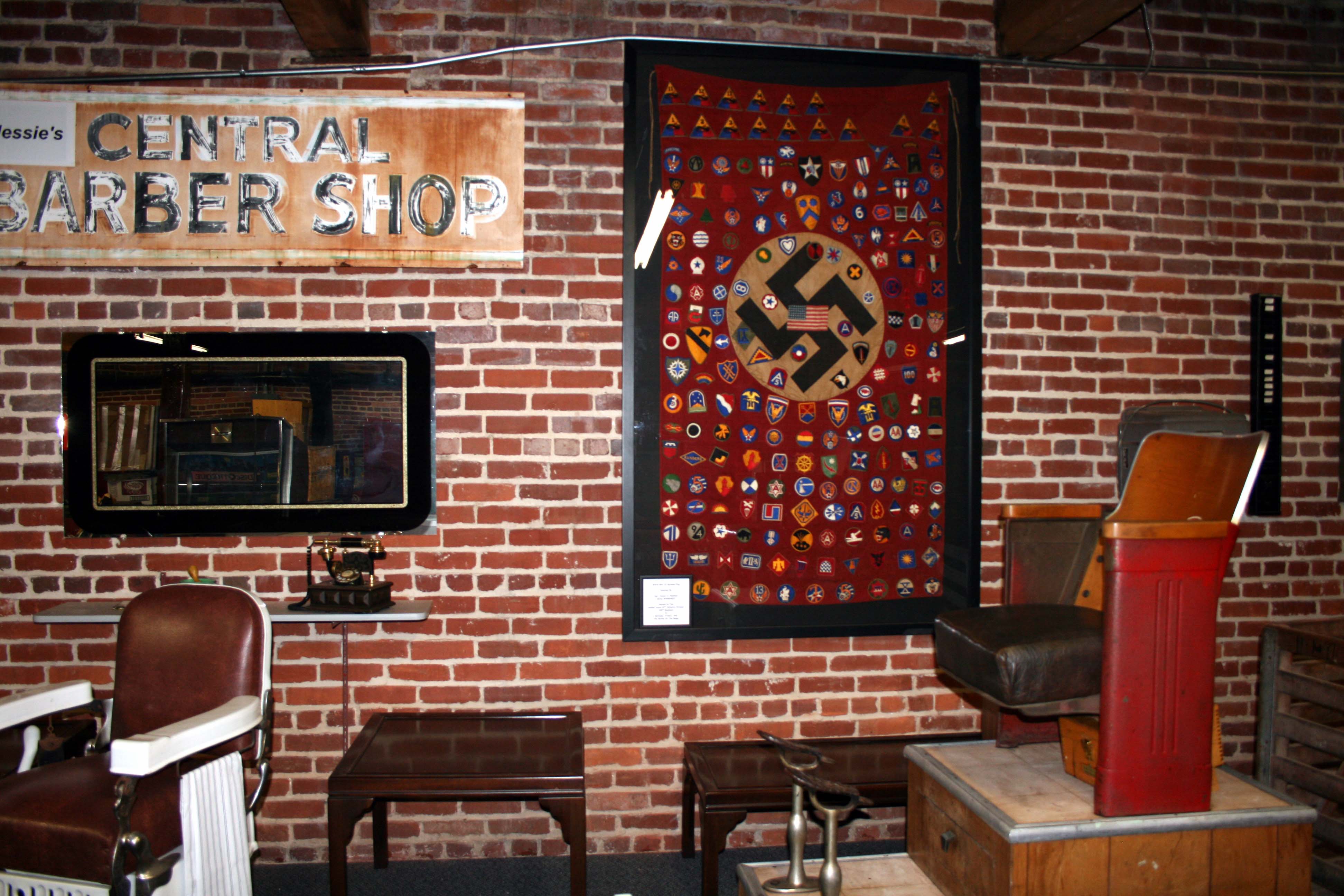


Milton J. Schober, 106th ID – A Collection of Memories


While reading the in-depth study of the action at Parker’s Crossroads in a recent issue of The CUB (newsletter of the 106th Infantry Division Association) it appeared to be a miracle that Company “F”, 424th Regiment was able to withdraw from the “fortified goose egg” on December 23, 1944 without colliding with either the 2nd SS Panzer Division coming from the south or with the 9th SS Panzer Division coming from the east as depicted on a map accompanying the articles. Through the many years since the War I’ve given a lot of thought to the actions of long ago. At the time I rarely had any idea of our whereabouts and probably didn’t attach any importance to it because of an underlying feeling that I wasn’t going to survive anyway. In the intervening years I have read a lot of first person accounts and historical interrogations of 106th Division personnel and have made a half-dozen trips to the Ardennes, starting in 1969. As a result I have a pretty good idea of Company “F”, 424th movements during their combat period.
 
Like most of the 424th Regiment, Company “F” moved into front-line positions on December 12, 1944. I was an exception, arriving on the 15th because of guard responsibilities at our previous campsite. We were at the very end of the many miles of front covered by the 106th Division. The next unit was Company “B” 112th Regiment of the 28th Division.
 
When the big noise started in the early morning of December 16, Company “F” wasn’t doing too badly on their hillside perches looking toward the village of Lutzkampen some 1500-2000 yards distant. (Perhaps I should qualify this as the first platoon of Company “F”, since the other platoons of the company did-get artillery and troop contact.) We could see the action of German troops moving against Company “B”, 112th Regiment, at the outskirts of Lutzkampen and we noticed German artillery landing in the farm fields in front of us, but nothing was landing on us at the time. In the late afternoon of the 16th, our company jeep came bouncing down a logging road to bring hot chow to first platoon men.
 
While waiting to be served, there was a loud explosion that I took to be incoming artillery but then realized that 25-35 feet away was a 3″ anti-tank gun of Company “B”, 820th Tank Destroyer Battalion which was firing toward Lutzkampen – a column of German tanks was the target, and what excitement there was in watching those fiery orange balls streaking to and exploding the tanks. Some say there were six tanks, others say five tanks and a truck, but whatever, they all burned furiously. Charlie Haug was in a foxhole very close to the tanks and wrote his story about them in a 1992 issue of the CUB. While all of this was going on, one of the cooks dishing out the food said: “Hurry up, you guys – we’ve got to get out of here.” He got no sympathy from us!
 
The following day, the 17th, German awareness of an anti-tank gun in our area resulted in barrages of “screeming meemies” (Nebelwerfer) landing on our hillside. In the afternoon I, with two others, was on duty at a lookout post when an incoming shell not heard by us apparently landed just short of our position. We were knocked to the ground and showered with dirt but had no injury other than severe ringing in our ears.
 
After darkness word came down for Company “F” to pack everything possible and to be ready to move out in twenty minutes. Riflemen were each given two bandoleers of 30 caliber ammo, which in itself is a load. This was the point at which most gas masks were abandoned. I remember Russ Mayotte, one of the smaller men in the first platoon, cramming everything possible into his knapsack to a point where he could barely lift it on his shoulders. After a few miles through the woods up and down hills, discarded ammo and other materials were quite noticeable along the trail. The big killer after crossing the Our River was climbing the Our Berg south of Burg-Reuland. We had been on the march for over four hours when we collapsed on elevated farmland after midnight. The admonition to dig foxholes at that time was ignored.
 
The morning of the 18th saw us digging a defensive line. Our activity didn’t go unnoticed at the farmhouse 500 yards further up the hill. The occupants came parading out, the lead person carrying a pole with a white cloth attached as they moved off to the west. I certainly sympathized with their action considering the appearance of a battle shaping up in their front yard. That didn’t turn out to be the case. Its fuzzy in my mind as to whether we stayed one day or two days in the farm area but when we did retreat a little further to a wooded area, it was at 2 a.m.
 
We left the latter wooded area on the morning of December 21. Down the muddy roads we hiked, stopping occasionally to put snow in our canteens or water from ruts in the mud (halogen tablets added). The men moved in columns on each side of the road, with 5 yard intervals, while jeeps and 6×6’s moved down the center of the road, bearing ammo and equipment. It was evident that we were in another full scale retreat. Food must have been in short supply because I remember eating a raw turnip lying in a field, and I donut like turnips. Our suspicion that German forces were in the vicinity was shortly confirmed. The noise of vehicles moving down the road attracted the attention of their artillery observers and several shells came screaming in about 100 yards short of the road. We had been dragging along but this was the incentive we needed to double time out of that locale. About five miles from our starting point we came to the village of Oudler where we saw several Sherman tanks on guard with their guns leveled down the several roads leading into the village center. They were ready to meet the Germans when they appeared. We kept moving through Oudler and perhaps went another four miles to reach Thommen, where we spent the night quartered in houses. There was talk of conducting a raid with tanks to retake Oudler which had been captured by the Germans after we had moved through it earlier in the day, but the plan was dropped.
 
On the 22nd we continued our retreat until late afternoon when we came to a village where we were told to set up a perimeter defense. I had long wondered the name of this village, and thought it was either Braunlauf or Crombach. It wasn’t until my friend, Joseph Dejardin, furnished me with a number of interviews with 106th Division people that I found one with Lieutenant Robert Logan, S-3 of 2nd Battalion stating the perimeter defenses were set up by “E” Company around Aldringen, “F” Company around Maldingen and “G” Company west of Braunlauf. So now I knew it was Maldingen that we were defending on the morning of December 23.
 
At a very early hour on this date there was a bumper-to-bumper assembly of tanks, half-tracks, jeeps, you name it. Where they had all come from I had no idea, but they were all lined up on the road out of Maldingen. Someone yelled “Get on board” and in short order most of “F” Company was clinging to some form of transport. I climbed on a half-track. About this time our Company Captain protested to the Armored Officer that his orders were to defend the village, to which the response was, “You can stay if you want to, Captain, but were getting out of here!”
 
It seemed an eternity for the column to move as the troops sat unprotected while some German shells landed in the vicinity, with wounds resulting. I remember seeing men with the 28th Division’s Bloody Bucket shoulder patch placing charges on trees to create a road block. Finally, to our immense relief, we began moving, and speed picked up when we reached the hard surfaced road running through Beho and toward Salmchateau. We passed a handful of Belgian civilians, some on bicycles, most with luggage, moving in our direction. It certainly wasn’t a moral builder for them to see us pulling back, but I know I felt exhilarated in getting out of what seemed a hopeless situation. I had the impression that we were putting miles between us and the Germans but in reality we were running parallel to their thrust. I donut know where we crossed the Salm River, but we came to one point where a bridge had already been blown, probably at Salmchateau. When we did dismount we were in the midst of 82nd Airborne troops and we felt we were in good hands. Now we commenced a march to an unknown destination. The air was frigid and once the sun disappeared temperatures plummeted. I remember that the water in my canteen was frozen in a solid block when we reached our destination north of Manhay in the Werbomont area.
 
We had a peaceful day on Christmas Eve watching heavy bomber formations flying east. I’ve written previously about our disastrous attack Christmas Day at Manhay. “F” Company suffered many casualties from German tank machine gun fire and apparently our own artillery. We maintained a defensive posture in the Manhay-Grandmenil area until December 30, when we were trucked back to the small Belgian village of Warzee, billeted in the warm homes of residents until January 7. Rumors had us going on line near Stavelot when we started our move. However, heavy snows were falling making driving treacherous, which probably was the reason for stopping in La Reid were we stayed several days as the snow stacked up. Our rest came to an end when the snow stopped and the temperature had a deep freeze feel. We trucked to the small community of Aisomont, a short distance east of Trois-Ponts, on January 10, 1945 where we joined the rest of the 2nd Battalion as regimental reserve. I remembered unattended cattle roaming about in areas where strings of American antitank mines were placed; I flinched when cattle hoofs came ever so close to sending them to eternity, but I never saw it happen. However there were frozen dead cattle, artillery victims lying about, and one enterprising soul chopped beef off the hindquarter of one and warmed it in his mess kit. It may not have been a medically sound decision, but it tasted a lot better than the “’C” rations we had. Buildings in Aisomont were badly torn up by shells and provided us no protection from the extreme cold. Several dead German soldiers were lying about, one near where we had set up sleeping space. I remember staring at the wax like face and speculating on the background of this unfortunate soul. On January 14, 1945 we moved into Lavaux which had been captured the previous day by the 1st Battalion, 424th Regiment and on January 15 “F” Company took Ennal.
 
After our capture of Ennal, the 30th and 75th Divisions pushed forward and pinched us out of action. For the next ten days we were living in the frigid out-of-doors, but not engaged in combat. On January 25 we moved into an area just west of Hoch Kreuz, the meeting place of the highway and the road into Medell. “F” Company was in reserve and “G” Company was to make the attack on Medell. In the early morning three tanks of the 7th Armored Division came from our rear and moved ahead of us behind a line of evergreens which acted as a screen. When “G” Company commenced the assault the tanks moved out in support and we awaited the results. It must have been several hours when word came back that “G” Company had been hard hit and that “F” Company had to join the attack.
 
As we moved forward it was disconcerting to see the wounded being carried back. I recognized one as the commanding officer of “G” Company – who was being carried by several German prisoners on a board used as a stretcher, blood coming out of his mouth. He may have already been dead. The snow we were moving through was deep until we came to the plowed roads. As we moved onto the road running into Medell we could see the three Sherman’s tank, more or less immobile, in a field to our left. An anti-tank gun was firing at them and the noise of the shells exploding near me scared the hell out of me as I crouched behind a snow bank offering me cover but no protection. Forward movement froze for a few moments until Dave McErlane, 1st Platoon Sergeant was able to get off shots close to the young German gunner to move him off the TD gun. This permitted us to gain entry to the first few houses. I remember running up to the second floor of one which had the corner blown away, thus providing a clear view of the rear of Medell. I saw a German in white camouflage running across an open space 200 yards ahead, one of the few times I got a good look at the enemy. I hurriedly fired a full clip of ammo but no results were apparent.
 
Medell is in the area of Belgium that was part of Germany prior to World War I. As a result many of the residents had sympathies with Germany and in fact had sons in the German army, as evidenced by pictures prominently displayed in some of the homes. As we moved from house to house we faced a confusing situation of disinterest in one house followed, perhaps, by exuberance in the next.
 
The tanks by now had moved over the Medell road following our troops into the main part of the village. Sergeant McErlane, at the head of the column, turned a bend in the road and spotted German troops climbing into trucks. McErlane motioned for the lead tank to move up and take a shot; they said they had no ammo, and a great opportunity was lost. Meantime the Germans spotted McErlane and opened fire, hitting him in the shoulder. I was just short of the village church at this time and retreated. In doing so I saw the face of a German soldier looking out of a shed window. Yelling “Heraus” (out) we suddenly found ourselves with five prisoners. Telling them to face the wall so we could search them, they apparently feared that we would shoot them and they began yelling “Nicht schiessen” (Don’t shoot). We calmed them down and I assigned one of my squad to move them to the rear. One the Germans at the end of the village got away into the hills behind Medell (where Eric Wood had carried on his guerilla activity earlier) we moved through the village and established outposts. Now at last we had warm sleeping quarters!
 
I slept in a house with pictures displayed of young men in Germans uniforms. Chests in the house were crammed with GI woolen underwear and other clothing. In the barn loft were duffle bags of GI shoes, undoubtedly material we lost at the onset of the Bulge. One evening as I was writing letters a German shell struck the roof. This particular house was partly barn, with a flimsy roof, and the rest, living quarters with sound structural qualities. There was no obvious damage to the interior of the residential portion, but the husband ran into the barn section and returned, crying, “funf stuck, alles kaput.” I didn’t appreciate the significance of his remark, but when I went into the barn section I saw five cows, all on their backs, with feet extended upwards, killed by shell fragments.
 
Frequently when we moved around Medell we would attract German artillery; running into the cellar of the nearest house we would meet many civilians. There was one particular house off the main street and not occupied by civilians, which was under sniper fire. We met there occasionally and whenever I got near the entrance I would hear the “zing” of a bullet near my head. I often wondered how close those bullets were. We were unsuccessful in locating the sniper. A bit of irony about our capture of Medell – the Star&Stripes reported, “On the First Army front, the Seventh Armored Division took the towns of Meyrode and Medell…”
 
On the 28th we were suddenly told to abandon our cozy quarter in Medell and to move to the heights beyond. Most of us dismissed the thought that the enemy may be near at hand as we romped in the deep snow, engaged in snowball fights, and in general became very noisy. A few mortar shells landed in the area and no one had to be told to dive into a foxhole. One man yelled that he was hit but on examination a mortar fragment was found embedded in his overshoe, with no other harm done. Early the next morning men of the 82nd Airborne joined us briefly before commencing their move to push Germans back into Germany. The waist deep snow made movement tiresome so men were rotated into the position of breaking a path. As the 82nd moved into the distance, occasional rifle shots sounded and then silence. We knew we were “rear echelon” again and it felt good.
 
It was time for a rest. Several miles back we met trucks of our regiment and our spirits rose at the prospect of getting to rear areas again. We learned that we were to be placed in XVIII Airborne Corps Reserve in Plainevaux, Belgium. It was after midnight when four of us awakened Papa Betas to whose house we had been assigned. Knowing that we had arrived from the bitter Ardennes cold, he soon had hit coffee ready as well as heated pads for our cold feet. Our Stay was extremely pleasant. Our Supply people helped the residents by providing such things as coal and; yes, toilet tissue (to substitute for the newspapers being used). Plainevaux is about twelve miles south of Liege and on the path used by the Germans in sending V-1 robot bombs. We thought it was funny when, upon hearing the approach of a V-1, we ran outside to view it while the Betas ran into their cellar. Their action no doubt was related to knowledge that a short round had previously landed in the village. All good things must end – on February 14, 1945, I left on a quartering party mission that resulted eventually in Company “F” relieving elements of the 99th Division in pillboxes and forest areas in the vicinity of Neuhof, Germany.
 
Source:  http://www.battleofthebulgememories.be/
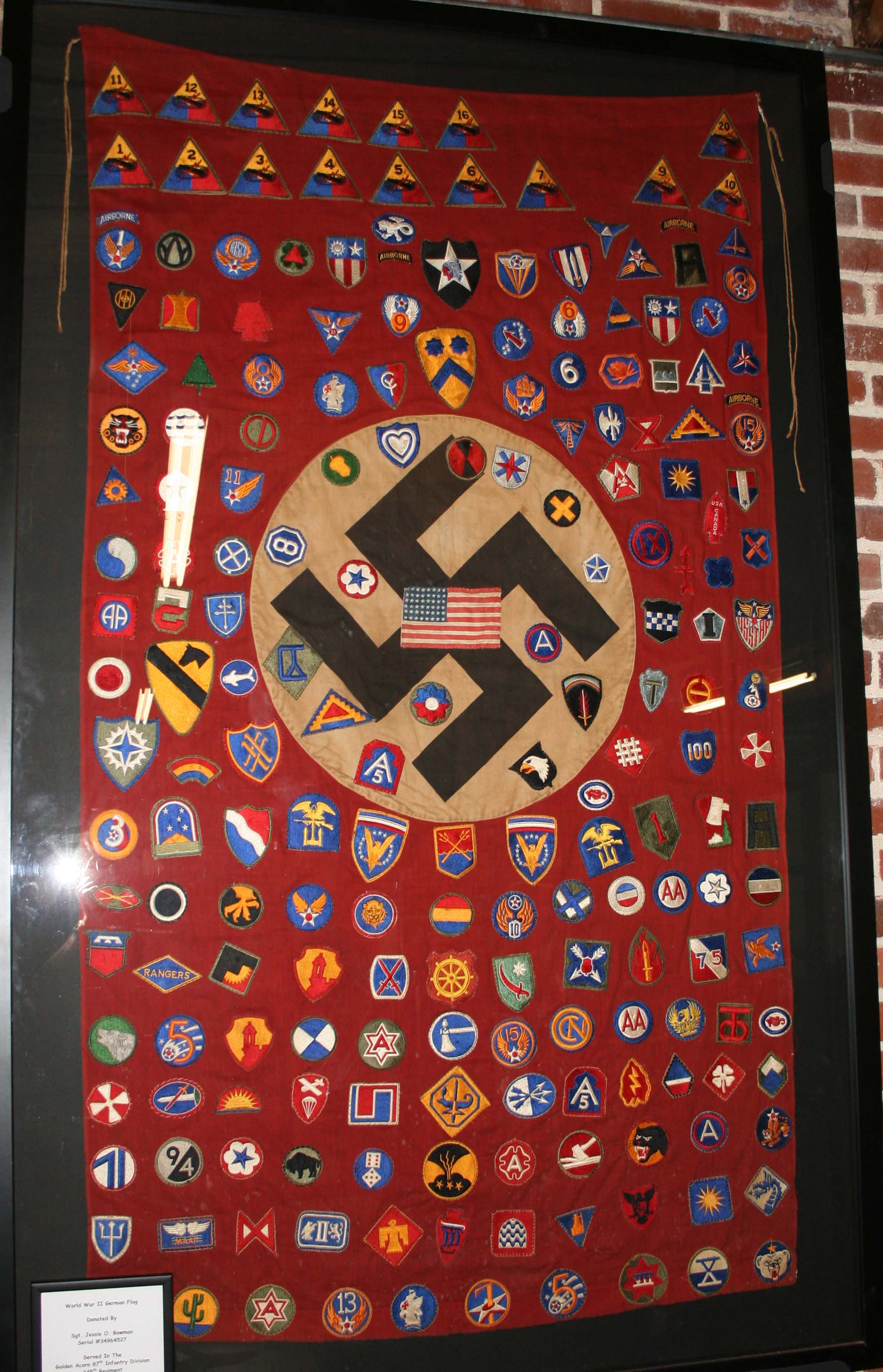
 

US Flag made during battle

AMERICAN PATRIOTISM

“If they won’t give us a flag, we’ll make one,” said First Lieutenant Samuel Lombardo, platoon leader Second Platoon, Company I, 394th Infantry Regiment, 99th Division, during the Battle of the Bulge in World War II. The platoon made this United States 48-star flag from scraps of cloth sewn on a white German surrender flag.

When Company I crossed the Remagen Bridge, their flag, only one side completed, became the first American flag in the 99th Division east of the Rhine River. During breaks in the battle, working mostly by candlelight, the flag was completed after two and one-half months, on the banks of the Danube River.

The flag is in the collection of the National Infantry Museum, Fort Benning, Georgia.

Back Row: Left to Right: Pfc. Gordon Wetherby, Charlestown, NH; T/Sgt Isadore Rosen, Pittsburgh, PA; Pfc. George E. Bellaire, Dayton, OH; 1st Lt. Samuel Lombardo, Altoona, PA

 Front Row: Left to Right: Corp. Cury Beauvais, Chicopee Falls, MA; S/Sgt William Junod, Wyandotte, MI

Published by Lombardo Books, Carlisle, PA 17013

Printed by Beidel Printing House Inc. Shippensburg, PA 17257

Wesley Ross, 146th Engineer Combat Battalion

The Bulge with the 38th Cavalry Squadron
and the 146th Engineer Combat Battalion

On the morning of 16 December 1944, the well orchestrated German attack in the Ardennes (Wacht am Rhein – a subterfuge hiding their offensive intentions behind a pretended defense) was launched.  Because Hitler suspected a security leak within his Wehrmacht, he limited disclosures of the attack plans to only his most trusted generals.  He was unaware that the British had broken his secret Enigma Code even though some of his advisors had suggested that this may have happened.  “Impossible” said der Fuehrer.

There were so few radio intercepts concerning the upcoming Ardennes offensive that our high level commanders were caught completely off guard even though many of us at the line level were antsy about all of the enemy activity nearby along our front.  In general, the Wehrmacht followed the mandated radio secrecy orders but there were enough slip-ups by their air force and civilian transportation units to have given our top-level commanders sufficient insight had they not been so over-confident that they discounted these critical intercepts.

At 1520 hours on 16 December, Colonel Pattillo from V Corps called Major Baker S-3 of the 146th Engineer Combat Battalion and ordered a company of engineers to be immediately attached to the 38th Cavalry Squadron at Monschau, to serve as infantry.  “A” Company was in the line at 1700 that evening where they supported for the out-numbered troopers.  The 38th Cavalry was at the northern tip of the Bulge and just north of Lt Colonel McClernand Butler’s 3rd Battalion, 395th Infantry Regiment, 99th Infantry Division, at Hofen.  (The 395th held their ground and so was not involved in a command restructuring which placed the remainder of the 99th Division under command of the 2nd Infantry Division.) 

For several days this small force — including 3rd Platoon, “A” Company, 112th Engineer Combat Battalion, and attached 105mm and 155mm artillery fought off several attacks by vastly superior enemy forces.  Several times they called artillery fire onto their own positions to thwart these attacks.  Canister rounds were used with devastating effect when they were about to be overrun.  For their stout defense all three units were awarded the Presidential Unit Citation.  According to Cavalry on the Shoulder, the 38th Cavalry was the only mechanized cavalry squadron to be so honored in WWII.  The 146th Engineer Combat Battalion had received a Presidential Unit Citation for their D-Day anti-boat obstacle demolition mission on Omaha Beach, so this added an oak leaf cluster of “A” Company’s PUC.  “A” Company, 612th Tank Destroyer Battalion fought nearby and was told that they were awarded a Meritorious Unit Citation — Unconfirmed.

The battlefield success of the 38th Cavalry Squadron in the Bulge was due to a number of elements, including a seasoned cadre who had fought from Normandy, but probably the most important item being their commanding officer — Lt Colonel Robert O’Brien — a 1936 West Point cavalry graduate.  He was fanatical in his dedication to patrolling the area forward of his lines — to the extent that the 38th came to “own the area between the fronts”!  Initially, this was not the case, but came to pass after several fierce firefights that inflicted heavy casualties on enemy patrols. 

This recounting of the Monschau defense is from Cavalry on the Shoulder:  “An example of the quick and deadly fights initiated by patrols is the instance at the end of October, 1944, when a “B” Troop patrol lead by First Lieutenant Weldon J. Yontz, fought a sharp action against a German patrol in the thick pine forests of the Ardennes.  The cavalry point man, Private Herbert H. Whittard, spotted the enemy first and motioned the cavalry men into position to spring an ambush.  Waiting in cover, the cavalry troopers engaged the enemy patrol at close range that killed or wounded all 22 of them.” 

 “Prisoners later revealed that this enemy patrol was handpicked from the reconnaissance company of the opposing German infantry regiment.  This type of aggressive acting was repeated often in the Monschau sector, causing enemy patrols to avoid contact and allowing cavalry patrols to make increasingly detailed reconnaissance reports and sketches of enemy positions.  More importantly, it left the German commanders ignorant of the details of the cavalry’s defensive positions.” 

“The preparation of the defense at Monschau may rank as one of the most thorough defenses by an American battalion – size unit in U.S. Army history.  The cavalry men, taking stock of their equipment, time available, and the aggressive spirit of the troopers, quickly established the defense which made maximum use of all available assets.  The defense was unique in many respects.  First, the establishment of patrol dominance denied the enemy detailed knowledge of the squadron’s disposition and strength.  Thus any attacking enemy would be forced to guess where the units were deployed, and where the squadron was weak and where it was strong.”

“A second aspect of the defense was the unusual attention to ensuring integrated command, control and communications.  To this end the squadron employed 16 radio nets, incorporating over 60 radios.  The high number of radios – several times the number found in an infantry battalion – supplemented a remarkable wire communications system consisting of 65 telephones, 50 miles of telephone wire, and six switchboards.  The wire command and control system integrated all squads, platoons, troops and supporting artillery into a single web.”

“This effort is even more amazing, considering the fact that the squadron was not authorized communication specialists.  The system was designed to function even if a portion of it were destroyed.  It also permitted very small units, in some cases individual four-man machine gun positions and two-man artillery observer teams, to continue to function and receive orders even when cut off from their immediate headquarters.  Additionally, all of the wire was buried deep to protect it from enemy infiltrators, accidental cuts and enemy artillery fire.  Finally, the entire wire system was duplicated, so that each line had a back-up in the event of failure.  This communication system would provide essential to the coordinated defense across such a large sector of front (about six miles) by so small a unit.” 

“The third unique factor which characterized the defense of Monschau was the extremely precise and effective positioning of the available weapons, obstacles and units.  Machine guns were one of the keys to the defense.  The 38th Cavalry dismounted .50 caliber and .30 caliber machine guns from terrain surrounding the town.  The weapons were carefully positioned so as to provide interlocking grazing fire along all of the likely enemy avenues of approach.  They were further tied into obstacles of concertina wire and personnel mines along these likely avenues.  Further, extensive use was made of trip flares to provide early warning of enemy approach.  Flares were preferred because they prevented friendly casualties in case of mistakes and they did not give the false sense of security associated with extensive minefields.”

“All of the weapons were dug in, with overhead cover to survive artillery attack and they were carefully concealed so that an attacking enemy had to literally be on the position to recognize it as a machinegun position.  Finally, the positions were integrated into the squadron command and control telephone net.  A final point on the preparation of the Monschau defense was a typical characteristic of defense common to the U.S. Army — the thorough integration and abundance of artillery support — 105mm and 155mm howitzers, augmented by their organic 60mm and 81mm mortars.”

“The effectiveness of the artillery support was later verified by a German prisoner of war.  He reported that German troops in the Monschau sector were forbidden to leave their bunkers and foxholes during the hours of daylight.  The German troops were reduced to observing their sectors through the use of mirrors, in order not to attract rapid and deadly artillery fire.  This dedicated defensive preparation was tested at 0545 on the morning of 16 December 1944, when the intense German artillery barrage announced the start of the Battle of the Bulge.” 

 At 1525 hours on 16 December, Colonel McDonough, the 1121 Engineer Group commander, called our headquarters and ordered another engineer company to be deployed as infantry.  The three “B” Company platoons moved into position the following morning and for several days formed a barrier line a short distance behind the front between Monschau and Elsenborn.  Our purpose was to slow the German advance should they manage to penetrate our lines.  The 3rd Platoon patrolled a 2,000 yard front in the snow. 

 We set up three machine guns in defensive positions and patrolled between them, but being in a semi-wooded area we had inadequate fields of fire and would have been overrun or bypassed by any determined enemy attack in force.  Sylvin Keck, from the 2nd Platoon, manned a daisy-chain road block on a nearby road.  These are AT mines roped together so they can be quickly pulled across a road at the approach of enemy vehicles – but they are not very effective unless adequately supported by covering fire.  A number of trees had C-2 explosives attached for potential road abatis. 

 While on outpost duty, the 3rd Platoon had no clue as to the German’s intentions.  We were positioned in the woods away from our headquarters but the wealth of unverified rumors, the actuality of the paratroopers and the reports of Skorzeny’s men in American uniforms kept us alert.  Unconfirmed rumors abounded!  Anyone moving about was challenged and this included even easily recognized American generals.  Our reconnaissance officer, Lt Leonard Fox, was taken prisoner by a patrol from the 38th Cavalry Squadron because he had not yet received that day’s password.  After six hours at their CP while they checked on his legitimacy, he was released. 

Lt Colonel von der Heydte’s parachute force was dropped nearby on the night of 16/17 December.  Their initial objective was capturing the Baraque Michel, a road junction midway between Eupen and Malmedy and ten miles west of Monschau – a brushy, timered area with streams and swamps forming the head waters of the Roer River.  The paratroopers were a day late because of glitches in delivering their gasoline and in getting their forces assembled and were also widely scattered because of inexperienced pilots and minimal advance information concerning their mission. 

The initial plan called for the General Sepp Dietrich’s forces to link up with the paratroopers at this road junction on 16 December — an intended replay of their successful breakthrough in 1940.  Had Dietrich been able to push his way through Monschau, he very well may have captured the big gasoline dumps near Eupen and then moved almost unimpeded north to Antwerp.  That would have made the 101st Airborne stand at Bastogne a non-event! 

 The twin “Jumo” engineers of the German planes were unsynchronized, and so had a distinctive uneven “yummm-yummm-yummm” beat-frequency sound as they flew overhead at night.  We believe that they were for aerial resupply of the paratroopers.  We were itching to turn our machine guns on them, but this was specifically forbidden as it would have divulged our defensive positions.  Several V-1s (Buzz Bombs) that landed nearby were said to have contained food and medicines instead of explosives but I saw one. 

 Early in the Bulge, Earl Buffington was riding in Blaine Hefner’s truck as they won the race with a German tank to a crossroad near Malmedy.  The tank halted and began firing at them as they scurried away.  Earl’s arm was injured by a low hanging tree limb that also knocked off his Omaha Beach “Trophy Helmet”, which sported two clean 8mm holes.   The bullet had passed through the front and out the back of the helmet, nicking his ear and the side of his head.  That he had not been seriously wounded was considered a good omen so he refused to swap it for a new one.  However, his trophy helmet was never recovered!  Earl was a volunteer from the 2nd Infantry Division for our anti-landing craft demolition mission and was wounded D-Day morning.  He was the only 2nd Infantry Division volunteer who returned to the 146th Engineer Combat Battalion after his hospitalization. 

 Engineers have only occasional need for machine guns, but we had both the WWI vintage water-cooled .30 caliber Brownings as well as the newer air cooler version and the .50 caliber Brownings (ring-mounted on our truck cabs for anti-aircraft).  Our .30s were light years behind the vastly superior German MG-42.  During the early hours of the paratroop drop, one of our water-cooled Brownings fired just one round, and sat there mute – the water in the cooling jacket had frozen, jamming the action. 

 Lt Schindler, who spoke German, led a reconnaissance patrol on one cold winter day, seeking information for V Corps on a German Panzer Division: “The infantry said that we were stupid for going beyond their outpost.  Claude Dobbs and Sergeant Roy Durfey were in Lt Schindler’s jeep, and Norman Lightell and the rest of the squad were in the truck driven by Robert Richardson.  Tom Wilkins manned the ring-mounted .50 cal machine gun.  As they approached a house they saw a German soldier run inside.  The men in back jumped out while Rom remained on the machine gun.” 

“Schindler’s jeep backed up and he called out in German for those inside to surrender.  Thirty-seven of them did so and were captured without a shot being fired.  They were then led away to a PW cage.  Later Schindler, Cecil Morgan and Roy Durfey returned to a nearby house from where smoke had been seen coming from the chimney and where Durfey had noticed a mule hooked to a two-wheel cart outside.  Morgan kicked in the door and stepped inside with a Thompson sub an 38 more surrendered.  Not a bad for a lieutenant and one squad of engineers!  Before taking the prisoners away, Durfey unhitched the mule and turned it loose.” 

On 23 December, while working on a large anti-personnel minefield near Elsenborn, designed to deny the Germans access to a natural infiltration corridor, a flight of British “Typhoons” came roaring in and rocketed a woods 80 yards to the east.  We were a bit jumpy as their path was almost directly overhead and we thought that they might have mistaken us for Germans.  That would not have been too unusual, considering the chaotic conditions along the front at that time.  We saw no indication of German forces before or after the strike; but since we were close to the front lines, there is a possibility that German armor was located there. 

 A prominent radiator bulge under their engines gave them a distinctive appearance, and their engines made an unusual roaring noise — not at all like the sharp exhaust crack of the Rolls Royce Merlins in Spitfires and Mustangs.  I was told that these engines had 24 cylinders — compared to the twelve cylinders of the Merlin — and the 24 exhausts blended the sound into the unusual road. (Since verified) 

 Christmas Day 1944, on the way to our AP minefield, a doe and a yearling crossed in front of our truck so I told the men in back to shoot her.  After a dozen or more rounds had been fired, at a distance of about 80 yards, I yelled “cease fire” as the deer disappeared into the brush.  The firing might have been interpreted as a fire fight with a German patrol, initiating a wasteful response.  The doe then sauntered back across the road so I shot her.  There was one hole in her hide.  That’s less than 10% accuracy for our “American Marksmen.”  Our company cooks then served up the fresh meat, which was a welcome change to our regular diet. 

 Several weeks previously, “B” Company’s various work parties returned to the company bivouac area one evening with five hogs, two cows, and a deer.  Someone had suggested that we have fresh meat, but had not coordinated the effort.  The animals were a nuisance around our AP minefields, as they hit our trip wires and detonated the mines – killing themselves in the process.  We only hastened their demise.  The hogs were fried first, and the pork fat was then used in frying the rest of the meat.  The meat was tough and chewy, but still much appreciated! 

On the night of 26 December 1944, our bivouac area was shelled heavily for about 30 minutes.  We were in an area of large pine trees, so there were many tree bursts.  Heading for a safe refuge in a culvert (which he called a tin-horn), Sgt Jackson ran into a truck tailgate and chipped off the corner of an upper front tooth.  I flattened myself on the ground at the base of a large tree away from the direction of most of the tree bursts, and was happy when the shelling ceased.  We believed that the damage was done by our captured 105mm howitzers.  The shelling probably stopped when the Germans ran out of ammunition.

Several trucks had flat tires and other holes, and the driveline of one truck was completely severed.  A shell fragment smashed through the front panel of our headquarters desk drawer, and spinning around inside, made a mouse nest out of the papers within.  A number of artillery fragments riddled the battalion aid station tent – one striking Ernest K. Hansen in the chest as he was holding a plasma bottle over one of our wounded. 

 Lt Colonel Isley was the most seriously wounded.  The battalion was moved to Henri-Chapelle that night – per Isley’s orders before he was evacuated.  Several of Colonel Skorzeny’s men who were captured wearing American uniforms after infiltrating our lines were executed by a firing squad at Henri-Chapelle a few weeks later. 

 I arrived late at our bivouac area, but the only cover I could find was in the haymow of a barn.  I tried to find a spot to spread ut, but the space was completely filled with bodies.  I did my best to find a bare spot, but after some offered to loosen all my teeth if I didn’t quite stepping on him, I crawled back out and shivered in the jeep until dawn.  The next morning 3rd Platoon – and possibly all of “B” Company — returned to our original bivouac area, and we continued working on the AP minefield. 

New Year’s Day morning was clear and cold.  While we were adding the red triangles – indicating a minefield — to the barbed wire fence around the AP minefield, the sky was suddenly filled with 28 ME 109s flying northwest at 1000 feet.  “Operation Bodenplatte” was the plan to attack our airfields and destroy our planes on the ground — a continuation of the Bulge.  A number of airfields near our front were successfully attacked that day, and several hundred American planes were destroyed on the ground.  German losses were only one-third of our but their losses — and especially their losses of trained pilots – were those that they could ill afford.

Luckily for us, our P47s were rendezvousing near the Liege air-fields for a strike of their own, and they caught these Germans by surprise as they were coming in.  It must have been a dog-fight, but we saw only the tail end of the action from our work area.  In 20 minutes, as we watched in fascination, five ME-109s were shot out of the sky.  The first one fell 1500 yards away, and they kept dropping closer and closer until the last one was only 300 yards from our work party.

The story was almost the same in every case.  The 109 pilots, who were flying southeast and very close to the deck heading for home, were being slaughtered by the P47s.  Our pilots were definitely more aggressive, and must have had superior training and experience.  We didn’t see any parts being shot off the 109s, but two were spewing smoke — before they crashed and sent up big black pillars.  The third downed plane hit 600 yards away, and several of us headed out to see what we could find of interest, (read Lugers or P38s)!  We had just started off, when another 109 came limping toward us, smoking and losing speed and altitude.

The P-47 kept boring in and firing short machine gun bursts.  The 109 was hidden by a group of pine trees when the pilot finally hauled back on the stick in an attempt to gain some altitude to jump.  His plane rose only a few hundred feet, coming back into our field of view, and then stalled just as he bailed out.  We charged down the hill to the crash site, fully expecting to find a dead pilot near the wreckage, since we were certain that he had lacked sufficient altitude to eject safely. 

 The pilot could not be found, but the plane was on fire and its magnesium castings were burning brightly.  We poked around in the wreckage until the machine gun and cannon shells began to cook off and then made our made exodus.  We searched the surrounding area and finally found the pilot’s chute in a pine tree 100 yards back in the direction from which we had come.  Landing in the tree surely saved him from severe injuries or death.  He had slipped his chute and hid until we passed, and then backtracked in our trail in the snow.  We followed his tracks, but lost them at dusk in the area where the snow had been heavily trampled. 

After escaping death in such a remarkable exit by parachute, we were saddened the next morning to find the young pilot dead within our AP minefield.  He crawled through our wire barrier and suffered modest wounds from an anti-personnel mine.  We surmised that he believed he would freeze to death before morning, so he killed himself with his 9mm P-38. 

The winter of 1944 was one of the coldest in many years, often dropping well below zero degrees Fahrenheit.  We slept in pup tends in the snow and motored about in our jeeps with the windshields folded down to be out of the way in case of an ambush or a firefight and slithered around in the snow in lose foot-freezing GI leather boots. 

 Our battalion had few medical problems during this period, although some, who failed to change their socks frequently, contracted trench foot (but none were from the 3rd Platoon).  Our armies lost many man/days to this malady during the Bulge.  It was easily prevented by keeping spare woolen socks ducked in one’s pants.  Body heat dried them out and they could then be swapped several times a day — meanwhile, giving the feet and toes an energetic massage.  Infantrymen, occupying foxholes out in the open and under fire, did not always have that option and so suffered many cases if trechfoot.   Dr Stanley Goodman treated several combat exhaustion cases with sedatives and rest — followed by several days of heavy labor.  Having all of this happen within the sounds of artillery and other battle noise near the front apparently did the trick. 

 A group of “B” Company men built a cardboard warming shack with a diesel drum stove in the center.  When one man tried to force his way in near the stove in an already full shack, he was unable to do so, and no one offered to swap places.  Not be deterred, he yelled, “I’ll show you sons of bitches,” and threw a full clip of M-1 ammo into the fire.  The mad scramble for the doorway almost completely demolished the shack — after which the perpetrator was run down and pounded. 

We must have been a bit odoriferous as we barely had an opportunity to shower.  “Whore baths” — water heated in helmets over an open fire was our only option for washing faces, ears, neck, underarms, crotch and feet — in that order.  Our helmets then took on a dingy hue.  We were usually able to shave daily — often in cold water — but our razors were not the sharpest ones on the planet.  I often fantasized about luxuriating in a tub of steaming hot water followed by a professional barber’s shave.  When the opportunity later arose for a German barber to do the job, I had to mentally restrain myself to keep from bolting from his chair when I realized how close to my throat his straightedge razor was operating. 

 Surprisingly, although we were often half frozen from riding in jeeps – with the windshield down – or from sloshing about in the snow, few of us were ever sick with colds or flu.  After most of the Bulge fighting was over and the weather had improved, we were issued insulated shoe pacs in lieu of those foot-freezing GI leather boots.  Citizen Soldiers by Stephen Ambrose noted that the American commanders gambled that the war would be over before we needed shoe pacs – in retrospect an error in judgment but  “C’est la guerre” – you can’t win all!

Source:  http://www.battleofthebulgememories.be/
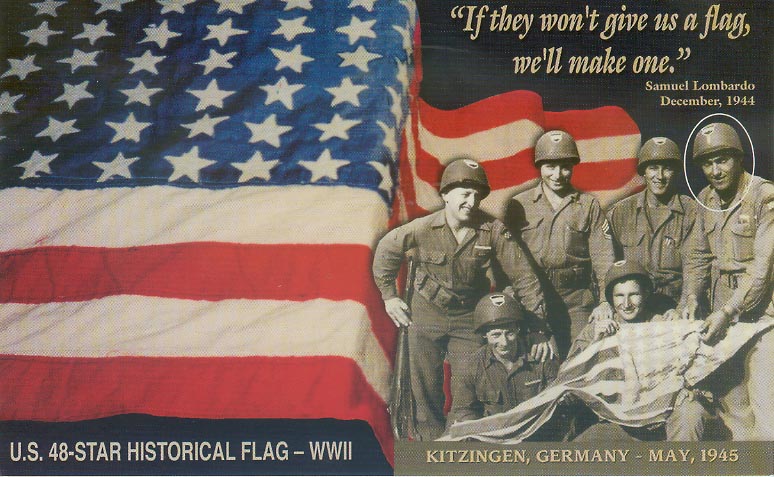
Willard Fluck, 84th ID, 333rd IR, HQ Co

My part in the Battle of the Bulge could be said to have started 75 miles north of Marche, Belgium, when my anti-tank platoon was attached to the thinned ranks of G Company, 2nd Battalion, 333rd Regiment, of the 84th “Railsplitter” Infantry Division.

We entered the front line into German-dug foxholes on the night of December 15, aided by low light of British searchlights playing onto the sky. I carried a bazooka, but had it knocked from my left hand when a piece of shrapnel hit the bazooka and the tips of my fingers, leaving my fingers numb for hours. We spent three days and three nights in those holes in 38° light rain and mud except to brave snipers and scattered artillery shells in order to evacuate wounded, bring up rations, or whatever. We were shelled heavily twice each day.

Some hours later, early morning of the 16th, Hitler’s armies launched their surprise attack through the Ardennes forests of Belgium, taking a heavy toll of our young soldiers. Our General Boiling got word to get the 84th to Marche and to hold the Marche to Hotton roadway “At all costs”. Bolling got there by 7 p.m. on the 20th, and the 334th Regiment began arriving by 10 p.m., followed by the 335th, and lastly by my 333rd, which had still been on the front lines near Geilenkirchen on the 18th. We were held in reserve until we got new men and re-organized.

General Eisenhower in his Crusade In Europe said “The northern flank was obviously the dangerous one and the fighting continued to mount in intensity.”

Author Charles B. MacDonald in his A Time For Trumpets adds that “As General Boiling readily deduced, the Germans needed Marche, for the town was as much a road center as was Bastogne.”

On the 22nd of December elements of our 2n Bn., 333rd, were strung out along a sloping road with five 57 mm anti-tank guns, dozens of bazookas, several 50 caliber machine guns, and several 30 caliber machine guns trained on a small bridge which had been mined to be blown if necessary. We were still holding that area on Christmas day and a few days afterward. The weather had turned terribly cold. Fires were forbidden except for small gasoline burners to heat coffee. Canteens froze solid and burst open. We tried to sleep, huddled together sharing blankets. We learned to keep an extra pair of socks tucked under our shirts to keep them warm and dry. It snowed and got deep. By some accounts the temperature dropped into the low teens.

Nights were long, starting about 4:30 p.m. and light came about 7:30 a.m., making guard duty trying and dangerous. Two hours on guard and four off was the usual, causing intermittent sleep, at best. Just keeping warm a problem. Sheets of newspaper slipped between layers of clothing were great windbreakers.

Germans in American uniforms and driving our vehicles were behind our lines. We were ordered to stop all vehicles and question the occupants about things we would know but Germans might not. We worked in pairs, one approaching the vehicle, the other hidden. Colonels and generals found themselves answering who was Mickey Mouse’s girlfriend. Then-we heard about the Malmedy massacre, and in our rage, we swore to take no prisoners. Actually, that didn’t hold later on.

When we first moved into Hotton, the enemy was close, but we didn’t know how close, so motor engine noise was kept low or off entirely and our 57’s were manhandled into position without talking and made ready next to one of the houses. Nothing. Next morning as we waited in the kitchen, an artillery shell blew in part of the wall and knocked over the pot-belly stove next to us. No injuries. At midnight of New Year’s Eve Jack and I were on guard nearby with a “daisy chain” of anti-tank mines. Tied about 18 inches apart they were in the ditch on the side of the road, and we had the end of the rope on the other side. If a tank came, we were to pull the mines onto the road, and run. No tanks, but exactly at midnight both our and German artillery let loose with a barrage at the other that was like nothing we had ever heard. Heavy artillery whistled over our heads in both directions. We heard the gun blasts and the explosions on both sides of us. By the 26th the whole front was quiet, and then the British came into Hotton and took our positions.

In his memoirs Winston Churchill wrote, “The wheel of the Fifth and Sixth Panzer Armies produced bitter fighting around Marche, which lasted till December 26, By then the Germans were exhausted, although at one time they were only four miles from the Meuse and had penetrated over sixty miles. Balked of their foremost objective, the Meuse, the Panzers turned savagely on Bastogne…..”

It took a few days to get re-organized, but on January 3, 1945, the 84th was paired with the 2nd Armored while the 83rd was paired with the 3rd Armored for the start of our-counter-offensive to choke off the tip of the German penetration. Our pincer move was to start at Manhay and end at Houffalize where we were to meet the Third Army coming from the south,, only about half our distance. The following days are confused in my mind, for we seemed always on the move from one short stay here or there to another place with a name. I remember Odeigne. During a lull we walked up a hill to a small one-room schoolhouse and just missed being hit by a mortar shell tree-burst. I took a little time to inspect the classroom. I found many French translations of our fairy tales and cowboy stories. In the cellar of the schoolhouse we found about forty civilians crowded into a space too small for ten. As I came down the path again I stopped to look at a dead G.I. nearly covered with snow. His arm and part of his head could be seen. I wondered whether his mother would ever see the watch still on his wrist. The next day it snowed and kept on snowing. Roads became almost invisible, and vehicles slid into ditches. Tanks made the hard surfaces slick as ice.

In a blinding snowstorm our E and F Companies launched an attack to take and secure the La Roche Road. No tank support. The snow was too deep and the terrain too difficult for them. An F Company patrol secured the vital crossroads where the La Roche Road and the Houffalize Road met. This feat had deprived the enemy of the only two first-rate roads to the east, and has been considered the turning point of the Ardennes operations. The enemy had been taken completely by surprise.

It was near here that a patrol of eight of us were sent to bring in a group of about 35 or 40 German prisoners being held by two GIs. I was the third man, sent along as interpreter. We waded through waist deep snow for some distance and then onto bare ground which had been blown clear. The Lieutenant, in the lead, saw the Germans just inside a grove of pine trees and started into the grassy area.. There was an explosion and I felt a puff-of air on my face. The sergeant two steps ahead of me had stepped on a German Shu mine and lost his foot. I backed out; the lieutenant re-traced his steps and got out. What to do? He ordered two of the biggest men to get the sergeant out. There was another explosion and another foot gone, while the third man had shrapnel up and down his right side. The second man was laughing. He was going back to a nice warm hospital bed. The lieutenant called for a jeep and they were all taken back to the Battalion Aid Station.

We found a path around the mine field and using my Pennsylvania German, I got the prisoners lined up, yelled some bad words at them, and marched them off to the La Roche-Houffalize crossroads, where the MPs took them back. Foxholes were not always safe havens. Just before the minefield incident

I vividly recall what it did to one’ German. He was no deader than many others, but his torso was frozen solid and half hanging on the edge of the hole. His head was gone, his insides had slid to the bottom of the hole, and his chest cavity was blown open. I couldn’t help thinking how nice and clean and pink and shiny the cavity was.

In Laroche, our squad found protection in the basement of a building mostly destroyed by artillery and by a fire. It had a concrete first floor and one wall in danger of falling down the stairwell, so we knocked more of it down and descended into the basement. Nice and warm from the heat of the first floor. Then we began to be too warm,, so we peeled off some outer clothing. Then our shirts. I don’t recall going any farther. Oh, but it was great to be warm for a few hours.

Again, we moved a lot. The war for the ordinary foot soldier is only just where he is and how far he can see around himself.

Battle in The Ardennes (Battle of the Bulge) ended officially on January 25, 1945. But the front line was still not back to where it had been before the 16th of December, 1944. So the 84th was put to work again to erase the holdouts east of Houffalize. Beho was our Battalion’s last objective to help in that effort. On the way there, through Bovigny, every vehicle in the convoy bogged down in the deep snow. It took hours to get to Bovigny and then start for Beho. There was still enemy resistance, but our slogging riflemen accomplished the task.

I can never say enough for those men who walked into the face of the enemy knowing they could be wounded or die at any time. They were the heroes. I was just one of the lucky ones. I can claim nothing spectacular; but I was there.

Source:  http://www.battleofthebulgememories.be/

Howard Peterson, 4th AD – My Five Days in the Bulge

On December 16, 1944, I was in Reims, France as a member of the 325th Glider Infantry Regiment, 82nd Airborne Division.  On 20 December, 1944, I was in Arlon, Belgium, as a rifleman replacement as part of CCA (Combat Command “A”) of the 4th Armored Division “Old Blood and Guts’ had ordered Hugh Gaffey to haul ass up the Arlon-Bastogne road to break the encirclement of the 101st in Bastogne.

 After a hellish ride from Reims to Arlon in a “deuce-and-a-half” we loaded in some half tracks and about 1600 hours started north out of Arlon on the Arlon-Bastogne road.  Progress was slow and we did not close on the blown bridge over the Sure River at Martelange until about 1300 hours, December 22nd.  We had covered about 20 of the 28 miles from Arlon to Bastogne.  While we waited for the engineers to finish the bridge over the Sure, we had a feast when one of the guys pilfered a ten in one ration off one of the tanks.  I drew guard duty about 0400 hours.  It was a bright moonlight night – – I thought I would be less of a target if I stood in the shadow of a tree.  While leaning up against a small tree I could feel this lump on my back.  I found out it was about 10 pounds of TNT wired to the tree with primer cord so that in case of retreat the engineers could blow the trees as a form of a roadblock.  I chose some other place to stand to finish out my tour of guard duty.  As we were closing on Martelange in the half tracks, as we rounded a curve and climbed a slight rise, as we emerged from a cut in the road, it seemed like were a hundred 105’s on both sides of the road which all opened up at the same time.  The sky suddenly became bright as day and the noise was deafening.  It was at this time that I had the first of my laundry problems.  To the uninitiated, that means that I was scared “s———.s

 About 0800 hours we got across the Bailey bridge over the Sure and we fanned out.  CCA was given the main Arlon-Bastogne road.  CCB was on the left flank using the secondary roads as its route to Bastogne.  CCB was flanked on its left by the green, newly arrived 76th Infantry Division CCA was flanked on its right by the ‘Blue Ridge Mountain Boys’ of the 80th Infantry Division.  We rode along on the backs of the Shermans.  I had on my G.I. “Long johns,” O.D. pants and shirt, two pairs of socks, jump boots, four buckle overshoes, knit sweater, banana cap, helmet, “tanker overalls,” and extra pair of socks under each armpit, my “K” bar knife, my G.I. gloves, I had thrown away my gas mask, I had an ample supply of toilet paper inside my helmet, and my pockets were stuffed with “K” rations, candle stubs, cigarettes, grenades, and 2-½ pound blocks of TNT complete with fuse to blow myself a hole in the frozen ground, if necessary. I had my good old M-1 with the regulation belt load of eight clips ball and two clips A.P. four and one on each side, bayonet, canteen, first-aid pouch, two extra bandoleers of ammo, and three bazooka rounds.

 By now it had snowed and just about everything was hidden by this white blanket.  As we rode on the backs of the Shermans, we stood on one foot and hung on with one hand for as long as we could stand the cold, and then we  switched hand and foot and tried to get some circulation going in the hand and foot we had just used.  This was made more difficult because the tank turret was being constantly traversed from right to left and left to right.  The tank I was riding on and three others fanned out in the fields left of the main road.  Suddenly the tank I was on, the lead tank, stopped and the sergeant “volunteered” another G.I. and I to investigate what appeared to be a squad of German soldiers moving along in extended order.  “They” turned out to be a row a fence posts, but to this day, I was sure at first, that I had seen my first “krauts.”  Another laundry problem.  One of the other tanks broke through a barbed wire fence and a strand of barbed wire slapped a G.I. across the face, turning his face into raw hamburger.  A G.I., wearing an unbuttoned overcoat, jumped off his tank and when the coat tails billowed out behind him they caught in the tracks and sucked his legs into the bogie wheels of the tank.

 Suddenly the tank I was ridding on stopped and one of the other tanks fired a whole belt (200+ rounds) of tracer ammunition at a haystack along side a barn about 200 yards in front of us.  No sooner did the tracers bounce off the haystack when the other two tanks opened fire and destroyed a German tank that had been trying to hide in the haystack.  I guess that the tankers had learned from experience that tracers do not bounce of haystacks.  We moved forward about another 20 yards and the tank I was tiding on got mired down in a small stream that had become hidden due to the heavy blanket of snow.  All I could think of at the time was to get away from the tank and I took off running as best that I could with the way I was dressed, with what I was carrying, and the deep snow.  (Oh, yes, by the way, it was a least 20 degrees below zero at the time.)  I must have managed about 50 yards when the fire from a German Nebelwerfer began falling around the stuck tank.

They assembled us foot troops back on the road (there were 26 of us in this one bunch) and we started north again toward Warnaco, a wide spot in the road about two miles further ahead.  We walked strung out in a line in the ditch on the right hand side of the road so we wouldn’t be such good targets for those damned 88’s.  A little way up ahead was an American 2-½ ton truck nosed down in the ditch and it had a big red Nazi flag with a black swastika on it across the front of the radiator.  We had to climb the road embankment to get around the rear of the truck and as I passed by the cab of the truck I could see another good Kraut sitting behind the wheel with the top of his head blown off.

 About another 500 yards up the road we came upon three tanks surrounding a farmhouse where they had a sniper trapped.  The sniper had already hit three GI.s and they said the sniper was a woman and by the way that she fired she must have an M-1 with plenty of ammo.  The three tanks proceeded to blow the farmhouse into a pile of rubble.  I don’t know if they ever got the sniper or if the sniper was a woman.  Our orders were to “get to Hell to Bastogne” so we took a break in a pig pen to get out of the cold.  There were a half dozen pigs and some sheep in this pen about 20′ by 20′.  There was also a dead pig and two dead sheep in paid any attention.  I mean the GI’s or the pigs.

 The town of Warnaco was where the Germans had set up their command center.  If you were passing Warnach in a car and sneezed, you probably would miss it altogether.  To enter Warnach, you make a right turn off the main Arlon-Bastogne road.  I was walking along behind a tank taking full advantage of the warm air from its radiator when suddenly I had this funny sensation in my ears and the sky turned red.  (It was about 0400 hours)  Then the same thing happened again.  A Hidden German S.P. gun in an orchard ahead had hit the tank twice and set it on fire.  I saw two GI’s jump into a ditch along side the tank and start to get one of those new folding bazookas ready to fire.  They didn’t have much luck and one of them yelled, “Let’s get out of here,” and they jumped up and ran.  I was young but my mommy didn’t raise no dummy so I proceeded to ‘haul freight,’ too.  In the process, my feet became entangled in some old chicken wire in the ditch and when I started to run I fell forward on my face.  To this day, I don’t know how I did it, but my guess is I broke that wire with my hands.

As I ran back toward the Arlon-Bastogne road along a brush filled ditch to my left, I heard somebody yell, “Hey, infantry.”  I hope that that tanker realize how lucky he was that I didn’t shoot him, but he told me he had a fellow tanker man whose right hand had been almost severed and was only hanging by some skin.  I put the wounded tanker’s left arm over my shoulder and his buddy did the same with the mangled one.  We would walk three-four steps and the wounded tanker would pass out.  We would drag him three-four steps and he would come to and take three-four steps and pass out again.  We managed to get him to a medic.

 I got back to my squad who had assembled along side a barn and when I got there I saw about a dozen German prisoners standing with their hands against the side of the building.  All but one of the German prisoners were Wehrmacht soldiers but the one on the right end was an SS Panzer soldier dressed in black coveralls.  He was a handsome S.O.B. with a head wound and blood running down the left side of his face.  None of the Wehrmacht soldiers had guts enough to turn around and ask for some gloves to cover their hands, but not the SS Panzer soldier.  He turned around and in perfect English demanded gloves for his hands.  A small American G. standing close by said, “I’ll give you some gloves you Kraut son-of-a-bitch” and poll-axed the SS trooper.  They all turned around and put their hands back on the wall.  The GI with the Thompson offered to return the prisoners to a POW camp to the rear but they wouldn’t let him go because he had just gotten word that his brother had been killed in the South Pacific.  Later we watched about 12-15 P-47’s doing their job on some German columns.  They were too far away to hear but we could sure see them plain enough.

 We were told we were going to spend the night here and by the time I got the message the only place I could find to lie down was at the top of the stairs.  All I took off were my four buckle overshoes and I used my helmet for a pillow.  It seemed like only a couple of minutes but was really several hours when a sergeant came running in yelling that a bunch of German paratroopers had landed to our rear.  Everybody engaged in organized confusion (or SNAFU).

It was about 0400 so I sat up on the top step and started to put my overshoes on when I got the damnedest cramp in the calf of my leg that I have ever had.  But being smart I figured that by the time I got the other overshoe on the cramp would have gone away.  When I started to put the other overshoe on, I’ll be damned if I didn’t get a cramp in the calf of that leg.  I beat on them with my fist to no avail and they finally went away.  We were told that we were going to attack Warnach again.  By the time we got started it was daylight and this 90 day wonder Louie wanted someone to use the .50 cal on top of the tank to rake the roadside and ‘scare the hell’ out of the Germans.  I was getting smarter by the minute and I remembered the old Army adage ‘Don’t never volunteer for nothing.’  After about 100 rounds the .50 jammed and the GI bailed down off the tank.  As we turned a corner to the right, there in the middle of the road sat one of those German motorcycles with tracks at the back as a sort of a road block.  The 90 day shave tail told the sergeant that he would back off a bit and then blast the motorcycle out of the way just in case it was booby-trapped.  No sooner did the tank fire when a hidden German S.P. gun to perdition.  Suddenly somebody yelled and two Krauts broke out of a copse of trees about 200 yards further down the road where it took a half dozen steps and then retreated to the safety of the trees.  The other one ran along the fence for about 200 feet, calmly climbed over the fence just as you or I might do it today, and started to run up the road.  Another 20-25 feet and he would have been safe, but all of a sudden he went about ten feet in the air, came down face first and never moved.  When the two German soldiers broke out of the trees, we all started to fire at them – -M-1’s, Thompsons, BAR’s, carbines, grease guns, and maybe a couple of.45’s, too.

 An officer came running over and ordered two other GI’s and myself to search this farmhouse.  As it turned out, I was the only one with any grenades left and I had bent the pins over to make sure one of them did not come out while the grenade was in my pocket.  Because of my cold hands, I couldn’t get the pin out so I tossed the grenade to one of the other GI’s.  He got the pin out, but as close as he was to the door, he should have lobbed it underhand but instead he threw it overhand and missed the doorway.  The grenade hit the edge of the door and bounced back into the yard.  The GI yelled, “I missed the door” and took off.  I knew what to do, too, so I hauled ass behind a pile of rubbish in the corner of the yard.  It seemed like forever and the grenade hadn’t gone off.  I stuck my head up to see what was going on just as the grenade went off.  I guess I was just plain lucky.  I had an M-1, one of the other GI’s had an M-1, and the third guy had a Thompson sub.  I was second through the door in front of me.  The other M-1 emptied his through the door to his left and the Thompson emptied his clip up the stairway to his right, and there we three stood just like the Three Stooges.

 As we stepped back out into the yard, a Sherman started to rake the side of the building with .30 cal starting at the eves and working his way across the building and then down and across again.  Then all of a sudden when he was about six feet off the ground he quit and took off.  I am almost certain that I managed to hide my whole body under my helmet while the tanker was hosing down the wall of the house.  Suddenly, out of nowhere a cow came around a corner of a nearby burning building followed by an old woman who looked to be in her nineties and carrying a switch with which she was chasing the cow.  The cow and then the old woman in pursuit disappeared around the other corner of the building and was gone.  Where she came from I don’t know and where she went I don’t know.

 I got mine on Christmas Eve; had to wait over four hours to be evacuated.  I was supposed to be air evacuated back to England but the friggen fog had come back in so I wound up in a field hospital in Commercy, France on Christmas day, naked as the day I was born with a small Red Cross package sitting on my chest.

 The records show that the taking of Warnach cost America five Sherman, 68 GI’s killed or wounded.  The Germans lost 135 dead on the streets and in the houses with a like number either wounded or taken as POWs.

Source:  http://www.battleofthebulgememories.be/

Frank Chambers, Cannon Co, 291st IR, 75th ID

The End—The Beginning

  Subtitle:  The End of the truck driver’s World War Two military service—The Beginning of the veteran’s civilian life.

 Time:  May, 1945 after surrender of Germany Places:  Germany, France, USA    War in the European Theater was finished.  Hitler’s Nazi regime surrendered unconditionally on May 8, 1945.  Victory in Europe Day (VE Day) was the cause for great celebration. The combat days of Cannon Company, 291st Infantry Regiment, 75th Infantry Division were over—in this part of the world.

    The first critical Allied task was restoring law and order in occupied Germany.  Troops were assigned Military Government (MG) duties.  The 291st Regiment (including Cannon Company) was stationed near the resort city of Bad Driburg, famed for mineral springs and baths.

    In taking over its assigned area of control, the Regiment issued orders and instructions for the Companies to follow in their respective areas.  Units were to establish Military Government by: appointing non-Nazi officials; posting and enforcing proclamations, laws and ordinances; enforcing curfew 2030 to 0630 military time (8:30 PM to 6:30 AM); collecting arms and ammunition; maintaining road blocks; establishing camps for displaced persons and Allied POWs and permitting no circulation outside the town limits without Military Government permits. 

    The truck driver and his buddies read through the precise wording of their MG duties.  Carrying out those orders and instructions appeared nearly as difficult as fighting a war.  They realized strict security measures were needed to protect the troops from Nazi sympathizers. Appointment of non-Nazi officials was the top priority. 

    Cannon Company’s assigned area included a German brewery that continued to operate.  A 24-hour military guard provided security at the brewery, security against the thirsty Allied soldiers. 

    The truck driver’s Company chow line was set up on trestle tables on a quiet street.  The aroma from the cooking food spread over the occupied German neighborhood.  At chow time the soldiers walked down the chow line, filled their mess kits to overflowing and ate most of the contents. When finished, nearly every mess kit contained scraps and bits of food.  Those leftovers were to be dumped into a large barrel for disposal.

     As the truck driver and his buddies approached the disposal barrel, several small German children met them.  Those children were holding little pails, pleading for the soldiers to dump leftover scraps into those pails.  Those big, pleading eyes, framed by gaunt faces, were heart-rendering sights.  The truck driver vowed that he never wanted his children or grandchildren to ever be in a similar situation, begging for food scraps.  He also vowed to share this experience upon his eventual return to civilian life. 

    The duties of Cannon Company and 291st Regiment were changed a few weeks later.  The troops were assigned new responsibilities.  With the conclusion of the war in Europe, all efforts were directed westward to the Pacific Theater of Operations.  The Allied forces had moved from island to island, ever nearer to the Japanese mainland, suffering many casualties during bitter hand to hand combat. Fresh troops in large numbers would be required to wage a successful campaign against the Japanese Empire. 

    Those millions of troops in Europe must be transported to the Pacific without delay.  To accomplish this momentous task, the Army established the Assembly Area Command (AAC).  Seventeen camps were built near the French city of Rheims for this purpose.  The camps were named for American cities, such as Baltimore, Boston, Chicago, etc.  The 291st Regiment, including Cannon Company, was assigned to Camp New York. 

    The AAC camps collected European based troops and processed them for Pacific duty.  Soldiers with long military service, especially the D-Day survivors, were granted furloughs in the States and then shipped to the Pacific.  Troops with less service were immediately loaded on ships and sent directly to the war zone. Everyone was thrilled that the war in Europe had ended, but preparing for the Pacific journey was quite sobering.  No one would dare speculate as to the end of that war. The Allies were making some progress, however slowly, across the Japanese-held territories.  Every day was critical in moving troops from Europe to the Pacific.  

    The truck driver’s location, Camp New York, was a ninety minute drive from Paris.  Every evening he and his driver buddies provided transportation to the bright lights of Paris, returning before midnight.  He strolled through the streets of Paris, often standing under the Arc de Triumph, to absorb the atmosphere and magnetism of the “City of Light”.  He climbed the stairs of the Eiffel Tower to view the vast panorama.  German soldiers had carved their names into wooden areas of the breathtaking structure.  Paris museums were retrieving their valuable works of art from secure war time locations.  An occasional visit to the interior of historic Notre Dame was another point of interest for American troops.  Of course Paris’s Place Pigalle and Folies Bergeres were favorite destinations for the soldiers. 

    July 4th, 1945 was a unique opportunity to celebrate American Independence Day in Paris.  French citizens reminded the American troops that French General Lafayette played a major role in the battle for Independence, serving as General Washington’s personal aid and advisor.  The day gave everyone the excuse for an inebriated celebration—as if an excuse was needed. 

    July 14th witnessed major celebrations throughout France.  Bastille Day, 1945 was the first opportunity for the French to celebrate this event since the liberation of Paris from the Germans.  The reveling was beyond description.  The truck driver had considerable difficulty in getting his passengers back on the truck for the return to Camp New York.  Reporting in before curfew was critical.  Curfew breakers lost many privileges, including that important Paris pass.

    In late July, the truck driver was ordered to report to his Commanding Officer.  With considerable trepidation, he promptly responded to the summons.  Sensing his discomfort, the CO put the truck driver at ease and handed him an armband containing sergeant’s stripes.  A very surprised truck driver accepted the stripes which identified him as “acting sergeant”.  The company’s long time motor sergeant, a career soldier, was being sent to the States on furlough.  He had recommended the truck driver be selected to fill that position.  Without saying, the truck driver was quite appreciative of the new assignment.

    Even though the armband designated “acting sergeant”, the truck driver was officially a Private First Class.  The CO stated that all promotions were frozen until further notice.  So the truck driver had the authority without additional pay.  Some benefits came with the armband, including private quarters and being relieved of driving his truck on that evening trip to Paris, now riding in the passenger’s seat.  He also was on 24 hour duty as the chief dispatcher of the company’s trucks to meet incoming troops at the rail station.  Although with new duties, the acting motor sergeant would always be a truck driver at heart.

   In early August, 1945, the truck driver and his buddies heard welcome news:  two week furloughs were announced.  They had the choice of the French Riviera or Switzerland.  The truck driver selected Switzerland because he wanted to buy Swiss watches for his family.  The soldiers were permitted to carry a maximum of $100.  The reason given for this limit was to avoid inflating the Swiss economy with a sudden influx of American dollars. 

 The vacationing troops entered Switzerland at Basel and had a fabulous journey on the famous Swiss electric railways.  Beautiful snow-capped mountains, verdant valleys and brilliant blue lakes were beheld by the travelers.  What a contrast to the war torn cities of France and Belgium!  Their final destination was the resort city of Wengen at the base of the famous Mt. Jungfrau.

 Those two weeks in the Swiss Alps were amazing in many ways.  The food and accommodations in the resort’s chateau were more than first class. The picturesque Alps could not be described in ordinary language.  The snowy summit of Jungfrau was reached by an underground two mile cog railway.  The truck driver celebrated his 22nd birthday on August 9th, 1945 on the peak of the mountain.  He and his friend, Floyd, were photographed holding snowballs in August.  They were standing on “The Top of Europe”.

 The most astounding event on this trip was earth shaking news from the Pacific.  The vacationing troops heard that bombs as powerful as 20,000 tons of dynamite had been dropped on two Japanese cities!  The secret atom bomb had been unleashed!

 Speculation was rampant.  Would Japan surrender?  Would this war finally end?  Would the troops come home soon?

 Returning from Switzerland, the truck driver heard more news:  JAPAN SURRENDERED!  The official ceremony would be held on the battleship Missouri on the 2nd of September.  The Army newspaper, The Stars and Stripes, contained pictures of great jubilation throughout the U.S.  Times Square in New York City was the scene of parades, dancing in the streets and servicemen kissing available females. 

 Now the mission of the military quickly changed. A program for troops to return to the States for discharge from service was put in place.  Points were awarded for total months of service, months of overseas service, designated awards and honors and specific battle campaigns.  The truck driver learned that his Combat Infantryman’s Badge was worth considerable points.

   With separation from service imminent, the troops realized they would be leaving their buddies.  Tight bonds of friendship were formed when soldiers fought the enemy.  They began discussing plans to continue those friendship ties as civilians.  One method was to form an association of veterans that would hold reunions in years ahead.  The truck driver was invited to participate in an association planning meeting of 75th Infantry Division troops.  The two day meeting was convened at the French city of Chalons sur Marne. Returning to his Company, the truck driver explained the purpose of his trip.  He began enrolling his buddies in the fledgling 75th Infantry Division Veterans Association.

 Late December, 1945, found the truck driver on the first stage of his journey home.  His accumulated service points placed him at the French port of LeHarve.  “Camp Lucky Strike” was the assembly point for troops awaiting home-bound ships.

 January 7, 1946 dawned.  The truck driver boarded the “Gustavus Victory” for the Atlantic voyage.  This Victory ship had huge rusty areas on its hull from many months of sea duty.  Regardless of appearance, the vessel was heading in the right direction—home. Crossing the north Atlantic in January was an unforgettable cruise.  Huge waves caused the small Victory ship to toss and tumble.  The vessel seemed to ride over the top of every wave instead of slicing through the water. 

 Suffering considerable seasickness, the truck driver wondered if this journey would ever end.  The troops had difficulty eating from their trays.  Every time the ship rolled to one side, the food trays would careen to the low end of the counter.  The next roll would bring them crashing back at high speed with food flying everywhere.  The Army’s famous Spam was the main food item. The truck driver promptly lost his appetite for Spam—for years to come.  He sought out a bunk in the deep hold of the ship.  The pitching and tossing was tolerable in this location.  Seasickness was soon forgotten.  Next stop was the United States!

 As “Gustavus Victory” approached the States, the truck driver yearned to see the Statue of Liberty again.  He recalled “Wave Goodbye to the Lady” as his outfit departed New York harbor in October, 1944.  He was prepared to lead more cheers upon sighting the Lady after fifteen months in Europe.

 This Statue of Liberty sighting did not happen.  The Victory ship came into port in New Jersey.  Not seeing the Lady was just fine with the truck driver.  He was now on American soil.  Several hours later, he entrained for his separation center—Camp Grant near Rockford in northern Illinois. 

   Twelve hours on the Illinois-bound train afforded the truck driver considerable thinking time.  Those thoughts first focused on his youth and the events leading to his military service.  He recalled his father relating that World War 1 had not resolved the problem with Germany.  While the Armistice of 1918 stopped that war, Germany was rearming under Hitler’s guidance.  (Story #1.Bells of 11/11). 

   The bombing of Pearl Harbor and the launching of World War 2 was the second highlight.  (#2. That Sunday in December).  In a few months he was inducted into the military. His 75th Infantry Division headed for Europe.  (#3. Wave Goodbye to the Lady).  After arriving in Europe, that war took a turn. (#4. A Sudden Change of Plans).  Hitler made a desperate move. (#5. Into the Heat of Battle).  The war in Europe was finally over. (# 6. The Year 1945: More War? World Peace?)  and finally (#7. The End…The Beginning) was in progress as the truck driver was approaching the end of his military service.  (See Summary of Stories).

   More recollections came to the truck driver while on that train. Crossing the Atlantic Ocean bound for Europe; driving into the dark and threatening Belgium battle front; freezing in the Ardennes cold and snow; retrieving the snow-covered bodies of fallen comrades; dining with Manny Knoops’ family in their Dutch home; milking the farmer’s cows in the war zone; seeing German children begging for leftover food; the trips to Paris; celebrating his 22nd birthday on the top of a Swiss mountain; the news of Victory in Europe and the surrender of Japan.  

 Completing several days of routine checkups, including physical exams, the truck driver was honorably discharged from military service.  Length of service was three years minus five days.  He boarded a train to Chicago, then another train to Springfield, Illinois.  From there, a short Trailways bus ride brought the veteran to Jacksonville, Illinois where his family met him with open arms.  His brother and sister had certainly grown in those three years.  Brother Jim was now in high school, sister Evelyn was preparing to enter nurses training.

 After a heartfelt family reunion with grandparents, aunts, uncles and cousins, the veteran pondered options for his future.  Should he resume his education at the University of Illinois? He had completed three semesters at Illinois in pre-veterinarian studies.  Another option was to enroll at Illinois College in Jacksonville in a liberal arts curriculum. The “G I Bill” would pay for his education.  College classes would start next fall, so it might be a good idea to find a job for the next seven months.  

 The veteran learned that two friends from a neighboring farm had recently received their discharges. On a cold January day, he drove over to see the Albers brothers, Russ and Jim.  Russ had been stationed in the Pacific Theater for four years and most recently in the Philippine Islands.  He had served those four years without having a home furlough since his induction in 1942.  The bitter January weather in Illinois was a drastic contrast to the tropics of the Philippines. Russ spent several days hovering around the big heating stove in his family’s living room.  His body was slowly becoming adjusted to the winter climes. 

 Russ’s brother, Jim, had returned from Air Corps duty in North Africa and Italy. The three veterans shared “war stories” and experiences while in the military.  The Albers brothers’ goals were establish their own farming operations.  Their father was an excellent farmer and had imparted those traits to his sons.

 Back in the living room of his Illinois farm home, the ex-truck driver/veteran began the serious task of charting his future.  His first goal was to purchase an automobile. To pay for this vehicle, he had deducted a war savings bond each month from his military pay. Perhaps the pages of his future would unfold in coming weeks.  He was truly beginning a new life.

 Finally, he was most thankful that the Lord has seen him safely through the events of the past three years.  

 Truck driver/veteran/narrator:

     Frank Chambers, Cannon Company, 291st Infantry Regiment, 75th Infantry Division

  Dates and places of military significance were verified in official records relating to the 75th Infantry Division.

 Frank’s comments:  This concludes seven stories relating to my military service in World War Two.  I dedicate the series to my wife, Doris, to my daughter and son-in-law, Marjorie and Bruce Duffield, and to my grandsons, Andrew and Timothy Duffield and their respective families.  This is in memory of our beloved son, John Chambers, 1956-1984.

 I also wish to honor the memory of my father, Wm. J. Chambers, who served in France in World War One with the US 58th Balloon Company, American Expeditionary Forces (AEF).  He, too, was a military truck driver.

  Final personal comment:  My wife, Doris (Albers) and I were married in 1951.  Doris is the sister of my neighbor friends, Russ and Jim Albers, mentioned in this final story.