All posts by admin

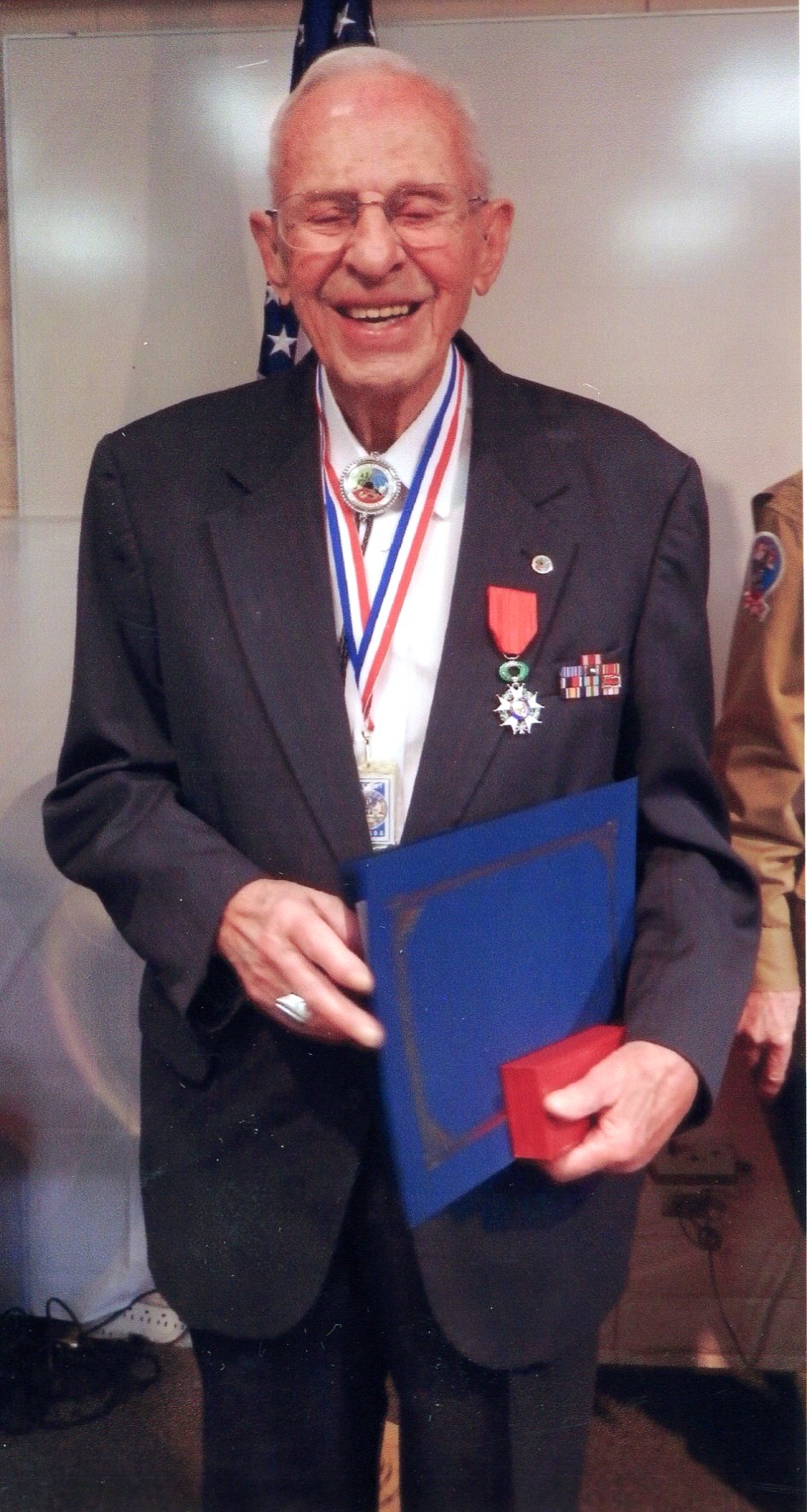
French Legion of Honor, Thomas Creekmore, 79th ID

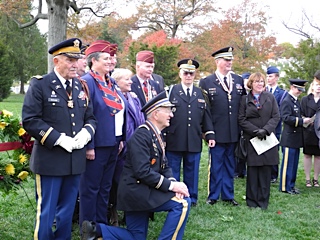
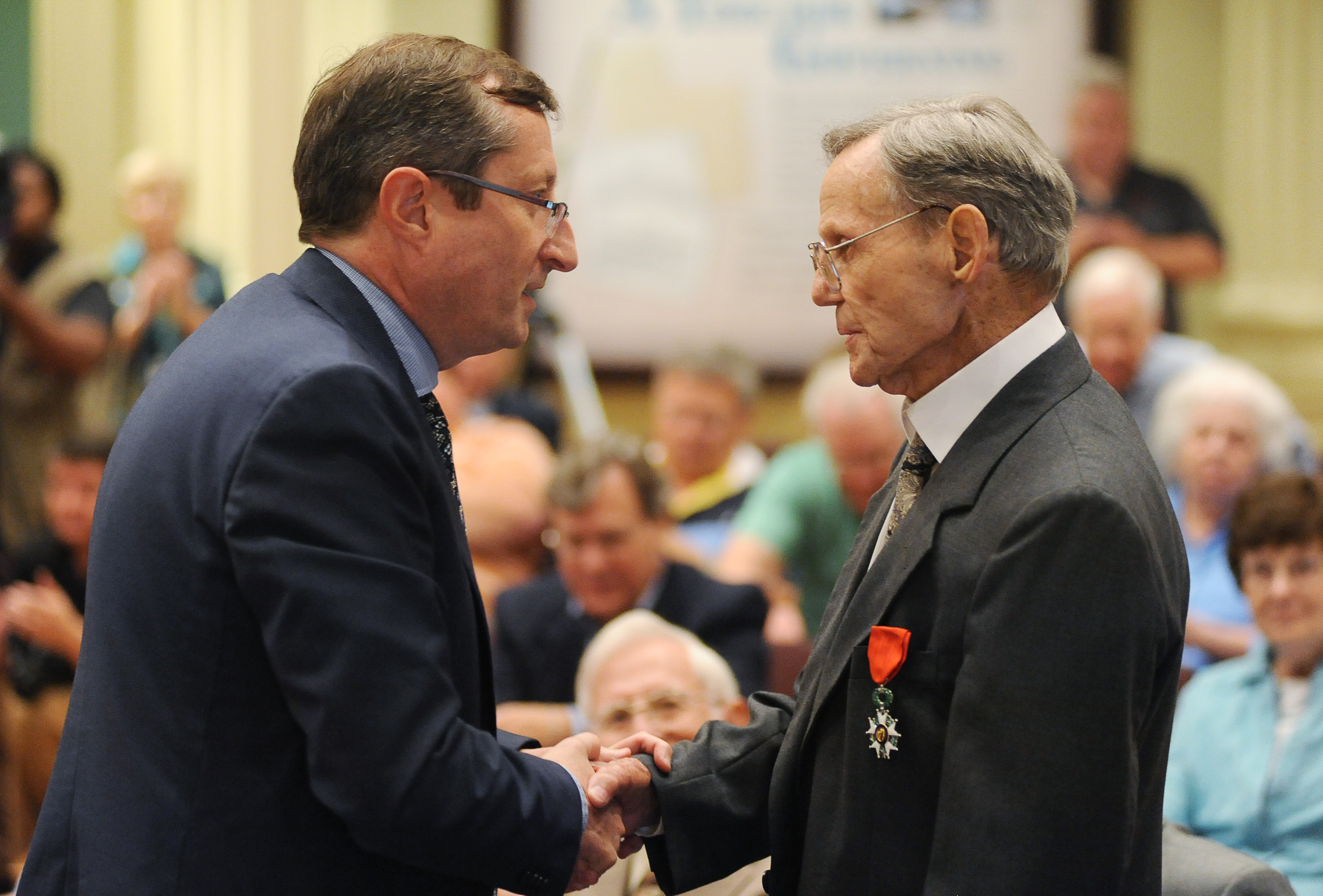
Legion of Honor ceremony, Atlanta, GA September 24, 2013

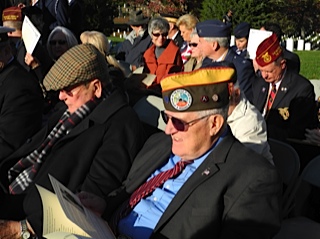
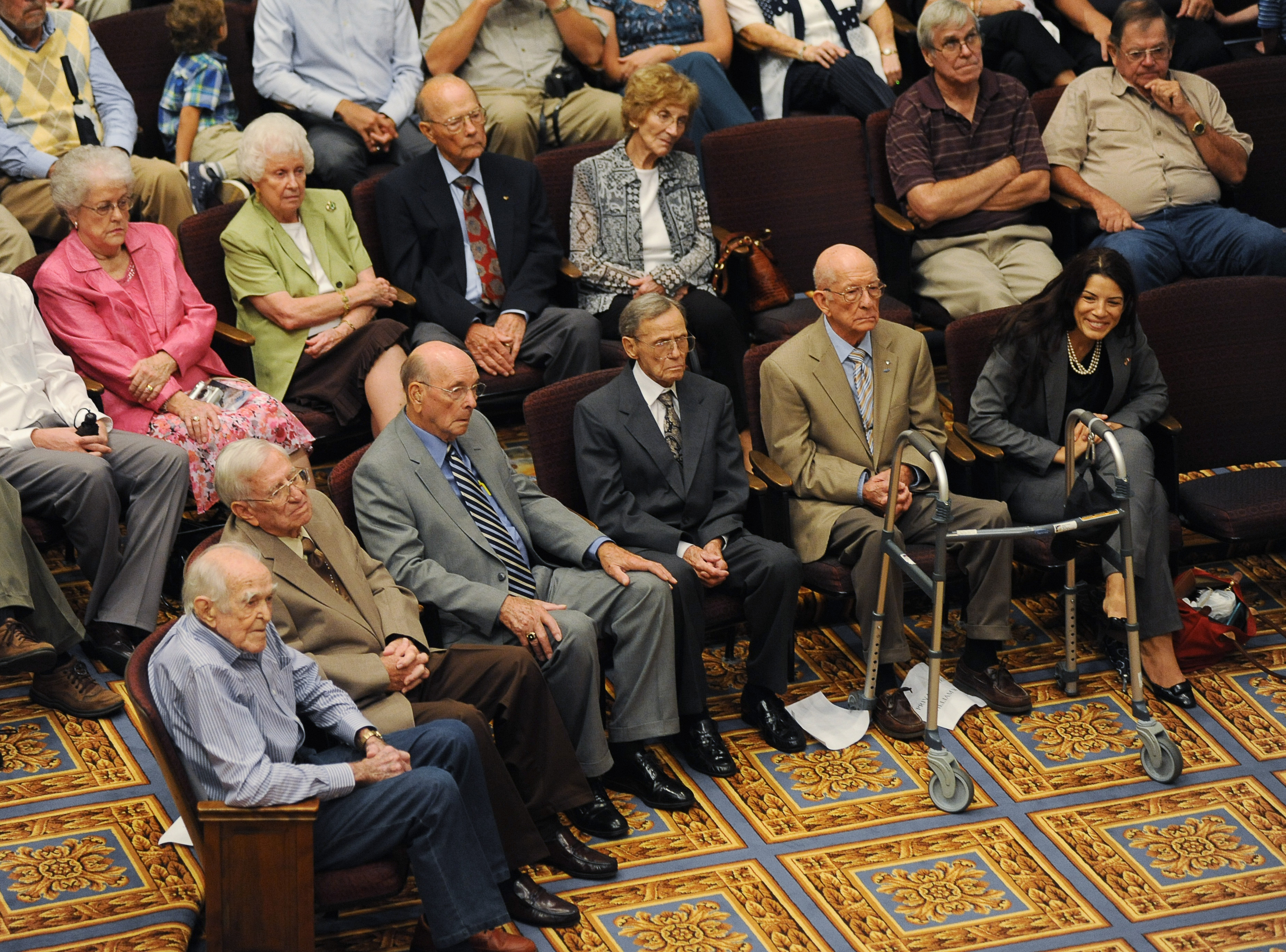
Thomas Creekmore, fourth from left seated
Thomas Creekmore, front row, fourth from left seated

You entered into active service in September 1943 and you were a part of the C-Company of the 315th Regiment in the 79th Infantry Division.

You were sent on April 7, 1944 to the European Theater Operations. You fought and aided in the liberation of the French towns in Avranches, Cherbourg, Fougeres, Laval, Le Mans, Saint-Armand, Joinville, and Luneville in Lorraine.

For your active participation in these combats, you were awarded the Bronze Star Medal along with the Good Conduct Medal and the World War II Victory Medal.

As a witness to the sacrifice of American combatants during the liberation of Europe, you were, at the end of the war, the only surviving member of C-Company to have landed in Normandy on June 12th, 1944.

Sergeant Thomas H. Creekmore, au nom du President de la Republique francaise, nous vous remettons les insignes de Chevalier de l’Ordre National de la Legion d’Honneur.

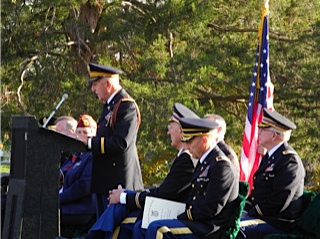
Thomas Creekmore presented the Legion of Honor by Denis Barbet, consul general of France in Atlanta, GA

Genesse Valley Chapter Book

A couple years ago members of the chapter decided to tell their stories, which would appear in a book entitled “The Battle in Common” and be available to the public. A “Book Team” was formed whose purpose was to spearhead the project. Stories were submitted by 19 veterans and four associate members.

Update on the book sales and distribution.

After being published last fall, nearly all “The Battle in Common” copies have been sold. As of this date we have approximately 60 books remaining. ISBN 978-0-9885762-0-9. Books were distributed free to the sponsors and to veterans associated with the project.All other copies of the book were purchased by the public, sold by three Rochester book stores and the book team. The book has generated more than $5000 in sales and donations for VBOB National.

Proposed next steps for the project.

The limited number of books remaining brought the question of a second printing. After much consideration, the Book Team decided to forego a second printing in favor of converting the book to an electronic format  (“e-book”) at no cost.

This decision provides two benefits:

  1.  There are no production costs, allowing all sales income to go to VBOB National,
  2.  The book would be available on all electronic systems ( all computers as well as tablet  readers like Kindle, iPad and Nook) for perpetuity.

The conversion of the book content to the new format will be provided pro bono by Michael Riordan, professor of printing at Rochester Institute of Technology who helped with the initial book. Distribution of the electronic books would best be serviced by Amazon, Barnes & Noble and other retailers who sell e-books. To fully enable the book team’s decision, National VBOB has endorsed this plan and will work with the Book Team (specifically RIT Prof. Michael Riordan) to set up distribution agreements with distributors such as Amazon, etc. The agreements would be with each vendor, to provide that revenues go to a VBOB Book Account.

The Rochester Book Team will disband after the program is in place.

Tom Hope (for The Book Team)
XIX Corps, Headquarters

Kudos to the chapter members and others for an outstanding job, one that will help to perpetuate the legacy of all who served in the Battle of the Bulge.


Belgian wants to hear from Bulge veterans

I have been writing to a young Belgian man, Jan Jasper, who lives in Essen, Belgium, up near the coast of Antwerp. He is interested in hearing from veterans of the Bulge. He is an aficionado of the Bulge veterans—very sincere!

He is married with 2 young boys ages 2 and 5. He drove from Antwerp all the way to Liege, Belgium to meet me at the “Remember Museum” 2 years ago.

He would like to hear from veterans who served in the Bulge—He does NOT sell your stories—He is very sincere!

His address is:
Jan Jasper
Hofstraat 7
2910 Essen
Belgium

Many Thanks,
John McAuliffe
87 INFD
Central Mass. Chapter VBOB

BEYOND THE CALL OF DUTY

There is an incident that I should have brought to your attention before. On March 21, 2011, a memorial service was held here in Buckfield, ME for my husband, Earl F. Turner, who passed away on March 14, 2011. Edward Deverell, as president of VBOB Tri-State (VT-NH-ME) Chapter 17, made the trip all the way across part of NH and ME to attend.

There is not an East-West direct highway, so it is a time-consuming journey! —And I did not realize that another VBOB member had informed Chapter 17 of Earl’s demise. I was grateful for Ed’s presence, and I do believe it was “beyond the call of duty.”

And to make it more interesting, as Ed was about to head homeward, an unexpected snow started falling. —So over two years later, my thanks still go out to Edward Deverell.

Sincerely,
Florence C. Turner, Associate

PS. Believe that Edward Deverell is an associate member and that his father was a BOB vet.

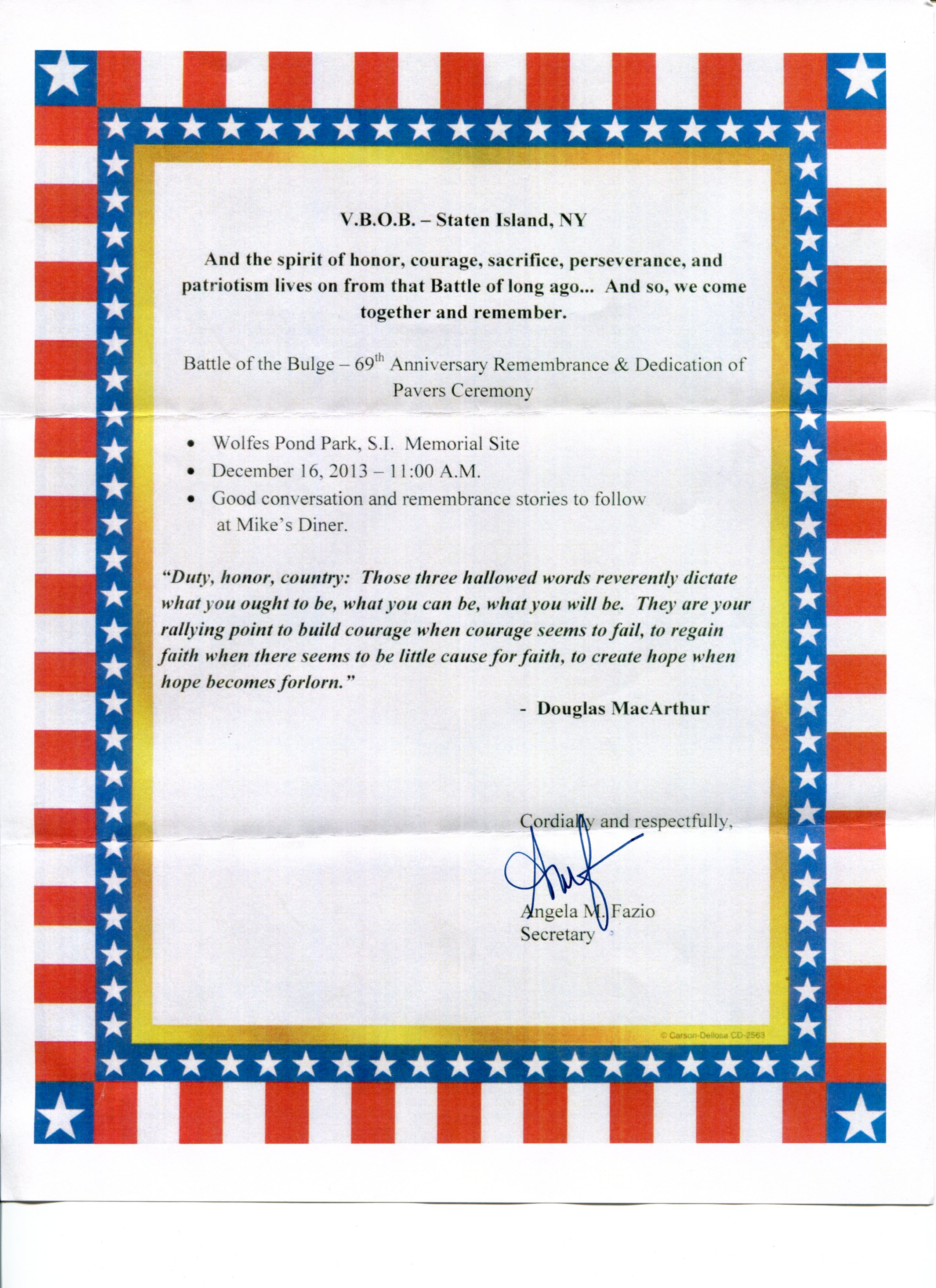
Bulge Commemoration, Indianapolis, IN 12/16/13

My name is Brittany Polson and I am a Wish Coordinator at Wish of a Lifetime. We are a 501 c3 nonprofit that is dedicated to enriching the lives of deserving senior citizens by granting them their wish of a lifetime. I am currently working on a wish for Robert A. Smith, whom fought in the Battle of the Bulge with the 11th Armored Division, Battery B, 492nd Armored Field Artillery Battalion. Robert has requested that since his fellow comrades are not able to travel and hold a reunion in person, that he would like to commemorate his division and the Battle of the Bulge.

war-memorialI have arranged for there to be a ceremony held at the Indianapolis War Memorial on December 16, 2013 at 1:00 PM- which will mark the date of when the battle began. Spread the word about this commemoration so we can honor all of the brave men and women who served in this battle.

Best Wishes,

Brittany Polson
Wish Coordinator, Wish of a Lifetime
1821 Blake Street, 200
Denver, CO 80202
[office] 303.954.9144 x14
[fax] 303.648.5626
brittany@seniorwish.org

College Bound, Sheldon Tauben, 75th ID

College Bound, Sept 1943-March 1944
by Sheldon Tauben, 75th ID, 289th IR, 2nd Bn HQ

A precursor to the post war “G.I. Bill/’ that remarkable and exemplary legislation that enabled veterans to obtain low-cost home mortgages and gave thousands the opportunity to secure a free college education, the US Army, in the summer of 1943, began a new educational endeavor, “The Army Specialized Training Program.” With its distinctive shoulder patch, a gold oil lamp of knowledge on a blue background, this special unit directed thousands of soldiers fresh from basic infantry training including air force cadets washed out of flight school and other services, to collection depots for testing and eventual assignment to colleges and universities throughout the United States.

The Citadel, a military school in South Carolina renown for its officer training and tracing a proud heritage back to the early 1800’s, was the major depot in the Eastern United States. All of the soldiers selected for this assignment had one thing in common- an “AGCT” score of 130 or higher. Upon entering the service each person underwent an extensive written examination with the final score prominently entered on his manila service file. The “Army General Classification Test” was an I.Q. exam used to direct personnel into jobs (MOS) or military occupation specialty that would be most appropriate for his on her level of intellectual ability. I had just completed 15 weeks of basic training at Seymour Johnson Field (Air Force) in Goldsboro, NC when I received orders to report to the administration center at the Citadel for further assignment.

After a week or so of inactivity (we did some sight-seeing in Charleston, SC) everyone received new orders directing them to any of the dozens of educational institutions within the program. By luck of the draw I was assigned to the Polytechnic Institute of Brooklyn, a renowned school of engineering located in the heart of downtown Brooklyn. A few days later I arrived in Brooklyn just in time to begin the fall term in September Of 1943. We were housed in the Fort Green housing project, a brand new Federal low cost development and were the first tenants. Bunker beds, desks, chairs and bookcases were provided-two men to a room. If not for the G.I. uniforms, it appeared much like a typical college dormitory. But the comparison ended just there. This was a military unit and run by the book.

6:00 a.m. reveille followed by formation in ranks by battalion in the courtyard, roll call and then dismissal for breakfast. 7:00 a.m. we formed up again by battalion and marched off in a sprightly military manner, each “student” carrying an over-the-shoulder mussette bag-books! Our route took us from the project down Schermerhorn Street and then to 99 Livingston where we lined up in the street in front of Polytechnic some 25 minutes later. Initially, it was a novelty to early morning Brooklynites and we were observed closely. Who doesn’t love a parade?

Formations broke up as we headed to our assigned classrooms for lectures in the usual freshman engineering curriculum plus some liberal arts courses in English, History and Geography. At 12 noon the entire unit again fell into ranks and marched back to the project for lunch. By 2 p.m. we were back at school ending the day with a 5:30 formation and return to our quarters for dinner. All meals were cafeteria-style served and eaten quickly, and no K.P. The basement of one of the buildings was converted into a cafeteria and served about 300 men at a time. After dinner we were expected to study the work assigned. AS I remember there was time for playing cards and craps. As long as we kept reasonably in order we were not bothered by “management.”

School continued for 5 days per week with weekends off on a pass unless some infraction of the rule caused the privilege to be withdrawn. These were pleasant weekends spent mainly with family as we lived in Jamaica about 1 hour away by train. On some weekends we attended local entertainment conducted by the American Red Cross. No hard liquor but lots of Coke and donuts. The girls that joined us were a motley crew from the local neighborhood, which in those days, close to the Brooklyn Navy Yard, was not exactly Park Ave.

One bright spot was the Commish’s Inn on Myrtle Avenue a few blocks away. It was run by my Uncle Irving, the black sheep of my father’s family, who had operated a speakeasy in Broad Channel during prohibition. Family legend had it that he used a black Cadillac hearse to run booze down from Montreal-passing through customs easily-who wants to bother a stiff I Uncle Irving was always good for a beer and pretzels and I saw him often at the time. I was never at a loss for company as 3 or 4 of my buddies also liked free beer. He kept a live monkey in a cage and had one of the first TV sets in NYC-about a 4″ screen in a 6ft high cabinet. Weekly fights and wrestling occupied a few hours at night. Uncle Irving was my father’s youngest brother. He had no children and took a liking to me, buying me my first baseball glove and a “Daisy” air rifle when I was 10 or 11. The odd name of his bar traced back to prohibition days when many of the NYC commissioners were his friends and customers. “Popularly known as “Brooklyn Poly” the name was changed in 1985 to Polytechnic University relocated form 99 Livingston St. to 333 Jay St. and now upgraded to “#6 Metrotech Center.” I still prefer the old names and address-you knew it was not in the Bronx and it favored important persons in American history!

College Bound Part 2

Going to classes 5 days a week for 7-8 hours a day was a difficult regimen|j but it took us through about two years of college “hours” between Sept 43 and March 44. After the war I was able to transfer some of the credits to a BA degree at Adelphi College (class of 49). I really wasn’t interested in engineering but managed to “hang on” while the program lasted. One of my buddies was Ralph Bono. He hailed from the Bronx and introduced us to the pleasures of pizza. Near the Commish’s Inn was a storefront, family-run “pizza parlor,” as they were generally known. Great deep dish, strictly cheese pizza-no fancy toppings but a taste to remember.

George Harris was another Gl from New Harmony, Indiana, deep at the southern end of the state. If it were difficult to locate a spot where the south and the north blended it is likely/ffafc New Harmony would fit the bill. Founded in the early 19th century as an English Utopian Commune, it soon dropped its pretensions and “grew up” as a small southern rural town. George’s family lived in an “honest to goodness” log cabin- outdoor toilets-no central heat and a kitchen pump added only as a recognition of modernity- not 100 yards from the Wabash River.

As fate sometimes dictates, I got to know George’s family well. His mom, Effie, sister, brother-in-law and niece welcomed me months later when I was stationed in Camp Breckenridge, KY with the 75th Inf Div. George had a disability form a poorly set broken elbow which left him on limited duty. He spent the war at desk jobs and while in New York visited my family on the same weekends that I spent in New Harmony with his. That spring and early summer of 1944 hold memories of southern fried chicken, mashed potatoes, iced tea and watermelon served on a wood plank table in the Harris’ front yard. They welcomed me warmly as George’s friend even though they may have wondered privately, what a nice Jewish boy like me was doing in a place like this!

Back to School!

Our Geography professor was a Dr. Fraim who had taught, before the war, at the University of Rangoon in Burma (now “Myannar”). When the troops learned this esoteric fact they recognized Dr. Fraim’s unique background with a monstrous battalion-sized shout of “RAN GOON” each morning as formations in front of Polytechnic broke up for classes. I think we all received “A’s” in Geography. The course work ran through Chemistry, Physics, Mathematics, blueprint drawing etc using text books usually written by the professor. Polytechnic was home to some of the top men in their fields. I never had the nerve to ask but I wondered what they thought of education by the numbers. Eight hours each day-5 days a week!

Through the winter of 1943-1944 we continued the daily grind. However, in mid-March our idyllic military careers came to a screeching halt. While it was all well and good to keep the colleges and universities functioning and give deserving Gl’s a shot at college studies, the manpower needs of the army came first. An infantry troop build-up was in the works and the ASTP was shut down except for some very limited programs in medicine and dentistry. We didn’t know it then but plans for the June 6,1944 D-Day landings in Normandy were well on their way.

Within a few days we were loaded into railroad cars (no Pullmans) and on our way South to Louisiana. Most of our group wound up in 75th Inf Div, then training at Camp Polk where we were assigned to various units. I drew the 2nd Bn HQ Co 289th Inf regiment and remained with them through the extensive training at Camp Polk, then Camp Breckenridge, KY. We departed for Europe in Sept 1944 and wound up in the Battle of the Bulge in Dec 1944. But that’s another story.

One small incident remains in my memory of our days at Brooklyn Polytechnic. During one of our daily “parades” through downtown Brooklyn, on a cold and clear morning we marched in strict military formation passing by a corner drug store. It had 3 steps leading up to the entrance. An older woman, bundled up, stood till, waving her handkerchief to us and called out “hurry back boys/’ She mistakenly thought we were headed to Bush Terminal, a nearby troop embarkation facility. A smart-ass PFC in the front ranks turned to her and replied so all could hear “It’s ok, lady, we’ll be back right after lunch!”


Luxembourg letter to Dan Santagata, 5th ID

Luxembourg, 14th of November 2013

Dear Mr. Santagata,

I hope you are doing well and that everything is well over there. I will introduce myself, my name is Patrick from Luxembourg, I am 28 years old and I am very interested in WWII since I was a young boy. My grandfather was also in WWII, he was forced by the Germans into war but he died very early and I had never the chance to hear his war stories, so I started collecting stories of the still living Veterans before it is too late. I have also a small collection of WWII items of US and German soldiers, that I started since I was a young boy. I found an article of you on Internet and I wanted to know more about you, so I decided to write you a letter.

The last few years I had the chance to be in contact with a few Veterans of WWII and I have many stories collected through email or snail mail. I am very interested in your WWII experiences and hope that you will share your story with me. I wanted to know with which Company and Regiment you fought with? I wanted to know where exactly you fought (France, Luxembourg, Bulge, Germany?), what missions did you had, which medals that you earned and what your “job” was during WWII? I am very curious if you have fought here in the Battle of the Bulge in Luxembourg. Did you took part in the crossing of the “Sauer River” in Diekirch in January 1945? I know that it is not easy to speak or write about WWII experiences because there are surely more bad memories than good ones, war is always cruel and I hope that a war like that will not repeat itself again that is why your experiences are so important for the generation like mine and the younger people. We have to preserve the freedom and liberty that you gave us back almost 70 years ago.

I also started since 2 years to collect recent pictures and WWII pictures with a signature of the Veterans in front of them who I met in Normandy, Luxembourg and Bastogne and I would be happy if you could also be a part of my “memory wall” at home. I wanted to know if you could send me some WWII and some recent photos of you through email, I wanted to know if I could print them out with your permission and send them with another letter to you for getting signed in front of them by you with your rank first then name and Unit in order to frame them. Do you think we could manage that, it would mean a lot To me? I will frame the photos and put WWII photos at left and recent photos at right, in the middle I will print the Red Diamond patch with your name and underneath a summary of your WWII story so you will get a place of honor in my home and I would be honored if you could be a part of it. In my next letter I will also include a coupon that you can give to the post office so you haven’t to pay for the shipping costs for sending the photos signed back! I didn’t put one in this letter now because I am not sure if the letter reaches the right person.

Unfortunately I never had the chance to meet you in Europe, have you been back since the end of the war? Do you plan perhaps to come over again in the future? I am also in good contact with Frank Forcinella and Don Hemphill of the 5th Division perhaps you know one of him? Is there any annual Reunion of the 5th Division in the USA?

If you have perhaps written your experiences down somewhere, I would be very interested in them. If you have some other stuff to add, please feel free to do it. If you know other buddies of yours of WWII who want to share their story to with me you can give them my email address and mailing address, I would be happy to get in contact with more Veterans before it is too late to collect their stories. I am looking forward to your returning letter Sir.

Thank you very much your service, your help and time.

Best wishes from Luxembourg

Patrick Dax
11, rue Jules Wilhelm
L-2728 Luxembourg
Luxembourg
Email: golf2_power@yahoo.fr

French Legion of Honor Presented -Tucson AZ

Click here to read the ceremony program

(Left to Right)

TECHNICAL SERGEANT EARL R. LISTON- U.S. ARMY
CORPORAL GEORGE W. MCGEE. – U.S. ARMY
PRIVATE FIRST CLASS MARSHALL W. BAIRD, U.S. ARMY
PRIVA TE FIRST CLASS HARPER COLEMAN, U.S. ARMY
PRIVATE FIRST CLASS ROBERT KIRBY, U.S. ARMY
PRIVATE FIRST CLASS ROBERT WALLING, U.S. ARMY
PRIVATE FIRST CLASS MAXWELL WARNER, U.S. ARMY

Program and photos submitted by George McGee, President Southern Arizona Chapter (53)


Request for information-Tammara

Dear VBOB

I tell my kids that WWII veterans saved the world. Your Nov 2013 newsletter shows a new member Robert Pidcoe from the 1st infantry division.  Would you publish and/or please forward him this correspondence.

My grandfather was PFC George Tammara 1st division, 26th regimental combat team.  He wore the Big Red One.  He was a replacement rifleman and went through rifleman training in Florida from July 1944—Oct 1944.

I have done significant research on George Tammara and his unit, The Blue Spaders in WWII.  George Tammara was killed in March of 1945 after fighting in the Northern Shoulder of the Battle of the Bulge and crossing at the Remagen bridgehead.  I worked hard to get all of his medals awarded posthumously and have compiled much information regarding his WWII service.

I am looking to find anyone who knew George Tammara during WWII.   I would very much like to speak with and/or meet anyone who knew my grandfather. More information on George is found at www.WWIIHERO.COM

Thank you to all the WWII veterans for saving the world.

Randolph George Tammara
215 880 8536

Before and Beyond 
the Bulge, Chester Pokusa, 90th ID

My Battle of the Bulge; Before and Beyond
by Chester Pokusa, Battery B, 90th ID

After two months training near Birmingham, England we were sent to Newport, Wales where we boarded the troopship “Enochtrain.” We were sent around the cape several miles into the English Channel to rendezvous. At 1600 officers gave us our briefing. As expected, it sent a spark of terror in most of the men. I can say I held my composure fairly well. This was all happening on June 6, 1944, D-Day. Ike called for us follow the 4th Infantry Division as we landed on Utah Beach. I mean truly, I’ve never seen so many landing craft and very large battleships blasting German forts above us. It was a very successful venture when the 90th met the 4th and 82nd. As we drove into Normandy we were very successful. I was wounded during the fight for St. Lo when a German Messerschmitt dove on us while we were at the base of a cliff. He missed us but hit the rocks above us and I was hit by a falling rock.

I returned to action quickly in time to be part of the trap of the Germans at Falaise. We were very successful when we met the Polish and Canadians to capture the German 7th Panzer Army. After we gave them two opportunities to surrender they refused. The sight and smell was terrible as we completely slaughtered them.

The 90th Division was put on 24 hour watch of ninety miles of front and we enjoyed an early full Christmas dinner in 1944. The very next day General Patton called us up on the line and said he needed one of his favorite divisions to follow his 4th Armored Division to Bastogne and free Gen. McAuliffe who was surrounded there. At that time he told the Jerrys “nuts” to their demand to surrender all our forces to them. It took Patton two days to rout the Jerrys with all of our fire power and help from other full divisions. It had been a surprise attack by the Germans and they caused a lot of damage to men and equipment. We went in and stopped them cold and reversed their onslaught. So it was overpowered on our part.

On one occasion as we approached Bastogne my artillery gun was chosen for “high angle” readiness. After we fired one round and word came back from our forward observer that we had a hole in one – a round right down the turret of the large tank. We had a field day demolishing that German column.

I must tell this true story of my Malmedy. Capt. Johnson called me in for a confab. He directed me to pick three other volunteers. He said we have a weapons carrier ready to take you and the other men to witness the murders of 86 prisoners of war the bastards had of ours. The Jerry commander had our guys line up and he told them he was going to release them because the war was almost won by the U.S.A. Instead, he backed two trucks full of machine guns. He ordered them to fire into them and grenade them, our defenseless men. Then they went among the terrible slaughter to shoot anyone that moved. When we got there the bodies were frozen and snow was being uncovered from over them.

I found out later that two men escaped – one had his eyes open and didn’t breathe. They shot the man next to him, just to show his importance even though the man was already dead. I traced that man that escaped – he lives in Beaver, Pa. just a few miles from where I live. One of my men couldn’t take it and backed away crying and vomiting at the same time. I cried for two days after this terrible experience. I can say at that time I wound up with a terrible urge to kill every Jerry I would run across. We had a temporary order not to take any prisoners. That order was lifted after about a week. I did not obey that order.

We were part of a contingent that captured Hitler’s salt mine loaded with all his loot of paintings, gold bars, and money stolen from the countries he captured. We did not encounter any watchdogs or guards patrolling the main entrance or any of the other two small hidden entrances. I believe it was called the Merker Salt mine. I was a good spectator.

General’s Eisenhower, Patton, Collins, Lear, and others eventually came to inspect, padlock and secure the mine. My buddy, Cpl. Thompson, and I had the best hillside position overlooking the main entrance about a hundred yards away. My buddy decided to leave and join the rest of our artillery battery. I stayed and witnessed history as it was happening. The Generals stopped as they left the mine entrance and had a pretty long sustained talk about their plans, paying no attention to what was going on around them. I noticed a German fighter in the far distance and it seemed that it was turning toward us. He turned once and went around to line us up for a run. I had suspicioned one box car sitting on the rail siding about 25 yards away was full of explosives so I took it on my intuition to warn off the generals and shouted for them to get down. Gen. Collins ran over to me to question what I was doing there.

At first he wanted to arrest me and put me in the brig. After reasoning with him and looking at the German plane closing on us, Gen. Collins decided it was best that the others take cover but he took my name, rank, and serial number and told me that he would have me court marshaled if I was wrong. He then told me to get the hell out of there toots sweet. I just started to high ball it over the hill when I heard the big roar of the jet plane go right over me. It was Germany’s new jet and he had angled into the box car with two large rockets. I was in the clear and saw the pilot and I thought I was a goner. As I suspected, the box car was full of explosives. The whole area shook and the ground trembled. Smoke was so thick that it took about 20 or 30 minutes to clear. The pilot must have chosen to spare me. I heard some of our anti-aircraft in the distance and thought they had shot down the plane. The plane was beautiful and red in color. None of our men at the mine entrance were injured.

We, the 90th, cut Germany in two and met the Russians in Czechoslovakia where the 11th German Panzer with all its equipment would only surrender to the 90th Division. I was awarded the bronze and silver star in addition to a Purple Heart and Presidential citation for my service.

Veterans Day Parade-AL Chapter 11

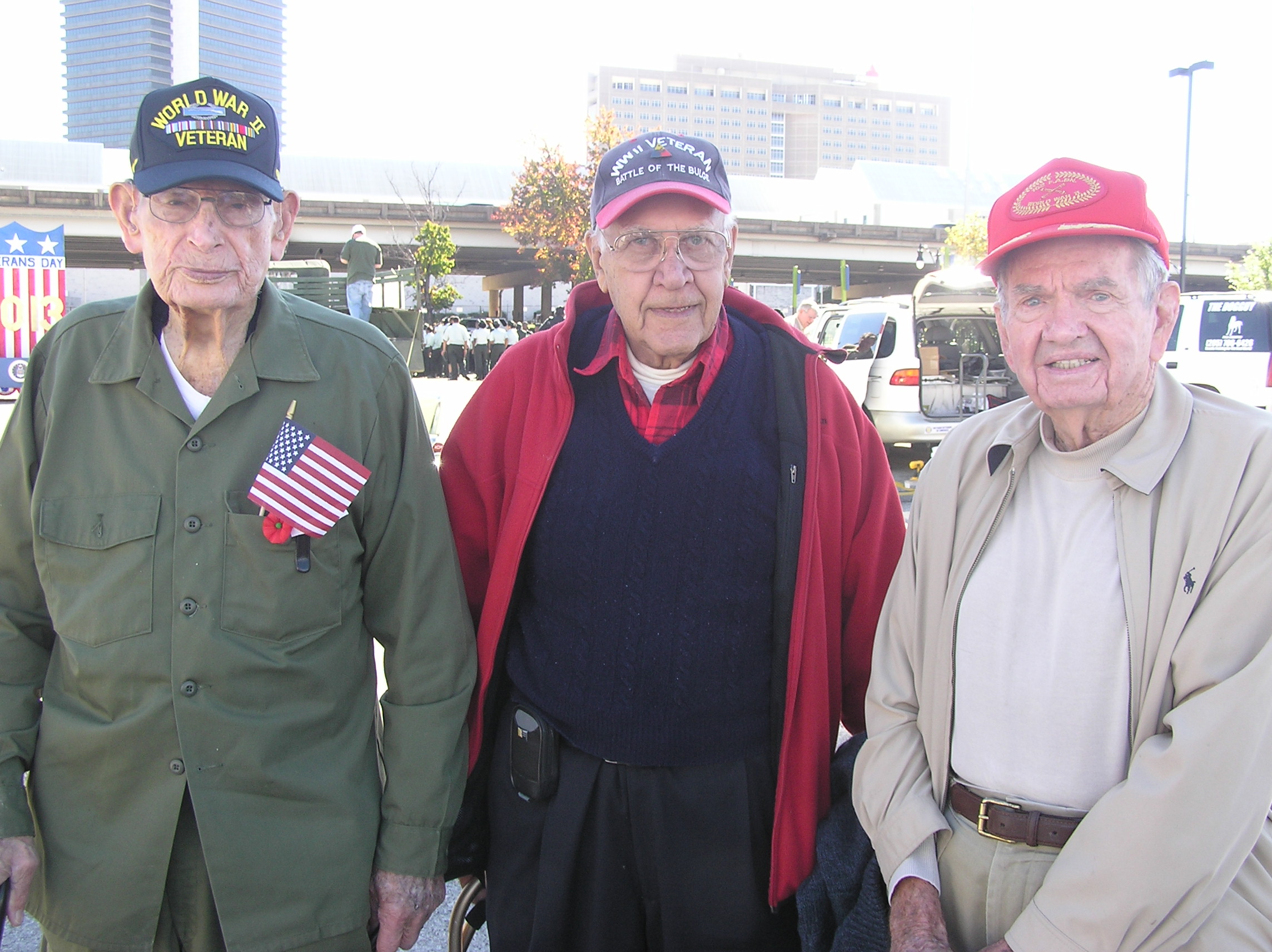
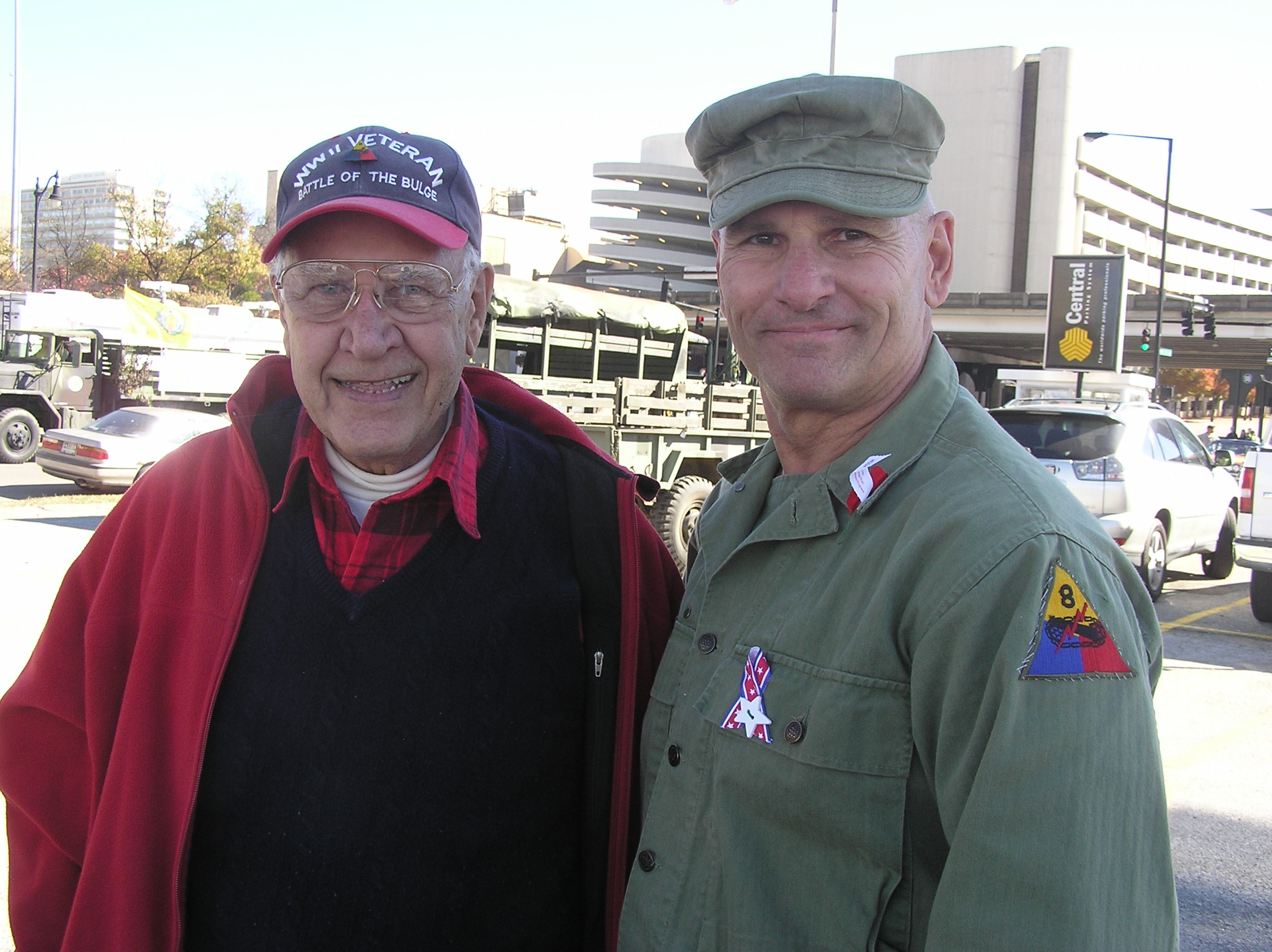
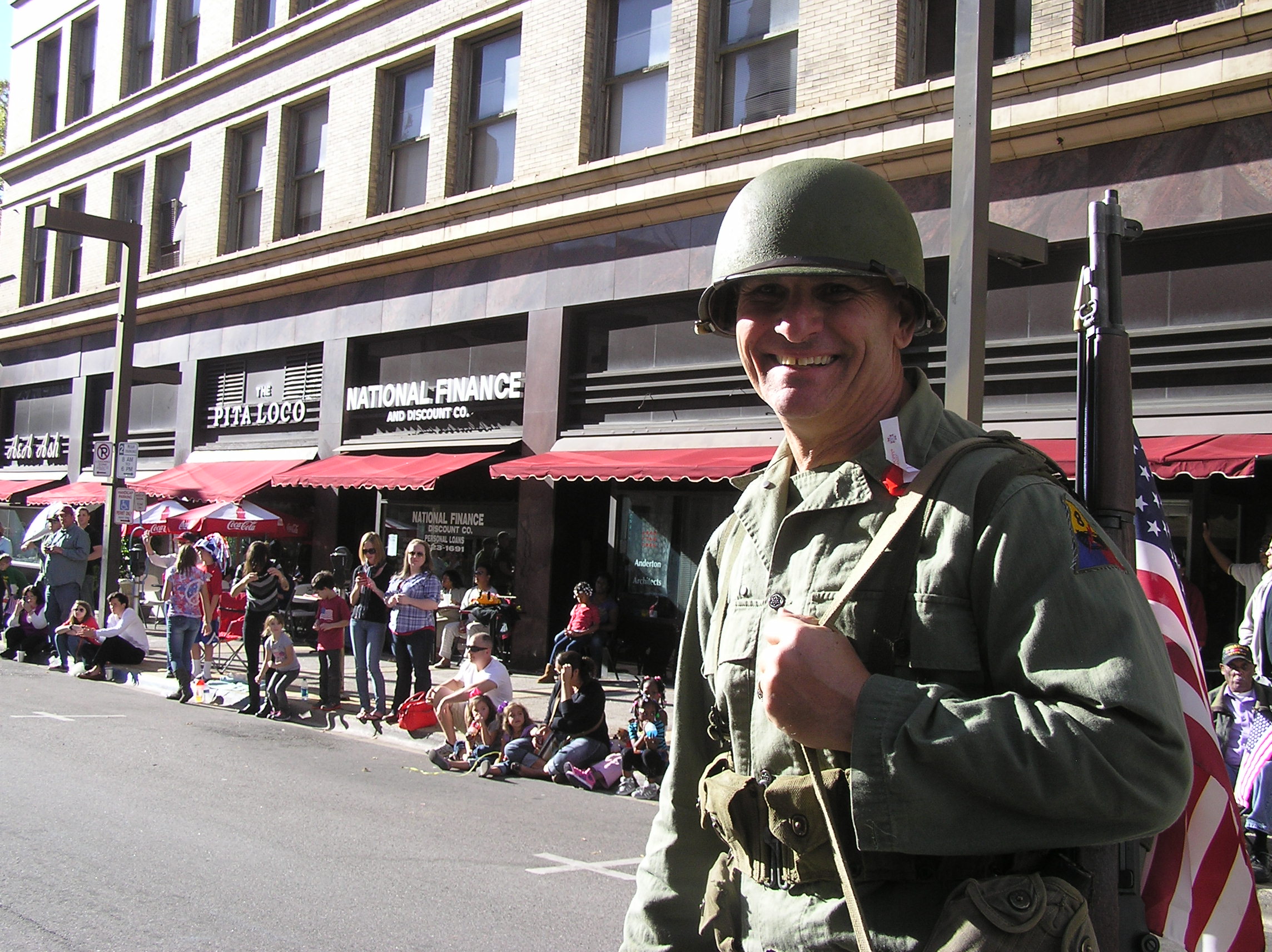
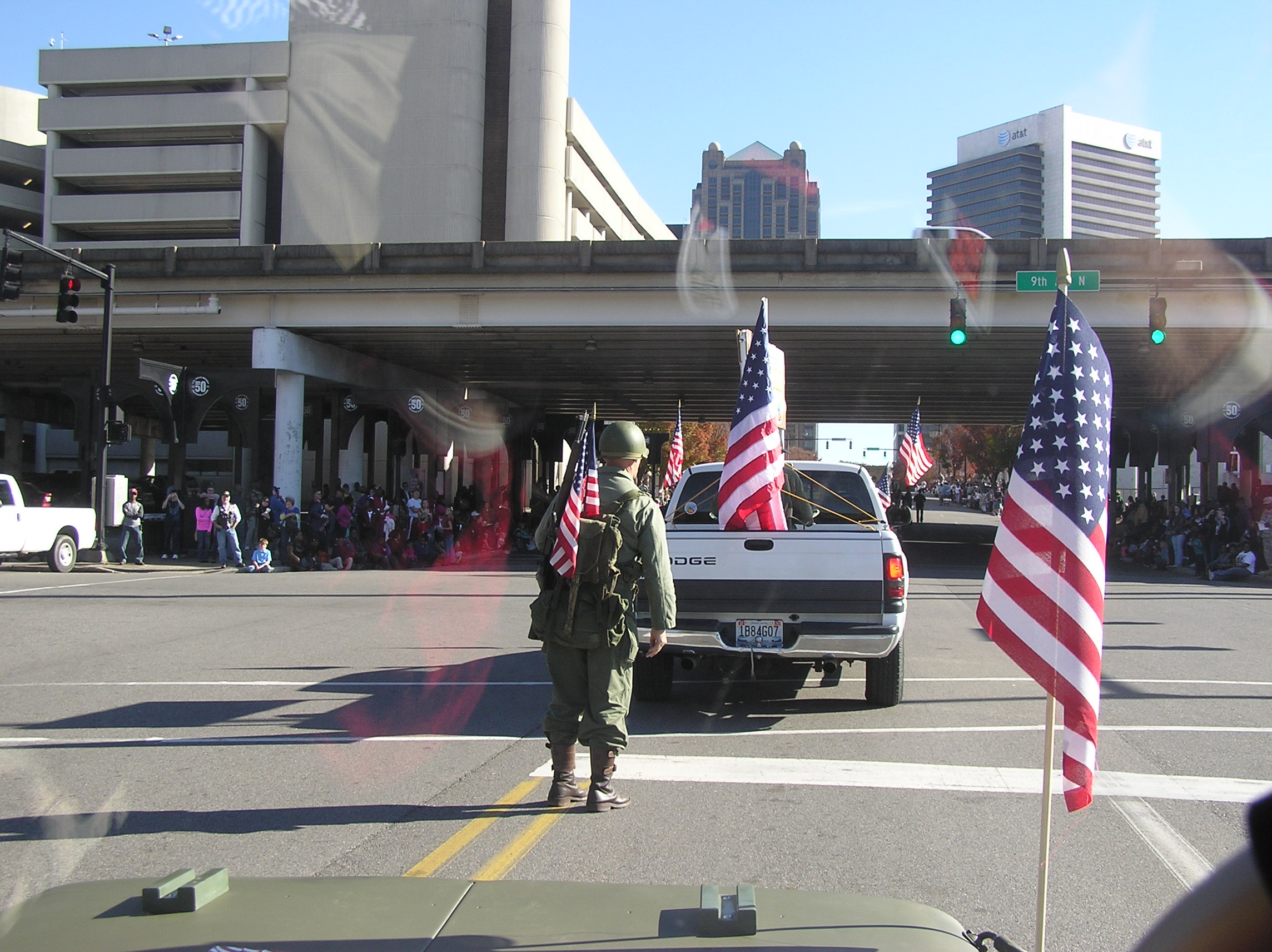
Attached are pictures from the National Veterans Day Parade in Birmingham, AL.  Vern Miller, president of the George S Patton, Jr Chapter of the Veterans of the Battle of the Bulge had the honor of riding in the parade in a WWII Jeep restored by Ronnie Guin, a VBOB member, and of being represented in the parade by WO4 Mike Hipwell, Fort Rucker, AL a helicopter pilot and a WWII Re-enactor. who returned a month ago from his tour of duty in Afghanistan.

Vern was honored to have Mike wear his 8th Armored Division shoulder patch and didn’t mind the ribbing he took because neither he nor Mike could come up with a set of T-3 stripes — so he was demoted to buck private.

L to R Max Herrington, 5th Inf Div; Vern Miller, 8th Armrd Div; & Jack Mullins, 752nd FA Bn, pose before mounting their parade vehicles.
Re-enactor Mike Hipwell (R) and Vern Miller (L) represented the 8th Armored Division.
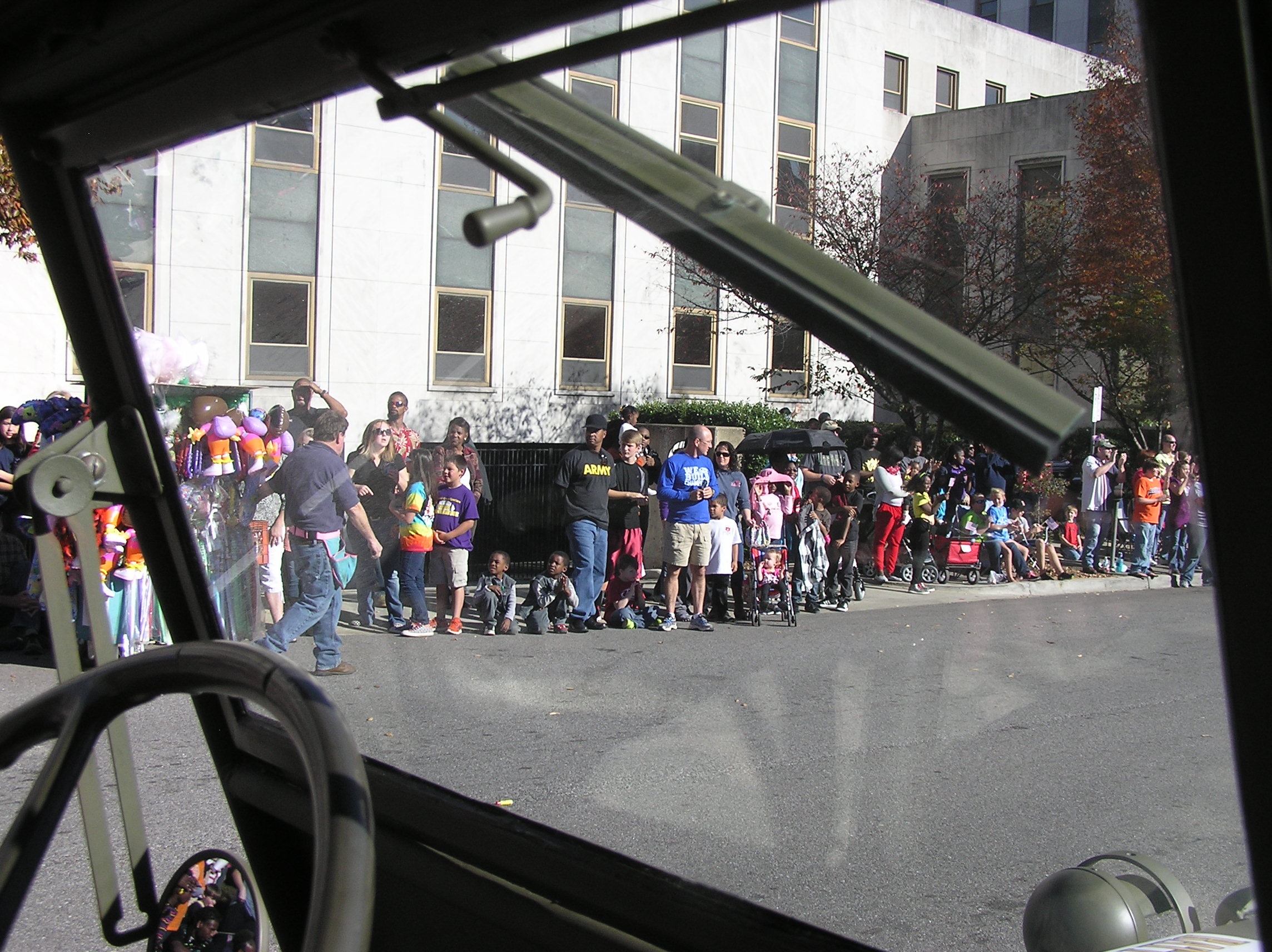
This is the view from the front passenger seat of Ronnie Guin's 1942 Jeep


WO4 Mike Hipwell takes time out near the end of the parade route
Mike Hipwell in 8th Armrd "battle rattle" marched behind VBOB's lead vehicle carrying Max Herrington.'


WA State Chapter Spring luncheon

WA State Chapter Spring luncheon
Greetings all! Please save the date, May 3rd 2014 for the WWII Veterans of the Battle Of the Bulge Spring Luncheon. I know it’s not even winter yet (although it is beginning to feel like it) however Spring is coming. We hope you will all be able to attend! Please feel free to share this news and invite your friends. Your assistance in getting the word out about this awesome opportunity would be welcomed.

We’ll have a terrific program and you’ll be able to meet some men who’ve made WWII history by participating in the Battle of the Bulge and also view interesting WWII displays and real restored military vehicles.

Location: La Quinta Inn, Tacoma
Date: Saturday, May 3, 2014
Time: 10:30AM (doors open)
Official Welcome @ 11am
Directions: La Quinta Inn (253) 383-0146
1425 East 27th Street
Tacoma, WA 98421-2200

Thank you!
With God’s love,
Beth (and Jim) Pennock
WA State VBOB Chapter Leaders
3006 NW 61st Street, Seattle, WA 98107
telephone (206) 783-0212
or gotweekenders@aol.com


CMOH Recipients during the Battle of the Bulge

During the Battle of the Bulge the Congressional Medal of Honor was awarded to the 17 individuals listed below. Click on their name to read the citation that describes their heroic actions.

Beyer, Arthur
Biddle, Melvin
Bolden, Paul
Cowan, Richard
Currey, Francis
Gammon, Archer
Hendrix, James
Jackman, Isadore
Kimbro, Truman
Lopez, Jose
McGarity, Vernon
Shoup, Curtis
Soderman, William
Thorne, Horace
Turner, Day
Warner, Henry
Wiedorfer, Paul