A Pearl Found In the Army

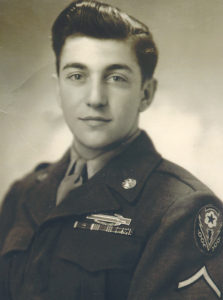
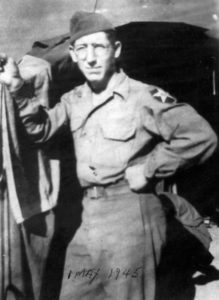
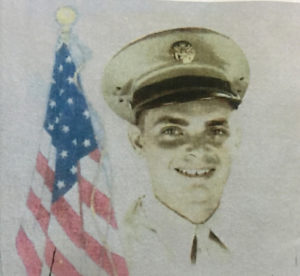
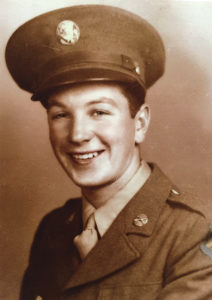
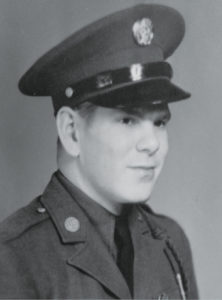
by Gerald White, 2 INFD, 23 REGT, CO M

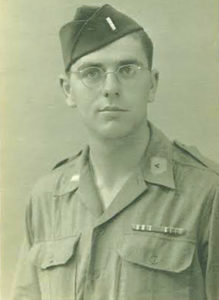
Gerald White, 2 INFD, 23 REGT, CO M

It was a very tough, long basic training in the sands of Florida, very difficult for a young, dumb, skinny kid. There were lots of snakes and wild boar. In mid-November 1944, I was given a fifteen-day leave, then reported back to Fort Dix for shipment overseas. On 8 January 1945, we left New York harbor on the Queen Elizabeth with approximately twelve thousand troops. On the ocean trip, we had two sub alerts. We landed at Glasgow, Scotland on 13 January 1945, and were sent directly to a port in southern England for transfer to a port in France. We were loaded on cattle cars (forty and eight) for assignment to forward units.

I was assigned to M Company of the 23rd Infantry of the Second Division on 15 January 1945 someplace in Belgium. It was very cold, with lots of snow. Sometimes there was a lot of shelling by the Germans, and many battles around the Omdemolivildengin Pass near St. Vith, Belgium as part of the Battle of the Bulge. We would cut trees down with C-4 to use for bunkers, as the ground was so frozen that we couldn’t dig foxholes. I was assigned as an ammo bearer, mostly mortars.

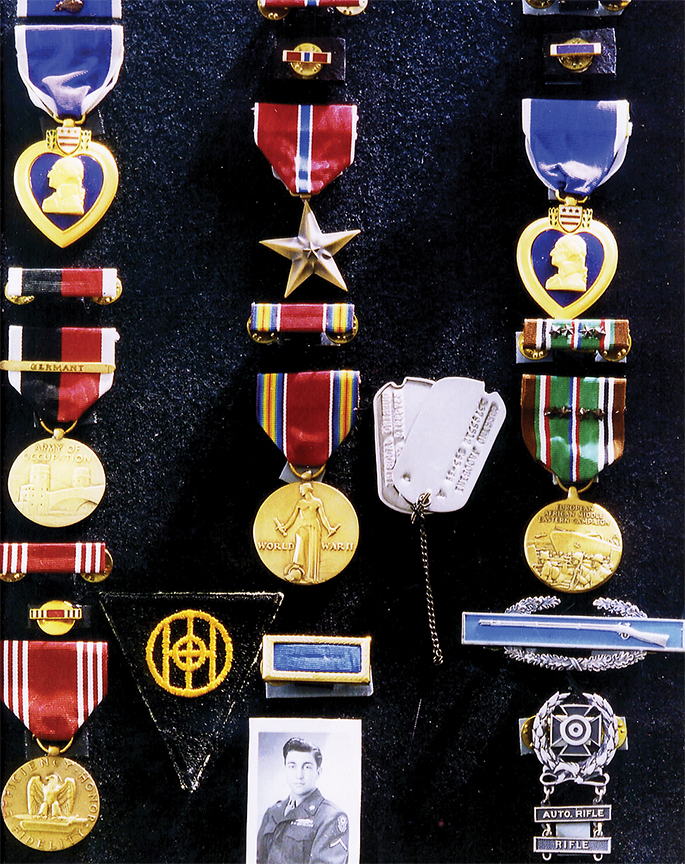
On 31 January, while on the Siegfried Line near Wehlerscheid, Germany, I was wounded. I was working KP, but don’t remember that I had done anything wrong to have to be there! I was told to burn up some excess food. So I finished piling up the food, applied some flammable fluid to it and lit it. A tremendous blast resulted, likely because there was an undetected mine beneath where the food had been piled. I was blown away from the food pile. I suffered burns and plenty of singed hair, and was evacuated to Beaujon hospital in Paris, France. Two officers reported that I was MIA, and this was reported to my family. Ten days later I was back with the unit, but my family was never told that I had been located, leaving them in complete darkness about my status!

Our unit crossed the Ruhr River 2 February 1945 on pontoon boats, with lots of action. I rejoined my unit, and we pushed ahead. On 21 March 1945 we crossed the Rhine River five miles south of the famous Remagen Bridge. At this point we were moving fast. I received some advanced training and became a mortarman. We were on mechanized vehicles: half tracks, tanks, etc. We had a major battle outside of Leipzig. Then the tide turned, really turned. We took out a lot of the enemy. At one point, I looked up at an Allied bombing formation. There were so many airplanes that it looked like a big cloud passing over us. We advanced to the Mulde River where we met up with the Russians. The unit moved south to Pilsen, Czechoslovakia. At this point, most of the Germans were giving up. On 8 May 1945 the war was over.

On 10 July 1945 the Division traveled by train to a port in France. On 13 July we were loaded on a ship and departed France. We arrived at Camp Kilmer, New Jersey. We were given thirty days leave, then were to report to Camp Swift, Texas. At Camp Swift the Division was to be regrouped for extensive training for assignment to an unknown location. I was home on leave on VJ Day. Happy Days! On 23 August, I reported in at Camp Swift, Texas and started advance training. The day before Thanksgiving, the complete division moved to Camp Stoneman, California by train. On Thanksgiving day, the division marched in a ticker- tape parade through San Francisco. There were very large crowds. The next day trainloads of equipment and troops—me included—were on the way to Fort Lewis, Washington. The division received new people, as the home of the division would be at Fort Lewis. I was at Fort Lewis until 28 June 1946. A long trainload of GIs was loaded for shipment across the USA for discharge. We arrived at Fort Dix on 2 July and I was discharged on 4 July 1946. AMEN!!

I left the service and went to Morrisville College on the GI Bill. I went to work at the Seneca Army Depot as a civilian, working in the surveillance office. I became a munitions inspector, QA Specialist (QASAS), and did this for 37 years. I also served the Army in Korea as a civilian. It was while I was at Seneca that I met Pearl Johnson, the woman who became my wife. Of all the good things that happened to me while serving in or working for the Army, Pearl was the best!

I retired as a QASAS-S Chief of the Missile Branch in May 1985, at Anniston Ordnance Depot, Alabama.

The Wallet that Saved a Life!

On August 14, 1937, Mrs. Elizabeth Dorsey gave her youngest son a leather wallet as a present on his 16th birthday. She never knew that wallet would save her son’s life in WWII.

Sgt Raymond Dorsey told the story:

Raymond Dorsey, 4 INFD, 22 REGT

“I’d joined the 22nd Inf. of the 4th ID a few weeks before Christmas. We were in the Hürtgen forest of Germany during the Battle of the Bulge. There was lots of snow [Sgt. Dorsey likes to understate things] and so cold there’s just no way to describe the cold!” [Mr. Dorsey said that it was so cold the soldiers had to take socks and other clothing off of the dead to keep warm-those memories still haunt him.] “If it wasn’t the Germans trying to kill us, it was the weather. I fought through the Bulge until mid-January ’45, when it was over. This is when the prisoners started turning themselves in – they were glad to be out of it. There were more of them than there were of us. The fighting was over and they were surrendering. By the middle of Jan ’45, my outfit started to receive a lot of German prisoners. I had to search them – lined ’em up – and they all had wallets full of German money, which was worthless. I didn’t have any money. There was nothing for them to buy, nowhere they could spend it. So I traded them anything I could give them for their money. I ended up with so much of their money that my wallet was full, and I couldn’t carry it in my back pocket, like normal, so I moved it to my shirt front pocket. We took artillery fire during the fighting of the Bulge and up until this time I had several close calls, yet was never hit.

We were moved to the city of Prüm, Germany around Feb 14th 1945. We were told to set up a staging area at the edge of town. The enemy was waiting for us near late evening. They were dropping shells all around us. We had to set up a command post in a house, with two medics in the basement. I was on guard duty when they dropped a shell real close. I was a little away from the house and hadn’t been hit. After those shells dropped, I moved nearer the house to find some cover. I took one step into the house, and when I turned around, a shell landed right in front of me. That’s when my lights went out! The fat leather wallet in my shirt pocket, now over my heart, caught the main hit of shrapnel. That wallet (full of German money which was useless,) that my mother gave me years before, saved my life. I was unconscious and the medics helped save me by stopping the bleeding. When I came to, I was on the floor of a big building, maybe an airplane hangar. The whole floor, from what I could see, was covered with soldiers like myself. Just full of soldiers like me. I wanted a drink of water, but they wouldn’t give it to me. But they did give me a shot of morphine. I hadn’t had a shave or bath since I’d arrived. I must have been a sight! I don’t know how long I was there or where it was – they kept me knocked out. They loaded me into an ambulance, and I remember hearing them say that we were passing the Eiffel Tower, so we must have been near Paris at this time. When I woke up next, I was clean, shaved and in a clean bed with sheets. I don’t know how long I was in France. I next remember waking up in the hospital in England, and they handed me my belongings, including the wallet. It was full of American money. Someone had changed all the German money for American! I felt blessed, because there was enough money in my wallet to send $100 to my wife (which was a lot of money in 1945,) and I kept the rest. My buddies in the hospital were the ones to point out the hole in my wallet and I realized that wallet saved my life! My right thigh was all bandaged up, and they started to unwrap it. They rolled me outside for a long way to the operating room. That’s when they sewed up my leg wound and put it in a cast. When the cast was removed, my doctor came around and asked, ‘How you doing today, soldier?’ I said, ‘Well, they just removed my cast, but I can’t move my knee.’ He went to the bottom of my bed, grabbed my right foot and gave it a heave – like a pistol shot, you could hear it – but after that I could bend my knee again. I can still see shrapnel in my thigh, my ankle and I’ve got a little in my face around my left eye.”

Sgt Dorsey was never able to tell his mom that she had saved his life with that birthday gift. When he was medically fit to be sent home, his mother was terminally ill, and as Dorsey said, “I was able to see my mom just before she passed, as I’d finally been released. She was a good mother. I didn’t talk about the war, never showed them wounds. It was too soon, and people didn’t want to know. I still have to live with it.”

A Gunner’s Story

This is a selected excerpt about US Army soldier Charlie Sanderson from My Father’s War: Memories from Our Honored WWII Soldiers, a book of first-hand narratives and photos chronicled by BOBA Member Charley Valera.

Charlie Sanderson, 78th INFD, 552 FABN, AAA AW BN

Unlike most soldiers who finished their training and were selected to be shipped overseas, [Charlie] Sanderson was rushed over as a replacement and completed his basic training in Salisbury Plains, England, near the white cliffs of Dover—not a pleasant or safe place to be in early 1944.

Sanderson was now official property of the US First Army, 552nd Field Artillery Battalion, 78th Infantry Division, AAA Automatic Weapons Battalion under Major General Edwin P. Parker. Sanderson soon found himself landing on Omaha Beach and would eventually end up in the Ardennes Forest.

Moving forward into Normandy and other parts of France, the troops fired on the towns of Saint-Lô and Sainte-Mère-Église. “Return fire was nonstop. Everything was coming at us.

One time, I looked up over the hill and saw all the tanks lined up,” Sanderson said. “I thought they were American tanks. They were Germans and they started firing at us. We were laying out a position and didn’t know we had gone too far.” The land between the two fighting sides is known as no-man’s-land. Sanderson’s troop had gone too far into German-occupied territory; they had to get out of there in a hurry.

Again, Sanderson was part of the 552nd Field Artillery Battalion. They had three gun batteries: A, B, and C Battery. Their weapon was the enormous, American-made 240 mm Howitzer Cannon that would shoot a 365-pound projectile within a twenty-mile range, using eighty-five pounds of gunpowder per shot. This big weapon of war could also be moved around as needed to advance.

Once a position was established and laid out, Sanderson began to empty his truck for action. He took a big canvas and put it down exactly where the massive Howitzer gun was to be located. The canvas had holes in it with metal grommets, and it took three men to lay it out. Assigned to a twenty-one-man crew, Sanderson was up front first. They’d put the large steel spades attached to the sides of the gun into the ground for support, but needed large enough holes to accommodate the recoil based on the gun’s nose’s aim. When the other part of his crew showed up, all they had to do was start digging. After that, they placed “a thousand sandbags around it,” Sanderson said. “Sometimes you had soft or sandy soil to work with.”

They used prime movers to move the Howitzers around—not a tank. A prime mover is a specialized heavy-duty gun tractor used to tow artillery pieces of various weight and sizes. They took two prime movers and put them at 45 degrees on either side of the Howitzer, cabling the gun to them for further stability.

Each man had his own job. A gunner would sit on a metal seat on one side of the gun and did quadrant lateral settings. Another sat on the other side, configuring the elevation settings. The two spun the big steering wheels for accuracy. When ready, the gunner got on a phone with the commander and yelled, “Set,” then “Ready” and the commander on the other end of the line would tell them when to fire. To work just the gun, “There would be two men on the gun; seven on ram-staff and four to bring the projectile out.”

With seven men on the ram-staff, a twelve-foot manual push rod got the projectile into the gun. “They’d yell, “One, two, three … ram!’ and slam the 365-pound bullet into the barrel of the Howitzer. It all went as fast as you could go … to have a round in the air every minute.”

There was a sergeant in charge of maintenance for all this equipment. The prime movers were all covered in camouflage to hide from reconnaissance planes. “The noise was tough,” explained Sanderson. “You were supposed to stand on your toes, open your mouth, and block your ears. How you gonna do that when you had to measure the recoil on the gun? The gun would recoil sixty-five inches,” he remembered. “The hotter the gun got from firing, the farther back the gun would recoil.”

“We needed cooks, truck drivers, mechanics, and others soldiers’ efforts of the unit to make it all work. Some of the others would be guarding the trucks and facilities during the shooting. You had guard duty, two “on and four off, and sometimes we’d agree to four on and two off to give more people a break or [to] sleep more at night. But you had to be close to your gun. Your pup tent was very close by the gun. When they called a fire mission, you had to be quickly available. Or, if there was a fire mission and you were sleeping … well, at least trying to sleep during all of that.”

Further inquiry about his crew continued. “The sergeant is like the head mechanic; he knows what’s to happen and when to move on. Everything is camouflaged and ready to go when needed. They all carried the carbine rifles with a sling over their shoulders.” He shook his head. “Nobody could believe what it was like.”

In front of the guns was a six-foot pile of loose grass or dirt caused by a vacuum from the firing. “One time, “on and four off, and sometimes we’d agree to four on and two off to give more people a break or [to] sleep more at night. But you had to be close to your gun. Your pup tent was very close by the gun. When they called a fire mission, you had to be quickly available. Or, if there was a fire mission and you were sleeping … well, at least trying to sleep during all of that.”

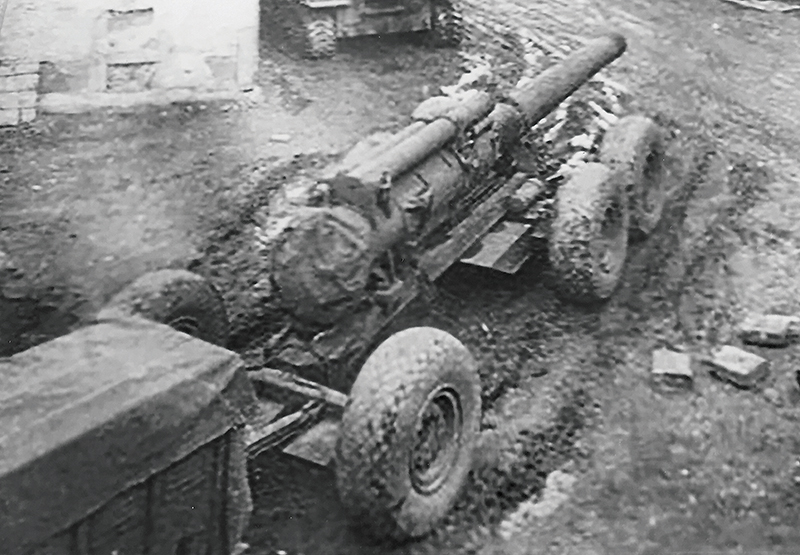
Sanderson’s 240 MM Howitzer, covered in mud, as usual.

Further inquiry about his crew continued. “The sergeant is like the head mechanic; he knows what’s to happen and when to move on. Everything is camouflaged and ready to go when needed. They all carried the carbine rifles with a sling over their shoulders.” He shook his head. “Nobody could believe what it was like.”

In front of the guns was a six-foot pile of loose grass or dirt caused by a vacuum from the firing. “One time,” Sanderson recalled with a smile, “there was a half dozen sheep close by. We fired over them and there was a whole pile of loose wool in front of the gun. It didn’t pull it out of them, but loose wool from their bodies was in with the grass. It was kind of funny.”

The food was mostly K rations. The only time their cook was able to provide decent meals was when they got into a quiet zone where they could kind of lie back, with not much going on. They sometimes took the big kettles, which looked like metal garbage cans, and set four of them out. They then took extra gunpowder bags and threw them onto a fire—which got the water boiling in just a couple of minutes. They threw C rations into the water so they could have hot food. But most of the time, it was K rations. The benefits of K rations were for quick eating meals and maximum energy while C rations were more for sustained daily food intake.

K rations were individual portions of canned combat food and provided breakfast, lunch, and supper. According to Wikipedia, a day’s menu consisted of the following:
Breakfast Unit: canned entree (chopped ham and eggs, veal loaf), biscuits, a dried fruit bar or cereal bar, Halazone water purification tablets, a four-pack of cigarettes, chewing gum, instant coffee, and sugar (granulated, cubed, or compressed).

Dinner Unit: canned entree (processed cheese, ham, or ham and cheese), biscuits, fifteen malted-milk tablets (in early versions) or five caramels (in later versions), sugar (granulated, cubed, or compressed), a salt packet, a four-pack of cigarettes and a box of matches, chewing gum.

Sanderson shared some of his memories of the Battle of the Bulge: “During the Battle of the Bulge, the Germans spearheaded around us. We were in the middle, and they had us surrounded. The lieutenant told us, ‘We’re going to fight until the last man. The first man to turn around, I’ll shoot him in the back.’ That’s what the lieutenant told us. Blood and Guts, General Patton, came in with his tanks. When he came by, you could see those tanks rolling around. He saved our ass, you know. We were surrounded.” When asked if he’d ever met General Patton, Sanderson responded with a smile. “I drove past him once. I knew who he was, but he didn’t know who I was.”

From a distant memory, Sanderson remembered another interesting story, detailing what the Ardennes Forest looked like. “Did you ever see land when a tornado’s come through? Did you ever see trees and stuff, twisted and broken off? The whole friggin’ forest was like that. I drove down a road and there were horses hooked to cannons—German horse-drawn artillery. Our men came down through and strafed them. We just had to push them off the road so we could get through. Imagine that—using horse-drawn artillery in World War II. Everything the Germans had, they used. That was the Ardennes Forest.” Sanderson was stunned to see the once-mighty Third Reich reduced to using horse-drawn artillery.

“They called them battles, but to me it was a battle all the way through.”

Sanderson got plenty of special detail. They took him and his assistant driver to a huge field at night so they could run a wire for their phones. “A jeep would drive the wire across the field. They’d say, ‘Here, this is your position.’ It was right next to a row of turnips. The Germans planted huge rows of them. A row of turnips covered in brush used to feed their animals and troops. We were out there to report if they [the German troops] came in by parachute. We were sitting ducks out there in the middle of the friggin’ field. All by ourselves, you know. These kind of details, you don’t mind when you’re back with your men. But when you’re all by yourself, those kinds of detail kind of get scary.”

Sanderson added, “They’d come by and drop those personnel bombs. They’d drop them all over the place and they’d go pop, pop, pop all over the friggin’ place like popcorn. They also dropped flares so they could see. They’d see us sitting ducks next to the pile of turnips camouflaged like it was something else. I was probably nineteen years old.”

“When you can’t see it, you get scared. You don’t know where it’s coming from. Anyone who said they weren’t scared is a damn liar.”

The war had been over for more than seventy years when Charlie and I spoke about his life. The memory of his war efforts is etched in his mind as though they had happened yesterday—just like the others I’ve interviewed, they all seem to remember the war in great details. There was lots of smoke, fire, guns going off, aircraft strafing; it was war, with people being killed on a regular basis.

Charley Valera is the author of My Father’s War: Memories from Our Honored WWII Soldiers, which includes photos and personal stories of a dozen more veterans from every branch and both theaters of WWII. Copies are available at Amazon.com and BN.com. Signed copies of the book are available only at www.charleyvalera.com. You can view many of the 
actual interviews on YouTube at https://goo.gl/4Q1919.

The Calendar that Changed Sides

by Benjamin Mack-Jackson, Member

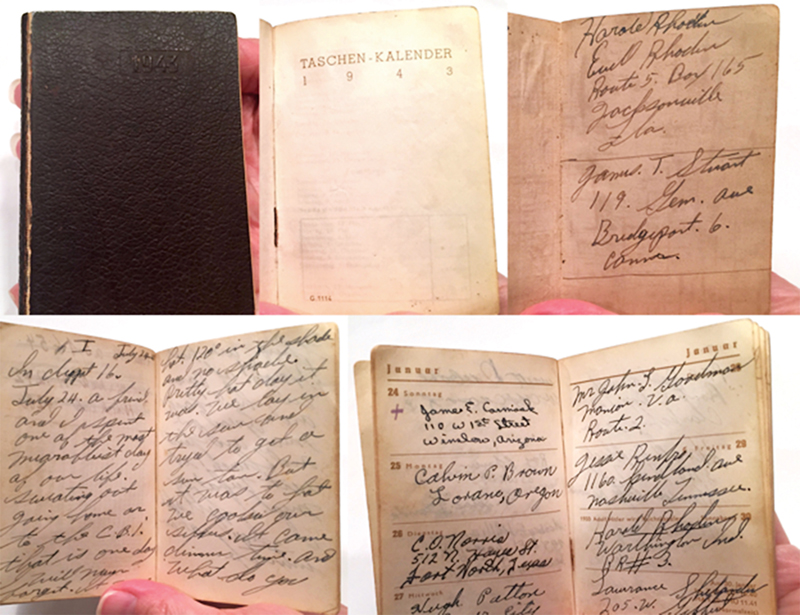
German soldier's calendar captured by Harold Rhoden, 106 INFD 424 REGT CO F.
German soldier’s calendar captured by Harold Rhoden, 106 INFD 424 REGT CO F.

At the 2017 106th Infantry Division Reunion, I was entrusted with an incredible historical artifact by the family of WWII veteran Harold Rhoden. Harold Junior Rhoden served as a Private in the 106th Infantry Division, 424th Infantry Regiment, Company F. He enlisted in the army on November 19, 1943, in Camp Blanding, Florida.
Private Rhoden wrote his wartime thoughts, as well as the names and addresses of his buddies, in this captured German soldier’s pocket calendar. The “Taschen-Kalendar” was most likely taken from a German soldier by Rhoden himself. Before being used by Rhoden, a German soldier had made several entries throughout the book in purple ink, including numbers, names, and dates.
On December 16, 1944, Rhoden and the 424th Infantry Regiment were plunged into the Battle of the Bulge, the largest and bloodiest battle fought by the United States in World War II. Private Rhoden undoubtedly saw fierce
 combat in late 1944 and early 1945, and this pocket calendar was with him all the way. Seeing ferocious and bloody combat for several months, Private Rhoden was awarded 
the Combat Infantryman Badge, a prestigious Army award.
On February 7, 1945, the 424th Infantry Regiment was moved to the vicinity of Hunningen, Germany to conduct defensive patrols. Eleven days after arriving in Hunningen, Private Rhoden was wounded in action, which resulted in him receiving the Purple Heart.
This pocket calendar ultimately survived the war and was brought home from Europe by Private Rhoden as a memory of his time in service. It is a true honor to be the caretaker of this incredible piece of history for educating future generations, and I am humbled that the Rhoden family chose me to do so.
Benjamin Mack-Jackson is the 16-year-old founder of the non-profit organization WWII Veterans History Project (WW2VeteransHistoryProject.com). Throughout the past three years he has interviewed over 50 WWII veterans and created the Traveling Museum of WWII, a mobile history display using artifacts donated by veterans and their families. He has spoken to thousands of people of all ages about the importance of history and remembering the past.

BOBA contributing to Bulge exhibit at the new National Army Museum

VBOB_vectorThe Battle of the Bulge Association, Inc. is co-sponsoring the Battle of the Bulge exhibit at the National Army Museum, along with the Grand Duchy of Luxembourg. Luxembourg has already pledged $125,000 for half of the cost of the exhibit. BOBA is raising the other half, so that our name will be on the exhibit and will create more awareness about BOBA.

The Campaign for the National Museum of the U.S. Army is being run by the Army Historical Foundation. For those who are not aware, the museum is under construction at Fort Belvoir, Virginia near Washington, DC. Completion is expected sometime in 2019. We expect that BOBA will tour the museum once open, as part of our December Commemoration, probably in 2020 (we will be in Belgium for the 75th Anniversary in 2019).

As the Veterans of the Battle of the Bulge, we have already contributed $2,500 to the Army Historical Foundation for the Museum. They have set up an account for BOBA for members, chapters, and friends who want to contribute to the Battle of the Bulge exhibit in our name, so we can meet the goal of $125,000.

There are several methods of making contributions.
1. Make checks payable to the National Army Museum Fund and use the memo line to write “BOBA – Acct #3601720”
Mailing address for checks:
National Army Museum Campaign
Attn: Beth Seaman
2425 Wilson Blvd
Arlington, VA 22201 

2. If you prefer making a donation via credit card, you can call Beth Seaman at (703) 879-0006. At the time of the call, you can let her know you’d like your donation to be put towards the Battle of the Bulge Association Fund.

3. If you prefer to make an on-line credit card donation to The Campaign for the National Army Museum, click here: Donate here to the National Army Museum Campaign

Upcoming 83rd InfD Association Reunion

83INFD_logoThe WWII 83rd Infantry Division Association will hold their 72nd Reunion on August 1-5, 2018 at: Verve Crowne Plaza, 1360 Worcester St., Natick, MA 01760. Veterans, friends, and families of veterans are welcome.
Contact Judy Breen, (603) 569-3263, walkgirl250@yahoo.com for more information. Reservations and payment due by 6/29/18.

The Belgian Boy and His Soldiers

by Bob Sparenberg

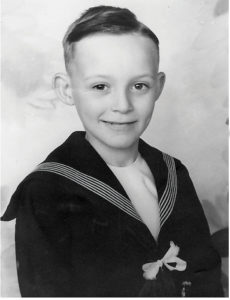
Bob Sparenberg at age 6, 1952

I was born in Grimbergen, Belgium in November of 1945 and am the second youngest of three boys and three girls. My family survived 4 years of Nazi occupation. In my early life, I relived the stories of my brothers and sisters fears throughout those years. I listened to my brothers’ stories of dog fights between M109s and Spitfires over our village, as well as, the constant barrage of B17s flying overhead to bomb Germany. My mother explained that when the Germans came into our village, the sound of their goosesteps on the cobblestones could be heard for miles before they even entered Grimbergen. That is when fear gripped the village and they knew what their future would be.

My parents, throughout those years, kept in contact with the Dutch underground in order to assist them whenever needed. They hid in our home, under a carpet which concealed a door on the dining room floor and which was covered by a large table, allied personnel who had been through the night, covertly moved to our home for safe passage out of Belgium. They would then be moved at the most opportune time in the night, to a convent in our village. On several occasions, the Gestapo and the local police who were working for the Nazi regime, entered our home to confront my family. They had heard rumors from local villagers that suspicious activity was going on at the Sparenbergs. My father was a widower when he married my mother. Together, my mother and father had 6 children. However, my father had 3 sons from his first marriage. One of my half-brothers had joined the German army, unbeknownst to the family. In the early part of 1944, my father received a letter on Nazi letterhead, mailed from Russia where my half-brother was fighting against the Russians. This letter proved to be a saving factor for my family being spared from confinement in the local concentration camp or possible execution. One day the Gestapo entered our home and lined my family up against the wall. A black shirt in our village had informed them that the Sparenbergs were possibly helping the enemy. A black shirt was a local villager who sympathized with the Nazis.

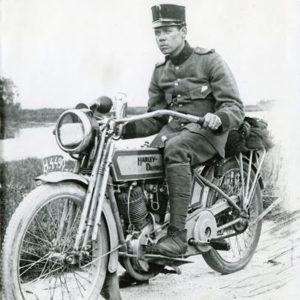
Bob Sparenberg’s father Hendrik Sparenberg on his Harley in 1917.

It was during this time that my father believed that God spoke to him and told him to get the letter and show them that his son is fighting for the Germans and that they too were in support of Germany. When the Gestapo saw the letter they left them with only a warning. This brought such relief to the family at that time. Several days later they were crawling under the kitchen table as the sound of V2 rockets could be heard whistling overhead. Several months later the Gestapo came back again looking for my father’s other son who they found out had become a Merchant Marine, the opposite of his brother who had joined the Germans. This son was moving supplies throughout the North Sea from England to France. My father was well aware of the dangers connected with war. In WW1 in 1917, he had patrolled the Dutch and Belgian borders on a Harley-Davidson for the Dutch Army in search of deserters between the two countries.

I sometimes reflect back on my brothers’ experiences, one of which was trying to take a 50 caliber machine gun out of a B17 which had crash landed in our village and their failure to do so. However, my oldest brother, Alex, managed to crack off pieces of the cockpit window and carved little B24s out of them which he still has to this day on his living room mantel. In a recent phone conversation with my oldest sister, Betsy, who is now 82, I told her about the men I am working with and the article that I was writing. She said, “Robert, to this day I still have fear. When I see a black PT Cruiser, my mind goes back to the Gestapo who had black sedans with the SS sign and the swastika.” They were the ones who assisted in putting Jewish families from our village, as well as our Jewish neighbors, onto the boxcars which were on the tracks directly across from our home. In the summertime it was hot and humid and there would be days and sometimes weeks with no power. My family would sleep with mosquito nets over their beds. My sister remembers early one morning being awakened by the sound of a German bayonet ripping through her net to see who was sleeping in the bed. They were making sure no Jewish children were being hidden with the local villagers.

One day, the talk in our village was the Americans had entered the Ardennes and were pushing their way into the Bulge. With Providence on the side of America, the German war machine was running out of fuel and ammunition. They were able to secure approximately 50,000 gallons of fuel from the American fuel depot but this was not enough to feed the thirsty armored division. This could have been a turning point of Germany’s success. After our village was liberated by British soldiers, many of them stayed by combat ready, to assist if needed, in the Bulge. (I was named after one of those British soldiers, Robert Seaman.) The impact of the American soldiers fighting in the Bulge was a crucial point in the history of WW2. It was truly the final liberation of the Belgian Ardennes. It left a deep thankful spirit in the hearts of the Belgian people who consider the Americans their heroes. And this thankfulness is celebrated every year since the Battle of the Bulge. Growing up in a grateful family, my passion has been to meet the men who fought those eighty kilometers from our village.

BOBA Veteran Member Homer Cox, 2 INFD, 9 INF REG, 1 BN,  SERV CO, as a young soldier.
BOBA Veteran Member Homer Cox, 2 INFD, 9 INF REG, 1 BN, SERV CO, as a young soldier.

Five years ago, I received a call from my son who was working at a Senior Center in Texas. He had just finished taking the blood pressure of a 90-year old 3rd army anti-aircraft gunner who was stationed in the Luxembourg Ardennes. Soon after he called me, I was introduced to Richard “Tex” Stanley. Richard was nicknamed “Tex” by General Patton and had survived 6 major battles of WW2. This began a friendship and camaraderie that fueled a passion for meeting other veterans who fought in our little country. I soon discovered I can find them by daily looking, in my travels, for those older men who proudly wear their WW2 Veteran hat, which sets them apart from the crowd. Among them is Ralph Garrett, Sr., age 94, of the 106th infantry. Ralph, another Texas native, came to my attention in a Walmart, wearing a WW2 hat, which invited an introduction on my part. “Thank you for your service, sir! Pacific Theater or European Theater?” This always leads into an interesting conversation which ends up in a lasting friendship. In a recent get together of these vets, I introduced Ralph to D-Day +1, 2nd Infantry, 9th regiment, 100-year old, Master Sergeant Homer Cox. They had never met before and yet on December 16th and 17th of 1944, the 2nd Infantry crossed paths with the 106th. They shared a lot of stories after shaking hands that day.

Homer Cox, Carmen Gisi, and Richard “Tex” Stanley.

I am privileged to attend once a month in Ft. Worth, Texas, a Veterans’ luncheon, called “Roll Call”. When my veterans are able to attend, I take them to this free luncheon where as many as 70 plus WW2 veterans and their families attend, along with other veterans. I was honored to speak to this group and asked for a show of hands of those men who fought in Belgium. A number of hands went up and after finishing I had the joy of meeting a number of new friends. Among them is Carmen Gisi, age 94, 101st Airborne Division. Carmen had been back to Bastogne on a number of occasions, by invitation. Again, this Belgian boy felt so privileged to be able to sit down and eat with these men and also call them his friends. And I always tell them in leaving that I am here because they were there.

At 72 years old, each day that goes by is one that I enjoy here in America because they were there in that last great battle which ended the terror of that era and provided the freedom for the whole world to enjoy. Today, my wife and I have made it our mission to seek and to thank the men whose boots plowed the snow and the mud of the Ardennes. Thank God for the American soldier.

At Home in Hulsberg, Netherlands

by Royetta Simmons Doe, Member

Roy P. Simmons, 333rd Infantry, Company A

When my father, Roy P. Simmons, was on his way to the Battle of the Bulge, he was a young 26-year-old husband and father who had never traveled outside the United States. He was lonely and homesick when he reached the Netherlands in the fall of 1944, but soon found a home away from home when the Army placed him with the Meex family of Hulsberg. They treated him like a member of their family and Roy became especially close with their son Alfons, who taught him some Dutch words, played games with him, and discussed family life.

As part of the 333rd Infantry, Company A, Roy received orders to proceed to the front and join the Ardennes Campaign. He was wounded in the Battle of the Bulge on December 26, 1944 and received The Purple Heart. He was one of the lucky soldiers that returned home. Although he rarely spoke of the war, as a child I remember him speaking with gratitude of the Meex family and of his warm welcome into their home.

After my mother and father died, I inherited a shoebox full of war letters. As I was perusing them, I found correspondence from the Meex family. One letter thanked my father for giving Alfons Meex a pair of boots. The Dutch suffered greatly at the hands of the Nazis and endured shortages of necessities like clothing, shoes and even food. I knew I had to find this family and thank them for their kindness all those years ago.

The Meex family of Hulsberg took care of American GI Roy P. Simmons in the  Netherlands during WWII.
The Meex family of Hulsberg took care of American GI Roy P. Simmons in the
Netherlands during WWII.

After writing letters to the townhall in Hulsberg, local churches, and even a letter to the return address on the yellowed envelopes—I finally found them! Unfortunately, the writer of the letters had passed away, but I reached his daughter and a niece and nephew. We are now 
Facebook friends and I hope someday soon to meet them in person. They have offered a tour of the Margraten American cemetery, which contains 8,300 graves of brave Americans who fought and died to defeat Hitler’s forces during their last offensive, and which is near their home. The Dutch have not forgotten the American soldiers buried at Margraten and honor them with a memorial ceremony each year on Liberation Day.

Finding My Father’s War (Part 2)

by Thea Marshall, Member

Robert T. Marshall, 26th (Yankee) INFD, 328th INF REG, 1st BN

This May 2016 query letter was written by Ann Hall Marshall, Capt. Robert T. Marshall’s wife of over 50 years, and my Mom. Sadly, my mother didn’t live to see this book (Healers and Heroes, publication pending) come to fruition—she died in August, 2016.

Ann Hall Marshall wrote:
“During WWII, while all around them men were killing and being killed, soldiers in the front-line aid station risked their lives to rescue GIs lying wounded and helpless on the smoking battlefield.

When WWII began, Robert Thomas Marshall (1919-1996) was drafted as a buck private during his first semester of graduate school. Four years later, he was discharged as a captain, with a Silver Star, Purple Heart, and four battle ribbons including the Battle of the Bulge. He was a medic in General Patton’s third army.

I have the large, annotated maps on which my husband marked their route.
On his own initiative, my husband kept a log of what went on in the aid station. Surprisingly, that included an overseas romance. Dr. Andy Dedick, commanding officer of the aid station, married Lt. Kate Golden, a nurse from the field hospital. Bob was best man.
I am 95 years old. My daughter, Thea Marshall, and I will soon publish a book titled Healers and Heroes. I will send you a copy. If this is of interest to your (magazine, program, newsletter) please contact me for further information.”

* * *

Although I live in Hawaii and my Mom was in Maryland, we were in close communication about the manuscript development. She advised, informed, and collaborated extensively—I did the legwork, naturally!

Mom found great pleasure and purpose in developing this compelling project that was so dear to her heart. As you can see from the above query, my mother was a fabulous writer (published in her own right!) and in full command of her mental faculties to the end.
Despite many hurdles, it’s a wonderful privilege to continue with the plan that my Mom and I undertook together. I miss her terribly, but I am working hard to fulfill my promise to her and will soon publish my Dad’s front-line account (written post-hostilities in Czechoslovakia, using logs, maps, notes and first-hand accounts).

A bit of further background:
Capt. Robert T. Marshall served with the 26th (Yankee) Division, landing on Utah Beach in September of 1944. They joined the Battle of the Bulge on December 20, 1944.
My father’s duties included scouting strategic locations for their Division’s medical aid stations, then setting up the “facility” in preparation for upcoming battles. As is evident from his own self-deprecating narrative, Dad also rescued wounded soldiers, planned evacuation routes, and organized and carried out a plethora of related actions that advanced the war effort.

My father was wounded and evac’d in late March, 1945—he and his comrades received treatment for their wounds by a medic on the scene, and were then transported to the very aid station they had set up earlier that day at Grossauheim. S. Sgt. Walter German generously contributed to the narrative, filling in the rest of the story until VE Day.
Following is an excerpt by my Dad from the forthcoming book, Healers and Heroes:

Chapter 2 – How a Jew Helped a Nazi
At this time, the regimental aid station was set up only a mile or so behind us on the road leading out of Bures. The crew had dug themselves into the side of the hill, and I know this was the first and last occasion on which they soiled their lily-white hands by digging foxholes. (In all fairness, we soon broke ourselves of the habit as well.) Lieutenant Markham was one of our few casualties when a chunk of masonry dented his scalp during some excitement in the town of Coincourt, where Charlie Company was holding court.
From this area we moved into Rechicourt to relieve the 2d Battalion. This was on November 1, and from the moment we landed, things began to happen. “Coke” and I spent the best part of the day reconnoitering the companies’ positions. Able Company was to take over the southwest slope of Hill 264 and Baker the southwest slope of Hill 253; the Heinies provided occupation forces for the other sides of these respective mounds, while the hilltops made a suitable no-man’s land.

* * *

The enemy was also in Bezange-la-Petite. That day was foggy, so we had no trouble contacting Lieutenant Lehrman of Fox Company and Captain Carrier of George Company, which Baker and Able were relieving respectively. The route to Able would be good: a straight road almost to the company CP. However, the one to Baker involved a bit of cross-country work as well as a good sense of direction. The line companies were not to make the switch until after dark, but we made the aid station swap in the afternoon. We had a couple of downstairs rooms for the station, while the gang slept in the attached barn.
The fireworks started shortly after dark when George Company, which had not yet been relieved, called to say they had a couple of casualties. We went out to find Lieutenant Randazzize (who had been in charge of the officers’ mess at Fort Jackson) shot through the ankle, as well as a couple of enlisted men who were even worse off.

We had gone at first to the George Company CP, but they had not only failed to furnish us guides to (or at least a faint idea of) where the casualties were, they also had moved one of the wounded from the spot where he was hit (fairly close to the evacuation route we had planned) to their own ammo dump, which was quite a piece out of the way. I naturally blew my stack, but we finally wandered all over the damn hill and got everybody collected and started back. During the whole trip back, the least injured of the three was hollering like a stuck pig, until I felt sure the Heinies up the road thought Ringling Brothers’ circus was headed for Bezange-la-Petite. Somehow we managed to get back without drawing any enemy (or friendly) fire.

The next night we got a call from Able and went out to find that a shell had landed in T/4 Joe Cabral’s foxhole. He was one of the aidmen with Able. We dug him out and brought him back to the aid station, but he was dead when we got there (and probably had been when we picked him up). Friday night T/4 Bill Market, a Baker aidman, got a shell fragment in his scalp, so we drove out and picked him up. Larry Honaker from the station went out to Baker as a replacement.

During the time we were at Rechicourt until the attack on November 8, a few odds and ends cropped up to keep us amused. Father Bransfield was staying with us and celebrated Mass each morning in the sacristy of the village church. Indeed, the sacristy was about all that was left of the church. Andy and I went out to pay a social call to Baker Company, and spent most of the trip hitting the dirt when a machine gun opened up nearby. We later discovered that it was a Dog Company gun firing from Hill 296 over our heads into Bezange.
Organizing himself into a one-man commando unit, Maj. Swampy Hilton went out to blow up a German artillery piece that stood between the lines in Baker Company’s sector. He came back and gave a glowing report of the success of this mission—how he had crept under the very noses of the Germans, tied dynamite on the gun, lit it, crept back, and watched the gun blow sky high. We later learned that the gun had already been deactivated by the 2d Battalion, while Honaker, who was an eyewitness, told us that Swampy had confined his efforts to throwing hand grenades at the offending weapon from a foxhole within the safety of our own lines.

Morgan Madden and Herbie Scheinberg were given the task of closing the latrine in our backyard and digging a new one, but they got confused, reversed the order, and dug the new one first. It was lucky for them that they did it thus, for whilst they were digging, a mortar shell dropped squarely into the old latrine and obliterated it. The odd part was that neither was injured, although they were within fifteen feet of the explosion. Rechicourt also saw me—after two long, hard, and faithful years—shed golden bars for those wrought of silver. For a while I had gotten to thinking that the damn War Department had decided to let me remain a second louie for the duration as an awful example to our drafted citizenry not to go to OCS, especially not MAC OCS.

One dark night, Lt. George Winecoff, exec of Baker, came into the aid station humbly seeking our assistance. It seems he was unable to navigate his usual ration route to the company and wanted us to guide him over the one we were using for evacuation—the route we had figured out all for ourselves, and that was a much better one. It tickled us to think that the infantry should come seeking such technical help from the medics whom they usually razzed for knowing so little of such matters. But we pitched in and delivered the rations and kept the gloating to a minimum.

* * *

Finally on the morning of November 8, the 1st Battalion attacked Bezange-la-Petite, which was our small part in the larger picture, the big Lorraine offensive by Patton’s Third Army. The medic plan had been figured out long in advance: We would evacuate Able right from Rechicourt and would set up an alternate aid station in the Chapelle St. Pierre, which was only a short distance behind the Baker CP, directly on our route of evacuation. Before daylight on the 8th, Bruegge, Madden, Jenkins, Geisler, German, Scheinberg, and I (along with one or two more) made our way to the chapel. We listened to the artillery preparation and watched the tracer shells from Geydos’ 57-mm anti-tank guns sailing through the dawn into Bezange.

The Heinies retaliated in kind, landing several shells within ten feet of the chapel and dropping a portion of its roof on Madden’s head, thus giving him his first Purple Heart. But we had gotten our signals crossed and were busily praying to St. Joseph, in whose honor we mistakenly thought the chapel was erected. The saints must have smiled tolerantly at our ignorance and pitched in together to give us a hand, for Madden’s scratch was the only one during the counter fire.

Soon the day had come in earnest, and with it the casualties started pouring in. Baker Company’s task was merely to clear the Jerries from the other side of Hill 253 and this they accomplished in short order and with a minimum of trouble after the artillery barrage had lifted. The enemy left as many dead and wounded as he had inflicted. We ran the jeep forward to the creek that flowed near the base of the hill and hand-carried the casualties down the hill. Back in the chapel, Bruegge and Geisler were busy passing out plasma and splinting, while the rest of us made it our job to bring them the patients. Lt. Joe Senger, our S-4, dropped in for a visit and was soon put to work hauling wounded from the chapel back to the main aid station.

The trip from the hill wasn’t too bad until the Heinies decided to blast Baker from its heights with artillery. A good many shells would just miss the top and would keep on going down into the valley near the stream straddling our evacuation route. Several shells breezed in as we were getting the last of the GI casualties off the hill. One of these chaps had trench foot and exhaustion so bad that two of the boys were carrying him. We hit the dirt, waited for a breathing spell, and then lit out on the double for the jeep before more shells landed. And who should be leading our pack but the crippled exhaustion case— and he beat us all with his shell-inspired sprinting.

Next we turned to the German casualties. It would have done the Jewbaiting Nazi politicians a world of moral good to see Herbie Scheinberg helping one of their fallen warriors across the be-shelled valley floor to the chapel. Indeed, Herbie picked up a hunk of German shrapnel in his arm from a near hit during one of these excursions. It wasn’t serious and Herbie kept going, but I still like to think about how I once saw a Jew earn a Purple Heart helping save Nazi lives. That’s one for the books!


PREPARATION FOR D-DAY

by David R. Hubbard, HQ ADV SECT COMM ZONE SIG

David R. Hubbard, HQ ADV SECT COMM ZONE SIG

The U. S. Assault Training Center, Woolacombe, Devon, England played a very valuable part in beach landing exercises to be used in the upcoming invasion of fortress Europe, but was not without some very tragic events. We learned of the men being killed when live ammunition was being used to shoot over men after landing on beaches and crawling beneath barbed wire. Some machine gun tripods had been set on unstable soil, and tilted downward. Also, an attempt was made to attach flotation devices around our tanks, so that they could be deployed further out from the beaches. Unfortunately, the devices failed, and the tanks, along with the men inside, were lost. The most horrific incident, however, was not known by any of us until after the war ended. Exercise Tiger was massive in scope, involving 21 Landing Ship, Tank (LST); 28 Landing Craft, Infantry (LCI); and 65 Landing Craft, Tank (LCT); plus nearly a hundred smaller vessels, and escort of warships. All the top brass were watching from shore, including General Eisenhower. Soldiers filled the landing craft scheduled to hit the beach the next day.

At about 2200 hours, nine small German E-Boats—similar to our P. T. boats—left Cherbourg. The E-Boats were undetected until they entered Lyme Bay, but by then they had begun inflicting mortal damage to our LST’s. One torpedo struck a LST carrying nearly 500 men, and two other LST’s were torpedoed. While the men were equipped with life vests, these proved to be more hindrance than help in many cases. These resembled a bicycle inner tube and were wrapped around their lower chests. Many drowned because the tubes caused them to enter the water upside down. The final death toll: 198 sailors and 441 soldiers—greater than the number who died landing on Utah Beach five weeks later. The edict went out from Headquarters that this event was to be kept secret. I imagine it was ordered by General Eisenhower himself. The fear was that perhaps some of the men had seen or might have been in possession of Operation Overlord information.

***

The Assault Training Center’s mission was complete, so on 22 May 1944, I was transferred in grade (T/4) and ordered to report to Headquarters Detachment, Advance Section Communication Zone (ADSEC), Bristol, England, reporting to the Commanding Officer. This was a relatively new organization being formed in an abandoned bakery building. ADSEC was the spearhead to provide all logistical support for the advancing troops, beginning on D-Day. When I arrived on April 23, I joined possibly a hundred or more men being given duty assignments in order to complete staffing of close to a thousand men. My assignment placed me in the Signal Section, Plans, Training & Operations Division (P. T. O.). We were to begin implementing Operation Overlord, issuing orders to Signal Units that were to provide communications beginning on D-Day. Orders had been received to the effect that no one was to gain access to Overlord documents without first being cleared for security beyond TOP SECRET. Those of us in this part of Signal Section were checked and received TOP SECRET B-I-G-O-T designation. (Derivation of this acronym, and reason therefore is printed at the end.) The document, of course, contained very sensitive information, even giving unit departure dates beginning with D-Day. I learned that my unit was to cross the channel on D plus 14. I had scrounged a signal unit radio and learned about D-Day listening to BBC broadcasts. The ensuing storm after D-Day delayed things by a couple of weeks. Most of us were assigned to be billeted in pairs in private homes. About June 28, a Military Policeman came to my location around midnight, with orders to be ready for pickup in half an hour. Arriving at Hq, I was assigned to a two and a half ton truck loaded with bales of invasion money – the very first to be delivered to Normandy to pay the troops. I slept on these bales of currency (printed in French Francs) for three nights, and turned the truck over to another authority in an apple orchard, the day after our July first landing at Utah Beach. We then moved through Carentan and made camp in a Catz, France pasture. I set up my field desk in an abandoned chicken house.

The Germans took a stand at St. Lo, preventing departure from Normandy until after August first. Andy Rooney of Sixty Minutes fame was attached to ADSEC, and spent most of his time in the field reporting for The Stars And Stripes news. He received the Bronze Star Medal for his coverage of the battle to dislodge the Germans from St. Lo, and also linking the story of Major Thomas D. Howie’s death before entering St. Lo. Major Howie was a Citadel graduate and wanted to be the first to lead his troops into St. Lo. His commanding General gave permission for his body to be placed on a jeep and driven into the ruined city, to be placed in the ruins of a church. I took a picture of this church when we passed through shortly thereafter. In typical Andy Rooney style, Rooney described the Bronze Star as follows: “That falls in rank somewhere between the Medal of Honor and the Good Conduct Medal.” He had already been awarded the Air Medal for making five trips on bombing raids. The Eighth Air Force bombed St. Lo relentlessly and in so doing, dropped bombs on our own troops, fatally wounding Lt. General Leslie McNair. Aluminum chaff was dropped to alter the aim of the German Radar, and much of it fell on our area back at Catz.

We followed close behind General George Patton, with brief stops in Le Mans, Etampes and Reims, France; Namur, Belgium; Bonn, Germany, and finally ending up at Fulda, where we celebrated V-E Day. Along the way, I was promoted to T/3 (Staff Sgt.) July 10, 1945, and sent back to Reims and stationed in “The Little Red School House”, where the Germans had surrendered May 7, 1945. This was then Hq. for Assembly Area Command, the center for tent cities around the area, where troops were assembled to await transfer to the Pacific, or back home. More G.I.s were concentrated in these tent cities than in any other spot on earth. I witnessed V. J. Day there, resulting in many thousands of very happy and hung-over G.I.s. The war was over —we were going home.

My service: Continental U. S. A: one month, 11 days; Foreign Service: two years, 10 months, 25 days.

Note: Portion of Exercise Tiger information taken from Article: “Exercise in Tragedy”, contained in May/June, 2014 issue of WWII Magazine.

BIGOT information: There are several derivations given for this Acronym. One being reversal of British Officer’s orders to Gibraltar or: “To Gib”; another is one attributed to Churchill: “British Invasion of German Occupied Territory”. The list of personnel cleared to know details of Overlord was known as the BIGOT list, and the people were known as “Bigots”. The details of the invasion plan were so secret, adherence to the list was rigidly enforced. Note: From Wikipedia, the free encyclopedia

Thank God It Was a Dud

by Francis Chesko, 7 ARMDD &148 Cmbt Engr Bn

Francis Chesko, 7 ARMDD &148 Cmbt Engr Bn

Sgt. Francis Chesko was a part of the 148th Engineer Battalion, who found themselves temporarily attached to several different divisions and corps of the 1st US Army. As part of the battalion, their unit’s primary purpose was to build bridges. They were attached to the 82nd Airborne, 101st Airborne, 2nd Armored, 90th Infantry, VII Corp and VIII Corps. They served in the battles of Normandy, Rhineland, Northern France, Central Europe, and the Ardennes (Battle of the Bulge) – and this is his War Story.

I left New Cumberland, PA on March 2, 1943, for Basic Training in Camp Shelby, MS. We spent our time building bridges, making roads, working with explosives, learning to fire rifles, machine guns & bazookas, throwing hand grenades, burying land mines, searching for mines and detectors and learning how to dig them up and disarm them, learning how to blow up bridges and build tank traps, etc.

I came home in July on a 10-day furlough, and then it was back to Mississippi for more training before traveling to Rhode Island on October 8, 1943 for departure to England. After ten days of zig-zagging in order to fool the German subs, we made our arrival in Gottington, England on October 18, 1943.

Our next home from October to June was in six man tents at Swindon, England. In our training, we built a “Baily Bridge” across the Thames River at 3 o’clock in the morning in 3 1/2 hours—“WOW!!” Then we built a landing strip at Swindon (more about that later).
Promoted to Corporal, and one day I was on C.Q. (Charge of Quarters) at the C.P. (Command Post) when a girl came in. I asked her what she wanted and she said she was looking for a soldier named Chesko. I told her I was Chesko, and she asked if I was Joe Chesko’s brother. I told her I was, and she told me Joe was stationed at Devizes, which was about 25 miles from me. Joe and I couldn’t write to each other because the enemy might find out where we were (yeah, they knew where we were all the time).

I went to see Captain Zadney and asked him for a Jeep and a weekend pass. Wow, you should have seen the look on his face!!! But after I explained the situation, he gave me the Jeep and the pass. Brother Joe was in the 4th Armored Division and his tank was called the “Coal Cracker.”

I got into the Jeep and departed on my journey to see brother Joe. I got to Devizes where he was stationed and found his barracks. I proceeded up the steps and he was sitting on the bunk with his back to me—he was writing a letter home. I snuck up on him and grabbed him with both hands around the neck and wouldn’t let him turn around. He said a few unprintable words and then I let go. Boy, was he surprised to see me! I stayed the weekend with him talking about the Army and, of course, of home too. It was just too bad we didn’t have a camera!

Shortly after my visit with Joe, our outfit got orders to move south in England to the front of Southampton to leave for France and Normandy Beach sector code-named “Utah.” A twenty-year old kid, wet behind the ears yet, scared to death and seeing mangled bodies all over the place—some alive, but most were dead.

The first night in France, we were going up a road and the Germans started shelling us. We all jumped into a ditch and I landed on a body. It was pretty dark and I couldn’t make out if it was a German or an American. I could feel his ear and face but no movement. (Boy, did I get out of there in a hurry!) After going through the dreaded hedge rows, we were advancing on a little town called La Haye-du-Puits. The next thing I know, I’m in a field hospital and doctors are pulling the skin off my legs, face, arms and hands because I had been burned.

Remember a paragraph or so back I said we built a landing strip at an airport at Swindon? Well, on the plane over the English Channel, I asked a nurse where we would land in England and she said, “Swindon.” (Thank God we did a good job of building the landing strip!)

The first morning at the hospital, the head nurse asked, “Whose bed is this that isn’t made up?” I told her it was mine, but I couldn’t make it because every time I tried to tuck in the blankets, I would scrape the skin off my hands. So she was kind enough to find someone to make it up for me. (Wasn’t that nice of her?)

After 50 days of recuperating in England, I was back to France on September 7, 1944. I joined the 7th Armored Division on October 16th in Holland. On October 29th, we were attacked by tiger tanks. On December 1st, we were in Aachen, Germany, which was the first city in Germany to be taken in the war. What a sight it was around the outside of the city—hardly a tree was left standing, and holes are all over the ground from all the shells falling from German and American artillery and from American bombs.

On December 16th, we were told to load up our trucks because we were going back about 50 miles. We thought, “Oh boy, a rest at last!” However, we were mistaken because that was the start of the “Battle of the Bulge.” It was very cold, with snow and fog, and we had no winter clothing or boots. Boy, did we suffer—sometimes our fingers would stick to our rifles.

One day we were building a small bridge out of logs that we had cut down in the forest when an 88mm shell came over my head and struck about 10 yards away. One buddy of mine, Michael Haase from N.Y., got the full force of the shell. It almost took his head off. He died instantly—what a terrible sight.

While fighting the Battle of the Bulge, we joined up with the British 1st Army. One day we spotted some smoke coming from behind a concrete bunker. We thought it was Germans trying to keep warm, so we crawled on our stomachs through the snow while some bullets were flying. You’ll never guess who it was!!! That’s right, you guessed it…it was 4 o’clock and the British were having tea! One of them asked me, “Would you care for a spot of tea, Yank?” I accepted.

Another time we were advancing and couldn’t figure out where the bullets were coming from. Then we spotted movement under haystacks where the Germans were. One of our tanks blew the haystacks down. When we got to the spot where the haystacks had been, we found one German who was cut in half, with his intestines strung out along the ground. Both of his arms were cut off near the shoulder. He was covered with gun powder and looked like a bust. Now comes the worst part: one of our soldiers picked up an arm and took off the wrist watch. He also tried to pull off the man’s ring, but he couldn’t get it off. So he hacked off the finger with his bayonet. (“Ugh,” and double “Ugh”—gruesome!!!)

Up in Holland, we were on one side of a canal and there were Germans on the other side. There was a bridge across the canal, so we planted explosives on it and left two men to blow it up if the Germans tried to cross. It was getting dark and most of us went into a house and bedded down. About 6 o’clock in the morning, I was on guard outside of the house and I heard tanks coming down the street. It was just getting light and I could make out that they were German tanks. I went in and got the Lieutenant by the shoulder and woke him up. I told him the German tanks were coming down the street, but he said that they couldn’t be, because the guards left on the bridge had orders to blow it up! Just then, an 88 mm shell went right through our truck and the Lieutenant gave the order to grab a bazooka. We aimed it at a tank, but it misfired, so we went out the back door of the house and went into the field. The German tank came right through the house after us. We were running alongside a fence and all of a sudden something hit me and knocked me over. A bullet had hit a fence post and a piece of wood hit my cartridge belt and that was what knocked me over. I was lucky I was not hurt. God was with us. Some American tanks and tank destroyers knocked out the German tanks. The next day, one of the men who was left to guard the bridge caught up with us and told the Lieutenant that the Germans took the bridge by surprise, and he was the only one who got away.

One night the Germans bombarded us with mortars. I was under a ditch overhang alongside a road. When it got light, I saw that there was a mortar stuck in the dirt above me. Thank God it was a “dud”—otherwise I wouldn’t be writing this!

The Night My Heart Beat So Loud, I Could Hear It!

by William “Bill” Armstrong, Service Battery, 263rd Field Artillery Battalion, 26th “Yankee” Division

There was one occurrence in France of which I am not very proud. It turned out all right and, as a matter of fact, probably saved some lives. At the time, however, I was very disappointed in my own lack of bravery.

I was an ammunition truck driver and my primary duty was to keep one of our three firing Batteries supplied with 105mm ammunition. My buddy, Bob Zellmer, and I drove one vehicle and we were with two other vehicles in a convoy when we got lost on the way back to our Battery. It was getting dark, so we decided to ‘hole up’ at the first place we could find. We saw a walled village that was situated on the top of the small hill off to our right. It looked like a good secure place to spend the night, provided we could get through the huge closed wooden gates. We had no idea if the gates were locked. Maybe we’d find a deserted village behind the gates, as so many villages had been abandoned.

As we approached the doors, the smaller door opened and a strange looking man appeared. He was dressed in dark clothing with black smudges on his hands and face. “You guys want in?” he called out. After hearing our surprised “Yes!,” the large doors swung open and our two trucks entered and parked. This strange man turned out to be an American soldier. He said he’d been watching us through a peep hole and was glad we decided to pull in.

I looked around and I will say that I never saw a place quite like this one. It looked very medieval. There were 12 houses in a rectangle and the whole area was surrounded by the fortress. The farmers who lived in this town must have worked in the surrounding fields during the day and then brought their livestock through the gate at night. They must have felt protected by the walls that were about 15 – 20 feet high. There was one thing that we noticed, though, and that was a big hole in the wall that was probably the result of artillery fire.

The American soldier told us that he was part of a unit of 8 men who were holed up in the basement of one of the houses. He led us to one of the houses and then down into a cellar, where there were other men in dark clothing with smudged hands and faces seated around a table playing cards. The men hadn’t shaved in long time and they smelled as though they hadn’t had hygiene in months. The lighting consisted of a number of burning candles placed about the room. It was definitely a very eerie scene.

The soldier said to one of the other guys, “Sir, these guys want to spend the night here. They could help guard the hole for us.” We couldn’t tell which of the men at the table he was addressing. There were no bars on their clothes or other means to identify the officer until he spoke to us. He explained that they were all Military Intelligence and worked behind the German lines at night—hence, the dark clothing and black smudges on the skin. He said that the hole in the wall needed to be guarded because German patrols came by there every night. He asked it we’d guard it that night so he could take all of the men on night patrol.

We agreed to guard the hole in the wall. He explained that although the German patrols came by every night, there was a mutual understanding that if they (the scouts) wouldn’t bother them, they wouldn’t bother the scouts. Regardless, he felt that it was better that someone was there on guard, just to make sure this agreement was kept. Should the Germans decide not to honor the agreement and force their way in, he gave us two hand grenades to protect ourselves. We wouldn’t be able to use our guns, because that would give our position away.

The hole was in the back wall of the blacksmith’s forge. There was fuel for the forge and one of the guys lit it to have a fire to heat our K-rations. We all agreed upon a schedule to guard the hole with each of us assigned a 2-hour shift. My buddy, Bob, had the first shift, 10 PM to 12 midnight. After our ‘dinner,’ we spread our blankets on the ground around the forge. Talk soon stopped and we went to sleep, with Bob guarding the hole. It seemed I had just closed my eyes when I felt someone shaking me. It was Bob, telling me it was time for my shift—midnight to 2 AM. He added that he had seen no Germans, and that was good news. I got up, put on my overcoat, slung my carbine on my right shoulder, put on my steel helmet and clambered over the pile of bricks that had been blasted out of the wall so that I could view the “lay of the land.” The town was on a low hill with what appeared to be a brush-lined stream at the foot of the slope. The distance to the stream was about 100 feet. The land between the stream and the wall was filled with vegetation that looked like oats, and that was a perfect setting for someone to sneak up on their belly and surprise us.

It was foggy and the air was chilly. The warmth of my bed roll soon dissipated as I stood in the cold air. There was enough moonlight filtering through that I could see the trees lining the small creek at the foot of the slope. The thought of seeing a German patrol, and the possibility that they might approach and cause trouble, made me grip the grenade tighter. This was a job for an infantryman who had been trained for close combat, I thought, not for me—a truck driver! Sitting down on the pile of bricks, time crept by slowly—minutes felt like hours. It was very quiet and I made sure to listen intently to all the sounds of the night. I thought I heard footsteps, but soon realized I was hearing my own heartbeat! Then I heard swishing in the oats, but realized that was just a breeze that had come through.

Without being aware of it, I found that I had edged my way back away from the hole. I found that I was just a few feet from the place where my buddies were sleeping. How I wished I was back in my warm bed roll! But, I had a job to do, so I must get closer to the hole to guard it. I just got back to the hole and heard a voice “Just checking—is everything OK?” The voice startled me—it turns out that it was one of the American soldiers just checking on me. He had come over rubble without making a sound. No wonder these guys were selected to do what they did—they were very skilled at being silent. I thumped my chest and caught my breath and whispered back, “Please don’t startle me again!” He just chuckled and said he wouldn’t. I told him that I might have pulled the pin on the grenade in my panic! After he left, it dawned on me that the Germans could be just as good as he was with sneaking up very quietly, so I listened even more intently after he left.

I waited and waited. Dead silence. I had time to think. It was then that I realized that I was trembling with fear. What if Germans came? Would I panic? The more I thought of it the worse it got. I was feeling truly afraid! It was the first time I had ever felt fear that intense! “Was I a coward?,” I asked myself. I had one of the grenades in my right hand with one of my fingers on my left hand in the safety ring. One jerk and the pin would be out and I could throw it. My carbine was over my left shoulder. I was as prepared as I could be, but I knew I was rattled with fear and wondered if I would screw up.

Berating myself, I returned to my post and it wasn’t but a few moments later that I saw movement along the creek. Seven dark shapes. “Oh God!,” I thought, “Here they come!” Two of them separated from the others and turned toward the hole. I’m in trouble now. Time for action! Gripping the grenade in my left hand, I tried to pull the safety pin. No matter how hard I pulled, the pin wouldn’t budge. I put it between my knees and pulled with all of my might. Why wasn’t it pulling? In my struggle to pull the pin, the butt of my carbine struck the wall and the two shapes paused. I broke out in a sweat. Did they hear that sound? Was I going to be overrun by both of them? There was no way I could call my buddies. I just had to be as quiet as a church mouse and pray. Slowly, the 2 Germans turned and went back down the slope to join the others. It was a great relief to see their column continue and get out of sight!

I realized I was bathed in sweat and that only made me colder. I just sat on the bricks and tried to stay as warm as I could and regain my composure. My heartbeat returned to normal. When my time was up, I woke up my relief and told him that everything had been peaceful. (I was too ashamed of myself to tell him of the incident). At daybreak, I asked the last guard to hand me the grenade, so I could see it in the light of the day—to see if there was any clue why it malfunctioned. I could see that the pin had been hammered down making it impossible to remove. When I returned the grenade to the lieutenant, I said, “Thanks a lot, Sir! It was a damned good thing I didn’t need it!” He replied, “I knew you men were not trained for close combat. Had you used it, it would have created an incident, and my scouts would have suffered retribution. The gentleman’s agreement with the Germans had to be honored.” I thought of all of the angst I had—all for naught.

I’m not proud to say that I didn’t feel courageous that night. For a long time, I couldn’t share this story with anyone. I wonder if other soldiers had similar experiences?

First reconnaissance + good news from home

by Norvin Vogel, 35 InfD, 134 Reg, Co L

Norvin Vogel, 35 InfD, 134 Reg, Co L

I remember only too well some of the details of my military service in Europe, and the first time I went on a reconnaissance (and not the last one). Every time L company made a counter attack with the 3rd Platoon leading the way, the first squad was on the left flank, the second squad on the right flank and the third squad with Sergeant Vogel leading the way as the point guard and the Platoon Officer and First Sergeant in the middle of the triangle.

I remember I was placed in charge of the 3rd squad of the 3rd platoon in L Company, 134th Infantry Regiment. A few weeks after we made the counterattack from the Ardennes Forest, one morning when we were standing for roll call, everyone was present except the 3rd squad. About 5 minutes later, the men from the 3rd squad came walking in. There was a Corporal in charge of the squad. The first Sergeant said, “Corporal, this is the last time the 3rd squad will be late for roll call. Sergeant Vogel, you are in charge of the 3rd squad.” I talked to the men of the 3rd squad and told the soldier with the BAR (Browning automatic Rifle), he’s 2nd in charge and where I go, he goes.

A few weeks later, L Company arrived at a small village by truck. The kitchen was already set up for hot coffee. We had ‘K’ Ration and hot coffee. I was sitting with the 3rd squad, drinking coffee, when the first Sergeant told me to report to the Company Commander. The Company Commander was standing by his JEEP with some maps. I reported, “Sergeant Vogel reporting as ordered.” The Company Commander said, “Sergeant, let’s take a walk across the street. See that large group of trees behind the houses on our left?” (They were about 1000 yards away). I said, “Yes, Sir.” He said, “Take the 3rd squad and check them for German soldiers. The First Sergeant will give you white sheets and a radio to keep in touch.” I replied, “Yes, Sir.” I walked around the one house with the 3rd squad. There was a large open field between me and the forest, but on the right side of the field there were large bushes for some protection. We decided to walk down the right side of the field. It was a good thing we did, because we were only about half way down the field when a barrage of mortars started exploding all over that open field. I started calling the company on the radio to stop the mortar firing. A few minutes later the firing stopped, and we could proceed to the forest. Every step of the way, we were waiting for the Germans to start shooting.

I was the first one in line and I told the soldier with the BAR to start shooting, and the rest of the squads to try and get back to report to the Company Commander.

We had no problems, and entered the woods and heard a lot of Germans talking. We proceeded through the woods and discovered we were about 60 feet above a road where there was a large group of German Solders running for trucks, and an officer giving all kinds of orders. One of the trucks had a large field gun connected to the back of the truck. This was the first time I saw German soldiers. We did not start shooting, because we were only too glad they were on the run. We returned to the company and I made my report to the Company Commander. He said, “Thanks, Sergeant. Get your men into a truck—we are moving out.”

I think my next reconnaissance (as I mentioned before), the Company moved into a wooded area with a few empty houses. It was after midnight when the First Sergeant woke me and told me to take the men of the 3rd squad and check a small village for German soldiers. We were given white sheets and the password. We walked to the edge of the wood and the First Sergeant pointed out the small village down over the hill. There was at least 1 1/2 or 2 feet of snow on the ground. We walked through a field to the first house. We found three women sleeping in one bed. They said, “No soldiers in here,” but I made a complete check of the house anyway. We checked the other three houses—no German soldiers. We started to go back when the tanks with a big spotlight turned on us. We identified ourselves. I talked to the officer in the first tank before returning to L company to make my report.

I think my next adventure was at the end of March. L Company was on the offense (walking—we were always walking). We came to a broken-down steel bridge (I mentioned it before). The First Sergeant walked up to me and said there was a concrete bunker on the other side of the bridge. He asked, “Can you get the 3rd squad across the bridge and check that bunker?” I said, “No problem.” I placed my rifle across my back and said, “3rd squad, let’s go.” I was the first one to start across the broken-down bridge. We could see a machine gun pointing out of the bunker and we knew if they started shooting, we were “dead ducks.” After crossing the bridge, we were on a hill above the bunker. We all laid down on the ground and I fired two rifle grenades into the bunker entrance. Out came a white flag, and four German soldiers with their hands on their heads.

We marched the German soldiers down the street to L Company Headquarters and turned the Germans over to the first Sergeant. There was a member of the Red Cross waiting for me, and handed me a telegram (and a blank form so I could write a letter to my wife to let her know I received her telegram and I was very happy,) informing me of the birth of our little daughter. Mother and daughter were both doing fine.